
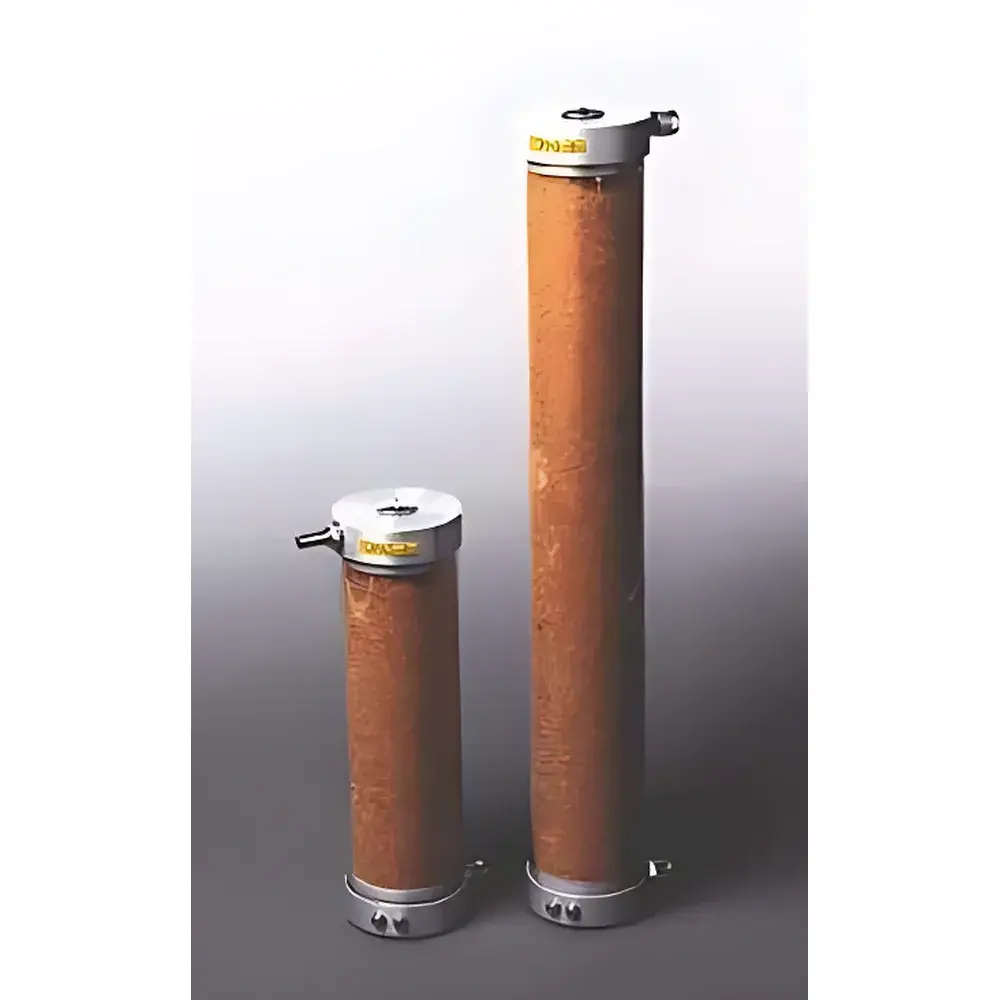
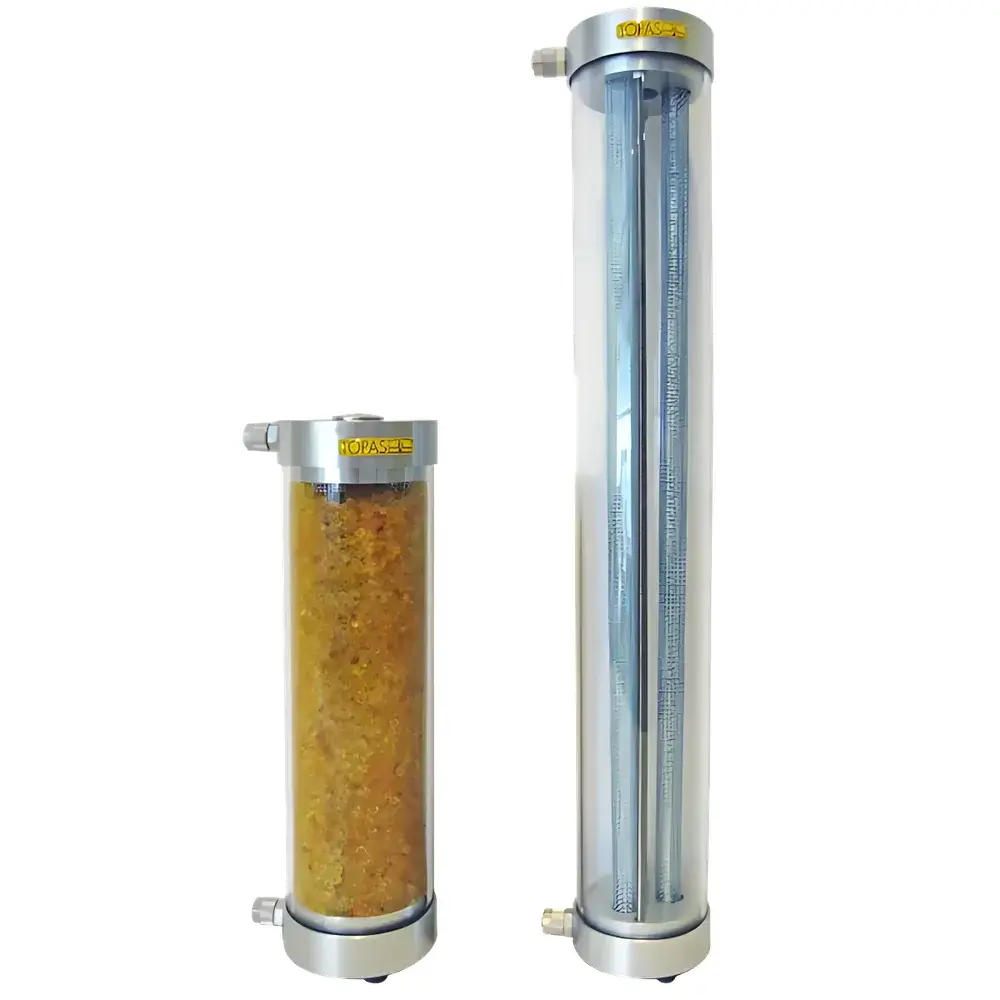
TOPAS DDU-570 Diffusion Dryer
| Brand | TOPAS |
|---|---|
| Origin | Germany |
| Model | DDU-570 |
| Instrument Type | Aerosol Conditioning Device |
| Design Variants | High-Profile (DDU-570/H) and Low-Profile (DDU-570/L) |
| Desiccant | Indicating Silica Gel (Type 830 for DDU-570/H |
| Max. Inlet Aerosol Flow Rate | 10 L/min (H) / 5 L/min (L) |
| Max. Inlet Aerosol Temperature | 40 °C |
| Operating Ambient Temperature | ≤40 °C |
| Dimensions (d × H) | 70 × 475 mm (H) / 70 × 253 mm (L) |
| Hose Connection | Ø 8 mm |
| Weight (empty) | 0.94 kg (H) / 0.72 kg (L) |
| Compliance | Designed for ISO 27427-compliant aerosol generation systems |
Overview
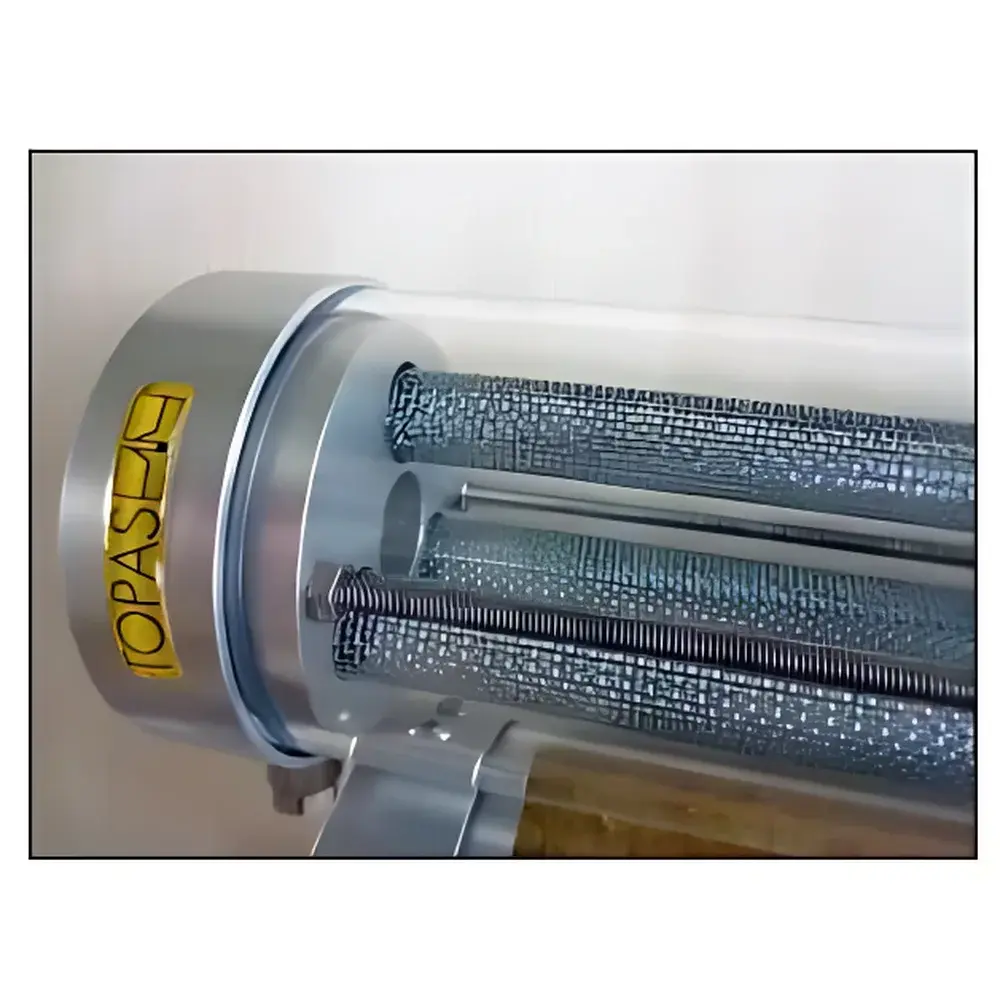
The TOPAS DDU-570 Diffusion Dryer is a precision-engineered aerosol conditioning device designed to remove water vapor from hygroscopic aerosols generated from aqueous suspensions or solutions—without altering particle size distribution, morphology, or concentration. Unlike impaction- or filtration-based drying methods, the DDU-570 employs a passive diffusion-driven desiccation principle: aerosol-laden air flows through three concentric stainless-steel mesh tubes housed within an acrylic cylindrical chamber filled with indicating silica gel. Water vapor diffuses radially across the porous mesh walls into the surrounding desiccant bed, where it is irreversibly adsorbed. This design eliminates direct contact between aerosol particles and desiccant granules, minimizing particle loss, bounce, or agglomeration—critical for metrologically traceable calibration and reference aerosol generation.
Key Features
- Diffusion-based drying mechanism ensures high particle transmission efficiency (>99.5% for 10 nm–10 µm particles under nominal flow conditions)
- Visual saturation monitoring via color-indicating silica gel (blue → pink transition signals desiccant exhaustion)
- Modular aluminum end-caps with integrated O-ring seals ensure leak-tight assembly and reproducible alignment of mesh tubes
- Two mechanically identical configurations: DDU-570/H (475 mm height, 10 L/min max flow) and DDU-570/L (253 mm height, 5 L/min max flow), enabling optimization for system footprint vs. residence time requirements
- Desiccant regeneration capability: spent silica gel can be fully reactivated via thermal treatment (e.g., 120 °C for 2 hours in a convection oven or desiccator), supporting long-term operational sustainability
- Chemically inert acrylic housing and stainless-steel mesh components prevent catalytic surface reactions or leaching during prolonged exposure to acidic or basic aerosols
Sample Compatibility & Compliance
The DDU-570 is validated for use with monodisperse and polydisperse aqueous aerosols—including polystyrene latex (PSL), ammonium sulfate, sodium chloride, and sucrose suspensions—across particle sizes from 10 nm to 10 µm. It is routinely deployed upstream of condensation particle counters (CPCs), scanning mobility particle sizers (SMPS), and optical particle spectrometers requiring dry, stable aerosol inputs. The device complies with the physical design principles outlined in ISO 27427:2022 (“Aerosol generation—Requirements for generating test aerosols”) and supports adherence to USP <1210>, ISO 14644-3, and ASTM F50 test protocols when integrated into validated aerosol generation trains. Its passive operation introduces no electrical interference, making it suitable for Class A/B cleanroom environments and ISO/IEC 17025-accredited laboratories.
Software & Data Management
As a hardware-only conditioning module, the DDU-570 does not incorporate embedded firmware or digital interfaces. However, its performance is fully documentable within laboratory information management systems (LIMS) and electronic lab notebooks (ELN) via standardized metadata tagging: desiccant batch ID, regeneration timestamp, inlet/outlet RH measurements (when paired with calibrated humidity sensors), and cumulative operating hours. When used with TOPAS aerosol generators (e.g., SLG-270, ATM-280), the dryer’s operational status—verified by visual desiccant color check—is recorded as a critical control point in instrument qualification (IQ/OQ/PQ) reports and FDA 21 CFR Part 11–compliant audit trails.
Applications
- Drying aerosols generated by ultrasonic or collision nebulizers prior to SMPS or DMA classification
- Stabilizing hygroscopic reference aerosols (e.g., PSL in water) for gravimetric filter calibration and filter efficiency testing (EN 1822, ISO 29463)
- Enabling reproducible generation of dry salt aerosols for inhaler performance evaluation per USP <601> and Ph. Eur. 2.9.18
- Conditioning challenge aerosols in HEPA/ULPA filter integrity testing and cleanroom certification
- Supporting aerosol mass concentration standardization in environmental chamber studies compliant with ISO 16000-27
FAQ
What desiccant types are recommended for the DDU-570/H and DDU-570/L?
For the high-profile DDU-570/H, TOPAS specifies indicating silica gel Type 830 (blue-to-pink transition at ~20% RH); for the low-profile DDU-570/L, Type 410 is used to maintain equivalent drying capacity within reduced volume.
Can the DDU-570 be used with organic solvent-based aerosols?
No. The device is engineered exclusively for aqueous aerosols. Organic vapors may degrade the silica gel indicator chemistry or compromise acrylic structural integrity.
How often must the silica gel be regenerated?
Regeneration frequency depends on inlet aerosol humidity, flow rate, and temperature. Under typical lab conditions (RH <80%, 5 L/min, 25 °C), one charge lasts ≥48 hours of continuous operation.
Is the DDU-570 compatible with pressurized aerosol lines?
It operates at ambient pressure only. Positive pressure exceeding 50 mbar at the inlet may distort the mesh tube geometry or cause seal leakage.
Does the DDU-570 require calibration?
No formal calibration is required, but users must verify desiccant activity via RH sensor cross-check before each critical measurement campaign, per ISO/IEC 17025 clause 7.7.
Related Products







