
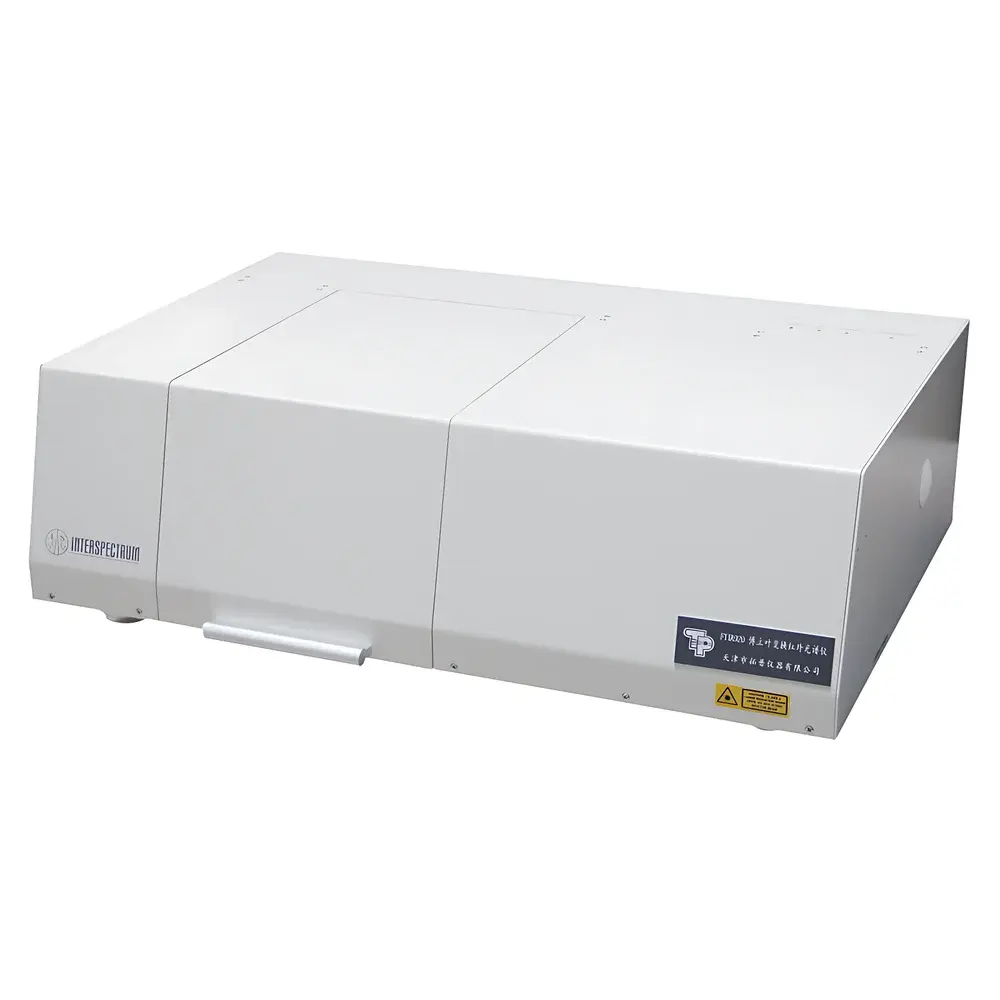
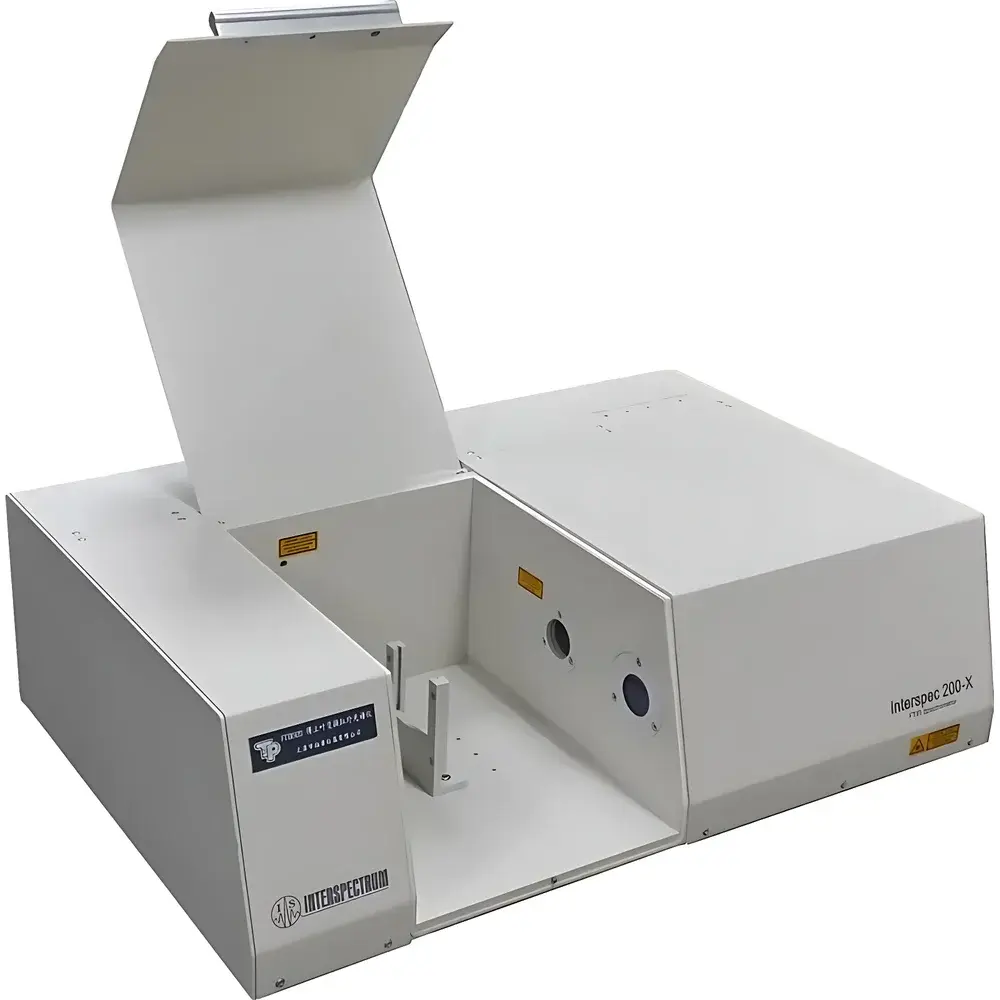
Topo FTIR920 Fourier Transform Infrared Spectrometer
| Brand | Topo (TP) |
|---|---|
| Origin | Tianjin, China |
| Manufacturer Type | OEM/ODM Manufacturer |
| Instrument Type | Laboratory FTIR Spectrometer |
| Wavenumber Range | 7800–375 cm⁻¹ |
| Spectral Resolution | 1 cm⁻¹ |
| Scan Speed | Microprocessor-Controlled, 6 Adjustable Speed Settings |
| Signal-to-Noise Ratio (S/N) | 15,000:1 (at 4 cm⁻¹, 1 min scan, peak-to-peak) |
| Wavenumber Accuracy | ±0.01 cm⁻¹ |
| Beam Splitter | 60 mm Ge-coated KBr with Hydrophobic Coating |
| Optics | Fully Gold-Coated Mirrors |
| Interferometer | Rocking-Mirror Interferometer (Space-Derived Design) |
| Environmental Protection | Integrated Heated Desiccant Chamber with Visual Indicator & Dual-Seal Enclosure |
| Purge Interface | Standard N₂ Purge Port |
| Software Compliance | FDA 21 CFR Part 11, GLP/GMP Audit Trail, Electronic Signatures, Role-Based Access Control |
Overview
The Topo FTIR920 is a high-performance laboratory-grade Fourier Transform Infrared (FTIR) spectrometer engineered for precision molecular identification and quantitative analysis across academic, pharmaceutical, materials science, and industrial quality control environments. Based on the Michelson interferometer principle—enhanced by a proprietary rocking-mirror optical architecture originally developed for space-based spectral monitoring—the FTIR920 delivers exceptional mechanical stability, vibration immunity, and long-term wavenumber reproducibility. Its core optical path employs fully gold-coated mirrors for >98% reflectivity across the mid-IR range (7800–375 cm⁻¹), minimizing thermal drift and maximizing signal fidelity. The instrument integrates a high-intensity air-cooled ceramic IR source and a low-noise deuterated triglycine sulfate (DLATGS) detector, enabling robust trace-level detection without liquid nitrogen cooling. Designed to meet stringent regulatory expectations, the FTIR920 operates as a validated analytical platform compliant with ISO/IEC 17025, USP , and ASTM E1421 standards for infrared spectroscopy.
Key Features
- Rocking-mirror interferometer design: Eliminates dynamic alignment sensitivity inherent in traditional moving-mirror systems; maintains optical path integrity under mechanical stress or ambient vibration.
- 60 mm Ge-coated KBr beam splitter with hydrophobic anti-humidity coating: Ensures consistent throughput and minimizes spectral artifacts caused by atmospheric moisture absorption.
- Integrated heated desiccant chamber with visual indicator window and triple-seal optical housing: Enables stable operation in high-humidity or particulate-rich lab environments without external dry-air generators.
- N₂ purge port standard: Reduces atmospheric CO₂ and H₂O vapor interference, critical for high-resolution fingerprint region analysis (e.g., 1800–1500 cm⁻¹).
- External interferometer energy adjustment: Allows real-time optimization of optical throughput without opening the instrument enclosure—reducing downtime and contamination risk.
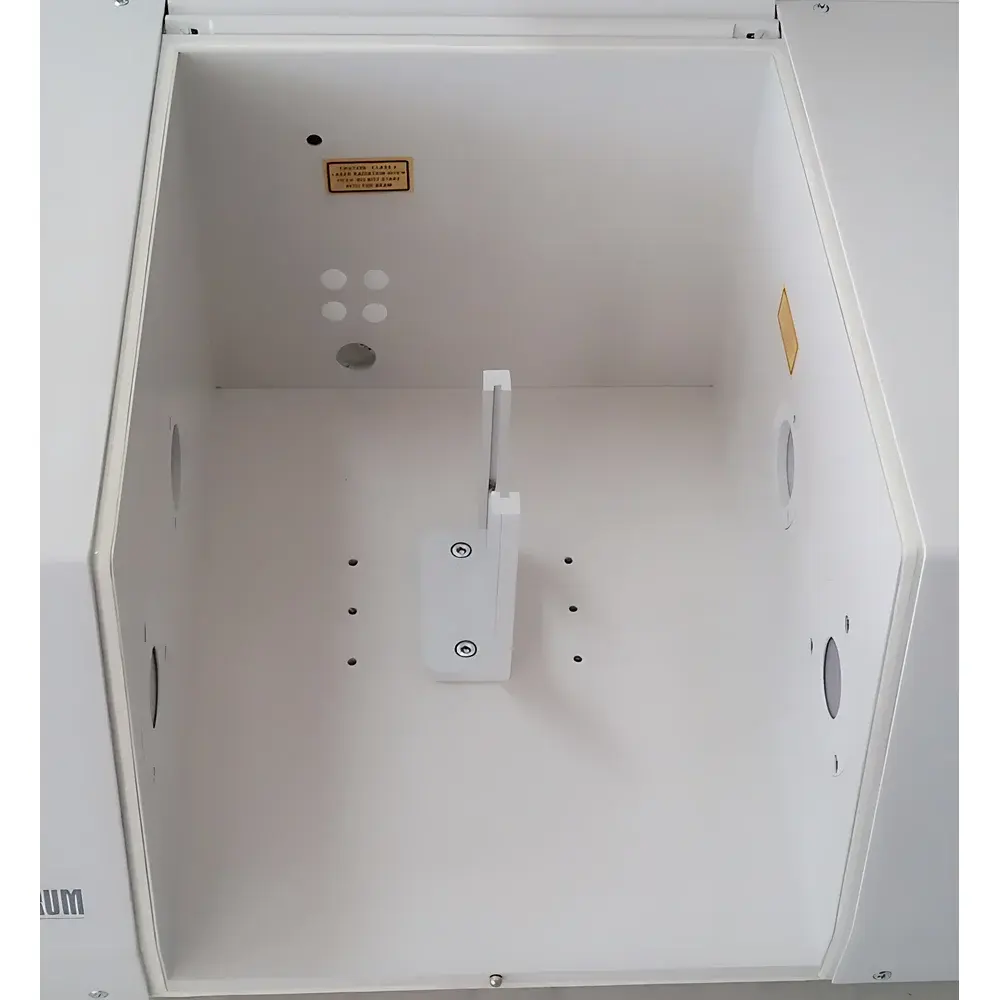
- Modular sample compartment (200 × 255 × 150 mm): Accommodates standard ATR, transmission, specular reflection, diffuse reflectance, and variable-angle accessories; supports custom large-format fixtures up to 300 × 300 × 20 mm (e.g., architectural glass, coated substrates).
Sample Compatibility & Compliance
The FTIR920 supports broad sample form flexibility—including solids (KBr pellets, films, powders), liquids (neat, solution, micro-volume), gases (with optional gas cell), and surface-bound analytes (via ATR). Its large sample chamber enables direct integration of industry-specific accessories: HF-series liquid cells (path lengths 0.1–100 µm), FW-series hydraulic pellet presses (up to 15 tons), HW-series IR drying ovens, and mirror-reflection stages for thin-film thickness quantification. Regulatory compliance is embedded at the system level: software enforces ALCOA+ data integrity principles, provides full electronic audit trails per FDA 21 CFR Part 11, supports IQ/OQ/PQ documentation packages, and includes built-in calibration verification per GB/T 21186–2007 and JJF 1319–2011. All firmware and application modules undergo annual revalidation against ISO/IEC 17025 Clause 5.9 requirements.
Software & Data Management
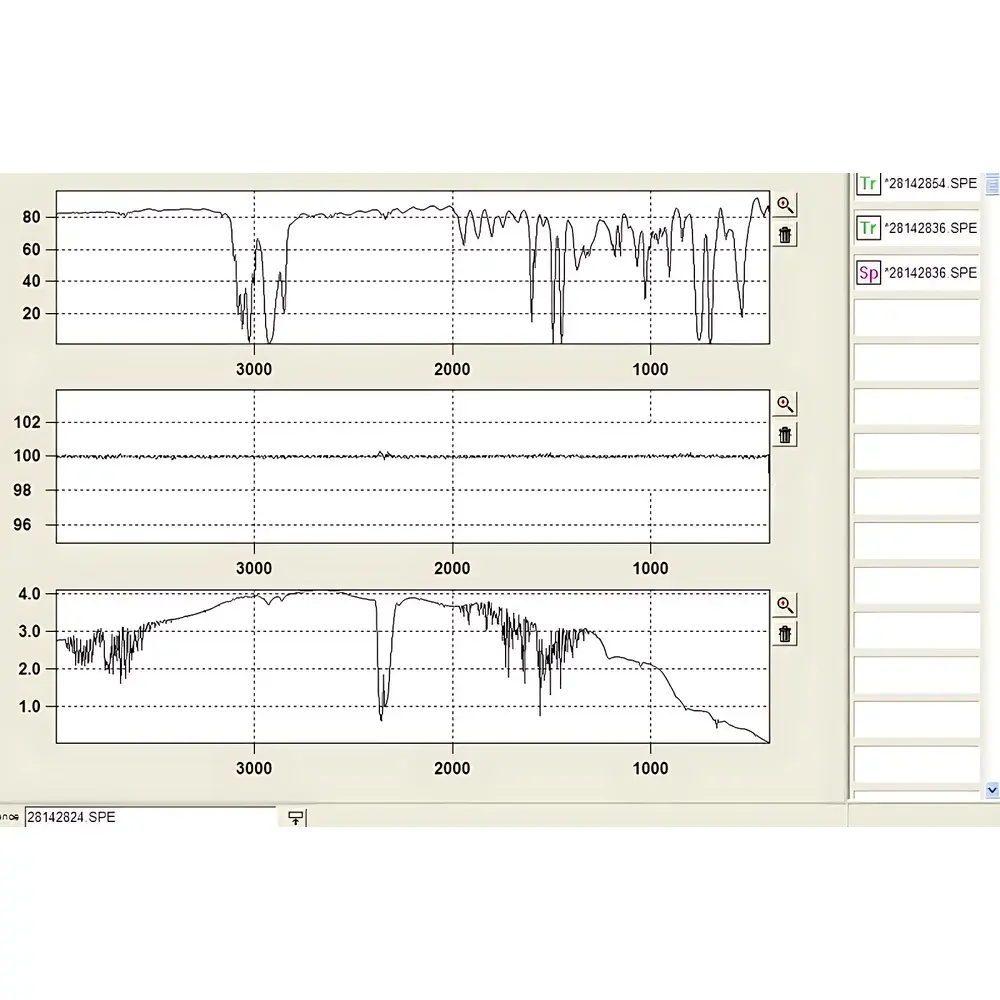
The included TopoSpectra™ v4.x software suite runs natively on Windows 11 (64-bit) and offers bilingual UI (English/Chinese) with role-based access control. Core capabilities include baseline correction (Rubberband, Concave), spectral subtraction, derivative mapping, peak integration (Gaussian/Lorentzian fitting), and 2D correlation analysis. Preconfigured industry workflows cover building glass thermal emissivity (EN 410), quartz hydroxyl content (ASTM C1036), asphalt binder oxidation state (AASHTO T 302), and polymer crystallinity index (ISO 18473). Spectral libraries (NIST, Polymer, Pharma, Forensic) are searchable via similarity algorithms (Hit Quality Index, HQI ≥ 95%). Data export supports CSV, TXT, JCAMP-DX, and XML formats; wavelength/wavenumber unit switching is lossless and metadata-preserving. Optional cloud synchronization (via encrypted TLS 1.3 API) enables centralized spectral repository management and cross-site method sharing.
Applications
The FTIR920 serves as a primary analytical tool in QC laboratories for raw material identity testing (USP ), finished product release (ICH Q5), and stability-indicating assay development. In materials R&D, it characterizes surface functionalization of nanomaterials, degradation pathways in biodegradable polymers, and interfacial bonding in multilayer optical coatings. Environmental labs deploy it for microplastic identification (FTIR imaging mode compatible), VOC speciation in air filters, and soil organic matter profiling. Academic users leverage its high S/N ratio and resolution for reaction monitoring (time-resolved FTIR), hydrogen-bonding dynamics studies, and teaching spectral interpretation fundamentals. Its ruggedized optical architecture ensures reliable performance in non-climate-controlled teaching labs or field-deployable mobile labs.
FAQ
What regulatory standards does the FTIR920 software support?
It complies with FDA 21 CFR Part 11, EU Annex 11, and ISO/IEC 17025 for electronic records and signatures—including audit trail generation, user authentication, and change control logging.
Can the FTIR920 operate without nitrogen purging?
Yes; the integrated heated desiccant chamber and sealed optics enable routine operation in ambient lab air. N₂ purging is recommended only for high-accuracy work below 1000 cm⁻¹ or extended spectral averaging.
Is the rocking-mirror interferometer serviceable in-field?
No internal optical realignment is required during normal operation. External energy tuning and desiccant replacement are the only scheduled maintenance tasks—no interferometer recalibration needed within 24 months of commissioning.
Does the system support third-party spectral databases?
Yes; JCAMP-DX import/export is fully implemented. Users may load proprietary libraries or integrate with Thermo OMNIC, Bio-Rad KnowItAll, or Bruker OPUS via standardized spectral exchange protocols.
What validation documentation is provided?
Factory-issued IQ/OQ protocols, 3Q-ready test scripts, calibration certificates traceable to NIST SRM 1921b, and a complete GxP implementation guide are included with each shipment.
Related Products





