
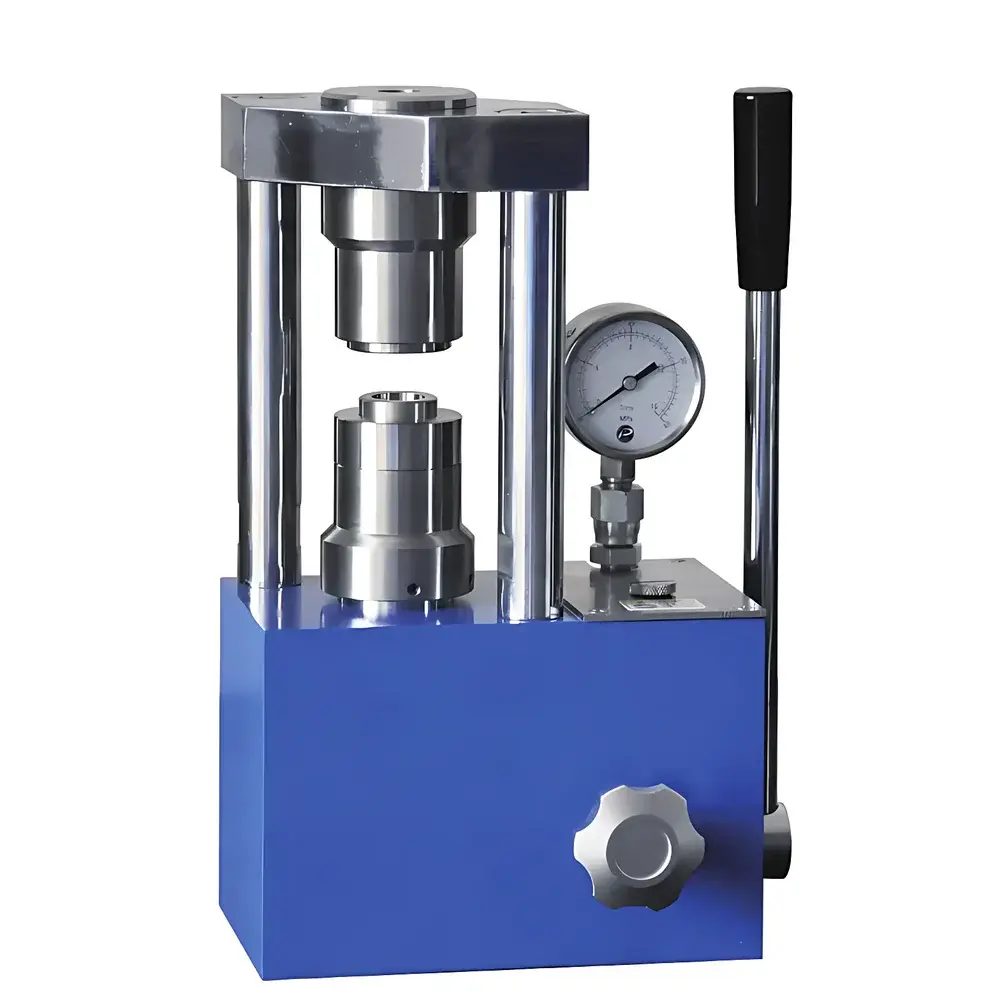
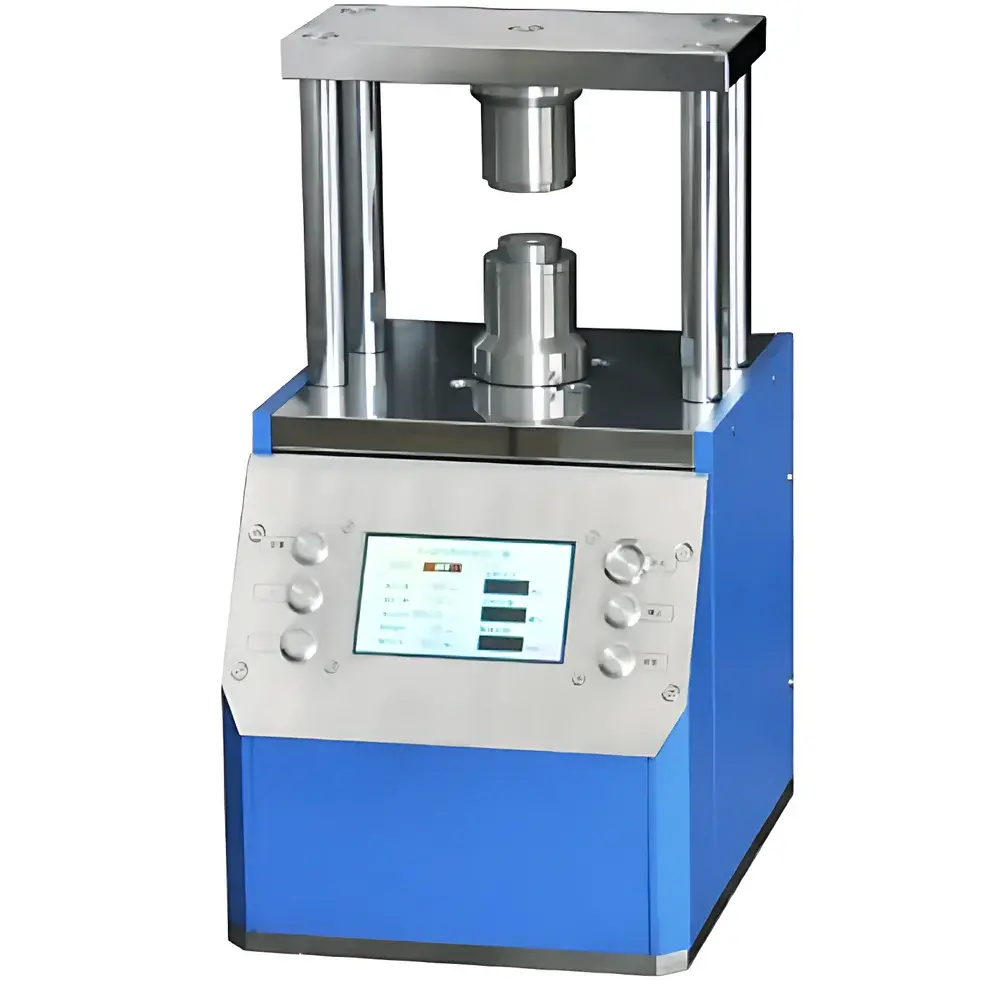
Topo FW-2N / FWZD-2N Button Cell Sealing Machine
| Brand | Topo (TP) |
|---|---|
| Origin | Tianjin, China |
| Manufacturer Type | OEM/ODM Manufacturer |
| Region of Manufacture | Domestic (China) |
| Model | FW-2N, FWZD-2N |
| Pricing | Available Upon Request |
Overview
The Topo FW-2N and FWZD-2N Button Cell Sealing Machines are precision-engineered benchtop systems designed for the controlled, repeatable hermetic sealing of coin-type (button) electrochemical cells—primarily used in R&D laboratories, battery prototyping facilities, and quality assurance environments. These machines operate on a mechanical crimping principle, applying calibrated axial force to deform the cell can lid into the groove of the can body, thereby establishing a gas-tight seal essential for electrolyte containment and long-term electrochemical stability. Unlike thermal or laser-based sealing methods, mechanical crimping avoids localized heating that could degrade sensitive cathode/anode materials or separator integrity—making the FW-2N series particularly suitable for Li-ion, Li-metal, and solid-state button cell assembly where thermal budget control is critical.
Key Features
- Adjustable crimping pressure and stroke depth via calibrated micrometer dials—enabling fine-tuning for diverse cell diameters (e.g., CR2032, CR2025, CR1620) and can material thicknesses (stainless steel, nickel-plated steel).
- Dual-mode operation: FW-2N supports manual foot-pedal actuation for low-volume prototyping; FWZD-2N adds programmable digital force control with real-time load monitoring and preset parameter recall for batch consistency.
- Integrated safety interlock system prevents actuation unless the upper die is fully seated and the protective guard is closed—compliant with ISO 13857 ergonomic clearance requirements.
- Modular die set architecture allows rapid tooling changeover between standard cell formats without recalibration—die sets are traceably labeled and compatible with NIST-traceable force verification protocols.
- Robust cast-iron frame with vibration-dampening base minimizes positional drift during crimping, ensuring radial symmetry of the seal bead and reducing post-crimp leakage risk.
Sample Compatibility & Compliance
The FW-2N/FWZD-2N accommodates industry-standard button cell configurations ranging from 10 mm to 24 mm in diameter and up to 5 mm in total height. Compatible can materials include 304 stainless steel, nickel-plated mild steel, and aluminum alloys—each requiring specific die geometry and force profiles to prevent gasket extrusion or can wall buckling. All machine configurations meet CE machinery directive (2006/42/EC) requirements and are constructed per ISO 9001-certified manufacturing processes. For regulated battery development workflows—including those aligned with UN 38.3 prequalification testing—the crimping process parameters (force, dwell time, displacement) are fully documentable and support GLP-compliant audit trails when integrated with external data loggers.
Software & Data Management
The FWZD-2N variant includes embedded firmware supporting RS-232 and USB-C serial communication for integration into laboratory automation ecosystems. Optional TopoSeal Control Suite (v3.2+) enables remote parameter configuration, real-time force/displacement curve visualization, CSV export of crimp logs (timestamp, setpoint, actual force, cycle count), and user-level access control (admin/operator modes). Audit trail functionality complies with FDA 21 CFR Part 11 requirements when deployed with electronic signature modules and time-stamped, immutable log storage. Firmware updates are delivered via signed binary packages validated against SHA-256 checksums to ensure integrity.
Applications
- R&D-scale fabrication of lithium-ion, lithium-sulfur, and sodium-ion button cells for half-cell and full-cell electrochemical characterization (CV, EIS, galvanostatic cycling).
- Quality control validation of seal integrity prior to electrolyte filling or post-filling leak testing (e.g., helium mass spectrometry or pressure decay methods).
- Process development for novel electrode architectures—such as thick-film cathodes or composite solid electrolytes—where conventional sealing equipment induces unacceptable deformation.
- Academic and government lab use in battery materials screening programs requiring strict batch-to-batch reproducibility under ASTM F2629-22 (Standard Guide for Battery Testing in Research Environments).
FAQ
What cell sizes are supported out-of-the-box?
Standard die sets cover CR1020, CR1220, CR1616, CR1620, CR2016, CR2025, CR2032, and BR2330 configurations. Custom dies for non-standard diameters (e.g., 8 mm or 25.4 mm) are available upon engineering review.
Is force calibration traceable to national standards?
Yes—each unit ships with a factory calibration certificate referencing ISO/IEC 17025-accredited force measurement labs. Annual recalibration services include NIST-traceable load cell verification and mechanical alignment checks.
Can the machine be integrated into a glovebox environment?
Both models are designed for inert-atmosphere compatibility: all external surfaces are passivated stainless steel or anodized aluminum; pneumatic components (if equipped) use oil-free compressors; and cable glands meet IP54 ingress protection ratings.
Does Topo provide technical documentation for regulatory submissions?
Yes—comprehensive DQ/IQ/OQ protocol templates, risk assessments (per ISO 14971), and raw test data packages are provided to support GMP-aligned battery development workflows and regulatory filings (e.g., FDA IND submissions for implantable medical device power sources).





