
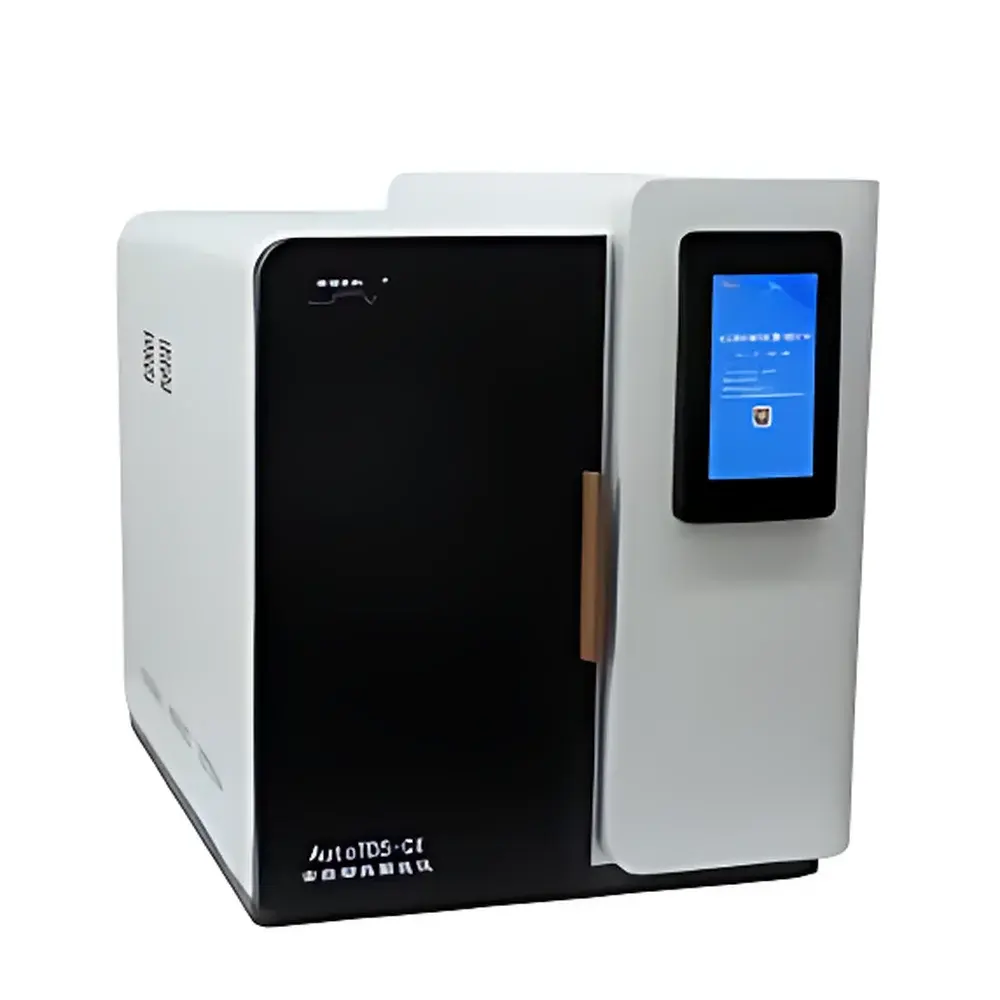
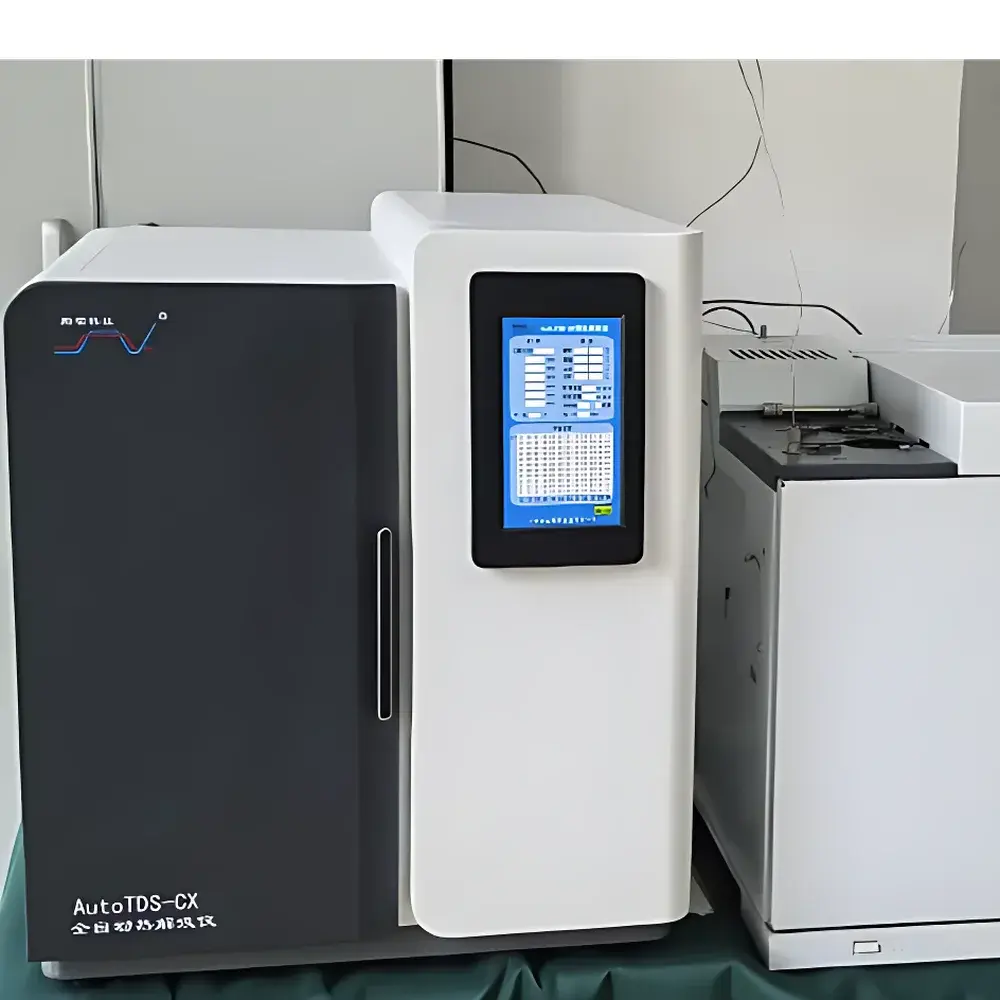
TouchScience AutoTDS-CX Fully Automated Thermal Desorber
| Brand | TouchScience |
|---|---|
| Origin | Beijing, China |
| Manufacturer Type | Direct Manufacturer |
| Instrument Type | Dual-Stage Thermal Desorber |
| Automation Level | Fully Automated |
| Primary Desorption Temperature Range | Ambient to 400 °C |
| Valve Injection Zone Temperature Range | Ambient to 220 °C |
| Transfer Line Temperature Range | Ambient to 250 °C |
| Cold Trap Temperature Range | Down to –35 °C |
| Temperature Control Accuracy | ±1 °C |
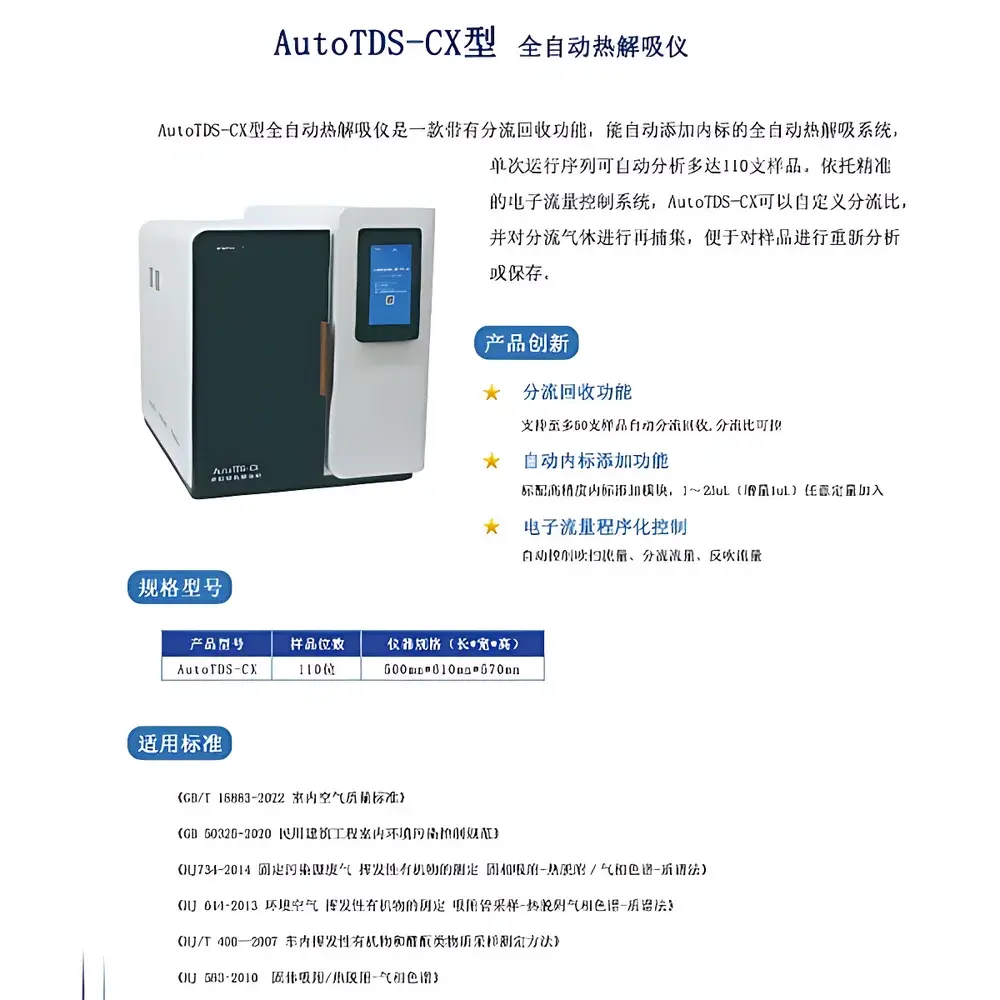
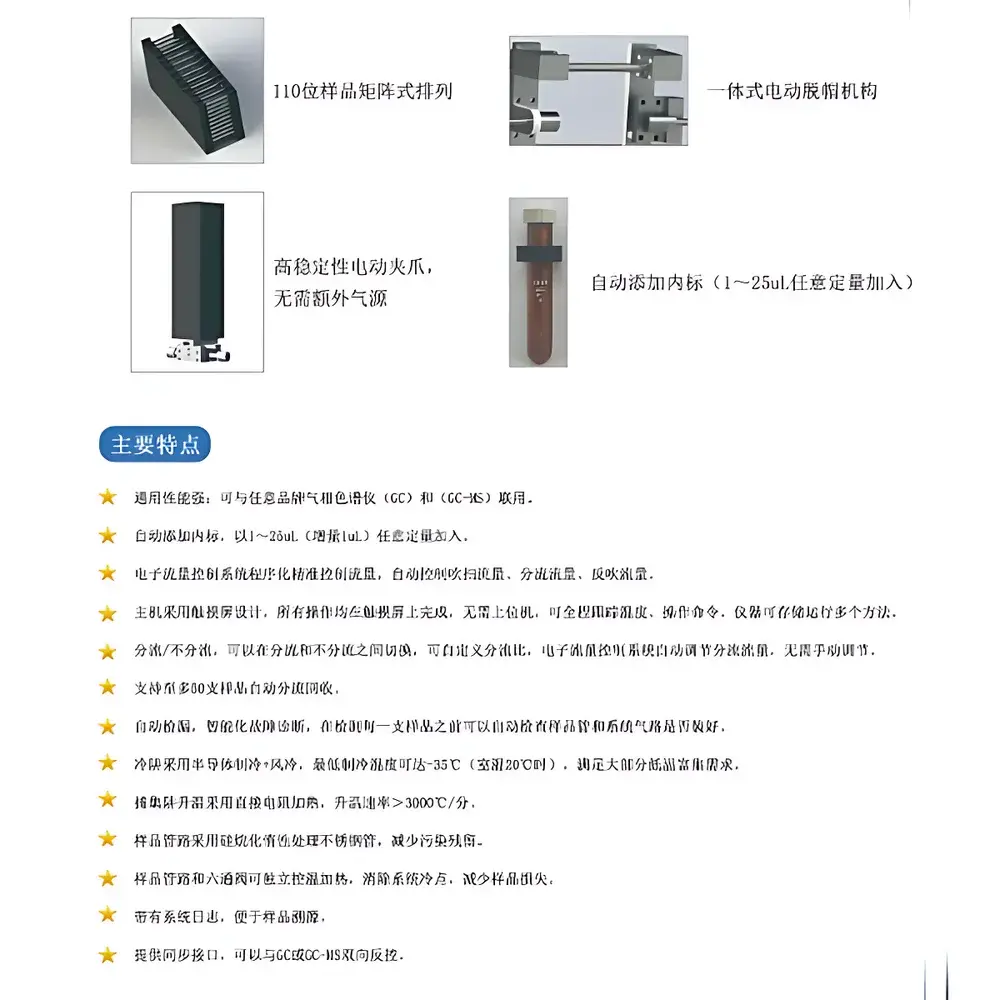
| Sample Capacity | 110 positions |
| Internal Standard Addition | Automated |
| Split Flow Recovery | Up to 50 samples per sequence |
| Electronic Mass Flow Control | Integrated for purge, split, and backflush flows |
| Leak Detection | Automated pre-run verification |
| Data Logging | Comprehensive system event logging |
| GC/GC-MS Synchronization | Bidirectional hardware trigger interface |
Overview
The TouchScience AutoTDS-CX is a fully automated, dual-stage thermal desorption system engineered for high-throughput, trace-level volatile organic compound (VOC) and semi-volatile organic compound (SVOC) analysis in environmental, occupational hygiene, food safety, and forensic laboratories. It operates on the principle of thermally driven analyte release from sorbent tubes—first stage desorption transfers volatiles into a cryogenically focused cold trap; second-stage rapid flash desorption injects a narrow, solvent-free analyte band directly into the gas chromatograph (GC) or GC-mass spectrometer (GC-MS) inlet. This two-step process ensures quantitative recovery, sharp peak shapes, and sub-part-per-trillion (pptv) detection sensitivity when coupled with modern capillary columns and sensitive detectors. The system eliminates manual handling, reduces carryover risk, and maintains analytical integrity across extended unattended sequences—critical for compliance-driven workflows under ISO 16000, EPA TO-17, and ASTM D6196.
Key Features
- Dual-zone precise temperature control: Independent heating of the primary desorption oven (ambient to 400 °C), six-port valve zone (ambient to 220 °C), transfer line (ambient to 250 °C), and cryogenic cold trap (–35 °C minimum) eliminates cold spots and minimizes analyte condensation or degradation.
- Automated internal standard addition: Integrated liquid standard delivery module enables programmable, reproducible spiking prior to desorption—essential for quantitation accuracy and compensation of matrix effects in complex samples.
- Electronic mass flow control (EMFC): Digitally regulated purge, split, and backflush gas flows ensure method repeatability; split ratios are user-defined and dynamically maintained without mechanical adjustment.
- Split flow recovery capability: Up to 50 samples per batch can be subjected to split-and-retrap operation, enabling reanalysis, method validation, or archival storage of split fractions without manual intervention.
- Self-diagnostic leak detection: Before each sample run, the system performs automatic pressure decay testing on both the sorbent tube and internal pneumatic circuitry—flagging improper tube seating or seal failure in real time.
- Touchscreen-native architecture: All operations—including method selection, parameter editing, real-time temperature monitoring, and status diagnostics—are executed via a dedicated industrial-grade capacitive touchscreen; no external PC or software installation required.
- Inert sample pathway: Silanized stainless-steel tubing and heated valve manifolds minimize active site adsorption and residual carryover, supporting robust analysis of reactive compounds including aldehydes, amines, and sulfur-containing VOCs.
Sample Compatibility & Compliance
The AutoTDS-CX accepts industry-standard 6 mm OD × 89 mm sorbent tubes (e.g., Tenax TA, Carbopack B/C, Carboxen 1000), as well as multi-bed configurations. Its 110-position autosampler accommodates both single- and dual-tube formats. The system meets essential regulatory design criteria for GLP and GMP environments: full audit trail via embedded system logging (timestamped events, operator ID, method version, temperature profiles), electronic signature support, and hardware-level synchronization triggers compliant with FDA 21 CFR Part 11 requirements when integrated with validated LIMS or CDS platforms. It is routinely deployed in laboratories accredited to ISO/IEC 17025 for air quality testing and workplace exposure assessment.
Software & Data Management
Onboard firmware supports storage of ≥50 user-defined methods, each with independent temperature ramps, flow profiles, timing logic, and recovery settings. System logs record every operational event—including desorption start/end times, cold trap cooldown stability, valve actuation sequences, and diagnostic outcomes—with UTC timestamps and non-erasable memory retention. A standardized RS-232 and TTL-level bidirectional sync interface enables seamless hardware handshake with Agilent, Thermo Fisher, Shimadzu, and PerkinElmer GC/GC-MS systems for synchronized oven start, injection trigger, and method loading. Exportable log files (CSV/ASCII) integrate directly into laboratory data management systems for traceability and audit readiness.
Applications
- Indoor and ambient air monitoring per ISO 16000-6 and EPA Method TO-17
- Workplace exposure assessment for OSHA- and NIOSH-regulated compounds
- VOC profiling in consumer products, building materials, and packaging
- Residual solvent analysis in pharmaceuticals (ICH Q3C-aligned)
- Off-gassing studies of polymers, adhesives, and composites
- Odor source identification and sensory panel correlation studies
FAQ
Does the AutoTDS-CX require an external computer to operate?
No—it features an embedded industrial touchscreen controller with standalone operation capability. A PC is only needed for advanced log export or integration with third-party CDS.
Can it be used with legacy GC systems lacking digital trigger inputs?
Yes—manual trigger mode is supported via front-panel button or external dry-contact closure; however, full bidirectional synchronization requires TTL-compatible GC interfaces.
What maintenance intervals are recommended for the cold trap and desorption ovens?
Cold trap cryo-cooler performance should be verified quarterly; desorption ovens and valve zones require annual calibration against NIST-traceable references per ISO/IEC 17025 guidelines.
Is method transfer between different TouchScience TDS models supported?
Method parameters are stored in proprietary binary format; while temperature and timing logic are portable, EMFC flow tables and split recovery configurations may require validation when migrating to earlier-generation hardware.
How is system contamination monitored over time?
Built-in blank runs (tube-only desorption) generate baseline chromatograms; integrated peak area trending tools flag abnormal background signals across consecutive sequences, indicating potential sorbent degradation or trap contamination.





