
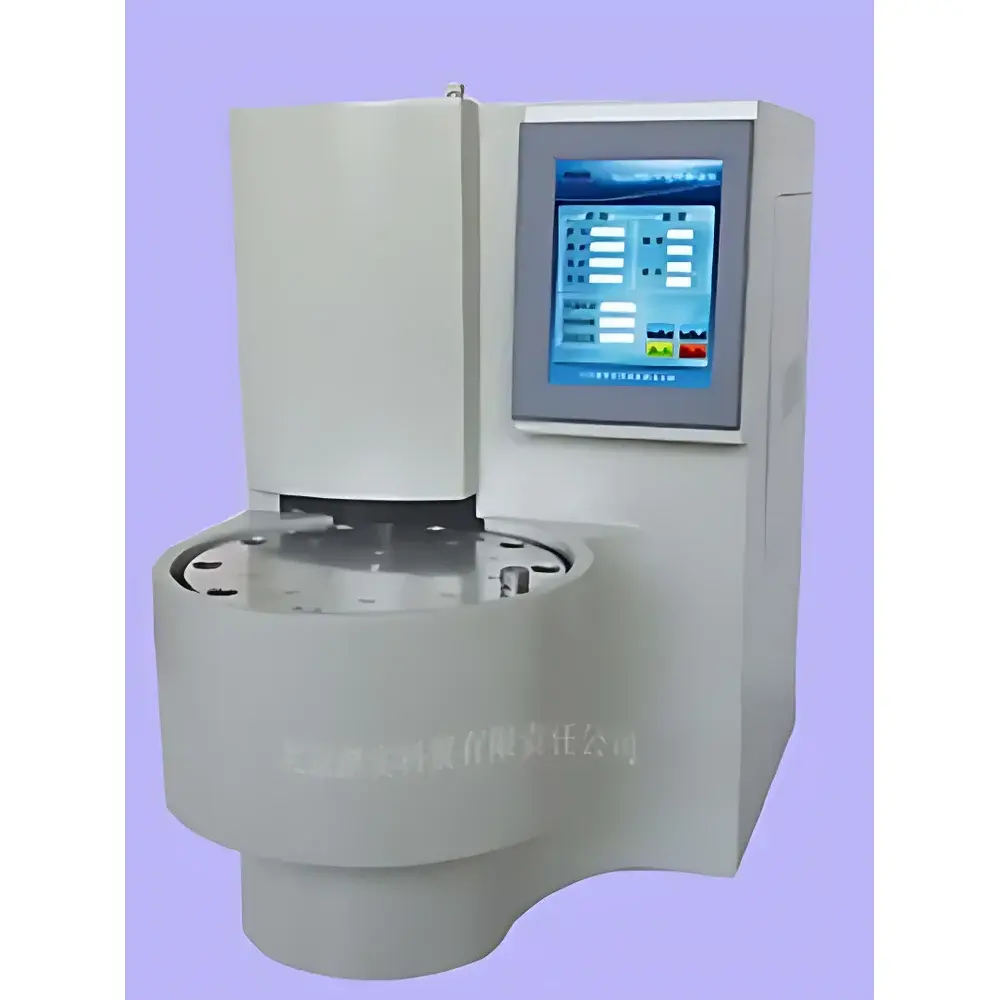
TouchScience AutoTDS-V Fully Automated Thermal Desorber
| Brand | TouchScience |
|---|---|
| Origin | Beijing, China |
| Manufacturer Type | Direct Manufacturer |
| Instrument Type | Dual-Stage Thermal Desorber |
| Automation Level | Fully Automated |
| Primary Desorption Temperature Range | 50–400 °C |
| Secondary Desorption Temperature Range | 50–400 °C |
| Valve Injection Zone Temperature Range | Ambient to 200 °C |
| Transfer Line Temperature Range | Ambient to 220 °C |
| Cold Trap Temperature | −30 °C |
| Temperature Control Accuracy | ±1 °C |
| Analyte Recovery Rate | >85% |
| Sample Capacity | 20 adsorption tubes |
Overview
The TouchScience AutoTDS-V Fully Automated Thermal Desorber is an engineered solution for quantitative trace-level analysis of volatile and semi-volatile organic compounds (VOCs and SVOCs) in air, environmental, and indoor matrices. It operates on the principle of dual-stage thermal desorption—first releasing analytes from sorbent-packed tubes under controlled heating (primary desorption), then refocusing them onto a cryogenically or thermally cooled trap (secondary trapping), followed by rapid flash desorption into a gas chromatograph (GC) or GC-mass spectrometer (GC-MS). This two-step process significantly enhances sensitivity, peak shape symmetry, and method reproducibility compared to single-stage desorption. Designed for compliance with internationally referenced environmental and indoor air quality protocols—including HJ 644–2013, HJ/T 400–2007, GB/T 18883–2022, HJ 583–2010, and GB 50325–2020—the AutoTDS-V supports laboratories conducting regulatory monitoring, occupational hygiene assessments, and building material emissions testing.
Key Features
- Fully automated sequential processing of up to 20 sorbent tubes without manual intervention, including tube loading, leak verification, primary/secondary desorption, and GC synchronization.
- Dual-mode secondary trapping capability: configurable for either ambient-temperature focusing (using heated trap design) or cryogenic trapping at −30 °C via Peltier + forced-air cooling—enabling optimization for compound volatility and chromatographic resolution.
- Comprehensive temperature control architecture: independently regulated zones for primary furnace (50–400 °C), secondary trap (50–400 °C), six-port valve (up to 200 °C), and transfer line (up to 220 °C), eliminating cold spots and minimizing analyte condensation or degradation.
- Integrated automatic tube leak detection prior to each desorption cycle—ensuring data integrity and preventing false negatives due to compromised sampling integrity.
- Direct resistive heating of the cold trap enables precise, rapid thermal ramping during flash desorption, critical for narrow-bandwidth injection and optimal GC peak definition.
- Universal GC/GC-MS interface with TTL-triggered synchronization: initiates GC oven ramp, detector acquisition, and data system recording simultaneously with desorption event onset.
- Large-format capacitive touchscreen display with real-time visualization of all thermal zones, operational status, and sequence progress—supporting both standalone operation and remote software supervision.
Sample Compatibility & Compliance
The AutoTDS-V accepts standard 6 mm OD × 89 mm length stainless steel or glass sorbent tubes packed with common media (e.g., Tenax TA, Carbopack B/C, Carboxen, or multi-bed configurations). Its hardware and thermal profiles are validated for use with EPA TO-17 compliant sampling methodologies. The instrument meets essential requirements for GLP and ISO/IEC 17025-accredited laboratories, including auditable sequence logs, user-access-level controls, and timestamped event tracking. While not inherently 21 CFR Part 11 compliant out-of-the-box, its software architecture supports integration with validated LIMS or chromatography data systems (CDS) that provide electronic signature, audit trail, and data integrity functions required under FDA and EMA guidelines.
Software & Data Management
Control and method development are performed via Windows-based TouchScience TDS Control Suite, offering intuitive workflow configuration—including customizable desorption ramps, hold times, trap conditioning cycles, and GC trigger logic. All method parameters, run history, and system diagnostics are stored locally with optional network backup. Raw desorption event metadata (temperature setpoints, actual readings, leak test results, valve actuation timestamps) are embedded in exported CSV or XML reports, facilitating traceability during regulatory audits. The software supports batch scheduling, email alert notifications upon completion or error, and export of calibration verification records aligned with ISO 17025 clause 7.7.
Applications
- Environmental air monitoring: ambient VOC speciation per HJ 644–2013 and EPA Method TO-17.
- Indoor air quality assessment: formaldehyde, benzene, toluene, xylenes (BTX), and C2–C12 aliphatics per GB/T 18883–2022 and GB 50325–2020.
- Automotive cabin air testing: aldehydes, ketones, and plasticizer emissions per HJ/T 400–2007.
- Building material emission screening: carpet, adhesives, insulation, and composite wood products.
- Workplace exposure evaluation: occupational limit value (OEL) compliance for solvents and process intermediates.
- Method development for emerging contaminants: e.g., halogenated VOCs, oxygenated compounds, and polar semi-volatiles requiring enhanced trapping efficiency.
FAQ
What sorbent tube formats are supported?
Standard 6 mm OD × 89 mm length tubes—compatible with commercially available Tenax TA, Carbopack, Carboxen, and custom multi-bed configurations.
Can the AutoTDS-V be integrated with third-party GC or GC-MS systems?
Yes—via TTL-level trigger output and analog/digital I/O ports; compatible with Agilent, Thermo Fisher, Shimadzu, PerkinElmer, and other major GC platforms.
Is cold trap temperature programmable?
The cold trap operates at a fixed −30 °C using Peltier + air-cooling; temperature is not variable but is stable and reproducible across extended sequences.
How is method validation supported?
Instrument performance checks include daily leak verification, temperature calibration logging, recovery testing via spiked standards, and retention time stability reporting—all exportable for inclusion in SOP documentation.
What power and environmental requirements apply?
Rated input: 220 VAC ±10%, 50 Hz ±0.5 Hz; maximum power draw <800 VA; recommended ambient operating range: 15–30 °C, non-condensing humidity <80% RH.





