
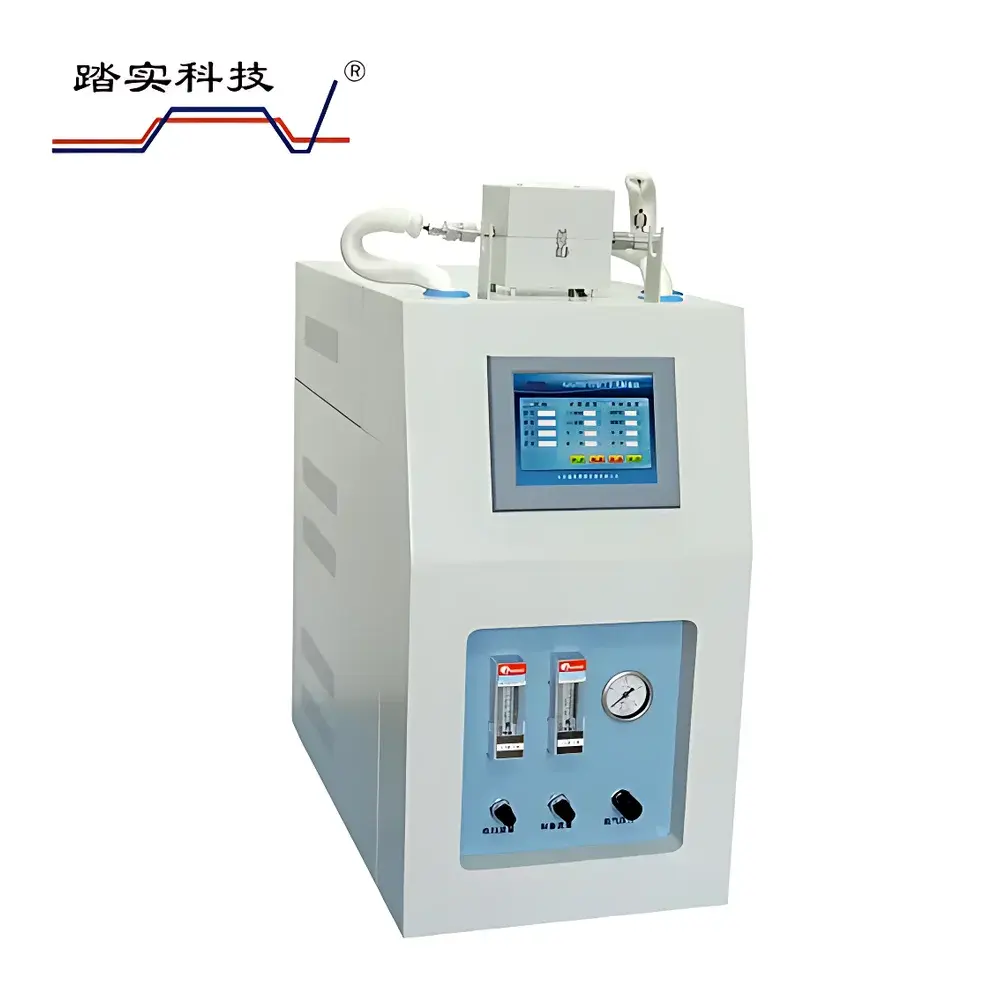
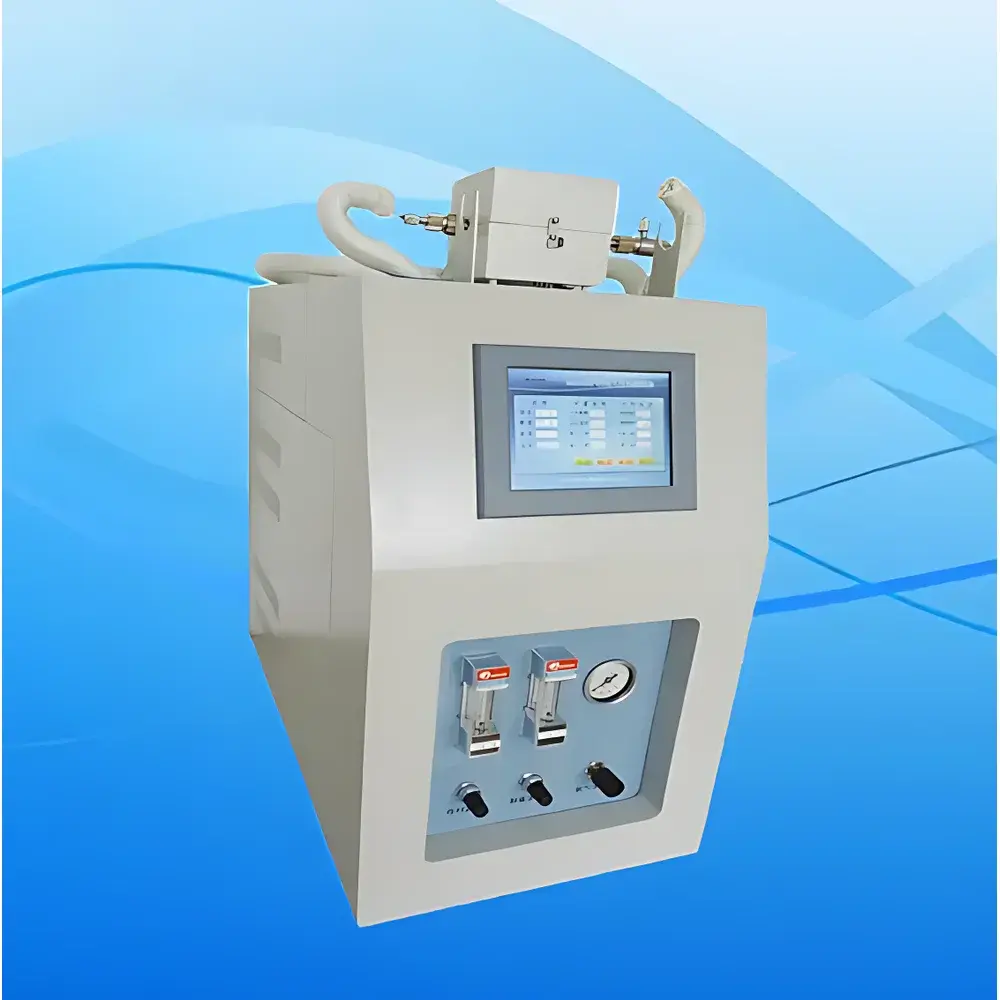
TouchScience AutoTDS-III Dual-Stage Thermal Desorber
| Brand | TouchScience |
|---|---|
| Origin | Beijing, China |
| Manufacturer Type | Direct Manufacturer |
| Instrument Type | Dual-Stage Thermal Desorber |
| Automation Level | Fully Automated |
| Primary Desorption Temperature Range | 50–400 °C |
| Valve Injection Zone Temperature Range | Ambient to 200 °C |
| Transfer Line Temperature Range | 50–250 °C |
| Cryo-Focusing Trap Temperature Range | Down to −30 °C |
| Temperature Control Accuracy | ±1 °C |
| Sample Position Capacity | 1 tube |
Overview
The TouchScience AutoTDS-III Dual-Stage Thermal Desorber is a fully automated, benchtop thermal desorption system engineered for high-fidelity volatile organic compound (VOC) analysis in environmental, occupational health, and indoor air quality laboratories. It implements dual-stage thermal desorption—comprising primary desorption from the sorbent tube followed by cryogenic focusing in an electronically controlled cold trap and subsequent rapid secondary desorption—thereby significantly improving chromatographic peak shape, analyte recovery, and method reproducibility compared to single-stage systems. The instrument operates on the principle of controlled thermal release and cryo-concentration: VOCs are thermally desorbed from standardized sorbent tubes (e.g., Tenax TA, Carbopack B/C), trapped and refocused at sub-ambient temperatures in a Peltier-cooled trap, then rapidly injected into the GC or GC–MS inlet via resistive heating (>60 °C/s ramp rate). This architecture minimizes band broadening and ensures quantitative transfer of light volatiles (C2–C12), including formaldehyde, benzene, toluene, ethylbenzene, xylenes (BTEX), and other regulated compounds.
Key Features
- Fully automated operation with integrated touchscreen HMI: 7-inch capacitive LCD panel enables real-time monitoring of all temperature zones, valve actuation status, and method progression without external PC dependency.
- Dual-stage desorption architecture with electronic cryo-trap: Achieves trapping temperatures down to −30 °C using solid-state Peltier cooling—no liquid nitrogen or cryogens required—ensuring robust, maintenance-free cold focusing.
- Resistive heating for secondary desorption: Enables precise, rapid (<100 ms), and reproducible thermal flash desorption directly from the cold trap into the GC transfer line.
- Heated sample pathway integrity: All critical surfaces—including the six-port switching valve, transfer lines (50–250 °C), and sample tube holder—are independently temperature-controlled to eliminate condensation points and prevent analyte loss or carryover.
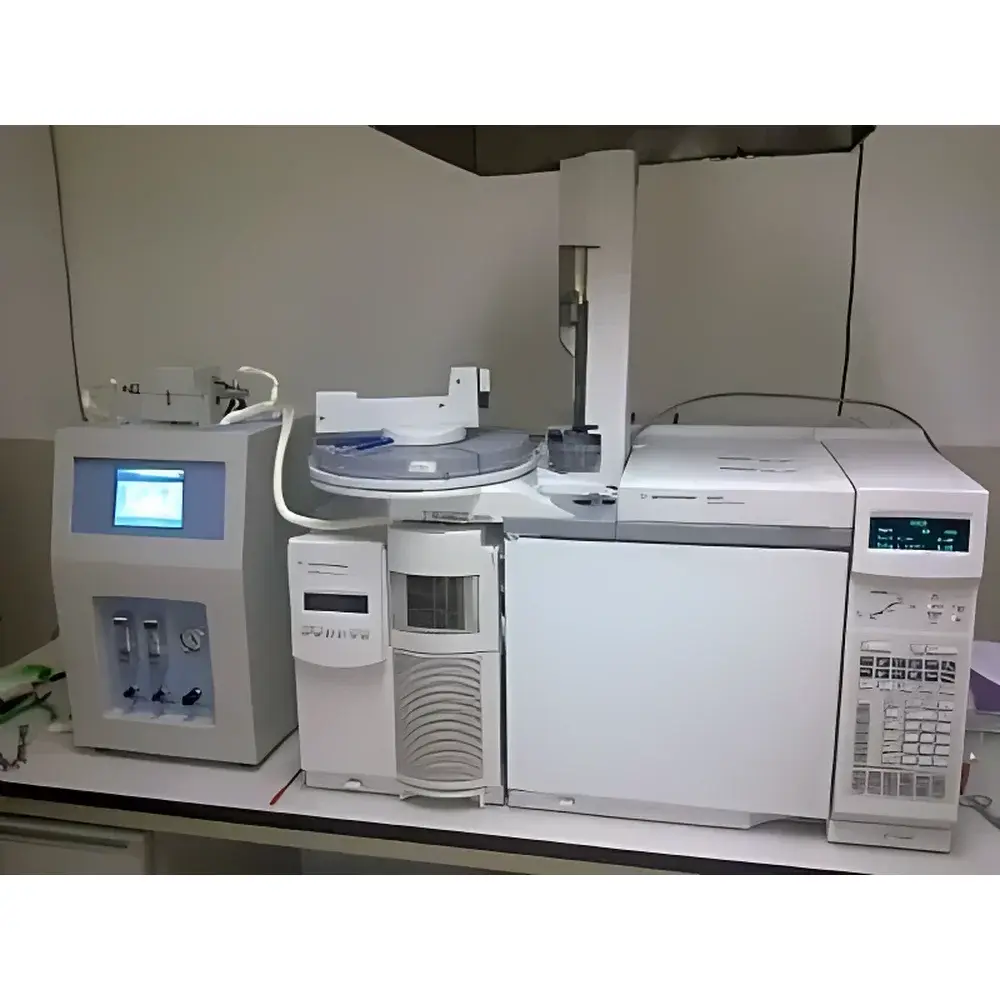
- Universal GC/GC–MS compatibility: Equipped with standard 1/8″ or 1/4″ compression fittings and TTL/RS-232 synchronization outputs to trigger GC oven start, detector acquisition, and data system logging simultaneously with injection.
- Siliconized stainless-steel flow path: Internal tubing and valves undergo rigorous silanization to minimize active site adsorption, ensuring low blank levels and high recovery for polar and reactive VOCs.
Sample Compatibility & Compliance
The AutoTDS-III accepts industry-standard 6 mm OD × 89 mm length sorbent tubes (e.g., Markes UNITY, PerkinElmer, or custom-packed beds) and supports both single-tube and sequential multi-tube configurations via optional accessories. It complies with key regulatory methodologies including EPA TO-17 (Determination of Volatile Organic Compounds in Ambient Air Using Active Sampling Onto Sorbent Tubes), HJ 644–2013 (Determination of VOCs in Ambient Air by Sorbent Tube Sampling–Thermal Desorption–GC–MS), HJ/T 400–2007 (Sampling and Analysis of VOCs and Carbonyls in Vehicle Interiors), and GB/T 18883–2022 (Indoor Air Quality Standard). Its design supports GLP-compliant workflows: full audit trail logging (via optional software), user-access-level controls, and method parameter locking are available through the companion TouchDesorb™ control suite.
Software & Data Management
Control is executed via TouchDesorb™ v3.x, a Windows-based application supporting method creation, sequence scheduling, real-time diagnostics, and event-triggered data export (CSV, XML). The software records timestamped temperature profiles, valve timing logs, and fault codes for full traceability. Optional 21 CFR Part 11 compliance packages include electronic signatures, role-based access control, and immutable audit trails—enabling use in regulated environments requiring FDA, ISO/IEC 17025, or CNAS accreditation. Raw thermal desorption events are time-stamped and synchronized with GC acquisition signals to ensure unambiguous chromatographic alignment.
Applications
The AutoTDS-III is routinely deployed in national CDC laboratories for ambient and workplace air monitoring; municipal environmental monitoring stations conducting routine VOC surveillance per HJ 644–2013; automotive OEM testing labs evaluating interior material emissions (VOCs and aldehydes); and third-party IAQ certification providers validating compliance with GB/T 18883–2022. Its cold-trap sensitivity enables detection of sub-pptv (ng/m³) concentrations of target analytes in complex matrices such as indoor air, vehicle cabin air, and industrial stack emissions—without preconcentration dilution or derivatization.
FAQ
Does the AutoTDS-III support multi-tube sequential analysis?
Yes—while the base configuration accommodates one tube per run, optional rotary autosampler modules (up to 20 positions) are available for unattended batch processing.
Is liquid nitrogen required for cryo-focusing?
No—the system uses a thermoelectric (Peltier) cooler capable of reaching −30 °C continuously without consumables or external cryogens.
Can I integrate this unit with my existing Agilent or Thermo GC–MS system?
Yes—standard TTL synchronization, analog voltage triggers, and RS-232 serial communication protocols ensure seamless integration with all major GC and GC–MS platforms.
What sorbent tube types are validated for use?
Tenax TA, Carbopack B/C, Carboxen 1000, and mixed-bed tubes (e.g., Tenax GR + Carbotrap) are fully supported; tube conditioning and bake-out routines are programmable within the method editor.
How is system performance verified?
Built-in leak-check routines, temperature calibration verification points, and certified reference standards (e.g., TO-17 test mix) are recommended for quarterly performance qualification per ISO 16000-6 and ASTM D6196 protocols.





