
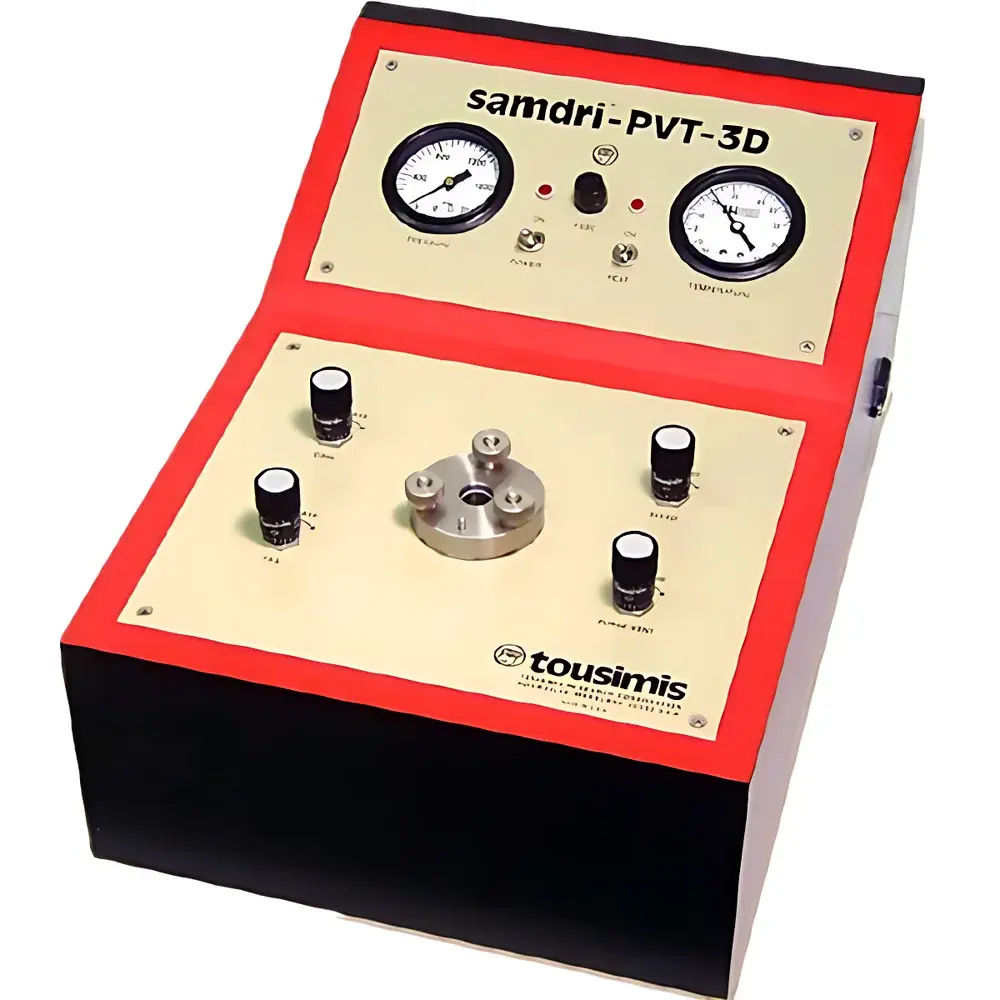
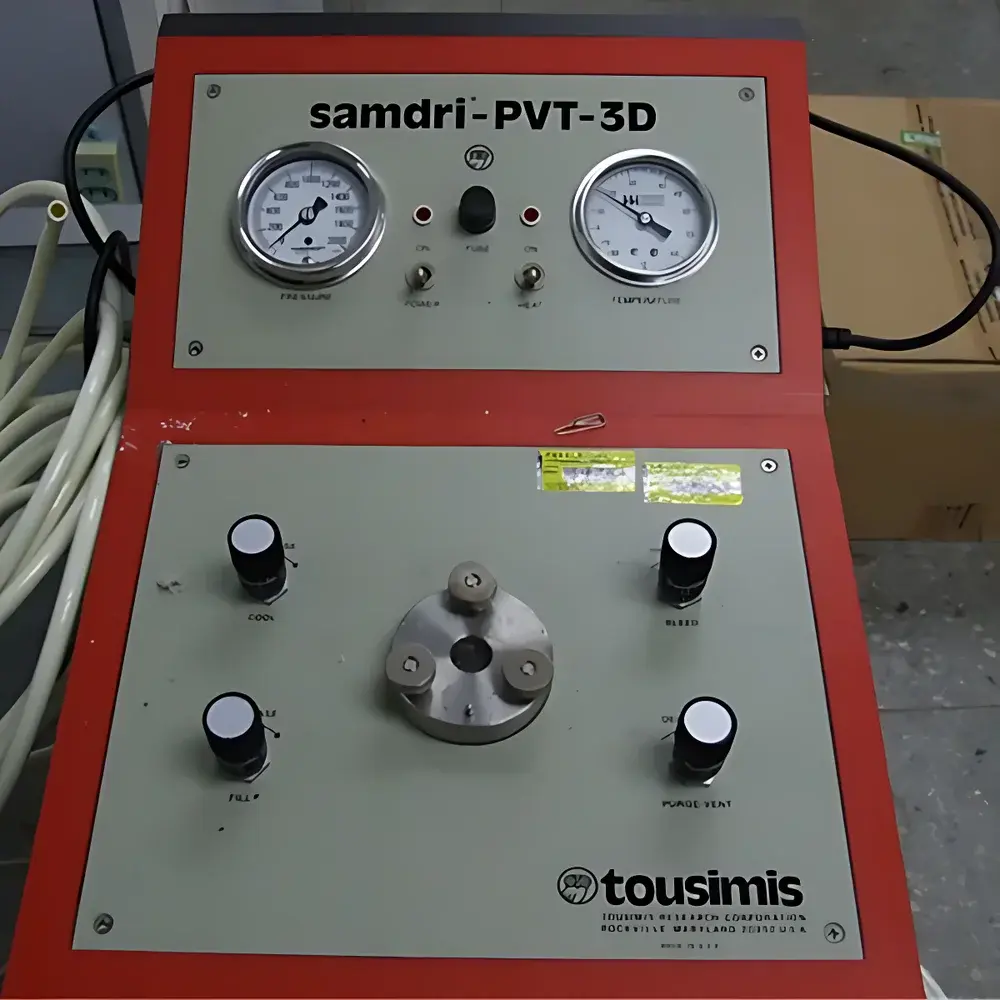
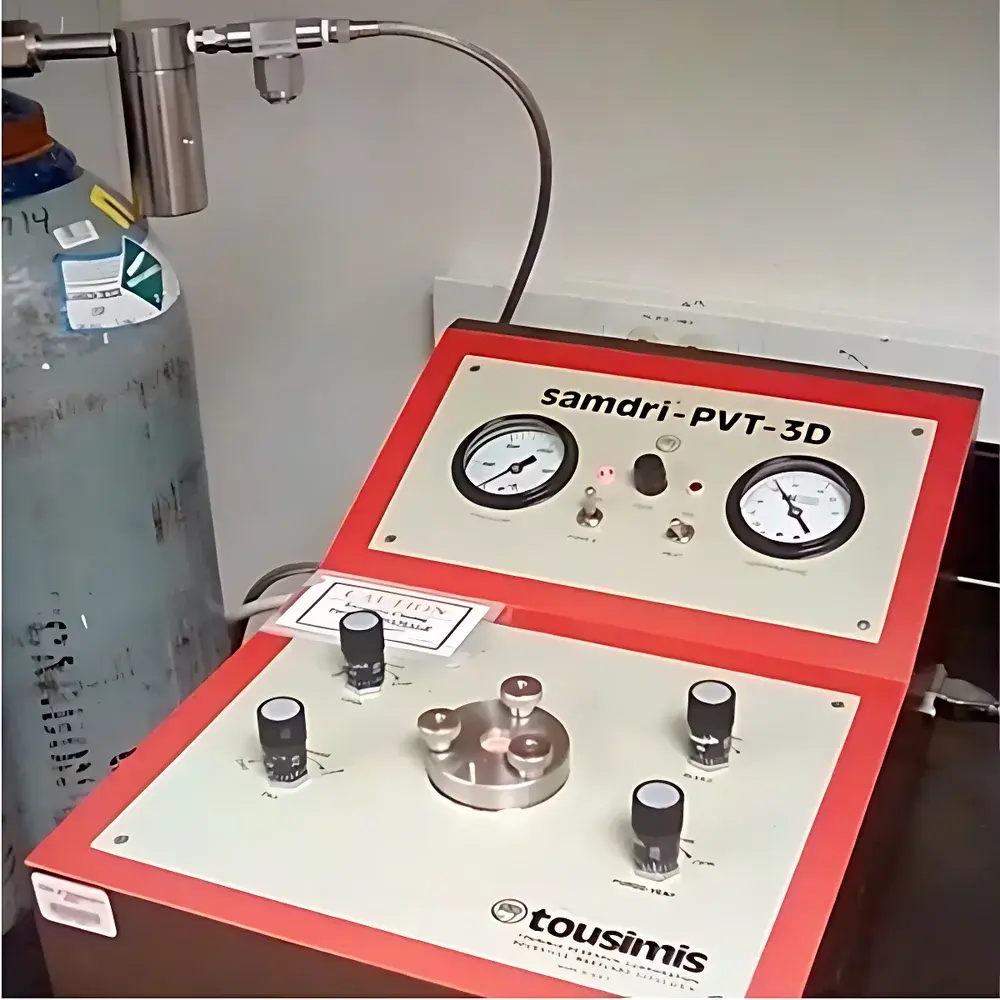
Tousimis SAMDRI-PVT-3D Critical Point Dryer
| Brand | Tousimis |
|---|---|
| Origin | USA |
| Model | SAMDRI-PVT-3D |
| Chamber ID | 1.25" |
| Temp Range | -30 °C to 60 °C |
| Pressure Range | 0–2,000 psi |
| Control | Fully Automated Temperature & Pressure Regulation |
| Flow Control | Micrometer-Adjustable Needle Valve |
| Cooling Time | ~1 min (from ambient) |
| Chamber Access | Top-Loading with View Window |
| Internal Surface | CO₂- and High-Purity Ethanol-Compatible Materials |
| Filtration | Integrated Particulate Filter |
| Optional | Condenser for Ethanol Recovery & Noise Reduction |
Overview
The Tousimis SAMDRI-PVT-3D Critical Point Dryer is a precision-engineered benchtop instrument designed for the gentle, high-fidelity drying of delicate hydrated or solvent-suspended specimens—particularly those with nanoscale porosity, fragile 3D architectures, or surface-sensitive microstructures. It operates on the physical principle of supercritical fluid processing, leveraging carbon dioxide (CO₂) as the drying medium. At its critical point (31.1 °C, 1072 psi), CO₂ exhibits zero interfacial tension between liquid and gas phases, eliminating capillary forces that cause structural collapse during conventional air-drying or freeze-drying. This enables preservation of native morphology in biological tissues, hydrogels, aerogels, MOFs, graphene monolayers, MEMS devices, and semiconductor wafers—without shrinkage, cracking, or surface distortion. Unlike water-based critical point drying (requiring 374 °C and 3212 psi), CO₂-based drying is thermally benign and compatible with temperature-sensitive biomolecules and polymeric matrices.
Key Features
- Compact top-loading chamber (1.25″ internal diameter) with borosilicate viewport for real-time process monitoring
- Micrometer-calibrated needle valve enabling reproducible, fine-grained control of CO₂ flow rate during liquid exchange and venting cycles
- Fully automated temperature and pressure regulation via integrated PID-controlled heating/cooling system and high-accuracy transducers
- Chemically resistant internal surfaces engineered for repeated exposure to liquid CO₂ and high-purity ethanol or acetone—key transition solvents
- Integrated particulate filter upstream of the chamber inlet, protecting both sample integrity and precision valve components from contamination
- Rapid thermal equilibration: chamber cools from ambient to sub-zero temperatures in approximately 60 seconds, minimizing cycle time
- Standard safety architecture including pressure relief valves, redundant overpressure cutoffs, and fail-safe interlocks compliant with ASME B31.3 process piping standards
- Optional condenser module available for ethanol recovery during purge/bleed steps—reducing solvent consumption and mitigating acoustic emissions
Sample Compatibility & Compliance
The SAMDRI-PVT-3D supports diverse specimen types requiring ultra-low-stress dehydration: fixed biological tissues (e.g., plant stomata, neural tissue, bacterial biofilms), soft hydrogels, silica aerogels, metal–organic frameworks (MOFs), carbon nanotube arrays, exfoliated 2D materials (graphene, h-BN), and MEMS/NEMS devices. Its chamber geometry accommodates standard SEM stubs, TEM grids, silicon wafers up to 1.25″ diameter, and custom sample holders. The system adheres to widely referenced laboratory protocols—including ASTM E2923 (standard guide for critical point drying of biological specimens), ISO 16700 (electron microscopy specimen preparation), and USP <1085> (guidance on lyophilization and alternative drying methods). While not certified for GMP manufacturing environments, its deterministic process parameters, audit-ready log files, and repeatable endpoint conditions support GLP-compliant documentation workflows.
Software & Data Management
The SAMDRI-PVT-3D operates via front-panel tactile controls with real-time digital displays of chamber temperature, pressure, and elapsed time. All process variables—including soak durations, ramp rates, hold times at critical conditions, and venting profiles—are manually configured per protocol. While it lacks embedded touchscreen software or PC connectivity, its mechanical repeatability and calibrated hardware enable strict adherence to validated SOPs. Process logs (temperature/pressure vs. time) can be recorded externally using third-party data acquisition systems interfaced via analog outputs (0–5 V or 4–20 mA). For laboratories requiring electronic records compliance under FDA 21 CFR Part 11, integration with LIMS or ELN platforms is achievable through optional analog-to-digital signal converters and timestamped logging modules.
Applications
- Preparation of high-resolution SEM/TEM specimens from aqueous suspensions without artifact introduction
- Drying of porous nanomaterials (e.g., MOFs, mesoporous silica) while retaining pore volume and BET surface area
- Stabilization of cryo-structured hydrogels for subsequent XRD, SAXS, or mechanical testing
- Post-lithography release drying of MEMS cantilevers and microfluidic channels to prevent stiction
- Processing of semiconductor substrates prior to ALD or CVD deposition where residual moisture must be eliminated without thermal degradation
- Preservation of delicate botanical structures (e.g., pollen, diatom frustules) for taxonomic imaging and metrology
FAQ
What solvents are compatible with the SAMDRI-PVT-3D for sample exchange prior to CO₂ infiltration?
Ethanol and acetone are the most commonly used transitional solvents due to their miscibility with both water and liquid CO₂. Isopropanol may also be employed depending on sample chemistry.
Can the system dry multiple samples simultaneously?
Yes—the 1.25″ chamber accommodates standard multi-position SEM stubs or custom sample racks, enabling parallel processing of up to five 12 mm diameter specimens per run.
Is the SAMDRI-PVT-3D suitable for cleanroom use?
The base model is rated for general laboratory environments. For Class 100 or ISO 5 cleanrooms, Tousimis offers the Autosamdri®-931 series with stainless-steel housings, HEPA-filtered purge lines, and electrostatic discharge (ESD)-safe construction.
How often should the CO₂ filter be replaced?
Under typical usage (10–15 runs/week), the external CO₂ particulate/moisture filter should be inspected monthly and replaced every 6 months—or sooner if pressure drop exceeds 15 psi across the filter element.
Does the instrument require special ventilation or exhaust handling?
CO₂ venting must occur in a well-ventilated space or via dedicated ducting; accumulation in confined areas poses an asphyxiation hazard. Optional condenser integration reduces ethanol vapor emissions and associated VOC concerns.



