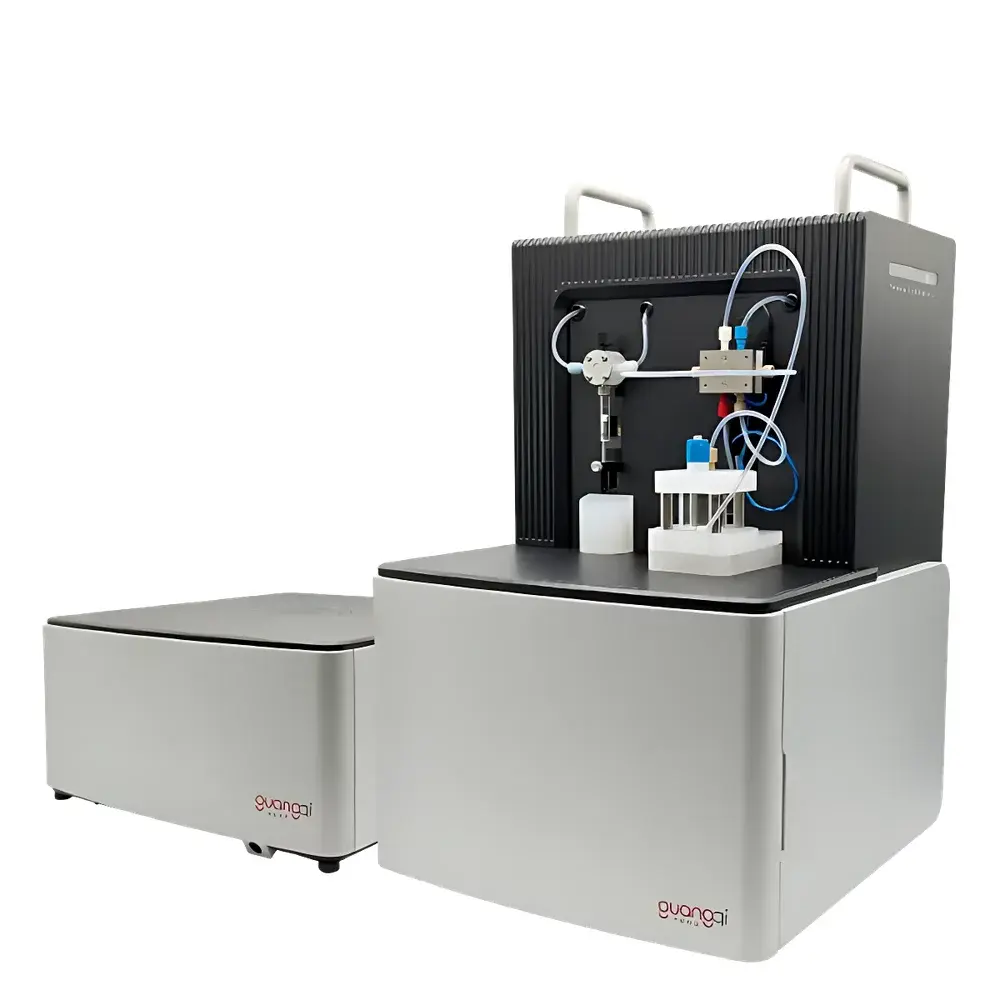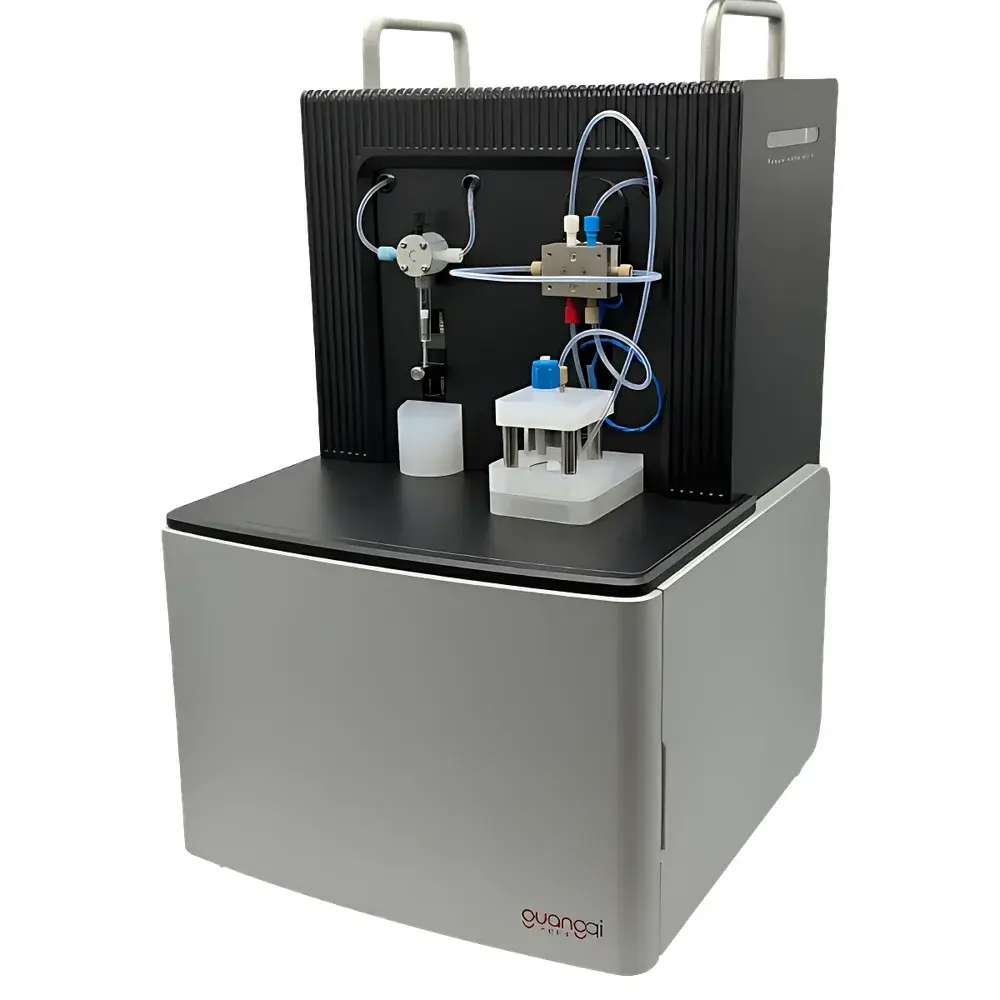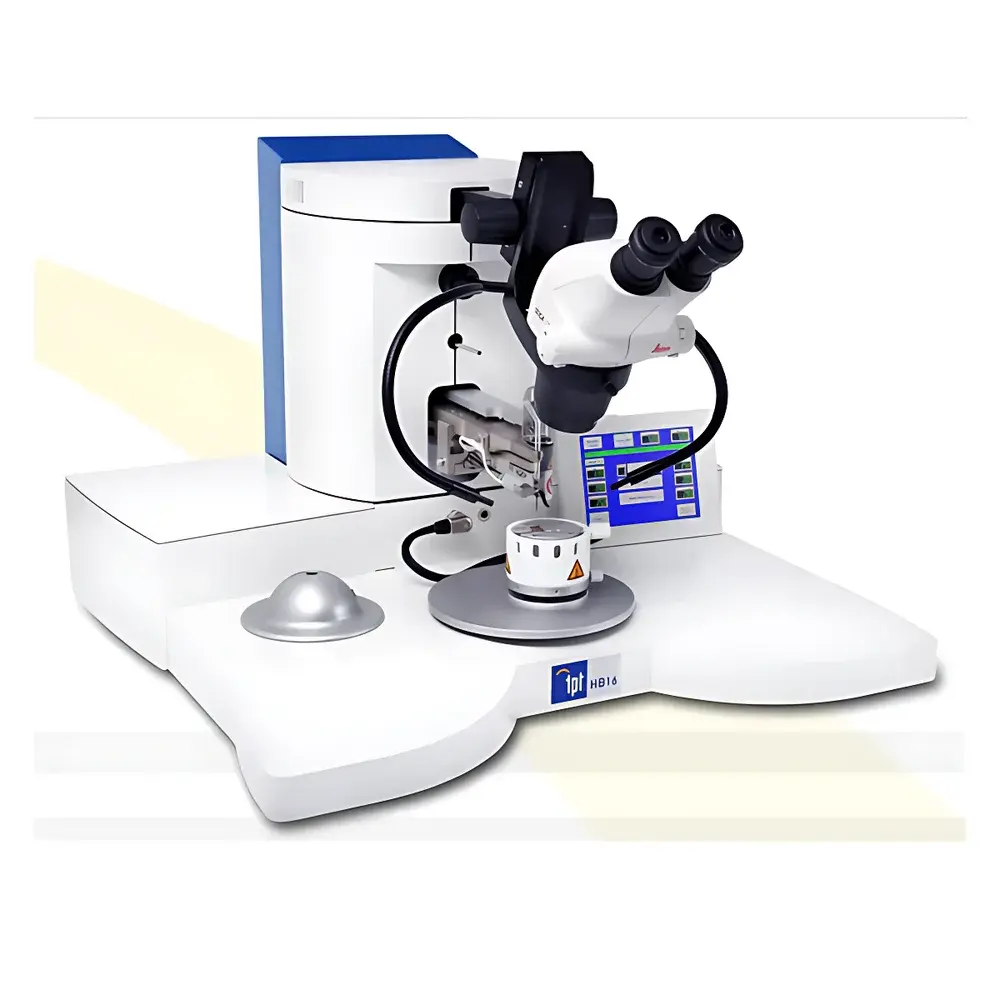
TPT HB10 Semi-Automatic Thermosonic Wire Bonder
| Brand | TPT |
|---|---|
| Origin | Germany |
| Model | TPT-HB10 |
| Bonding Methods | Wedge-Wedge, Ball-Wedge, Ribbon & Bump Bonding |
| Wire Diameter Range | 17–75 µm (gold/aluminum) |
| Ribbon Size | up to 25 × 250 µm |
| Ultrasonic Frequency | 62 kHz, PLL-controlled |
| Ultrasonic Power Output | 0–5 W |
| Bond Time | 0–10 s |
| Bond Force | 5–150 cNm (350 cNm optional) |
| Z-Axis Stroke | 17 mm |
| Bond Head Cavity Depth | 16 mm |
| Bond Arm Length | 165 mm |
| Temperature Control | up to 250 °C ±1 °C |
| Touchscreen Interface | 6.5" LCD |
| Program Storage | 100 user-defined recipes |
| Power Supply | 100–240 V AC ±10%, 50/60 Hz, max. 10 A |
| Dimensions (W×D×H) | 680 × 640 × 490 mm |
| Net Weight | 42 kg |
Overview
The TPT HB10 Semi-Automatic Thermosonic Wire Bonder is an engineered solution for precision interconnect formation in semiconductor packaging R&D, prototyping, and low-volume production environments. Designed around thermosonic bonding principles—combining controlled heat, ultrasonic energy, and mechanical force—the HB10 enables reliable metallurgical bonding of gold, aluminum, and copper wires (17–75 µm), ribbon (up to 25 × 250 µm), and bump structures onto die pads and substrate metallizations. Its compact benchtop footprint (680 × 640 × 490 mm) and modular head architecture support rapid reconfiguration between ball-wedge, wedge-wedge, and ribbon bonding modes via simple capillary exchange—eliminating the need for multiple dedicated tools. The system operates under a closed-loop control architecture: real-time PLL-synchronized 62 kHz ultrasonic transduction ensures consistent energy delivery; motor-driven Z-axis actuation (17 mm stroke, 6:1 mechanical advantage) guarantees repeatable bond force application (5–150 cNm standard, 350 cNm optional); and integrated temperature regulation (up to 250 °C ±1 °C) maintains thermal stability critical for oxide-breaking and diffusion kinetics during thermosonic cycles.
Key Features
- Multi-mode bonding capability: seamless transition between ball-wedge, wedge-wedge, ribbon, and bump bonding using standardized capillaries and tooling
- Motorized Z-axis with high-resolution positional feedback—enabling precise force control and reproducible bond height consistency across heterogeneous substrates
- 6.5″ industrial-grade LCD touchscreen interface with intuitive parameter navigation, real-time waveform preview, and on-screen recipe editing
- Electronic ball diameter control with closed-loop monitoring—reducing operator dependency and improving first-pass yield in fine-pitch applications
- Integrated pull-test module option (ASTM F459-compliant) for post-bond mechanical validation without external instrumentation
- USB-based recipe backup and firmware update pathway—supporting GLP-aligned documentation practices and audit-ready data traceability
- Deep-cavity bond head (16 mm clearance) accommodating high-profile packages, stacked dies, and thick substrates common in power electronics and MEMS assembly
- Motorized wire feed and clamp actuation—minimizing manual intervention and enhancing process repeatability in extended-run qualification studies
Sample Compatibility & Compliance
The HB10 accommodates a broad spectrum of substrate geometries and material systems encountered in advanced packaging workflows—including FR-4, ceramic, silicon, and organic substrates with pad metallizations of Al, Au, Cu, or NiPdAu. It supports bonding to both flat and stepped topographies within its 10 mm XY micro-adjustment range. All motion control subsystems comply with IEC 61000-6-2 (immunity) and IEC 61000-6-4 (emission) standards. When configured with audit-trail-enabled software and electronic signature modules, the system meets foundational requirements for FDA 21 CFR Part 11 compliance in regulated development labs. Process parameters are fully exportable in CSV format for integration into LIMS or MES platforms supporting ISO 9001 and IATF 16949 quality management frameworks.
Software & Data Management
The HB10 runs on TPT’s proprietary BondControl™ firmware, which provides deterministic real-time execution of up to 100 stored bonding recipes. Each recipe includes timestamped parameter sets (ultrasonic power, bond time, force ramp profile, temperature ramp rate, dwell duration), along with operator ID and machine serial logging. USB 2.0 ports enable secure local backup of recipes, calibration logs, and event histories—retaining full metadata integrity without cloud dependency. Optional Ethernet connectivity supports remote diagnostics and centralized fleet monitoring via SNMP-compatible network management systems. Firmware updates follow a dual-signature verification protocol to ensure code authenticity and prevent unauthorized modification—a requirement aligned with NIST SP 800-193 guidelines for hardware-rooted trust.
Applications
- R&D validation of new wire alloys (e.g., palladium-coated copper, silver alloys) under controlled thermosonic conditions
- Qualification of ultra-fine-pitch (<50 µm pitch) bonding processes for image sensor and RFIC packaging
- Process development for high-thermal-conductivity substrates requiring precise temperature ramping and hold profiles
- Reliability testing including temperature cycling, HAST, and mechanical shock—using pull-tested bonds as failure metric inputs
- Low-volume manufacturing of medical-grade implantable devices where lot traceability and parameter lock-down are mandatory
- Education and training in semiconductor packaging laboratories—leveraging its intuitive UI and safe operating envelope
FAQ
Does the HB10 support copper wire bonding?
Yes—the system is fully compatible with bare and palladium-coated copper wire (17–75 µm), provided appropriate capillary geometry, ultrasonic tuning, and ambient humidity control protocols are applied per JEDEC JEP170 recommendations.
Can the HB10 be integrated into a cleanroom environment?
The unit meets ISO Class 5 particulate emission specifications when operated with optional HEPA-filtered exhaust ducting and static-dissipative work surface grounding kits.
Is GMP/GLP documentation support available?
TPT provides IQ/OQ documentation templates, calibration certificates traceable to PTB (Physikalisch-Technische Bundesanstalt), and optional 21 CFR Part 11-compliant software validation packages upon request.
What maintenance intervals are recommended?
Ultrasonic transducer performance verification every 500 operational hours; capillary wear inspection before each shift; annual full-system metrology recalibration by certified TPT service engineers.