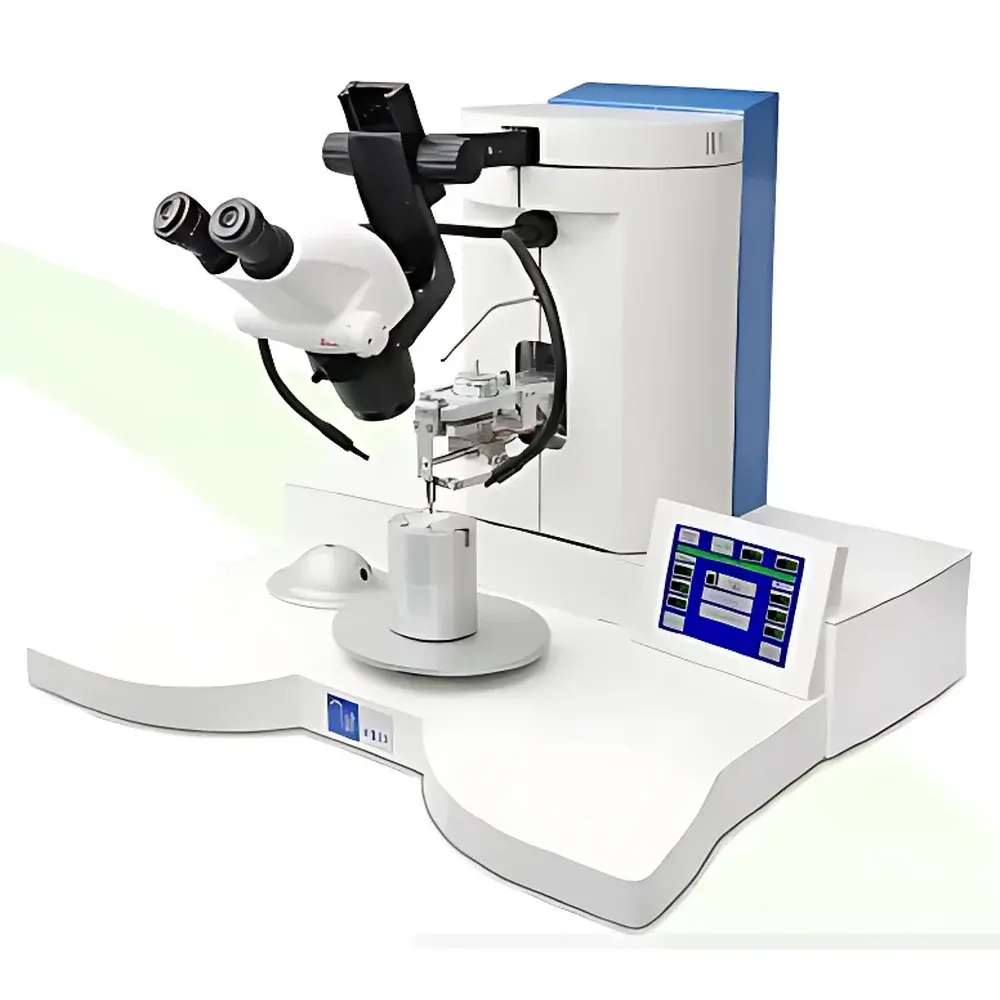
TPT HB30 Heavy Wire Bonder
| Brand | TPT |
|---|---|
| Origin | Germany |
| Model | HB30 |
| Wire Diameter Range | 100–500 µm (Al) |
| Bonding Force | 50–1500 cN |
| Ultrasonic Power | 50 W |
| Bond Time | 0–10 s |
| Motorized Z-Axis Stroke | 20 mm |
| Motorized Y-Axis Retract Travel | up to 17 mm |
| Micro-Stage X-Y Travel | 15 mm |
| Mechanism Ratio (X | Y): 6:1 (3:1 optional) |
| Touchscreen | 6.5" LCD |
| Program Storage | 100 recipes |
| Lighting | Dual integrated fiber-optic illumination |
| Bond Modes | Semi-automatic, step-by-step, and manual |
| Wire Cut | Front-end shear cut |
| Wire Feed Angle | 90° |
| Power Supply | 100–240 V ±10%, 50/60 Hz, max. 10 A |
| Dimensions (W×D×H) | 680 × 640 × 490 mm |
| Net Weight | 50 kg |
Overview
The TPT HB30 Heavy Wire Bonder is a precision-engineered, benchtop ultrasonic wire bonding system designed for reliable interconnection of high-current semiconductor devices using thick aluminum wires (100–500 µm). Built on a robust mechanical architecture with motorized Z- and Y-axis actuation, the HB30 implements controlled thermosonic bonding—combining ultrasonic energy, precise bond force, and thermal input (via heated stage, optional)—to achieve consistent metallurgical bonds on power modules, IGBTs, SiC diodes, and other high-power discrete packages. Its compact footprint and modular design make it suitable for R&D laboratories, pilot-line validation, low-volume production, and process development environments where repeatability, traceability, and operator ergonomics are critical. The system operates under standard cleanroom-compatible conditions and integrates seamlessly into controlled manufacturing workflows compliant with ISO 9001 and automotive-grade quality protocols (e.g., AEC-Q100).
Key Features
- Motorized Z-axis bonding head with 20 mm stroke and fine positional resolution for repeatable bond height control and dynamic force application.
- Motorized Y-axis for programmable wire loop retraction—up to 17 mm travel—enabling precise arc geometry tuning and reduced wire sweep in high-density layouts.
- 6:1 (standard) or 3:1 (optional) X-Y mechanical reduction ratio for enhanced spatial resolution during alignment and bonding steps.
- 6.5-inch high-contrast LCD touchscreen interface with intuitive graphical navigation, real-time parameter feedback, and context-sensitive soft keys.
- Dual integrated fiber-optic illumination system providing uniform, shadow-free viewing across the entire field of view—critical for accurate capillary positioning and post-bond inspection.
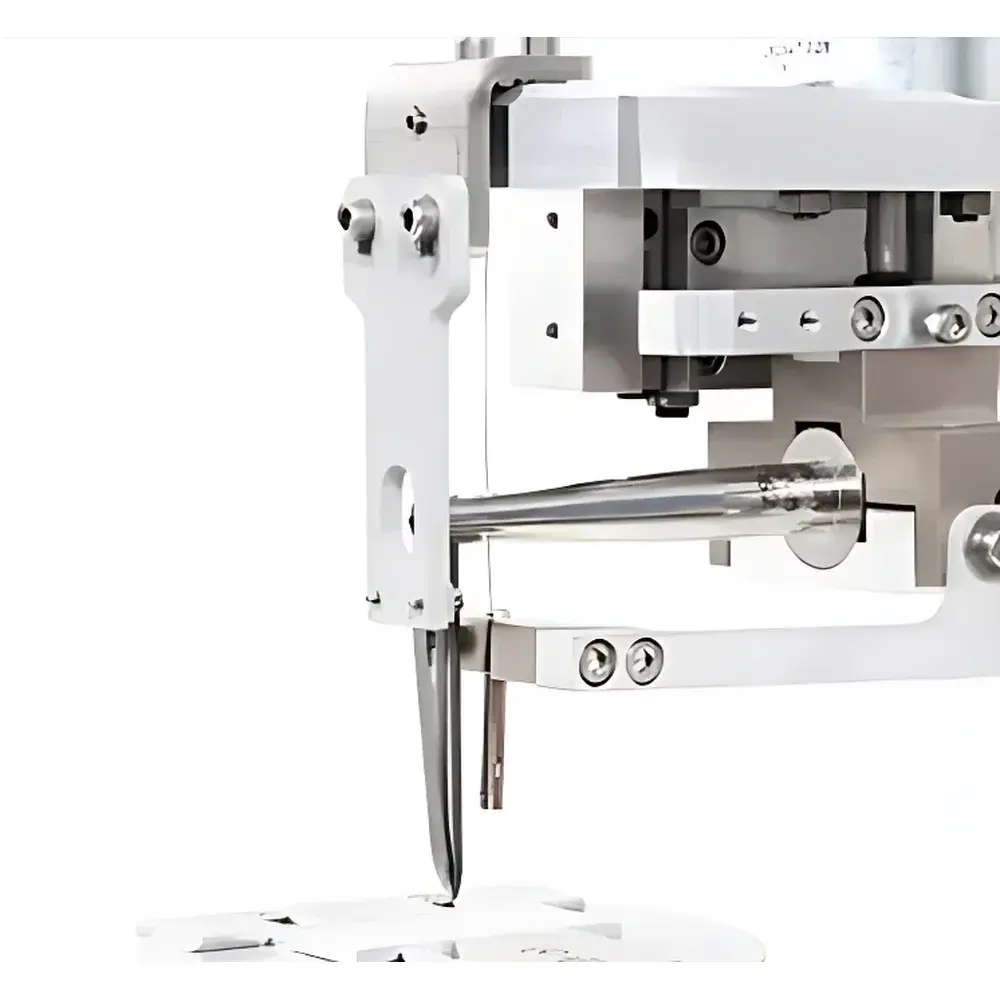
- Front-end wire shear mechanism with 90° feed angle ensures clean, orthogonal cutoff and minimizes wire deformation prior to bonding.
- PLL-based ultrasonic generator delivering stable 50 W output across the full 0–10 s bond time range, supporting both soft and hard metallurgical interfaces.
- Onboard storage for up to 100 user-defined bonding recipes, each with independent settings for force, time, ultrasonics, arc profile, and step sequence.
Sample Compatibility & Compliance
The HB30 accommodates standard 6″ and 8″ substrate carriers and supports die sizes from 1 mm² to >200 mm². It is compatible with aluminum wire (100–500 µm), including alloyed variants (e.g., Al-1%Si), and can be adapted—via optional tooling—for copper wire bonding with appropriate surface preparation. All motion axes meet ISO 230-2 positional accuracy standards. The system complies with CE marking requirements (2014/30/EU EMC Directive and 2014/35/EU Low Voltage Directive) and conforms to IEC 61000-6-2/6-3 immunity and emission limits. For regulated environments, audit trails and electronic signature support are available via optional software modules aligned with FDA 21 CFR Part 11 and EU Annex 11 principles.
Software & Data Management
The embedded control firmware provides real-time logging of all critical bonding parameters—including actual bond force, ultrasonic amplitude, bond time, and Z-position—with timestamping and recipe ID tagging. Exportable CSV logs enable statistical process control (SPC) integration and root-cause analysis. Optional PC-based TPT-BondView software extends functionality with remote monitoring, recipe synchronization across multiple units, Gage R&R study templates, and GLP/GMP-compliant report generation. Data integrity safeguards include password-protected access levels, change history tracking, and non-volatile memory retention during power loss.
Applications
- Power semiconductor packaging: bonding of Al wires to Cu or Ni-plated pads in IGBT modules, MOSFETs, and SiC Schottky diodes.
- R&D process qualification: evaluation of new wire alloys, pad metallizations (e.g., Al/NiV/Cu), and substrate materials under varied thermosonic conditions.
- Failure analysis labs: reproducible re-bonding of lifted leads for cross-sectional analysis and bond strength correlation studies.
- University microelectronics labs: teaching platform for wire bonding fundamentals, process optimization, and reliability testing (e.g., temperature cycling, HAST).
- Automotive electronics: pre-production validation of bonding processes meeting AEC-Q200 stress test requirements.
FAQ
What wire diameters does the HB30 support?
The HB30 is optimized for aluminum wire ranging from 100 µm to 500 µm in diameter. Custom capillary configurations are available upon request for specialized wire types.
Is thermal control integrated into the HB30 platform?
The base configuration includes ambient-stage operation. A heated stage (up to 200°C) and closed-loop temperature controller are available as factory-installed options.
Can the HB30 perform stitch bonding or wedge-wedge bonding?
The HB30 is configured for ball-wedge bonding with standard capillaries. Stitch bonding requires additional tooling and firmware licensing; wedge-wedge capability is not supported in this model.
Does the system support automated vision alignment?
Vision-assisted alignment is not included in the standard HB30. However, the machine features RS-232 and Ethernet interfaces for third-party vision system integration via custom API scripting.
What maintenance intervals are recommended for the ultrasonic transducer?
TPT recommends transducer performance verification every 500 operating hours, with recalibration advised annually or after any mechanical impact event affecting the bonding head assembly.