
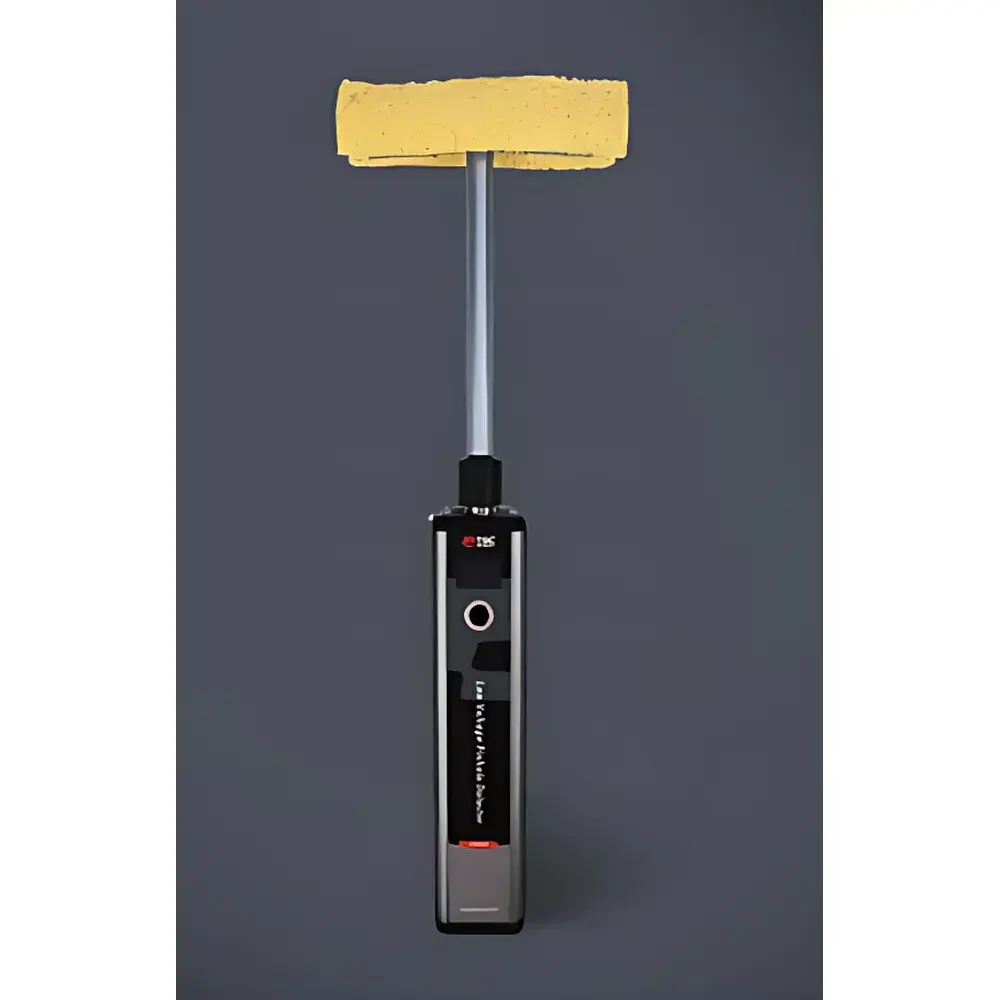
TQC LD8100/LD8105 Low-Voltage Holiday Detector
| Origin | Netherlands |
|---|---|
| Manufacturer Type | Authorized Distributor |
| Origin Category | Imported |
| Model | LD8100 / LD8105 |
| Price | Upon Request |
| Voltage Range (LD8100) | 9 V, 90 V |
| Voltage Range (LD8105) | 9 V, 24 V, 67.5 V, 90 V |
| Max Coating Thickness Detection | 500 µm |
| Voltage Accuracy | ±5% |
| Minimum Detectable Resistance | 100 kΩ |
| Feedback Modes | Visual (LCD), Audible (Buzzer), Tactile (Vibration, optional headphone support) |
| Safety Feature | Continuity Check of Return Lead |
| Compliance Standards | ISO 8289-A, ISO 14654:1999, BS 7793-2:1996, ASTM D5162-A, JIS K 6766:2008, TM0384-2002 |
Overview
The TQC LD8100 and LD8105 Low-Voltage Holiday Detectors are precision-engineered instruments designed for non-destructive detection of discontinuities—including pinholes, holidays, thin spots, and bare substrate areas—in non-conductive coatings applied over electrically conductive substrates. Operating on the principle of low-voltage wet-sponge continuity testing, these detectors apply a controlled DC voltage across a moistened sponge electrode traversed over the coated surface. When the sponge encounters a breach in the coating, current flows through the defect to the grounded substrate, completing the circuit and triggering an immediate response. This method is standardized for coatings up to 500 µm dry film thickness (DFT) and is widely specified in protective coating inspection protocols for infrastructure, marine, pipeline, and industrial maintenance applications.
Key Features
- Multi-voltage selection: LD8100 offers fixed 9 V and 90 V outputs; LD8105 provides four calibrated voltage levels (9 V, 24 V, 67.5 V, 90 V) to match coating thickness and resistivity requirements per ISO 8289-A and ASTM D5162-A.
- Integrated return-lead continuity monitoring: Automatically verifies electrical integrity of the grounding loop prior to and during measurement—preventing false negatives due to poor ground connection.
- Real-time multi-modal feedback: Simultaneous visual indication (backlit LCD display), audible alert (adjustable buzzer), and tactile vibration; optional headphone output supports noise-sensitive environments or personal hearing protection compliance.
- Intelligent power management: Adaptive screen dimming, programmable standby mode, and auto-shutdown after 10 minutes of inactivity extend battery life without compromising operational readiness.
- Onboard diagnostics: Self-test sequence at startup confirms sensor functionality, voltage regulation stability, and feedback system integrity—ensuring measurement reliability before field deployment.
- Pinhole counter with memory: Logs and displays cumulative defect count per inspection zone, supporting traceability and reporting in quality documentation workflows.
Sample Compatibility & Compliance
These detectors are validated for use on solvent-based, waterborne, and high-build epoxy, polyurethane, zinc-rich, and fusion-bonded epoxy (FBE) coatings applied to steel, aluminum, and other conductive metallic substrates. They are not intended for use on non-conductive substrates (e.g., concrete, fiberglass) or insulative underlayers without verified grounding pathways. The LD8100/LD8105 series conforms to international holiday detection standards including ISO 8289-A (low-voltage wet-sponge method), ISO 14654:1999 (coating defect detection), BS 7793-2:1996 (protective coating inspection), ASTM D5162-A (standard practice for detecting discontinuities), JIS K 6766:2008 (Japanese standard for coating pinhole testing), and TM0384-2002 (transportation infrastructure specification). All units undergo factory calibration traceable to NIST-equivalent national metrology institutes and include a certificate of conformance.
Software & Data Management
While the LD8100/LD8105 operate as standalone handheld instruments without onboard data logging, they support integration into digital inspection workflows via manual entry into compliant QA/QC platforms such as SAP QM, ETQ Reliance, or TrackWise. The clear visual display, consistent alarm thresholds, and repeatable voltage selection enable auditable pass/fail decisions aligned with GLP and GMP documentation practices. For regulated industries (e.g., offshore oil & gas, potable water tanks), users may pair the detector with external certified tablets running electronic checklist applications that enforce procedural adherence—including mandatory ground-check verification before test initiation—as required under API RP 571 and ISO/IEC 17020 audit frameworks.
Applications
- Pre-commissioning inspection of internal tank linings in chemical storage facilities and wastewater treatment plants.
- Quality assurance during shop-applied coating of structural steel components for bridges and wind turbine towers.
- Field verification of coating integrity on buried pipelines prior to backfill and cathodic protection activation.
- Routine maintenance surveys of marine ballast tanks, cargo holds, and offshore platform decks.
- Validation of anti-corrosion systems in pharmaceutical cleanroom wall and floor coatings where pinhole-free barriers are critical to contamination control.
FAQ
What is the maximum recommended coating thickness for reliable detection with the LD8105?
The instrument is validated for coatings up to 500 µm DFT when tested using the appropriate voltage setting per ISO 8289-A Annex A guidelines.
Does the device require calibration certification for ISO 9001 audits?
Yes—each unit ships with a factory calibration certificate referencing traceable standards; annual recalibration by an accredited laboratory is recommended to maintain compliance with ISO/IEC 17025.
Can the LD8100 detect defects in powder-coated surfaces?
Yes, provided the powder coating is fully cured, non-porous, and applied over a conductive substrate with verified grounding continuity.
Is the wet-sponge method suitable for underwater or submerged inspections?
No—the method requires direct surface contact with a moisture-saturated sponge under ambient atmospheric conditions; it is not rated for submersion or pressurized environments.
How does the return-lead continuity check enhance measurement reliability?
It prevents erroneous “no-fault” readings caused by open-circuit grounding, ensuring every alarm corresponds to an actual coating breach rather than a measurement setup failure.



