
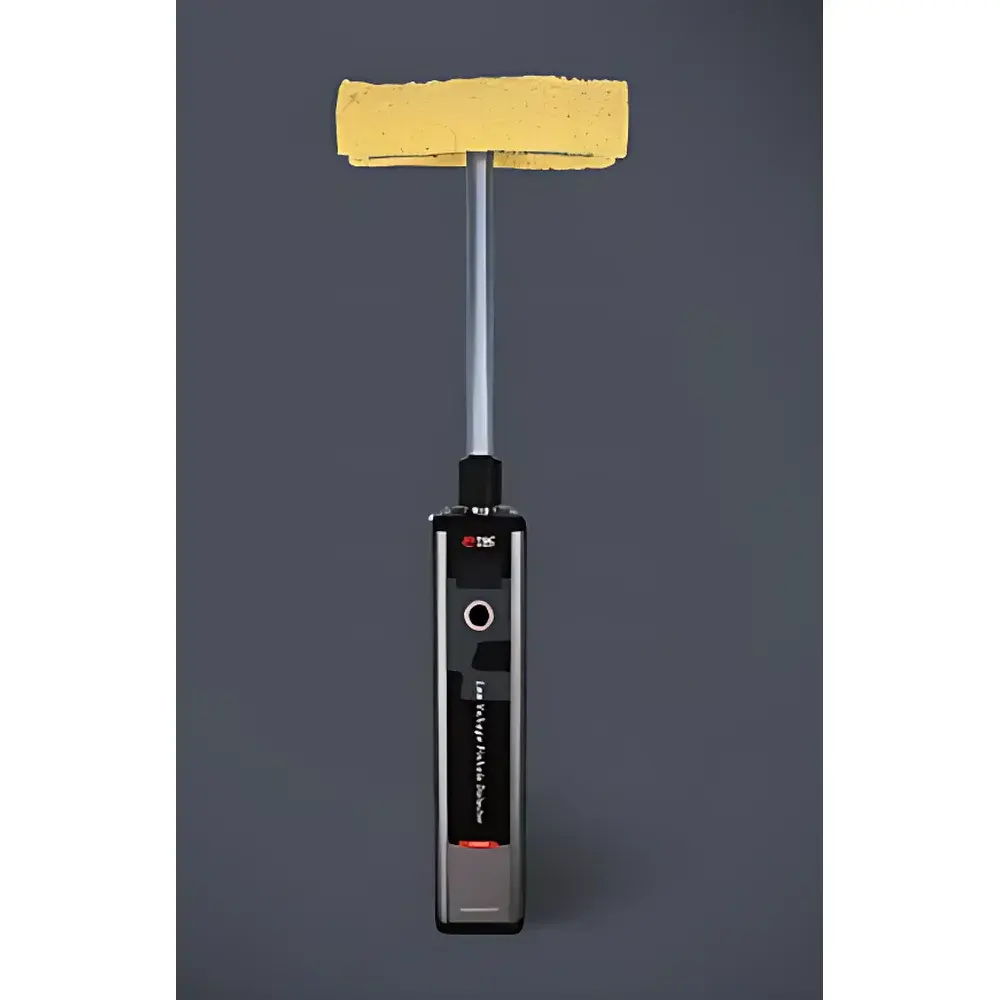
TQC LD8100/LD8105 Low-Voltage Pinhole Detector
| Origin | Netherlands |
|---|---|
| Manufacturer Type | Distributor |
| Origin Category | Imported |
| Model | LD8100 / LD8105 |
| Price | Upon Request |
| Voltage Range (LD8100) | 9 V, 90 V |
| Voltage Range (LD8105) | 9 V, 24 V, 67.5 V, 90 V |
| Max Coating Thickness | 500 µm |
| Voltage Accuracy | ±5% |
| Detection Sensitivity | 100 kΩ at all voltage settings |
| Feedback Modes | Visual (LCD), Audible (buzzer), Tactile (vibration), Optional Audio (headphone output) |
| Safety Feature | Return-lead continuity monitoring |
| Compliance Standards | ISO 8289-A, ISO 14654:1999, BS 7793-2:1996, ASTM D5162-A, JIS K 6766:2008, TM0384-2002 |
Overview
The TQC LD8100 and LD8105 Low-Voltage Pinhole Detectors are precision instruments engineered for non-destructive detection of discontinuities—including pinholes, holidays, thin spots, and localized coating defects—in non-conductive protective coatings applied over electrically conductive substrates. Operating on the principle of low-voltage wet-sponge continuity testing, these detectors apply a controlled DC test voltage across a moistened sponge electrode and the grounded substrate. When the sponge traverses a defect site, current flows through the conductive path formed by the electrolyte (typically tap water or a standardized test solution), completing the circuit and triggering an immediate response. This method is specifically validated for coatings up to 500 µm in thickness and complies with internationally recognized standards for low-voltage holiday detection, including ISO 8289-A and ASTM D5162-A. Unlike high-voltage spark testers, the LD8100/LD8105 series eliminates risk of dielectric breakdown, substrate pitting, or coating damage—making it ideal for quality assurance in maintenance painting, pipeline rehabilitation, tank linings, and marine coating applications where integrity preservation is critical.
Key Features
- Multi-voltage selection: LD8100 offers dual fixed voltages (9 V / 90 V); LD8105 provides four calibrated outputs (9 V, 24 V, 67.5 V, 90 V) for optimized sensitivity across varying coating types and thicknesses.
- Integrated return-lead continuity monitoring ensures reliable grounding before each test cycle—preventing false negatives due to poor substrate contact.
- Real-time defect confirmation via triple-mode feedback: visual (backlit LCD display), audible (programmable buzzer), and tactile (vibration motor); optional headphone output supports noise-sensitive environments.
- Automatic self-diagnostic routine at power-on verifies internal circuit integrity, battery status, voltage calibration, and sensor responsiveness.
- Intelligent power management includes adaptive screen dimming, configurable auto-standby (5–30 min), and automatic shutdown after prolonged inactivity—extending battery life without compromising operational readiness.
- Pinhole counter function logs cumulative defect events per inspection session, supporting traceability and trend analysis in QA/QC documentation.
Sample Compatibility & Compliance
The LD8100/LD8105 is designed for use on conductive substrates—including carbon steel, stainless steel, aluminum, copper, and galvanized surfaces—coated with insulating materials such as epoxies, polyurethanes, vinyl esters, coal-tar enamels, and zinc-rich primers. It is not suitable for non-conductive substrates (e.g., concrete, fiberglass, plastic) unless a conductive backplate or grounding mesh is installed. All operational parameters and test procedures conform to ISO 8289-A (low-voltage wet-sponge method), ISO 14654:1999 (coating defect detection), ASTM D5162-A (standard practice for detecting discontinuities in protective coatings), BS 7793-2:1996 (specification for protective coatings for corrosion protection), JIS K 6766:2008 (Japanese standard for holiday detection), and TM0384-2002 (transportation infrastructure coating inspection protocol). The instrument’s ±5% voltage accuracy and 100 kΩ minimum detectable resistance meet the repeatability requirements for third-party certification audits under ISO/IEC 17025-accredited laboratories.
Software & Data Management
While the LD8100/LD8105 operates as a standalone field instrument with no onboard data logging or Bluetooth/Wi-Fi connectivity, its design supports integration into structured QA workflows. Inspection records—including date/time stamp, selected voltage, total pinhole count, and operator ID—can be manually transcribed into digital reporting systems compliant with ISO 9001, API RP 571, or NACE SP0188. For facilities requiring electronic audit trails, the device’s consistent output behavior enables synchronization with external tablet-based inspection apps that support FDA 21 CFR Part 11–compliant electronic signatures and GLP/GMP-aligned metadata capture. Firmware updates (if applicable) are delivered via USB interface using TQC-certified configuration utilities—ensuring version control and calibration traceability.
Applications
- Pre-commissioning inspection of storage tank interiors and exteriors prior to hydrostatic testing.
- In-service evaluation of offshore platform splash zones and submerged piping coatings.
- Quality verification during shop-applied coating of structural steel components per SSPC-PA 2 and ISO 12944-6.
- Maintenance assessment of coated ductwork, HVAC enclosures, and pharmaceutical process vessels where spark testing is prohibited.
- Third-party coating inspection services performing NACE Level 1/2 certified holiday surveys in petrochemical, water treatment, and infrastructure sectors.
FAQ
What is the maximum recommended coating thickness for reliable detection with the LD8105?
The instrument is validated for coatings up to 500 µm dry film thickness (DFT) when tested using distilled or deionized water-moistened sponge and appropriate voltage selection (e.g., 67.5 V or 90 V for thicker films).
Does the LD8100/LD8105 require calibration certification?
Yes—TQC provides factory calibration certificates traceable to NIST or EU-accredited national metrology institutes. Annual recalibration is recommended per ISO/IEC 17025 guidelines or internal QA protocols.
Can the device detect defects in multi-layer coating systems?
Yes, provided the topcoat is non-conductive and the underlying layer(s) do not bridge the defect to ground; however, intercoat delamination or conductive fillers may affect sensitivity and require method validation per ASTM D7091.
Is the wet-sponge method acceptable for regulatory compliance in drinking water tanks?
Yes—ISO 8289-A and NSF/ANSI 61 explicitly endorse low-voltage wet-sponge testing for potable water contact surfaces, as it avoids coating ablation and introduces no hazardous residues.



