
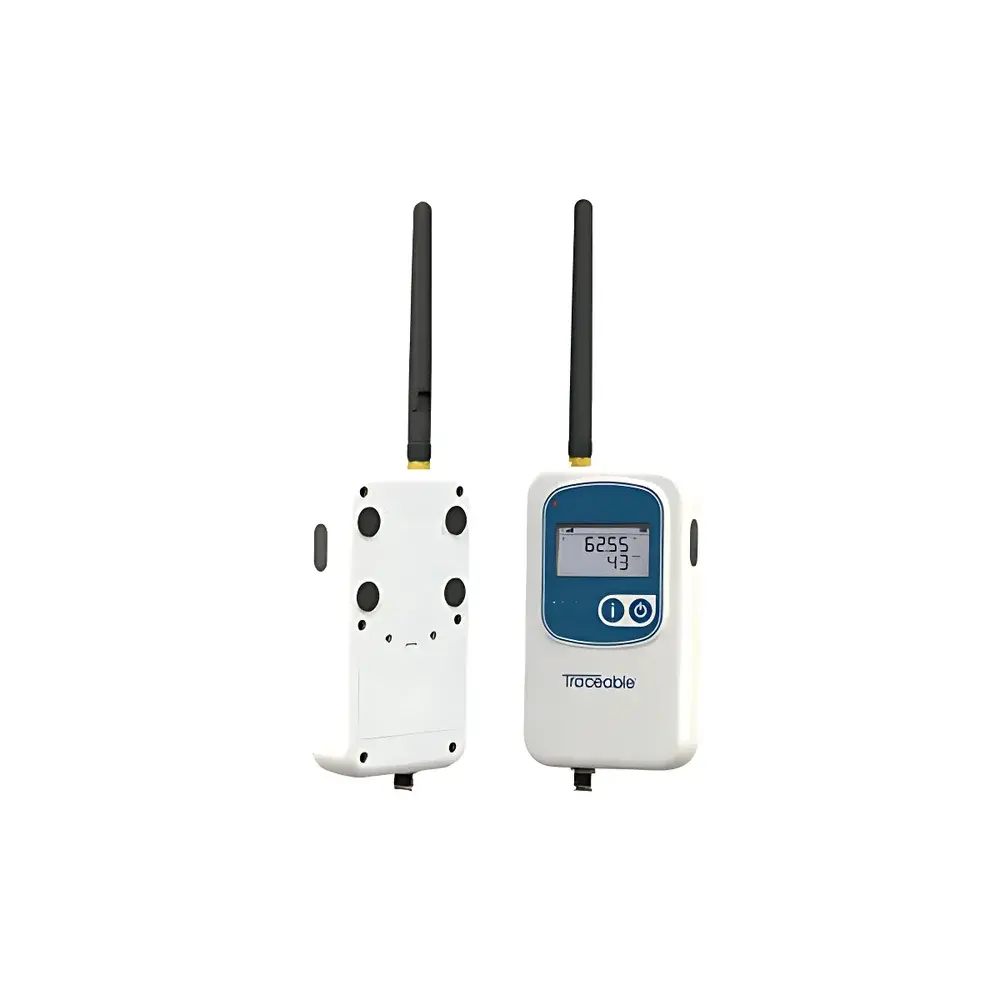
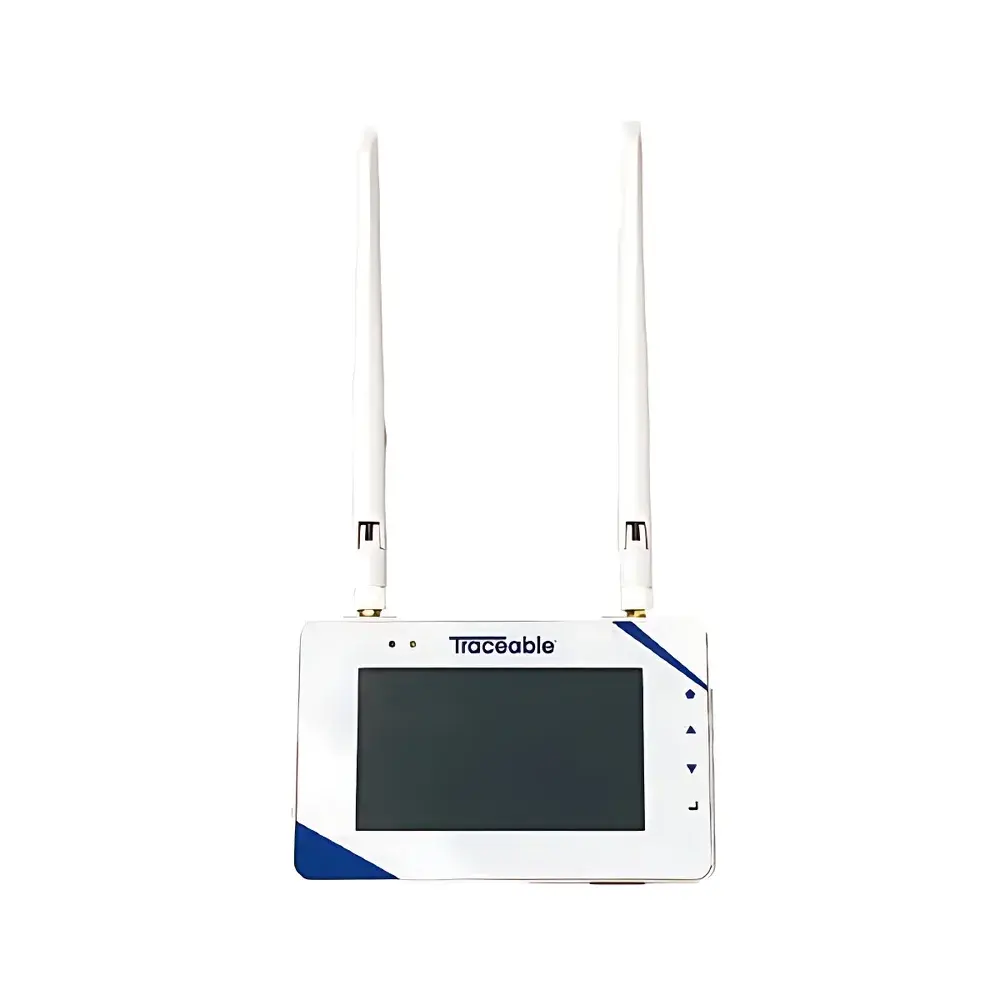
Traceable Continuous Environmental Monitoring System (TDL Series Data Loggers & TGW Gateway)
| Brand | Avantor |
|---|---|
| Origin | USA |
| Model | Traceable TDL/TGW |
| Wireless Protocol | Proprietary Self-Organizing Mesh RF |
| Max Nodes per Gateway | 30 |
| Sampling Interval | 1 min – 24 hr |
| Onboard Memory | 60,000 readings |
| Battery Life | >3 years (TDL), ≥12 hrs (TGW on backup) |
| IP Rating | IP65 (TDL), IP30 (TGW) |
| Operating Temp | −20°C to +60°C (TDL), −5°C to +45°C (TGW) |
| RF Range | >100 m line-of-sight, wall-penetrating |
| Sensor Compatibility | Digital, RS-485, PT100 |
| Data Resilience | Local caching + auto-resume transmission |
| Compliance | Supports 21 CFR Part 11 audit trail readiness, GLP/GMP-aligned data integrity architecture |
Overview
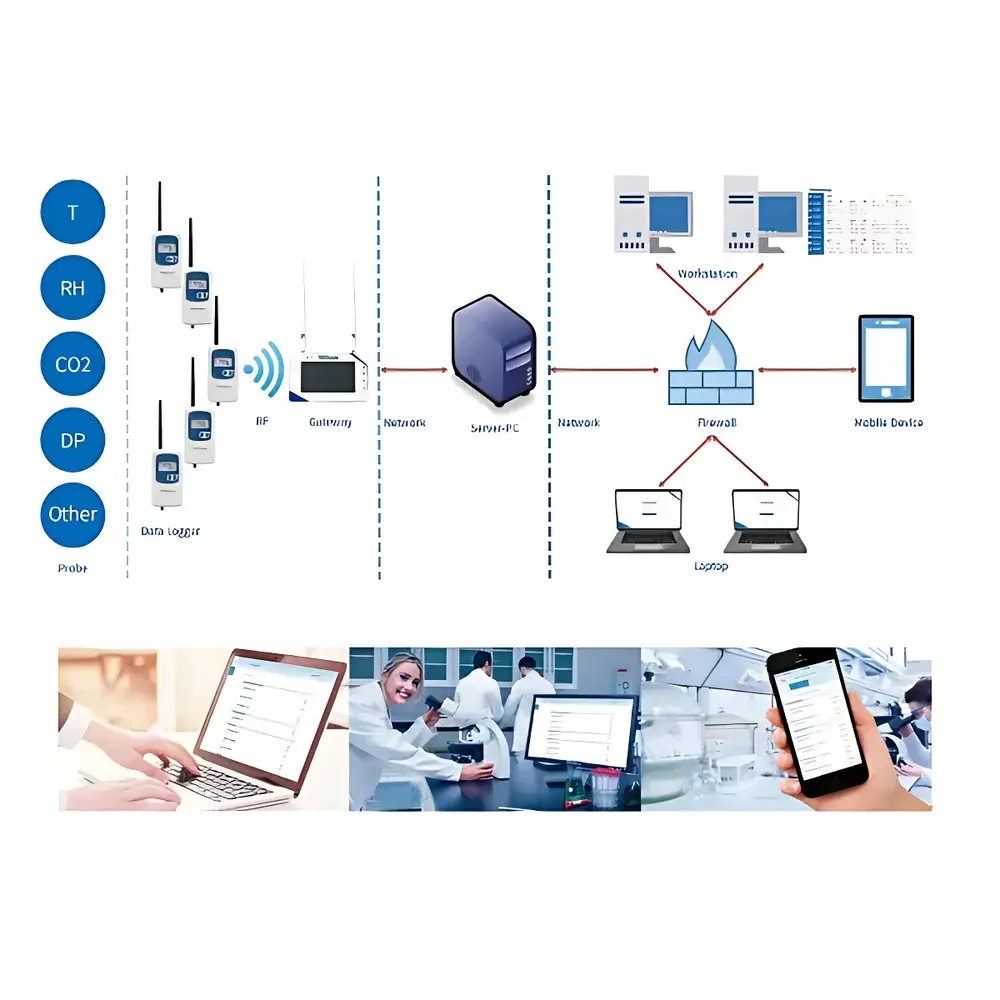
The Traceable Continuous Environmental Monitoring System is a validated, scalable wireless infrastructure engineered for long-term, unattended monitoring of temperature and relative humidity across regulated and non-regulated environments—including pharmaceutical cold chains, biologics storage rooms, ISO Class 5–8 cleanrooms, clinical laboratories, and manufacturing process areas. Built upon Avantor’s proprietary self-organizing radio-frequency mesh protocol, the system eliminates dependency on existing Wi-Fi infrastructure or complex IT provisioning. Each TDL-series data logger operates as an autonomous node—autodiscovering and binding to the nearest TGW-series gateway without manual configuration—ensuring rapid deployment and operational continuity even during network reconfiguration or partial RF congestion. The architecture adheres to fundamental principles of measurement traceability: all devices are pre-calibrated with NIST-traceable certificates, and time synchronization is maintained via embedded real-time clocks with drift compensation algorithms. Designed for continuous operation in dynamic thermal environments, the system meets foundational requirements for data integrity under FDA 21 CFR Part 11, EU Annex 11, and WHO TRS 961 guidelines—particularly where electronic records serve as primary evidence of environmental compliance.
Key Features
- Proprietary RF mesh networking: Zero-touch node onboarding; automatic topology optimization; no router or VLAN configuration required
- Multi-sensor interface support: Simultaneous integration of digital thermistors, industrial-grade PT100 RTDs, and RS-485 Modbus-compatible probes for application-specific accuracy
- Robust local data persistence: 60,000-point onboard memory with timestamped logging; automatic gap-filling upon network recovery
- IP65-rated TDL loggers: Dust-tight and water-jet resistant enclosure enabling use in washdown zones, refrigerated trucks, and high-humidity incubators
- TGW gateway dual-mode connectivity: Concurrent 4G LTE, IEEE 802.11n Wi-Fi, and 10/100 Mbps Ethernet uplinks with failover prioritization
- Local alarm enforcement: Visual LED indicators, audible buzzer, and full-color LCD display showing real-time status, thresholds, and active alerts
- Cryptographic device authentication: SHA-256 hash-based handshake between loggers and gateways prevents unauthorized node injection
- Extended battery autonomy: TDL units operate >3 years at 5-minute sampling intervals under typical ambient conditions (25°C, 50% RH)
Sample Compatibility & Compliance
The system accommodates diverse physical installation constraints through magnetic mounting (TDL), DIN-rail brackets (TGW), and optional surface-mount kits. It supports validation protocols including IQ/OQ/PQ documentation packages compliant with ASTM E2810, ISO 14644-3, and USP . All firmware versions undergo regression-tested release cycles aligned with IEC 62304 Class B software safety requirements. Data export formats include CSV, PDF summary reports, and encrypted SQLite archives—all retaining original timestamps, sensor IDs, and calibration metadata. Audit trails record user actions (e.g., threshold changes, calibration uploads, report generation) with immutable timestamps and operator identifiers—meeting 21 CFR Part 11 Subpart C electronic signature and record retention stipulations.
Software & Data Management
The Traceable Monitoring Software (TMS) provides browser-based access to live dashboards, historical trend analysis, and configurable alerting via email/SMS/webhook. Role-based permissions enforce separation of duties: administrators manage users and system settings; supervisors review deviations; analysts generate regulatory submissions. Raw data files are stored with SHA-256 checksums to verify integrity post-transfer. Optional integration with enterprise systems (e.g., LIMS, MES, SCADA) is supported via RESTful API with OAuth 2.0 authentication. All data transmissions employ TLS 1.2+ encryption; locally cached gateway data remains encrypted at rest using AES-256.
Applications
- Pharmaceutical warehouse temperature mapping and continuous qualification per FDA Guidance for Industry: Cold Chain Controls
- Stability chamber monitoring for ICH Q5C studies, with automated deviation reporting and root-cause tagging
- Cell therapy lab environmental surveillance—tracking ISO 14644 particle counts alongside temperature/humidity baselines
- Vaccine transport validation using portable TDL units mounted inside shippers, with GPS-tagged location metadata
- Medical device sterilization area monitoring (steam autoclaves, ethylene oxide chambers) via high-temp probe variants
- Academic research facility HVAC performance benchmarking across multi-zone buildings
FAQ
Is the system compliant with 21 CFR Part 11?
Yes—the TMS platform implements electronic signatures, audit trails, and role-based access controls consistent with Part 11 Subpart C requirements for closed systems. Full validation documentation is available upon request.
Can TDL loggers operate independently without a gateway?
No—they require association with a TGW gateway for data aggregation and upstream transmission; however, they continue logging locally during gateway outages and resume sync automatically when connectivity is restored.
What is the maximum recommended distance between a TDL logger and its gateway?
Under typical indoor conditions with standard drywall and concrete partitions, reliable communication is sustained up to 100 meters. Field testing in each deployment environment is recommended prior to final validation.
Does the system support external power for TDL units?
TDL loggers are battery-only; however, the TGW gateway accepts both PoE and 12 VDC input for continuous mains-powered operation.
How frequently is firmware updated, and how are updates deployed?
Firmware releases follow a quarterly cadence, with critical security patches issued ad hoc. Updates are delivered over-the-air via TMS with version rollback capability and pre-deployment compatibility verification.
Related Products







