
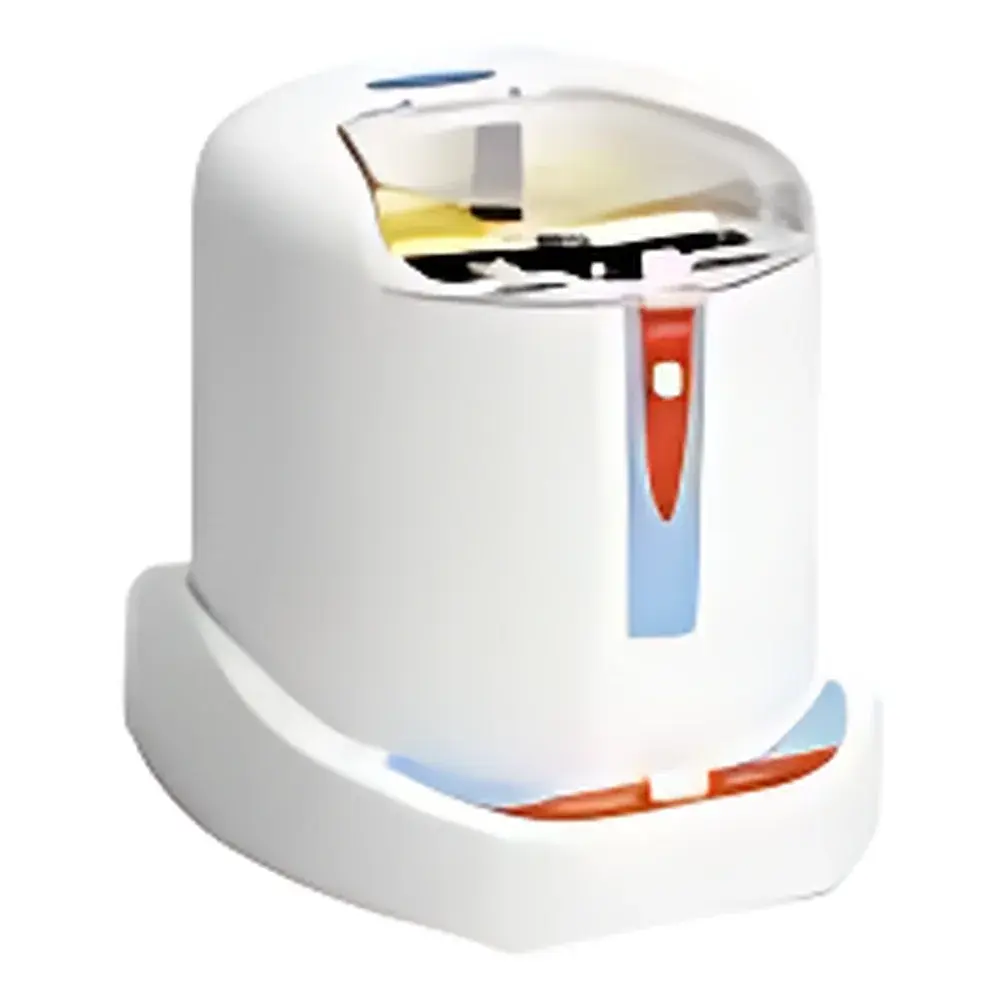
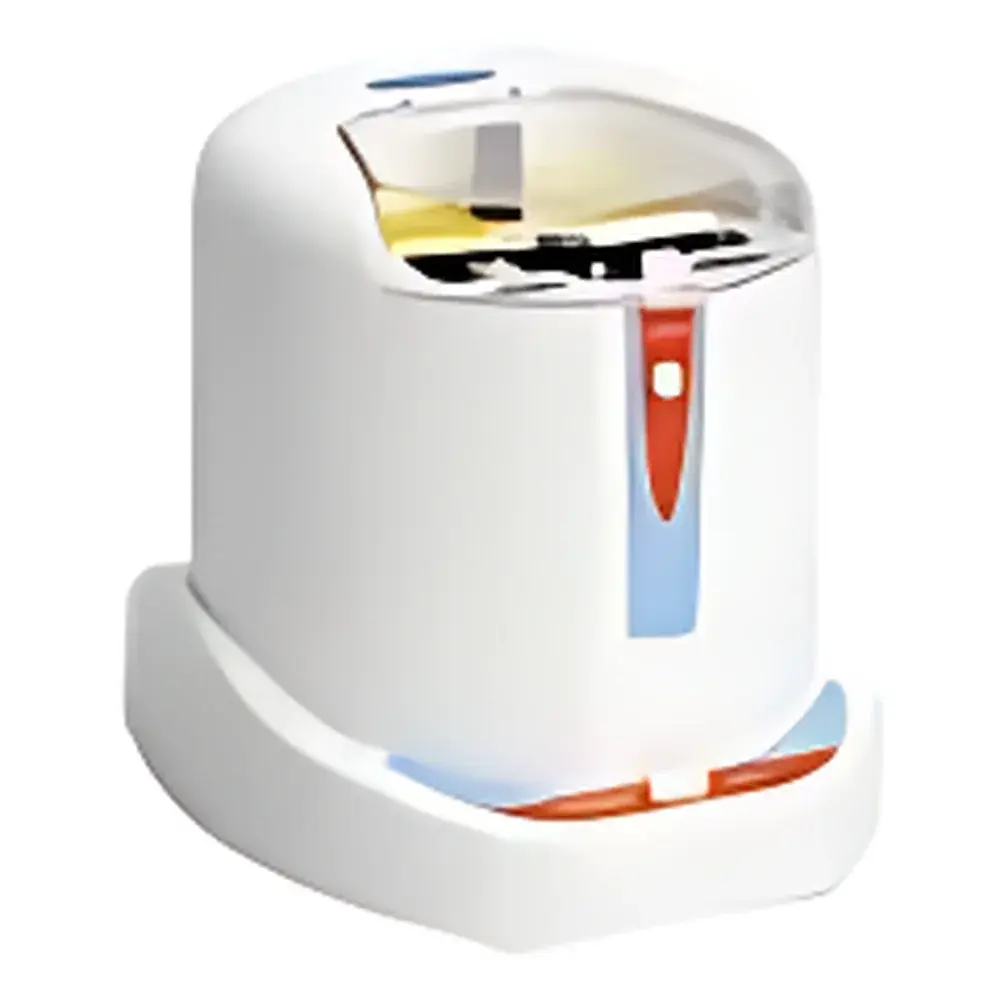
Truelab Mini PCR Plate Centrifuge
| Origin | Shanghai, China |
|---|---|
| Manufacturer Type | Distributor |
| Product Origin | Domestic (China) |
| Model | Mini PCR |
| Instrument Type | Palm-Sized Centrifuge |
| Speed Range | 2500 rpm |
| Max RCF | 2500 × g |
| Max Capacity | 2 × 96-well PCR plates |
| Rotor Type | Fixed-angle rotor |
| Dimensions | 23 × 20 × 20 cm |
| Category | Benchtop Microplate Centrifuge for PCR Applications |
Overview
The Truelab Mini PCR Plate Centrifuge is a compact, purpose-engineered benchtop centrifuge designed exclusively for rapid and uniform pelleting of reagents in standard 96-well PCR microplates. Unlike general-purpose centrifuges, this unit operates on fixed-angle rotor dynamics optimized for low-volume, high-density microplate formats—ensuring minimal sample displacement, consistent wall-to-bottom migration of liquid phases, and reproducible pellet formation across all wells. Its operation adheres to fundamental principles of sedimentation kinetics under controlled angular velocity, where radial acceleration (RCF) governs particle trajectory and settling efficiency. With a maximum rotational speed of 2500 rpm and an RCF of 2500 × g, the device delivers sufficient force to consolidate condensation droplets, residual primers, or enzymatic reaction mixtures without inducing thermal stress or well-to-well cross-contamination—critical requirements in qPCR, RT-PCR, and library preparation workflows.
Key Features
- Ultra-compact footprint (23 × 20 × 20 cm), occupying less than 25% of the bench space required by conventional PCR centrifuges—ideal for crowded biosafety cabinets, PCR workstations, and mobile lab environments.
- Dual-plate capacity supports simultaneous processing of two full 96-well PCR plates, improving throughput consistency and reducing inter-run variability in high-throughput amplification setups.
- Fixed-angle aluminum rotor with precision-machined plate clamps ensures mechanical stability at operating speed and eliminates lateral vibration during spin-down cycles.
- Brushless DC motor provides silent operation (10,000 h MTBF), and precise speed regulation within ±10 rpm tolerance.
- Integrated lid lock mechanism complies with IEC 61010-1 safety standards for Class II laboratory equipment, preventing accidental opening during rotation.
- No external cooling system required—designed for ambient-temperature operation compatible with temperature-sensitive master mixes and lyophilized reagents.
Sample Compatibility & Compliance
The centrifuge accommodates ANSI/SBS-standard 96-well PCR plates (full-skirted, semi-skirted, and unskirted), including polypropylene, cyclo-olefin copolymer (COC), and PCR-grade polycarbonate variants. It is validated for use with common reaction volumes ranging from 5 µL to 200 µL per well. While not classified as a regulated medical device, the instrument conforms to ISO 9001-certified manufacturing practices and meets electromagnetic compatibility (EMC) requirements per EN 61326-1. Its mechanical design aligns with GLP-aligned lab practices—no software-based audit trail is embedded, but manual usage logs may be maintained per internal SOPs for traceability in regulated environments (e.g., clinical research labs operating under CLIA or CAP guidelines).
Software & Data Management
This is a manually operated, non-programmable centrifuge with no onboard firmware, touchscreen interface, or data export capability. All operational parameters—including run time (user-defined via mechanical timer or external stopwatch) and speed—are set via a single rotary dial with tactile feedback. No connectivity (USB, Bluetooth, Ethernet) is provided, eliminating cybersecurity concerns and ensuring compliance with air-gapped laboratory network policies. For laboratories requiring electronic recordkeeping, integration with LIMS systems must be achieved externally through operator-entered metadata (e.g., timestamp, plate ID, operator initials) logged in structured spreadsheets or validated ELN entries.
Applications
- Rapid condensation recovery prior to thermal cycling—minimizing evaporation loss and ensuring uniform reaction volume distribution across all wells.
- Pre-centrifugation of master mix components to eliminate air bubbles and ensure homogeneity before plate loading.
- Post-amplification pelleting of amplified DNA fragments in clean-up protocols preceding Sanger sequencing or NGS library quantification.
- Centrifugal consolidation of magnetic bead suspensions in automated nucleic acid extraction workflows where microplate-based binding steps are employed.
- Quality control step in diagnostic assay development labs verifying reagent layer integrity after freeze-thaw cycles or long-term storage.
FAQ
Is this centrifuge compatible with 384-well plates?
No. The rotor geometry and clamping mechanism are dimensionally constrained to ANSI/SBS-compliant 96-well PCR plates only.
Does it support variable speed ramping or programmable acceleration/deceleration profiles?
No. This is a single-speed, direct-drive centrifuge with instantaneous spin-up and passive coast-down deceleration.
Can it be used for cell pelleting or protein precipitation?
Not recommended. Its RCF ceiling (2500 × g) and absence of refrigeration limit utility to low-mass, low-viscosity aqueous solutions typical of PCR workflows.
What maintenance is required?
Routine cleaning of the rotor chamber with 70% ethanol; annual inspection of rotor integrity and lid latch function per manufacturer’s maintenance schedule.
Is CE marking or FDA registration applicable?
The device carries CE marking under the Low Voltage Directive (2014/35/EU) and EMC Directive (2014/30/EU); it is not FDA-listed as it falls outside the scope of 21 CFR Part 807 medical device classification.



