
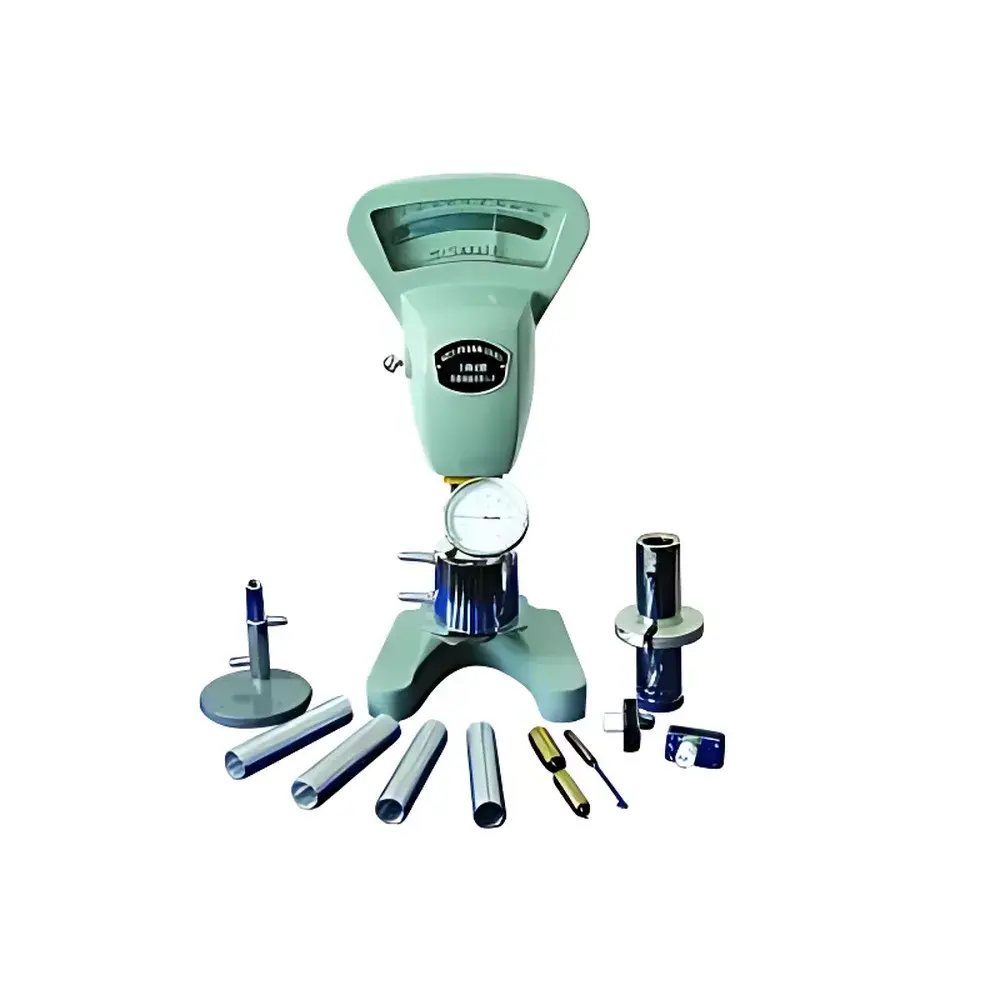
Truelab NDJ-79 Rotational Viscometer
| Brand | Truelab |
|---|---|
| Origin | Shanghai, China |
| Model | NDJ-79 |
| Instrument Type | Benchtop Rotational Viscometer |
| Viscosity Range | 1–1×10⁶ mPa·s |
| Accuracy | ±5% (for Newtonian fluids) |
| Rotational Speeds | 7.5 / 75 / 750 rpm |
| Measuring Systems | Three interchangeable spindles (Units I, II, III) |
| Power Supply | AC 220 V ±10%, 50 Hz |
| Dimensions | 170 × 140 × 440 mm |
| Weight | 15 kg |
| Operating Environment | Ambient temperature (no integrated temperature control) |
Overview
The Truelab NDJ-79 Rotational Viscometer is a benchtop mechanical viscometer engineered for precision measurement of dynamic viscosity in Newtonian liquids and apparent viscosity in non-Newtonian fluids under controlled shear conditions. Based on the classical Couette principle—where torque exerted on a rotating spindle immersed in a sample is proportional to fluid resistance—the NDJ-79 delivers repeatable rheological data without requiring complex calibration protocols or software dependency. Designed for routine quality control and process validation in industrial laboratories, it operates across a broad dynamic range (1–1×10⁶ mPa·s), accommodating low-viscosity solvents such as ethanol or acetone, mid-range polymer solutions, and highly viscous materials including bitumen, heavy lubricants, and uncured resins. Its fixed-speed tri-level drive system (7.5, 75, and 750 rpm) enables discrete shear rate selection, facilitating comparative analysis across formulations while maintaining mechanical robustness and long-term stability.
Key Features
- Benchtop mechanical architecture with no embedded microprocessor or touchscreen—optimized for operational simplicity and field reliability
- Three standardized spindle units (I, II, III) enabling method-specific configuration for diverse sample classes and viscosity magnitudes
- Direct analog torque sensing via calibrated spring deflection mechanism—eliminates drift associated with electronic transducers
- Fixed rotational speeds (7.5, 75, 750 rpm) selected via mechanical gear switching—ensures consistent shear history between replicate measurements
- Compact footprint (170 × 140 × 440 mm) and lightweight construction (15 kg) facilitate integration into constrained lab spaces or mobile QC stations
- AC-powered design (220 V ±10%, 50 Hz) compatible with standard laboratory mains—no external power conditioning required
- Mechanically damped pointer display with linear scale reading—enables rapid visual assessment without digital interpretation delay
Sample Compatibility & Compliance
The NDJ-79 is validated for use with homogeneous, particle-free Newtonian and pseudoplastic liquids within ambient laboratory environments (15–30 °C). Typical applications include petroleum distillates, refined mineral oils, solvent-based coatings, pharmaceutical suspensions, food-grade syrups, and cosmetic emulsions. While not equipped with active temperature regulation, the instrument is routinely deployed alongside external thermostatic baths (e.g., immersion circulators or jacketed sample holders) to meet ASTM D2196, ISO 2555, and GB/T 265 requirements for temperature-controlled viscosity testing. Its mechanical design conforms to general safety standards for Class I electrical equipment (IEC 61010-1), and its spindle geometry aligns with ISO 3219 reference configurations for coaxial cylinder geometry approximation. For regulated environments, manual recording of test parameters—including spindle ID, speed, elapsed time, and observed scale reading—is fully compatible with GLP-compliant documentation workflows.
Software & Data Management
The NDJ-79 operates independently of proprietary software or drivers, functioning as a self-contained analog measurement system. All readings are captured manually from the front-panel scale and recorded in laboratory notebooks or LIMS-compatible spreadsheets. This design eliminates cybersecurity vulnerabilities, software licensing constraints, and OS compatibility limitations common in digitally dependent instruments. For laboratories implementing 21 CFR Part 11 compliance, traceability is maintained through documented operator signatures, timestamped entries, and controlled revision of paper-based SOPs governing spindle cleaning, zeroing procedure, and calibration verification using standard silicone oils (e.g., Cannon N25, N100, N1000). Optional accessories—including stainless-steel sample cups, spindle cleaning tools, and certified viscosity standards—support audit-ready operation.
Applications
- Quality assurance of lubricating oils and hydraulic fluids per ASTM D445 and ISO 3104
- Routine batch release testing of architectural paints and coil coatings per ASTM D1084 and ISO 2555
- Stability monitoring of topical pharmaceutical gels and ointments during formulation development
- Viscosity grading of asphalt binders in road construction material labs (ASTM D36, D217)
- Process consistency verification for edible oil refining and confectionery syrup production
- Educational demonstration of shear-thinning behavior in polymer dispersions and colloidal suspensions
FAQ
Does the NDJ-79 support temperature-controlled measurements?
No—the instrument lacks integrated temperature sensing or heating/cooling capability. Accurate thermal control requires external equipment such as a circulating water bath or Peltier-cooled sample holder.
What spindle configurations are included with the standard NDJ-79?
The base configuration includes three interchangeable spindles designated Units I, II, and III—each optimized for distinct viscosity ranges and sample volumes per manufacturer specifications.
Is calibration traceable to national standards?
Yes—calibration verification is performed using NIST-traceable standard oils (e.g., Cannon or Lovis series), with certificates provided upon request for metrological validation.
Can the NDJ-79 measure thixotropic or yield-stress fluids?
It provides single-point apparent viscosity values at fixed shear rates; full time-dependent or yield stress characterization requires a programmable rheometer with controlled shear ramping and oscillatory capability.
What maintenance is required for long-term accuracy?
Routine cleaning of spindles and guard legs with appropriate solvents, periodic mechanical zero adjustment, and annual verification against reference oils constitute the recommended maintenance protocol.



