
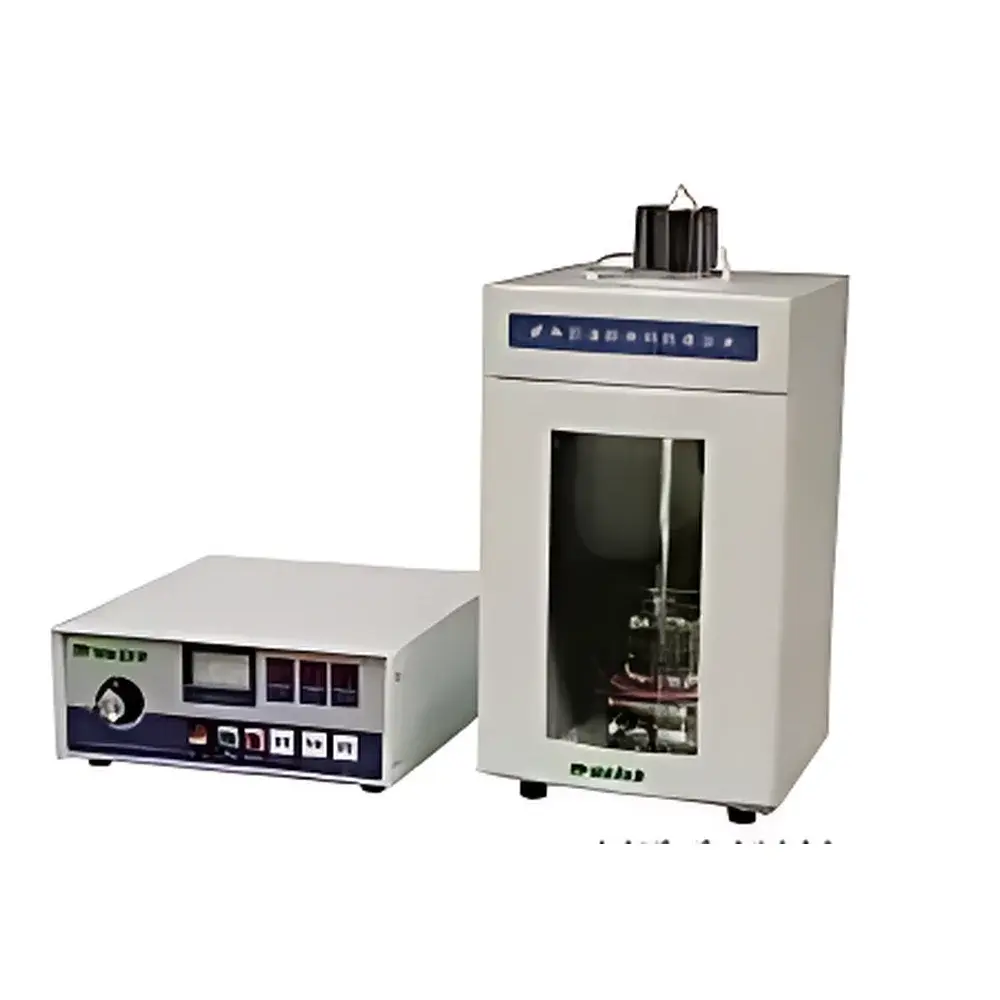
Truelab UPH-150 Horizontal Digital Ultrasonic Cell Disruptor
| Brand | Truelab |
|---|---|
| Origin | Shanghai, China |
| Model | UPH-150 |
| Instrument Type | Ultrasonic Cell Disruptor |
| Ultrasonic Power Range | 150–1800 W |
| Operating Frequency | 20–25 kHz |
| Sample Volume Capacity | 0.5–1200 mL |
| Temperature Control | Ambient (D-type variant includes microprocessor-controlled cooling) |
| Number of Samples Processed Simultaneously | 1 |
| Standard Horn Diameter | Φ6 mm |
| Optional Horn Diameters | Φ2, Φ3, Φ8, Φ10, Φ12, Φ15, Φ20, Φ22, Φ25, Φ28 mm |
| Duty Cycle Adjustment Range | 0.1–99.9% |
| Input Voltage | 220 V / 110 V, 50 Hz / 60 Hz |
Overview
The Truelab UPH-150 Horizontal Digital Ultrasonic Cell Disruptor is an engineered solution for controlled mechanical lysis of biological samples via high-intensity ultrasonic cavitation. Operating within the 20–25 kHz frequency range, the system generates acoustic energy that induces transient microcavitation in liquid media—leading to localized shockwaves, microstreaming, and shear forces sufficient to disrupt cell membranes, organelles, and microbial structures without significant thermal degradation when properly managed. Its horizontal transducer architecture enables stable coupling with variable-length titanium alloy horns (standard Φ6 mm), optimized for consistent energy delivery across a broad sample volume range (0.5–1200 mL). Designed for reproducible benchtop processing in regulated and non-regulated laboratory environments, the UPH-150 supports both continuous and pulsed sonication protocols, making it suitable for applications requiring precise control over energy input and thermal management.
Key Features
- Horizontally mounted piezoelectric transducer with high-efficiency titanium alloy horn (standard Φ6 mm; optional diameters from Φ2 to Φ28 mm) for optimal impedance matching and acoustic transmission.
- Digital microprocessor control enabling independent adjustment of ultrasonic power (150–1800 W), duty cycle (0.1–99.9%), pulse duration, and rest intervals—critical for preserving labile biomolecules.
- D-type configuration includes integrated Peltier-based temperature monitoring and feedback-controlled cooling to maintain sample integrity during extended sonication cycles (ambient operation standard on base models).
- Robust stainless-steel housing with ergonomic horizontal layout, facilitating easy access to the sample chamber and horn insertion—reducing operator fatigue during high-throughput workflows.
- Acoustically damped enclosure (included as standard) compliant with ISO 9612:2009 guidelines for occupational noise exposure, reducing ambient sound pressure levels to ≤75 dB(A) at 1 m distance.
- Compliance-ready firmware architecture supporting audit trail generation (time-stamped parameter logs), user-level access control, and exportable CSV-formatted session records—aligned with GLP/GMP documentation expectations.
Sample Compatibility & Compliance
The UPH-150 accommodates diverse biological matrices including mammalian and insect cell suspensions, bacterial cultures (e.g., E. coli, Bacillus spp.), yeast, plant tissue homogenates, viral lysates, and subcellular fractions. It is routinely employed in workflows conforming to ASTM E2874-22 (Standard Guide for Ultrasonic Disruption of Microorganisms), USP <1043> (Cell Lysis Methods), and ISO/IEC 17025:2017 requirements for method validation. The instrument’s modular horn selection allows method scalability—from low-volume (<5 mL) nuclear extraction to large-batch (≥500 mL) protein solubilization—while maintaining consistent specific energy input (J/mL). All titanium components meet ASTM F136-23 specifications for surgical-grade Ti-6Al-4V alloy, ensuring corrosion resistance and biocompatibility.
Software & Data Management
Embedded firmware provides real-time display of active parameters (power output, elapsed time, duty cycle, temperature if equipped) and stores up to 100 protocol presets with user-defined names and version timestamps. Data export is supported via USB 2.0 interface to standard FAT32-formatted drives, generating ISO 8601-compliant .csv files containing per-cycle metadata (start/end time, peak power, average amplitude, thermal deviation). No proprietary software installation is required; exported logs are directly importable into LIMS platforms or statistical analysis tools (e.g., JMP, GraphPad Prism). The system supports 21 CFR Part 11–compatible configurations—including electronic signatures, role-based permissions, and immutable audit trails—upon deployment with validated third-party laboratory information management systems.
Applications
- Preparative lysis for recombinant protein purification (e.g., inclusion body solubilization, membrane protein extraction).
- Nucleic acid isolation (genomic DNA, plasmid DNA, total RNA) with minimized shearing under pulsed conditions.
- Preparation of antigenic lysates for immunoassay development and vaccine research.
- Nanoparticle dispersion and deagglomeration in drug delivery formulation studies.
- Emulsification of lipid-based nanocarriers and liposome formation.
- Accelerated enzymatic digestion and chemical derivatization reactions via acoustic enhancement.
- Microbial inactivation validation studies in pharmaceutical water systems and bioburden reduction protocols.
FAQ
What safety certifications does the UPH-150 hold?
The instrument complies with IEC 61010-1:2010 for electrical safety and IEC 60601-1:2012 Annex BB for acoustic emission limits. CE marking is applied under the EU Machinery Directive 2006/42/EC and EMC Directive 2014/30/EU.
Can the UPH-150 be integrated into automated liquid handling platforms?
Yes—RS-232 and TTL-compatible digital I/O ports enable external triggering and status feedback integration with robotic arms or PLC-controlled workstations.
Is validation support documentation available for GxP environments?
Truelab provides IQ/OQ templates aligned with ASTM E2500-22 and Annex 15 of the EU Guidelines to Good Manufacturing Practice, including test protocols for amplitude linearity, power accuracy, and thermal stability verification.
How is horn wear monitored and calibrated?
Amplitude drift is tracked via built-in impedance sensing; users receive maintenance alerts after 200 h of cumulative operation or upon ≥5% deviation from baseline resonance frequency—verified using supplied calibration standards traceable to NIST SRM 2810.
Does the system support multi-horn parallel processing?
No—the UPH-150 is configured for single-sample, single-horn operation. Parallel throughput is achieved via sequential batch processing using interchangeable horns and programmable queue scheduling.




