
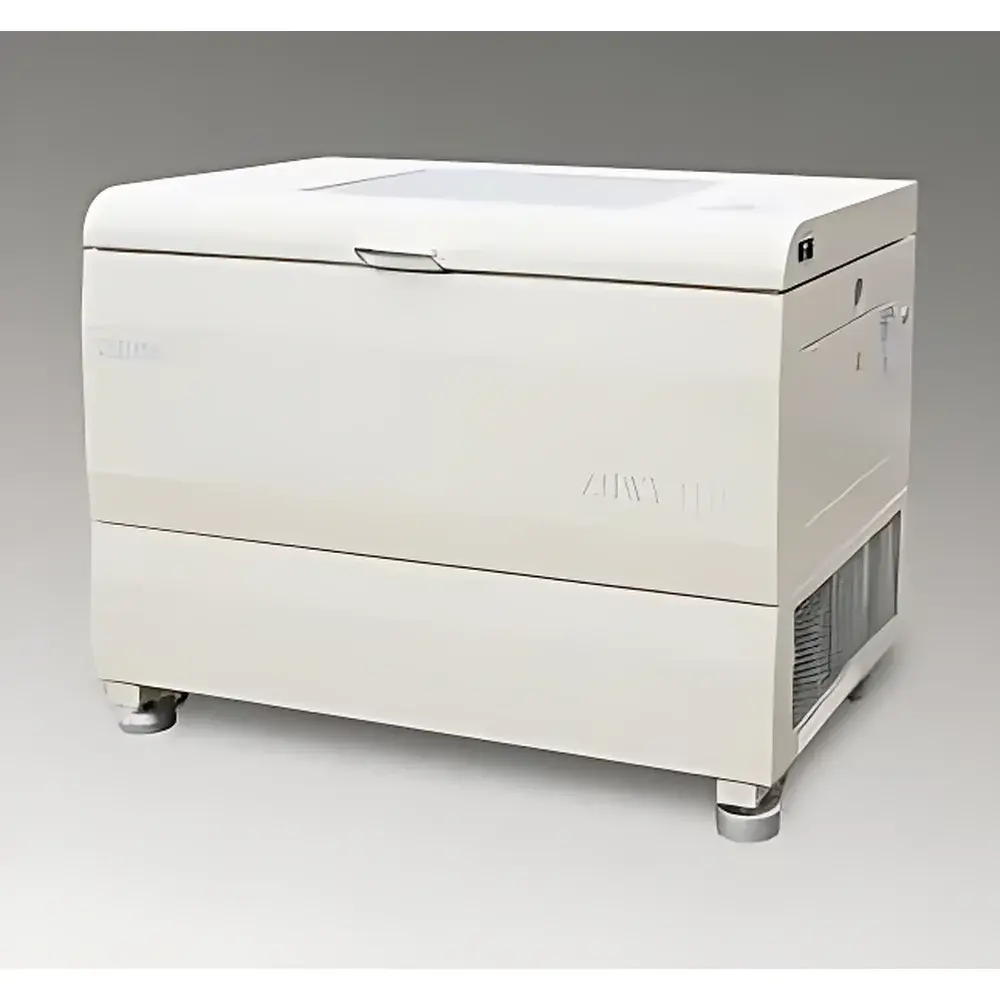
Truelab ZHWY-111/211B/C/D/E Horizontal Incubator Shaker Series
| Brand | Truelab |
|---|---|
| Origin | Shanghai, China |
| Model | ZHWY-111/211B/C/D/E |
| Timer Range | 0–500 h |
| Oscillation Frequency | 30–300 rpm |
| Amplitude | 26 mm (circular) / 0–50 mm (reciprocating, ZHWY-F variants) |
| Temperature Range | 4–60 °C (ZHWY-211 series) or RT+5–60 °C (ZHWY-111 series) |
| Number of Shaking Platforms | 1 or 2 (model-dependent) |
| Platform Dimensions | up to 940 × 584 mm |
| Chamber Volume | 168–286 L |
| Temperature Uniformity | ≤ ±1 °C at 37 °C |
| Temperature Stability | ≤ ±0.5 °C at 37 °C |
| Temperature Resolution | 0.1 °C |
| Frequency Accuracy | ±1 rpm |
Overview
The Truelab ZHWY-111/211B/C/D/E Horizontal Incubator Shaker Series is a precision-engineered platform for controlled temperature and orbital or reciprocating agitation in life science and bioprocessing applications. Designed for high-capacity, long-duration experiments, these shakers employ PID-controlled forced-air convection heating (and optional cooling in the ZHWY-211 series) combined with microprocessor-driven motor control to maintain stable thermal and mechanical conditions across large chamber volumes. The system operates on the principle of uniform orbital shaking (26 mm diameter) or adjustable linear reciprocation (0–50 mm), enabling reproducible suspension culture, microbial fermentation, enzyme kinetics, hybridization, and cell-based assays. Its horizontal configuration maximizes internal volume utilization—supporting up to 28 × 500 mL flasks or 6 × 5000 mL vessels—making it suitable for pilot-scale bioreactor development, QC batch testing, and GLP-compliant process validation.
Key Features
- Microprocessor-based PID temperature control with 0.1 °C resolution and ≤ ±0.5 °C stability at 37 °C; optional refrigeration extends low-end range to 4 °C (ZHWY-211 models)
- Orbital shaking (ZHWY-B/C/D) or variable-amplitude reciprocating motion (ZHWY-F), both programmable from 30–300 rpm (orbital) or 30–240 rpm (reciprocating), with ±1 rpm accuracy
- Dual-platform capability (select ZHWY-111/211E configurations) enables independent operation of two decks for parallel experimental conditions
- Robust AC induction motor with brushless design, wide-speed torque compensation, and gradual acceleration/deceleration profiles to protect shear-sensitive cultures
- Large LCD backlit display with real-time monitoring of setpoints and actual values for temperature, speed, amplitude, and remaining time
- Comprehensive safety architecture: overtemperature alarm with automatic power cutoff, motor overheat protection, door-open interlock (standard), and foot-pedal access option (ZHWY-D) for hands-free operation
- Memory retention for all operational parameters after power interruption, with auto-restart functionality per original settings
- Electrostatically coated steel chamber with reinforced tempered glass viewport; ergonomic front-loading design and modular interior geometry for flexible flask/bottle arrangement
Sample Compatibility & Compliance
The ZHWY series accommodates standard laboratory vessels ranging from 50 mL test tubes to 5000 mL Fernbach flasks, with optimized airflow distribution ensuring uniform temperature and mixing performance across heterogeneous load configurations. Chamber dimensions (up to 1005 × 655 × 435 mm) and platform surface area (up to 940 × 584 mm) support ISO-standard stacking patterns and USP compliant aseptic workflow integration. All models meet IEC 61010-1 safety requirements for laboratory equipment and are designed for use in environments adhering to GLP and GMP principles. While not intrinsically certified for FDA 21 CFR Part 11 compliance, the embedded audit trail functionality—including timestamped parameter logging, user-access lockout, and encrypted setting preservation—supports traceability requirements in regulated quality control laboratories.
Software & Data Management
Operation is managed via an integrated environmental scanning microcontroller with non-volatile memory storage for up to 10 user-defined protocols. The LCD interface supports multilevel password protection for parameter modification, preventing unauthorized changes during ongoing experiments. Data logging includes real-time temperature and speed traces (stored internally for ≥72 hours), exportable via USB interface (optional accessory) for post-hoc analysis in Excel or LabChart-compatible formats. Firmware updates are performed via secure bootloader protocol, maintaining version control integrity. For networked lab environments, RS-485 Modbus RTU output allows integration into centralized building management systems (BMS) or LIMS platforms without proprietary middleware.
Applications
- Bacterial and yeast cultivation under controlled aerobic conditions for metabolic studies and strain optimization
- Mammalian and insect cell suspension expansion in serum-free or chemically defined media
- Protein expression and purification workflows involving E. coli lysate clarification and affinity column equilibration
- Environmental microbiology: BOD incubation, water toxicity screening, and bioremediation assay development
- Pharmaceutical R&D: dissolution testing support, excipient compatibility trials, and stability-indicating method development
- Food safety analytics: pathogen enrichment (e.g., Salmonella, Listeria) and probiotic viability assessment
- Academic teaching labs requiring robust, multi-user instrumentation with configurable safety limits
FAQ
What distinguishes the ZHWY-111 and ZHWY-211 model families?
The ZHWY-111 series operates from ambient +5 °C to 60 °C, while the ZHWY-211 series adds active cooling to reach 4 °C—enabling low-temperature enzymatic reactions and cold-adapted organism studies.
Can the ZHWY-F reciprocating models be used for mammalian cell culture?
Yes—when operated within recommended amplitude (≤25 mm) and frequency (≤120 rpm) ranges, the linear motion profile minimizes hydrodynamic stress on adherent and suspension cells, particularly in serum-free formulations.
Is remote monitoring supported out-of-the-box?
Standard models include local display and manual controls only; Ethernet or Wi-Fi connectivity requires optional communication modules installed by authorized service personnel.
How does the foot-pedal opening mechanism (ZHWY-D) integrate with biosafety practices?
The hands-free door actuation eliminates contact contamination risk during sterile procedures and complies with ISO 14644 cleanroom behavioral guidelines when used with appropriate PPE.
What maintenance is required for long-term reliability?
Annual calibration verification of temperature and speed sensors is recommended; the brushless motor and sealed bearing assembly require no routine lubrication or replacement under normal operating conditions.




