
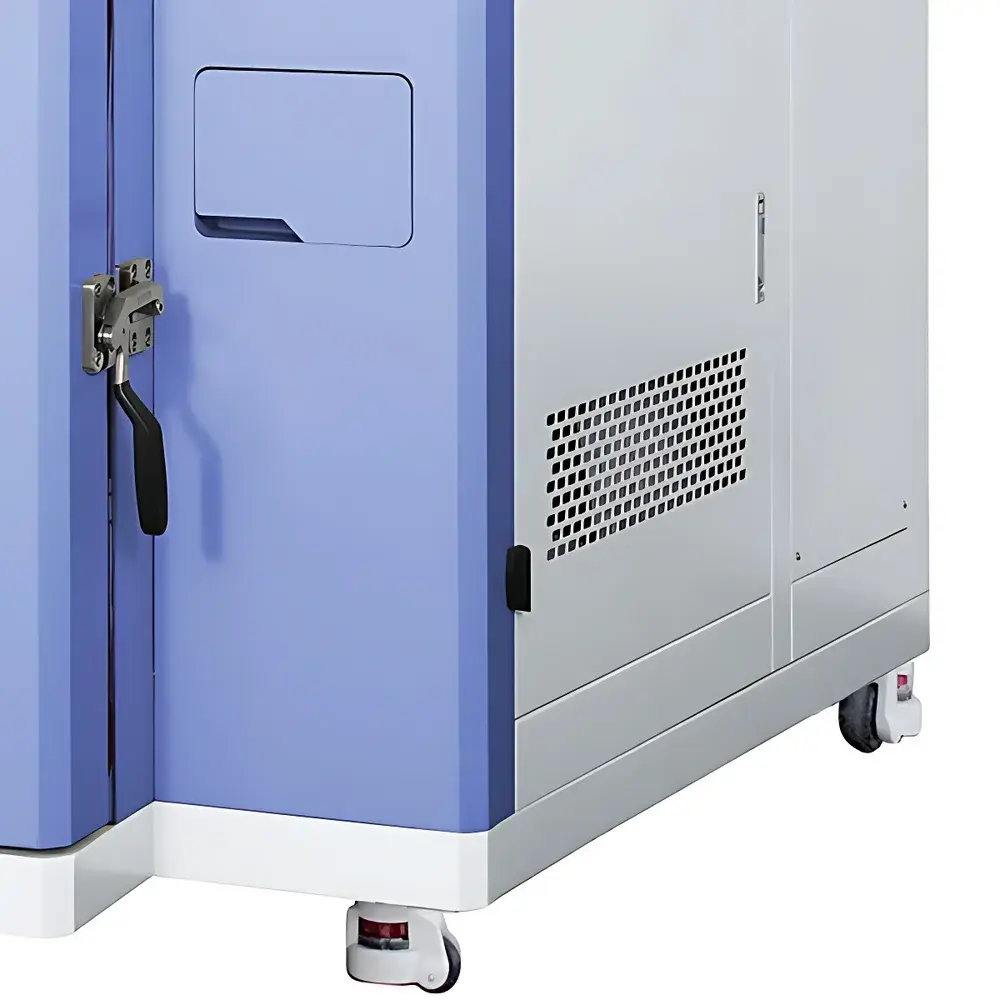
OK-TS-8 Thermal Shock Test Chamber
| Brand | OK Instruments |
|---|---|
| Origin | Guangdong, China |
| Manufacturer Type | Direct Manufacturer |
| Product Origin | Domestic (China) |
| Model | OK-TS-8 |
| Price | USD 12,500 (FOB Guangdong) |
| High-Temperature Range | +200 °C |
| Low-Temperature Range | −40 °C |
| Thermal Shock Range | −40 °C to +200 °C |
| Temperature Stability | ±2 °C |
| Heating Rate | 10 °C/min |
| Cooling Rate | 10 °C/min |
Overview
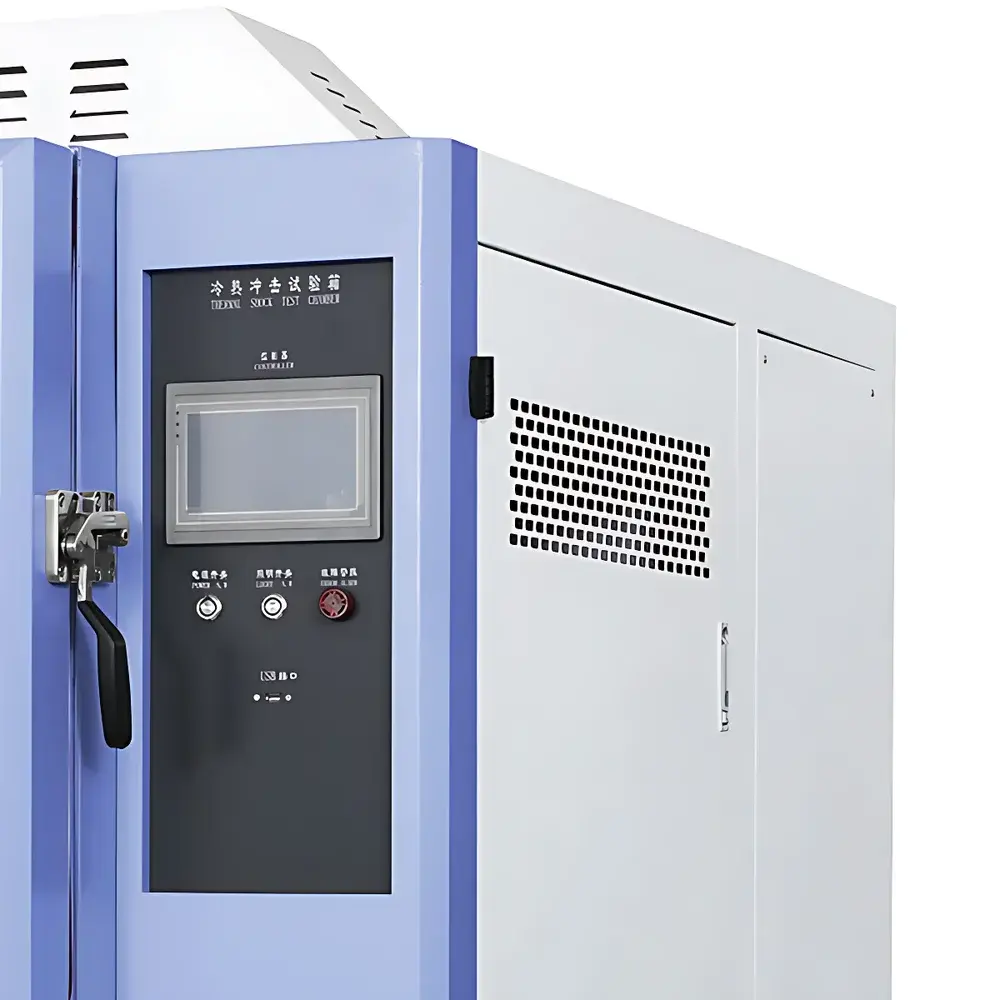
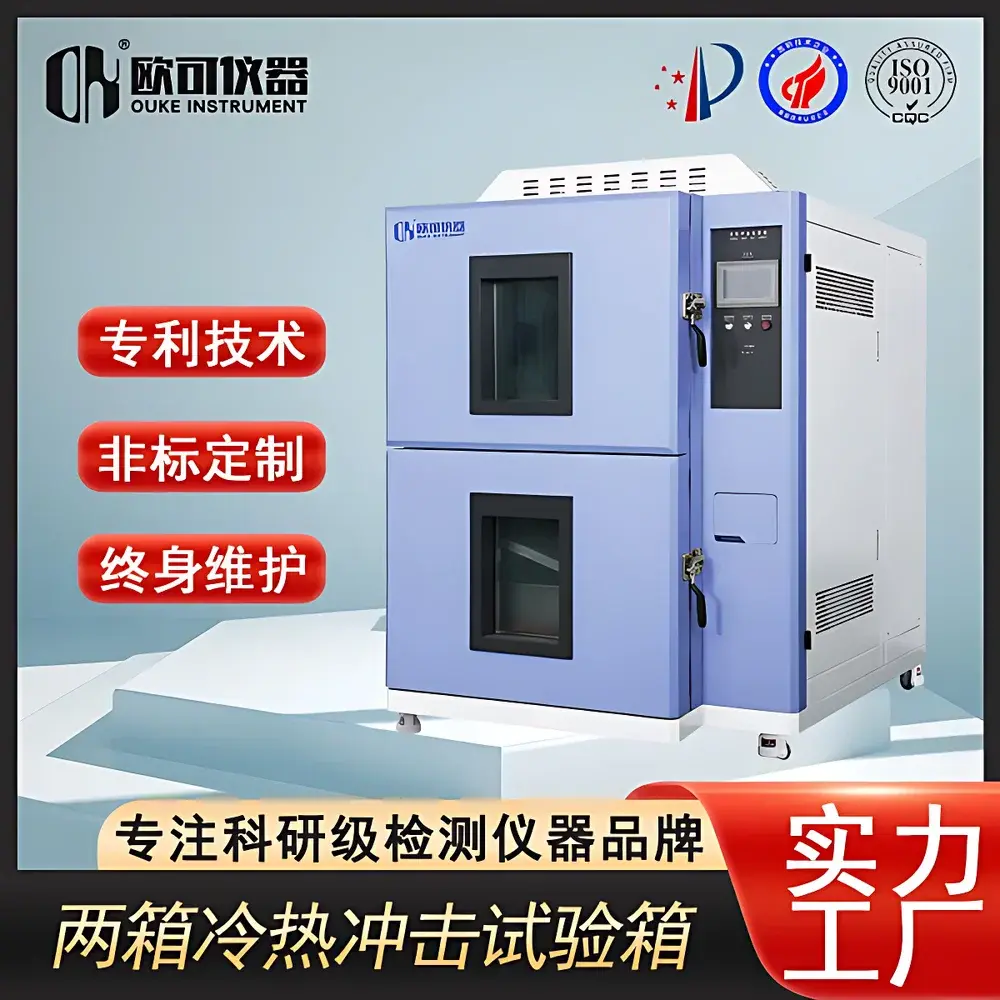
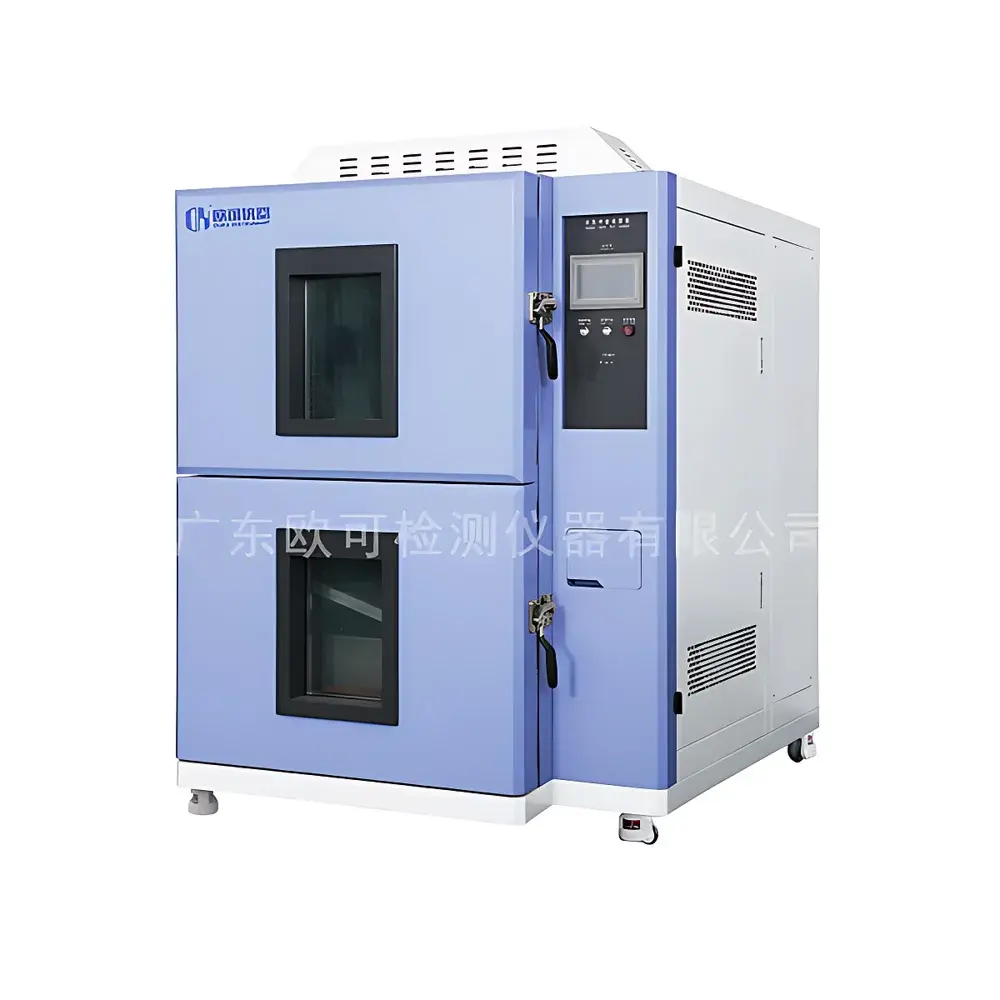
The OK-TS-8 Thermal Shock Test Chamber is a dual-chamber (two-box) thermal shock system engineered for high-fidelity evaluation of material and component reliability under rapid, extreme temperature transitions. It operates on the principle of mechanical sample transfer between isolated high-temperature and low-temperature chambers—enabling controlled, repeatable thermal stress application via abrupt ambient shifts rather than gradual ramping. Unlike standard environmental test chambers designed for steady-state or slow-cycle conditioning, the OK-TS-8 delivers discrete, high-magnitude thermal shocks to accelerate failure mechanisms linked to coefficient-of-thermal-expansion (CTE) mismatch, interfacial delamination, solder joint fatigue, and microcrack propagation. Its design targets applications where real-world exposure involves sudden environmental transients—such as avionics during ascent/descent, automotive ECUs subjected to under-hood heat soak followed by cold-soak immersion, or consumer electronics transitioning from indoor heating to outdoor winter conditions.
Key Features
- Dual-chamber architecture with independent high-temperature (+200 °C) and low-temperature (−40 °C) zones, ensuring minimal thermal cross-talk and maximum shock intensity.
- High-speed horizontal transfer mechanism with pneumatic actuation, achieving ≤5-minute transition time (sample dwell-to-dwell) between extreme setpoints—meeting the core requirement of IEC 60068-2-14 Method N.
- Precision PID-controlled refrigeration and heating systems utilizing cascade refrigeration technology and stainless-steel-sheathed cartridge heaters for stable thermal maintenance (±2 °C) at extremes.
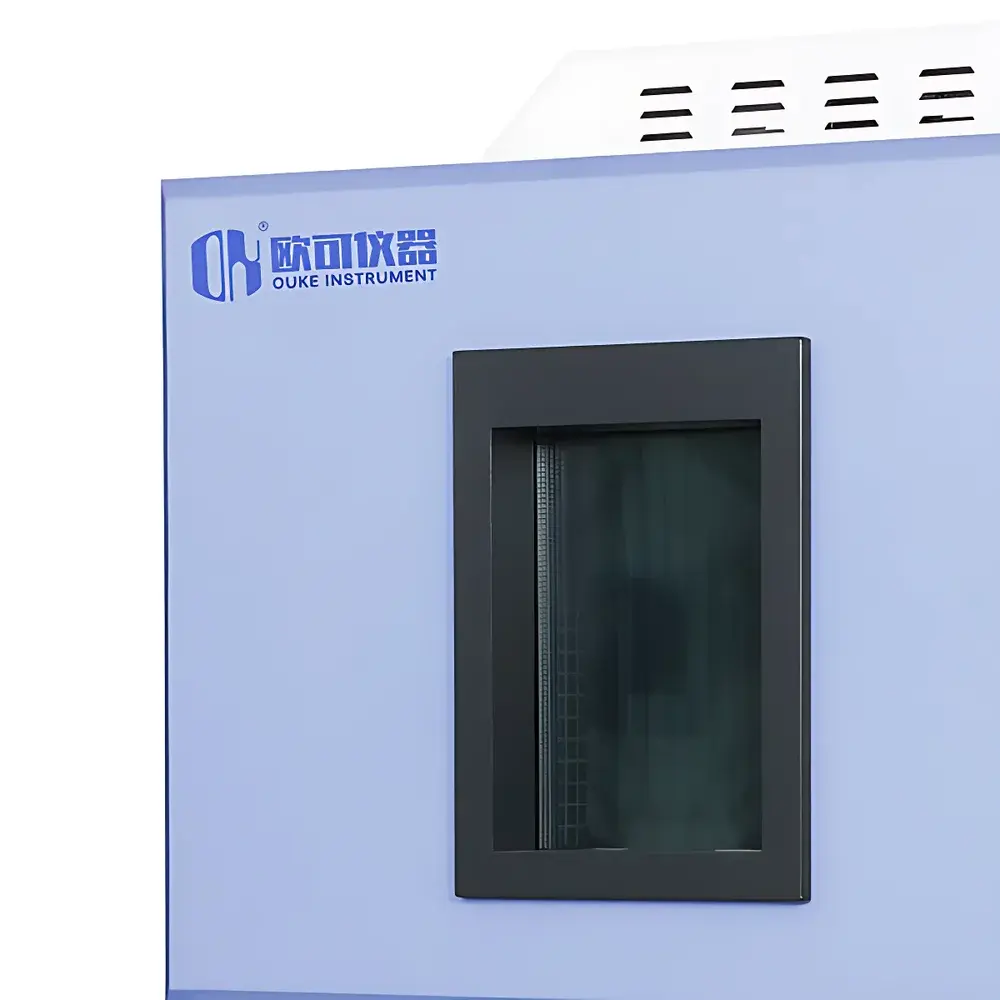
- Robust chamber construction: 304 stainless steel interior walls, double-layer insulated door with magnetic seal, and reinforced lifting basket rated for up to 20 kg load capacity.
- Integrated safety architecture including over-temperature cut-off, phase-loss protection, refrigerant pressure monitoring, and emergency stop circuit compliant with IEC 61000-6-2 EMC immunity requirements.
Sample Compatibility & Compliance
The OK-TS-8 accommodates samples up to 400 × 400 × 400 mm (W × D × H) within its transfer basket. It supports rigid, semi-rigid, and assembled electronic modules—including PCBAs, sensors, connectors, battery packs, and optoelectronic housings—provided they are non-volatile and mechanically stable during rapid acceleration. The system complies with test condition definitions in IEC 60068-2-14 (Test Nb: Change of temperature), MIL-STD-202G Method 107 (Thermal Shock), JESD22-A104D (Temperature Cycling), and GB/T 2423.22–2012 (equivalent to IEC 60068-2-14). While not certified to ISO/IEC 17025 for accredited testing, its control repeatability, calibration traceability (via external PT100 reference probes), and documented uncertainty budgets support GLP-compliant internal qualification and pre-compliance screening.
Software & Data Management
Equipped with OKControl v3.2 embedded controller featuring a 7-inch capacitive touchscreen interface, the OK-TS-8 enables full programmability of shock cycles—including dwell time per zone (1 min to 999 min), total cycle count (1 to 9999), ramp direction sequence, and auto-recovery after power interruption. Real-time logging records chamber air temperature (Thot, Tcold), basket surface temperature (optional RTD input), and system status flags at 1-second intervals. Exportable CSV data files include timestamps, setpoints, measured values, and alarm events—supporting post-test analysis in MATLAB, Python, or JMP. Audit trail functionality meets FDA 21 CFR Part 11 requirements when used with optional networked user authentication and electronic signature modules.
Applications
- Automotive electronics: Validation of engine control units (ECUs), ADAS cameras, and EV battery management systems against thermal cycling-induced solder joint fracture per AEC-Q200.
- Consumer electronics: Accelerated life testing of smartphones, wearables, and wireless earbuds under repeated thermal shock to assess housing integrity and display adhesion.
- Aerospace components: Screening of flight-critical avionics enclosures and satellite payload housings per MIL-STD-883K Method 1010.8 (Thermal Shock).
- Semiconductor packaging: Qualification of QFN, BGA, and wafer-level CSP devices for intermetallic growth and die attach degradation.
- Optical communication modules: Stress testing of transceivers and passive alignment assemblies exposed to field-deployed temperature excursions in 5G base stations.
FAQ
What is the difference between “air transfer time” and “sample transition time”?
Air transfer time refers to the duration required for chamber air temperatures to cross the midpoint between extremes. Sample transition time—the critical metric—is measured using calibrated thermocouples attached directly to the test specimen. OK-TS-8 performance specifications reflect typical sample-based transition times under nominal 5 kg aluminum load.
Does the OK-TS-8 support three-zone (triple-chamber) operation?
No. The OK-TS-8 implements a two-box configuration for maximum thermal shock severity and minimal dwell contamination. For stationary-sample applications requiring zero mechanical movement, OK Instruments offers the OK-TS-3X series as a separate product line.
Can the system be integrated into an automated test lab environment?
Yes. Standard RS-485 Modbus RTU and optional Ethernet/IP interfaces enable bidirectional communication with MES, SCADA, or test sequencing software such as NI TestStand or Keysight PathWave.
Is calibration documentation included with shipment?
Each unit ships with a factory calibration certificate covering temperature uniformity (per IEC 60068-3-5) and stability verification at −40 °C, 25 °C, and +200 °C, traceable to NIM (National Institute of Metrology, China). On-site ISO/IEC 17025 calibration services are available upon request.
What maintenance is required for sustained performance?
Routine tasks include monthly condensate drain inspection, quarterly condenser coil cleaning, annual refrigerant leak check, and biannual verification of door gasket compression force and basket rail lubrication—all detailed in the included Maintenance Logbook and aligned with ISO 13374-1 condition monitoring guidelines.



