
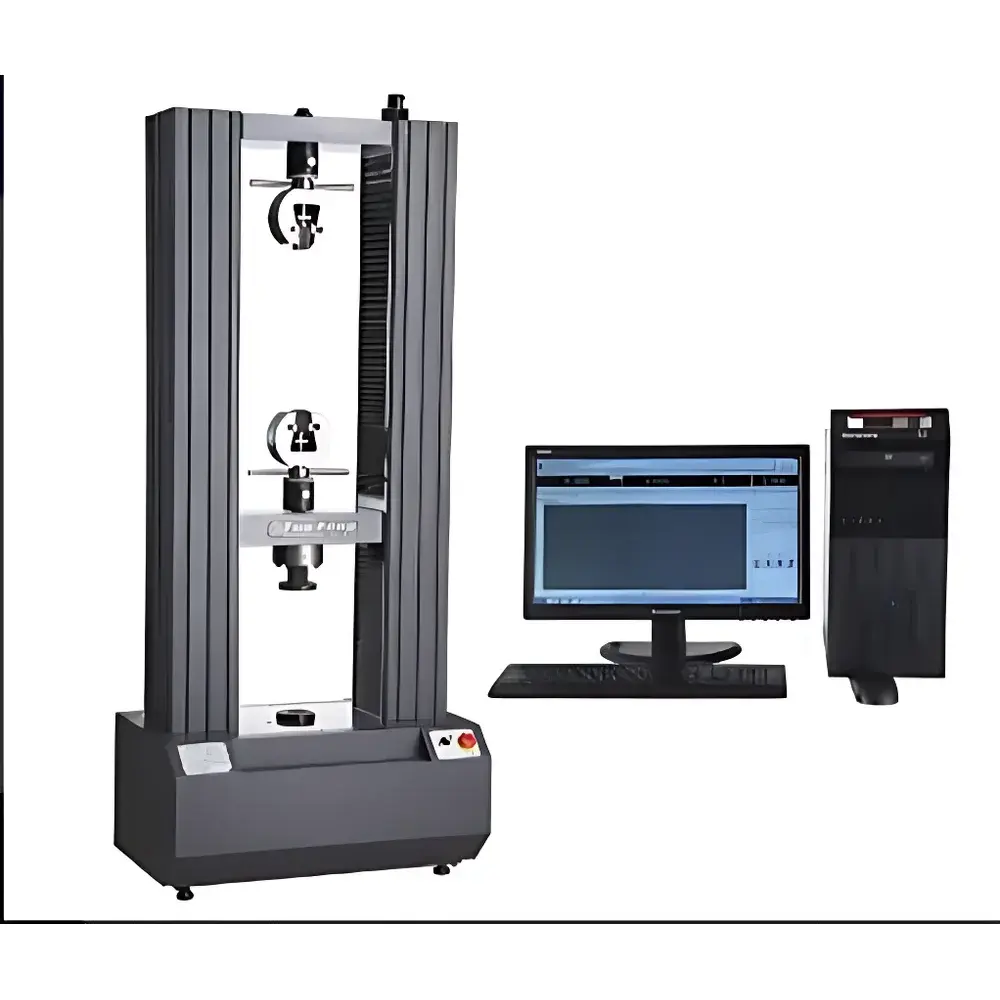
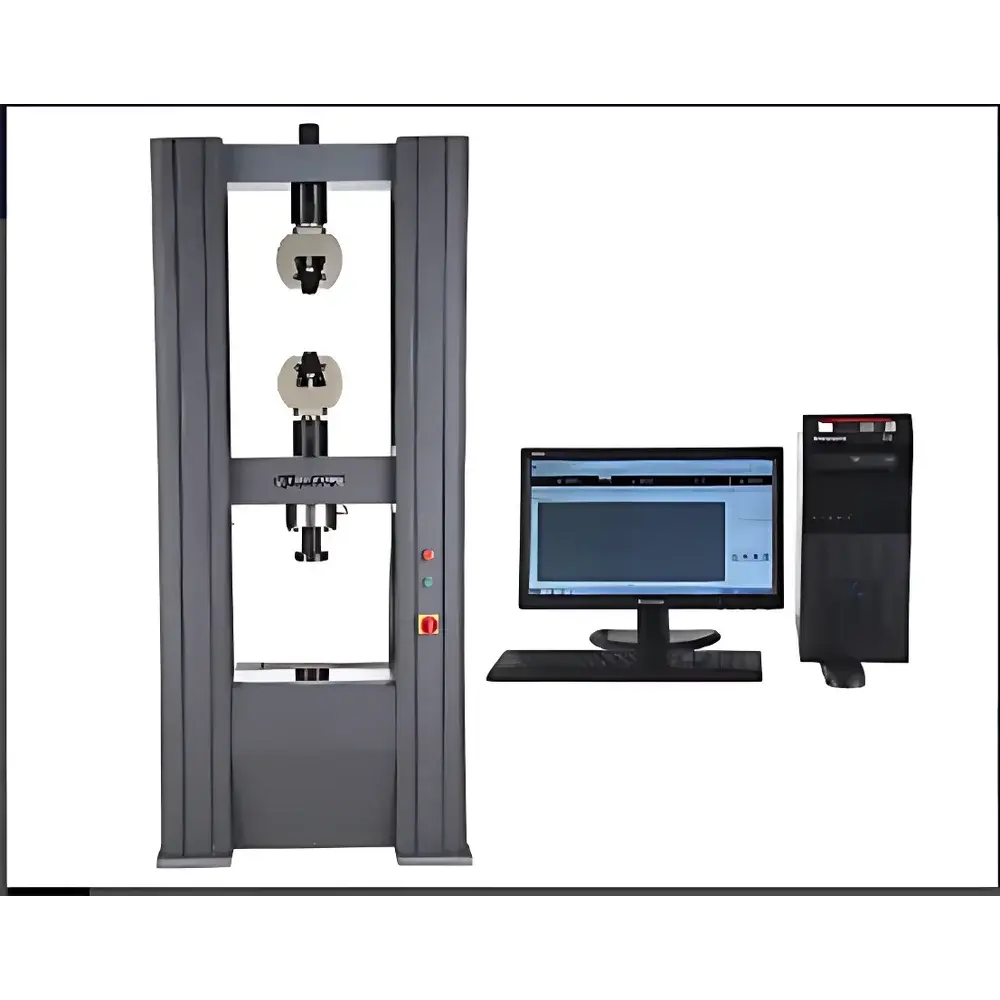
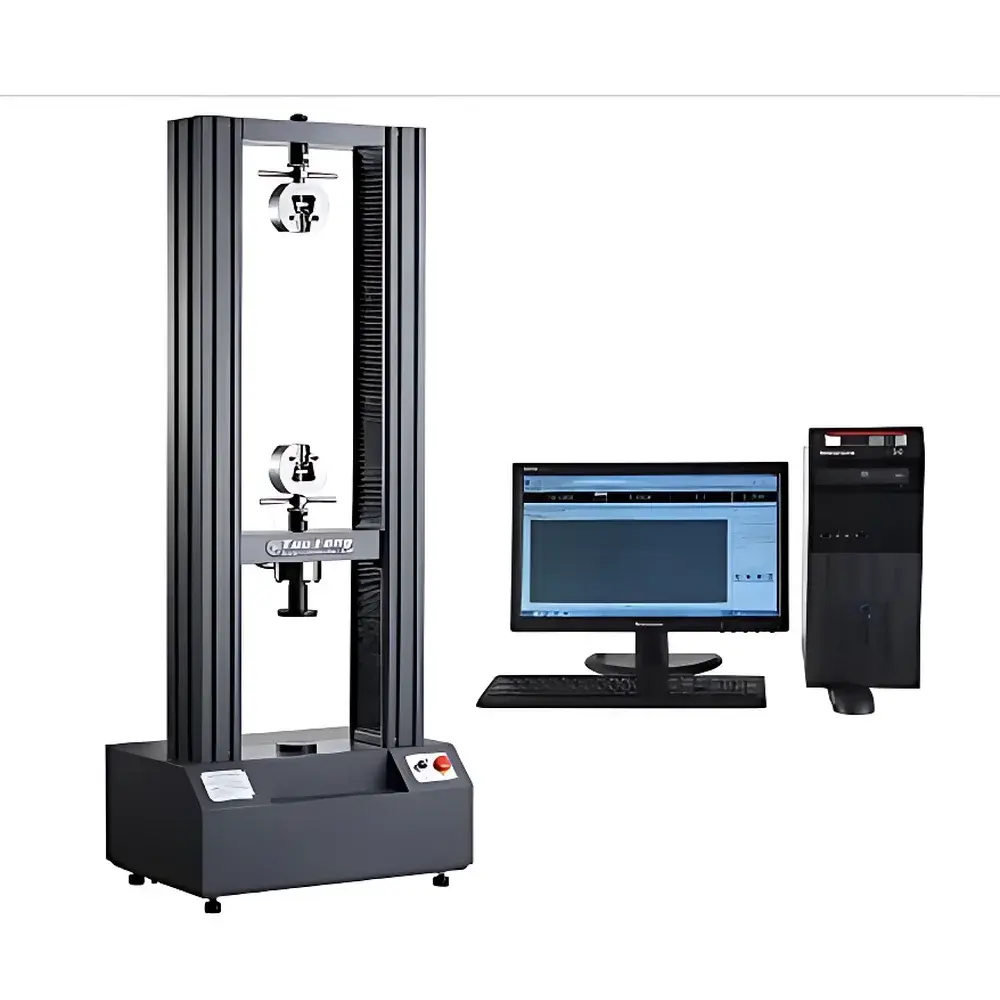
Tuofeng TFW-106 Electronic Universal Tensile Testing Machine
| Brand | Tuofeng |
|---|---|
| Origin | Shanghai, China |
| Manufacturer Type | OEM Manufacturer |
| Model | TFW-106 |
| Max Test Load | 200 kN |
| Force Measurement Range | 1 kg to 200 kN (0.2%–100% FS) |
| Force Accuracy | ±0.5% of reading |
| Crosshead Travel | 1000 mm |
| Displacement Resolution | 0.001 mm |
| Test Speed Range | 0.001–500 mm/min (infinitely variable) |
| Effective Test Width | 400 mm (customizable up to 600 mm) |
| Position Measurement System | High-resolution optical encoder |
| Displacement Accuracy | ±0.005% of reading |
| Load Cell Resolution | 1 part in 500,000 full-scale codes, single-range, constant resolution |
| Power Supply | 220 V AC, 3.0 kW |
| Machine Weight | ~1500 kg |
| Accuracy Class | ISO 7500-1 / ASTM E4 Class 0.5 |
| Compliance | GB/T 16491–2008, JJG 475–2008, ASTM E4, ASTM D638, ASTM D790, ISO 527, ISO 178, ISO 6892-1, DIN 53455, JIS K7113, BS EN ISO 10365 |
Overview
The Tuofeng TFW-106 Electronic Universal Tensile Testing Machine is a high-capacity, microprocessor-controlled mechanical testing system engineered for precision static mechanical characterization of metallic, polymeric, elastomeric, composite, and ceramic materials. Based on servo-controlled electromechanical actuation and high-fidelity load/displacement transduction, the system operates under closed-loop feedback control to maintain strict adherence to standardized loading protocols defined in ISO 6892-1 (tensile testing of metals), ASTM D638 (plastics), ASTM D790 (flexural properties), and ISO 527 (tensile properties of plastics). Its robust architecture supports both uniaxial tension and compression modes, as well as bending, shear, tear, peel, puncture, and yield-point analysis—enabling full mechanical property profiling across R&D, QC, and regulatory validation workflows.
Key Features
- High-force capacity: 200 kN maximum load with dual-range force measurement capability from 1 kg to full scale, ensuring sensitivity at low loads and stability at peak capacity.
- Precision motion control: Imported servo motor coupled with high-precision ground ball-screw transmission delivers smooth, backlash-free crosshead movement across a 1000 mm travel range.
- Sub-micron displacement resolution: 0.001 mm optical encoder-based positioning system with ±0.005% linearity, enabling accurate strain determination even for low-elongation materials.
- True single-range load cell: 500,000-count internal resolution without auto-ranging or hardware switching—guaranteeing consistent signal fidelity across the entire measurement span.
- Dual-speed crosshead control: Programmable fast/slow return function with emergency stop, electronic limit switches, and overload protection (110% overcapacity cut-off).
- Modular fixture interface: Standard M8/M10 threaded mounting surfaces support rapid interchange of grips—including pneumatic, wedge, hydraulic, and custom-designed fixtures for rubber, film, fiber, and composite specimens.
- Thermal-stable structural frame: Heavy-duty welded steel base and upright columns minimize deflection under load, meeting ISO 7500-1 Class 0.5 stiffness requirements.
Sample Compatibility & Compliance
The TFW-106 accommodates diverse specimen geometries—from thin elastomer strips (per ASTM D412) and vulcanized rubber sheets to reinforced composites, metal rods, and textile laminates. Its adjustable test width (standard 400 mm, extendable to 600 mm) and vertical clearance allow testing of large-format or thick-section samples. The system conforms to national and international metrological and performance standards including GB/T 16491–2008 (Chinese standard for electronic universal testers), JJG 475–2008 (verification regulation), ISO 7500-1 (static calibration), and ASTM E4 (load verification). It supports full traceability for GLP/GMP environments through audit-ready calibration logs and user-accessible uncertainty budgets.
Software & Data Management
Control and analysis are performed via Windows-based proprietary software compliant with FDA 21 CFR Part 11 requirements—featuring electronic signatures, role-based access control, and immutable audit trails for all test parameters, raw data, and result modifications. The platform supports multi-language UI (English, Simplified/Traditional Chinese), customizable unit systems (N/kN/lbf, mm/inch, MPa/psi), and real-time plotting of up to four synchronized curves: load–time, load–displacement, stress–strain, and displacement–time. Automated calculations include tensile strength, yield strength (0.2% offset), Young’s modulus, elongation at break, tear strength (ASTM D624), peel adhesion (ASTM D903), and compressive modulus. Data export is supported in CSV, XML, PDF, and Excel formats; batch reporting includes statistical summaries (mean, min, max, CV%) and curve overlay comparisons for material lot qualification.
Applications
- Rubber & elastomer R&D: Characterization of natural/synthetic rubber compounds per ASTM D412 and ISO 37—covering tensile set, permanent deformation, and hysteresis behavior.
- Automotive component validation: Testing of hoses, belts, bushings, and vibration-damping mounts under controlled strain rates and environmental conditioning (when integrated with environmental chambers).
- Wire & cable industry: Evaluation of conductor tensile strength, insulation elongation, and jacket peel resistance per UL 1581 and IEC 60811.
- Medical device manufacturing: Mechanical verification of silicone tubing, catheter shafts, and polymer-based implants per ISO 10993-12 and ASTM F2102.
- Academic materials science: Teaching and research applications involving fracture mechanics, viscoelastic modeling, and constitutive law development.
- Quality assurance in aerospace composites: Interlaminar shear strength (ILSS), flexural rigidity, and compression-after-impact (CAI) pre-screening.
FAQ
What standards does the TFW-106 support out-of-the-box?
The system includes preconfigured test methods for ASTM D638, ASTM D790, ISO 527, ISO 178, ISO 6892-1, GB/T 1040, and GB/T 16491—with editable templates for custom protocol development.
Can the machine be integrated with environmental chambers?
Yes—standardized electrical and mechanical interfaces support third-party temperature/humidity chambers (–70°C to +300°C) with real-time synchronization of environmental data into test records.
Is the software validated for regulated industries?
The software package includes IQ/OQ documentation templates and supports 21 CFR Part 11 compliance through configurable user roles, electronic signatures, and tamper-proof audit logs.
What maintenance is required for long-term accuracy?
Annual recalibration of load cell and displacement encoder is recommended; periodic verification using certified reference standards (e.g., NIST-traceable deadweights) ensures ongoing conformance to ISO 7500-1.
Does the system support extensometry?
Yes—optional high-accuracy clip-on or non-contact video extensometers can be connected via USB or analog input, enabling strain measurement independent of crosshead motion for modulus-critical applications.



