
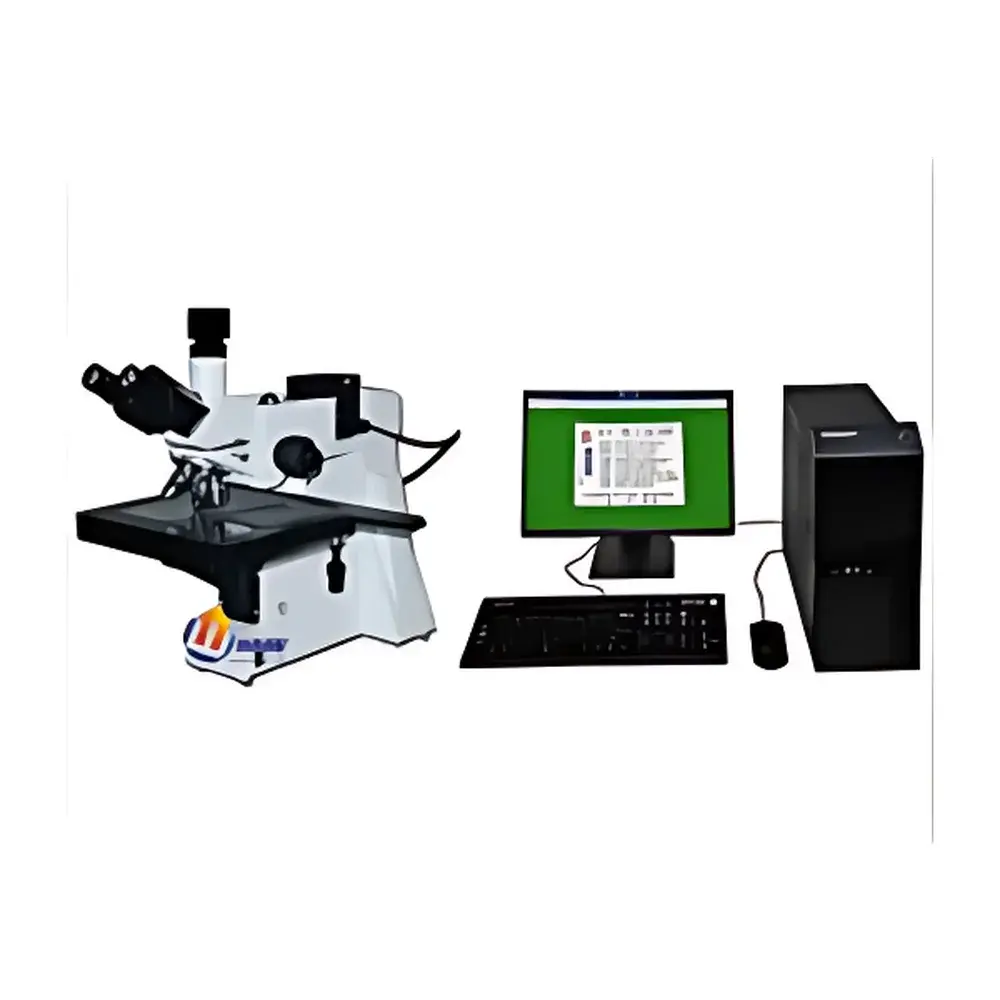
YANRUN MMAS-12 Upright Metallurgical Microscope with Integrated Image Analysis System
| Brand | YANRUN |
|---|---|
| Origin | Shanghai, China |
| Manufacturer Type | Direct Manufacturer |
| Product Type | Upright Metallurgical Microscope |
| Model | MMAS-12 |
| Total Magnification Range | 50×–800× |
| Eyepieces | Wide-Field WF10X (Φ18 mm) |
| Objectives | PL 5X/0.12, PLL10X/0.25, PLL20X/0.40, PLL40X/0.60, PLL80X/0.80 (long working distance, achromatic, cover-slip free) |
| Illumination | 6 V / 20 W adjustable halogen Köhler illumination with polarizer/analyzer, field & aperture diaphragms, and filter turret (yellow/green/blue + ground glass) |
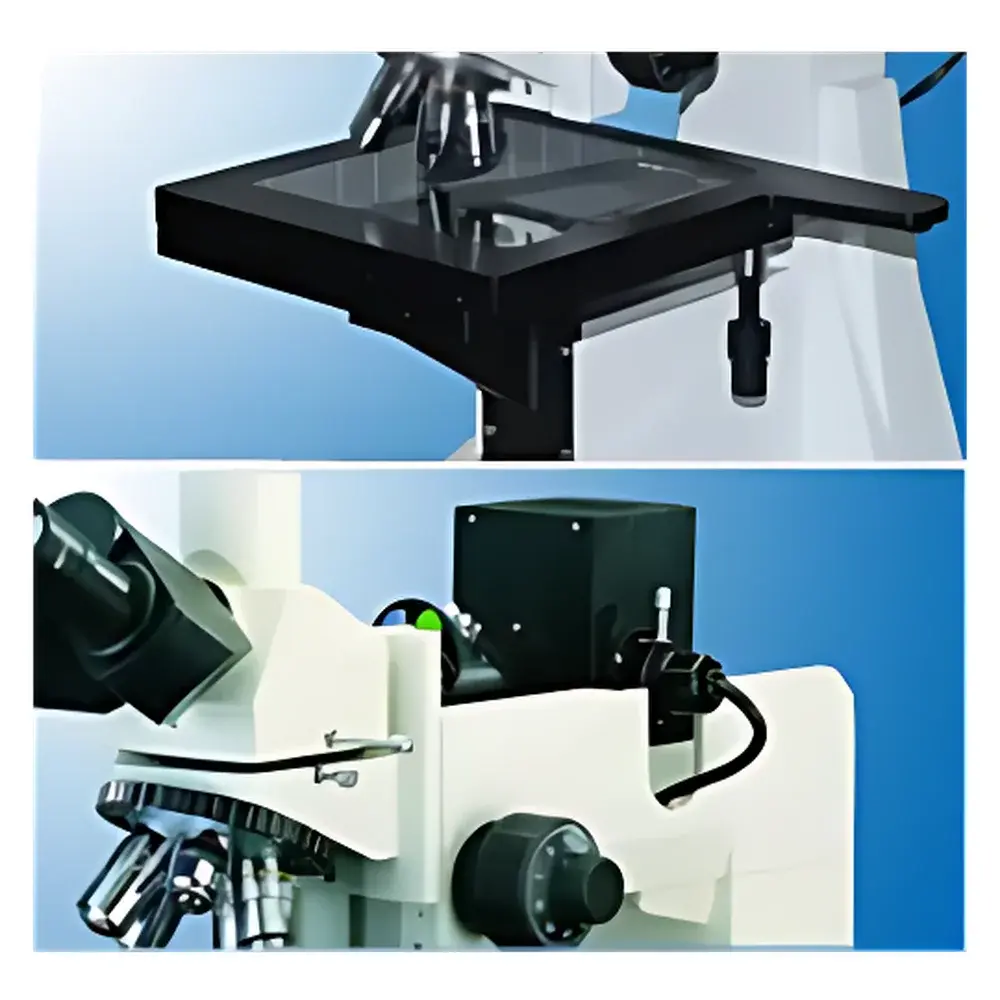
| Stage | Triple-layer mechanical stage (250 × 230 mm), travel range 154 × 154 mm |
| Focusing | Coaxial coarse/fine focus (fine step: 2 µm), tension-adjustable coarse drive with lock and limit stops |
| Nosepiece | Quintuple inward-rolling ball bearing turret |
| Tube | 30° inclined trinocular head with built-in analyzer, 100% light path split for imaging |
| Frame | T-shaped anti-vibration base with low-profile front-mounted focusing mechanism |
| Software | MMAS-12 Image Analysis Suite (ISO/ASTM-compliant quantitative metallography platform) |
| Included Systems | MOS high-transmission optical system, MMAS software v5.x, dedicated analysis workstation |
Overview
The YANRUN MMAS-12 is a precision-engineered upright metallurgical microscope designed for quantitative microstructural analysis of opaque, polished, or etched metallic and ceramic specimens. It operates on the principle of incident (epi-illumination) brightfield, darkfield, and polarized light microscopy—enabling comprehensive evaluation of grain morphology, phase distribution, inclusion content, precipitate size, and coating integrity. The system integrates a robust optical train featuring long-working-distance, cover-slip-free achromatic objectives optimized for high numerical aperture and flat-field correction across the full 18 mm field of view. Its Köhler illumination architecture ensures uniform intensity and optimal resolution at all magnifications, while the T-shaped vibration-damping frame and low-center-of-gravity mechanical design provide exceptional stability during extended measurement sessions—critical for repeatable image-based metrology in ISO 17025-accredited laboratories.
Key Features
- Trinocular observation tube inclined at 30°, with integrated rotatable analyzer enabling seamless switching between standard and polarized light observation; 100% beam-splitting capability supports simultaneous visual inspection and high-fidelity digital capture.
- Five-position inward-rolling ball-bearing objective turret ensures precise, repeatable lens positioning and long-term mechanical reliability under routine industrial use.
- Triple-layer mechanical stage (250 × 230 mm footprint, 154 × 154 mm travel range) facilitates rapid specimen navigation and accurate coordinate-based repositioning—essential for multi-site statistical sampling per ASTM E112 and ISO 643.
- Coaxial coarse/fine focusing mechanism with 2 µm fine-focus graduation, tension-adjustable coarse drive, mechanical lock, and hard-stop limiters enables both ergonomic operation and sub-micron Z-axis repeatability required for focus-stacking and depth profiling.
- Dedicated epi-illumination system with 6 V / 20 W halogen lamp, continuously variable intensity control, field and aperture diaphragms, and removable filter turret (yellow, green, blue interference filters plus ground glass diffuser) supports contrast optimization across diverse material systems—from aluminum alloys to hardened steels and refractory ceramics.
Sample Compatibility & Compliance
The MMAS-12 accommodates standard metallographic specimens up to 40 mm in height and 75 mm in diameter, including mounted cross-sections, bulk castings, weld zones, and coated substrates. Its cover-slip-free objective design eliminates spherical aberration when imaging unsealed, oil-immersion-unfriendly surfaces—common in as-polished or electrolytically etched samples. The system complies with core international standards governing metallographic practice, including ASTM E3 (specimen preparation), ASTM E112 (grain size determination), ASTM E1245 (inclusion rating), ISO 643 (steel microstructure classification), and ISO 4967 (non-metallic inclusions). All hardware and software components are engineered to support GLP/GMP documentation workflows, with audit-trail-capable software logging, user-access controls, and electronic signature readiness aligned with FDA 21 CFR Part 11 principles.
Software & Data Management
The MMAS-12 ships with the proprietary MMAS-12 Image Analysis Suite—a validated, modular platform supporting over 400 standardized evaluation protocols derived from ASTM, ISO, GB/T, and JIS specifications. The software features calibrated geometric measurement tools (line, rectangle, circle, polygon, angle), automated grain size classification (ASTM E112, Heyn, Jeffries), inclusion quantification (ASTM E1245, JK Standard), phase area fraction analysis, and custom threshold-based segmentation. It supports DICOM-compatible image import/export, TIFF/PNG/JPEG acquisition, report generation with editable templates, and batch processing of multi-field datasets. Advanced modules—including image stitching (for large-area mapping), focus stacking (Z-series synthesis), and optional confocal reconstruction—extend analytical capability without requiring third-party integration. All measurement data, operator logs, calibration records, and timestamped image metadata are stored in a relational database compliant with ISO/IEC 17025 traceability requirements.
Applications
This system serves as a primary analytical instrument in metallurgical R&D labs, foundry QC departments, aerospace component certification facilities, and academic materials science programs. Typical use cases include: quantitative assessment of ferrite/pearlite ratios in carbon steels; grain boundary characterization in nickel-based superalloys; inclusion type and distribution analysis in bearing steels per ISO 4967; coating thickness and delamination detection in thermal barrier systems; and microstructural evolution monitoring during heat treatment validation. Its polarized light capability further enables crystallographic orientation mapping of non-cubic phases (e.g., Ti-6Al-4V α-phase variants) and stress-induced birefringence evaluation in tempered glasses or composite interfaces.
FAQ
Does the MMAS-12 support automated grain size reporting per ASTM E112?
Yes—the MMAS software includes fully configurable ASTM E112 implementation with manual point-counting, linear intercept, and planimetric methods, generating compliant PDF reports with embedded calibration certificates.
Can the system be upgraded with oil-immersion objectives?
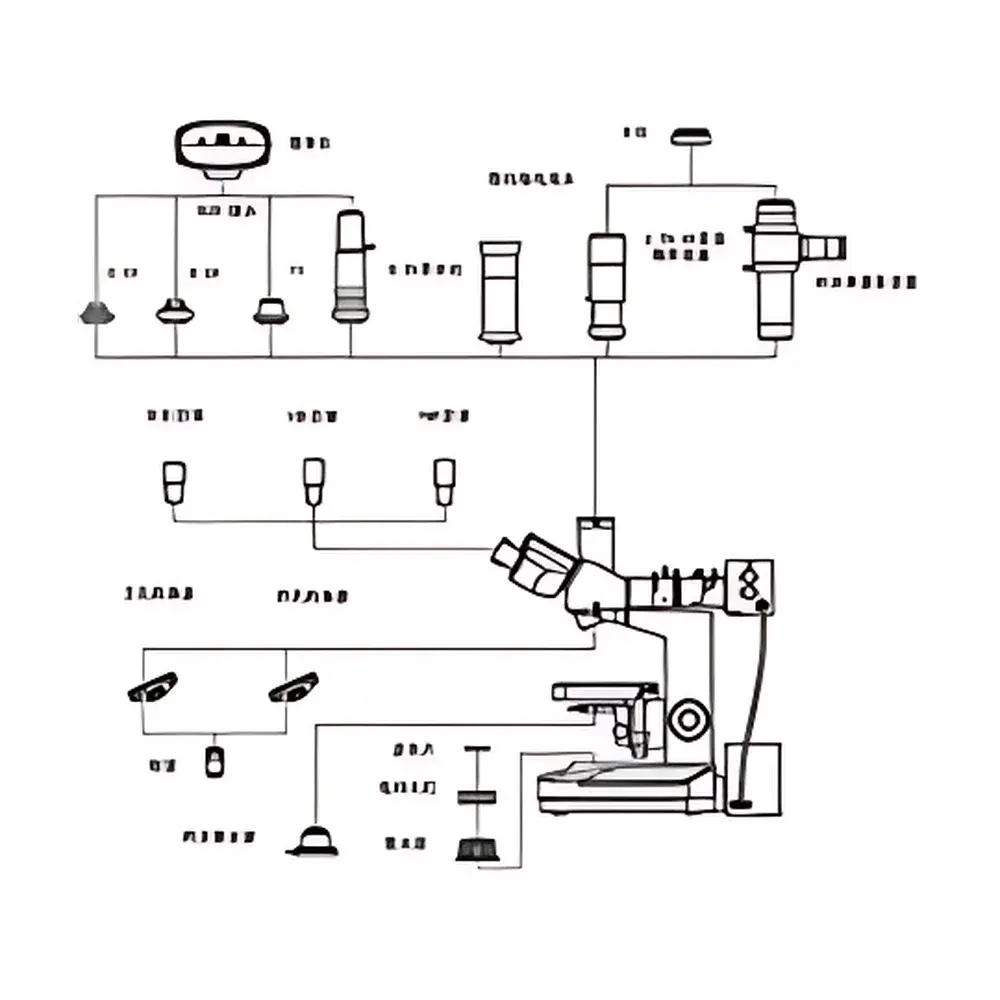
Yes—optional PLL100X/1.25 oil-immersion objectives (with spring-loaded correction collar) are available as accessories and integrate seamlessly via the quintuple nosepiece.
Is the software compliant with FDA 21 CFR Part 11 for regulated environments?
The MMAS-12 v5.x software supports electronic signatures, role-based access control, audit trails, and data integrity safeguards—meeting foundational requirements for Part 11 compliance when deployed on validated IT infrastructure.
What camera interface options are supported?
The system is compatible with USB 3.0 and HDMI-output industrial CMOS cameras (including YANRUN’s certified 5 MP and 12 MP models), with real-time preview, exposure control, and RAW+JPEG dual-stream capture.
Is technical support and software maintenance included?
YANRUN provides 24-month hardware warranty, lifetime software updates for the MMAS suite, and remote troubleshooting assistance through ISO 9001-certified engineering support channels.




