
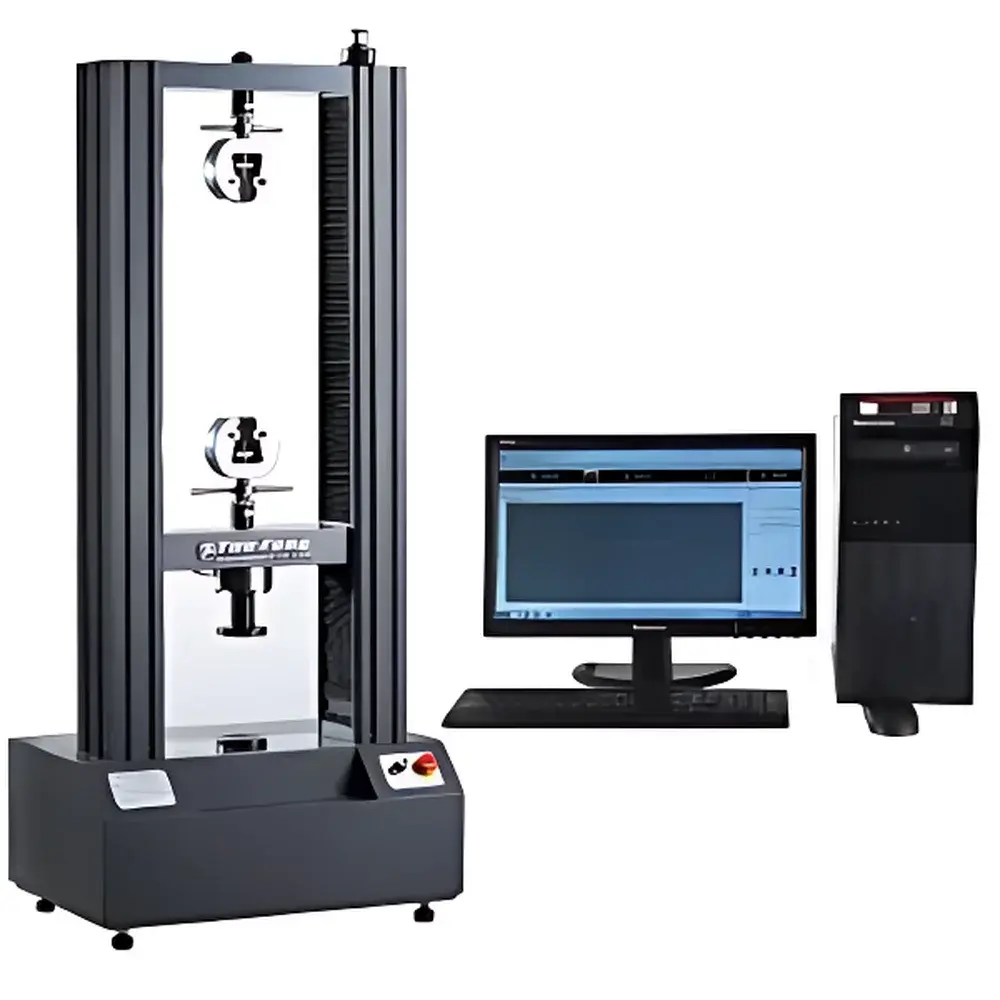
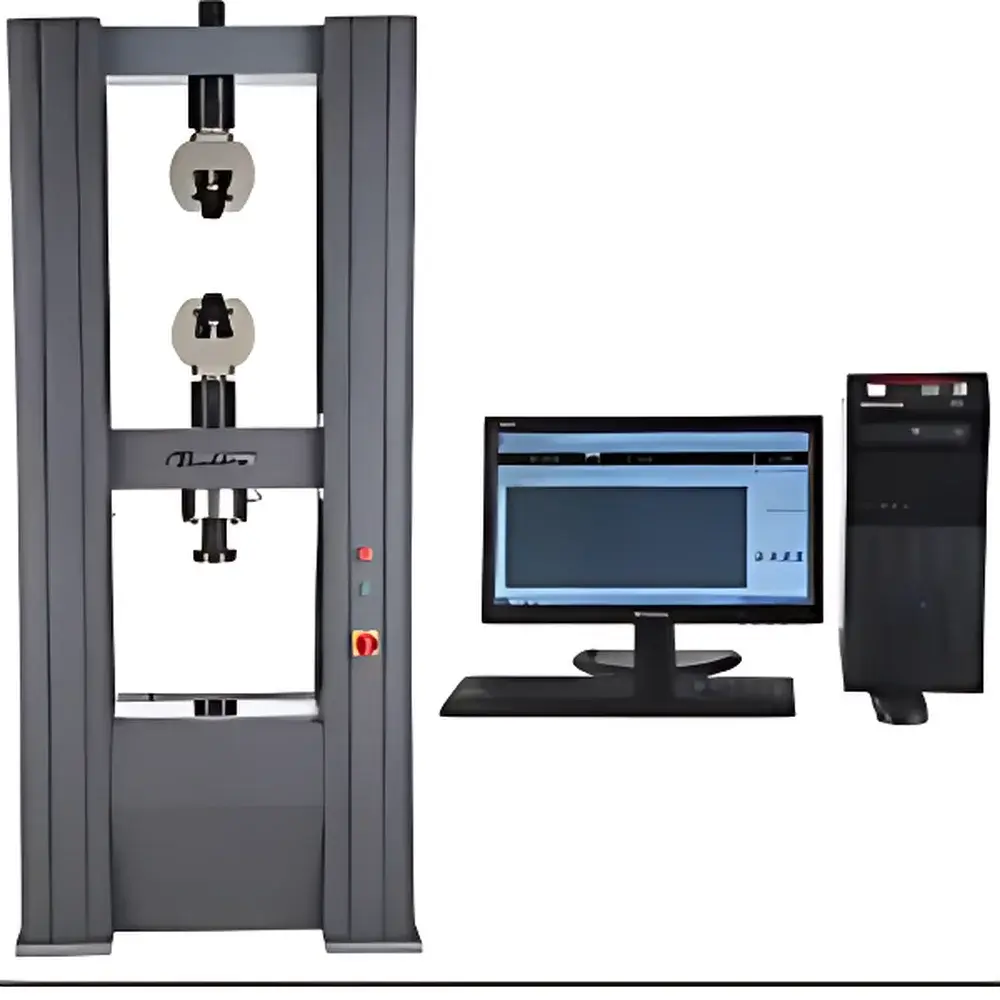
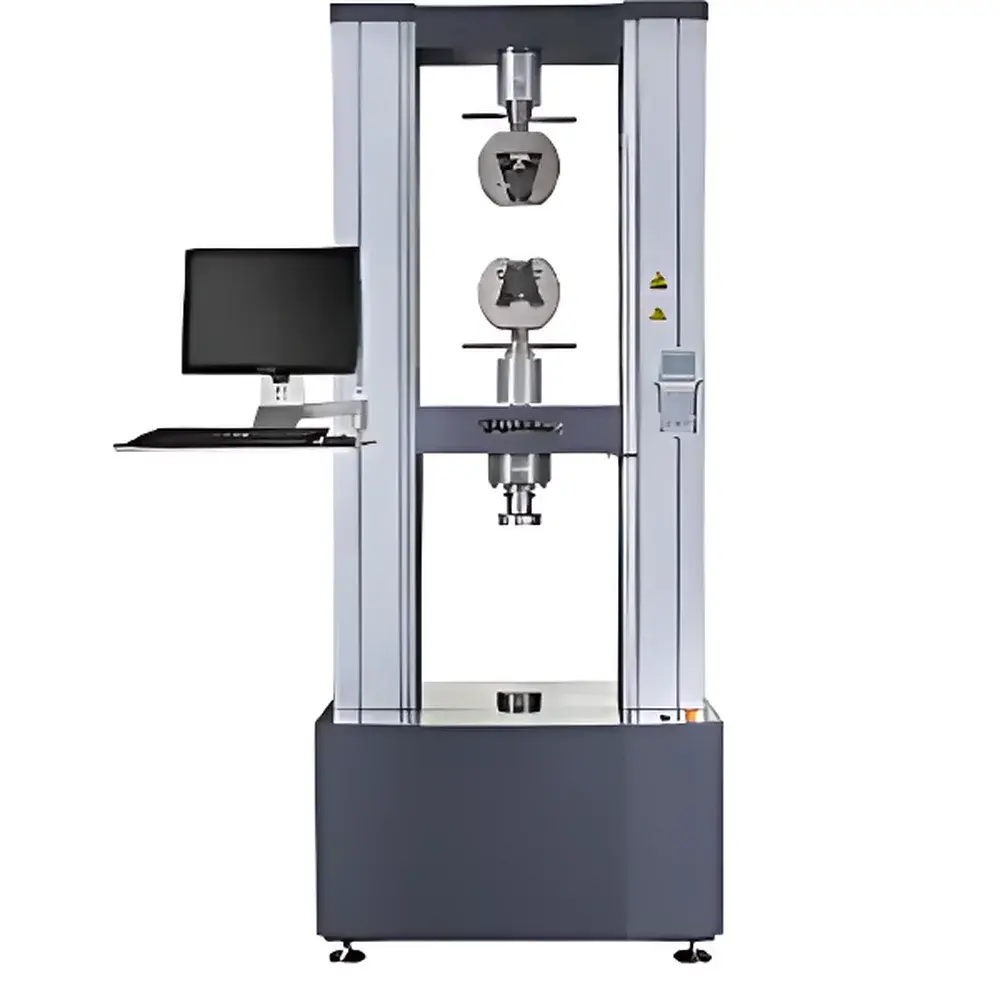
Tuofeng TFW-124 Computer-Controlled Servo-Driven Universal Tensile Testing Machine
| Brand | Tuofeng |
|---|---|
| Origin | Shanghai, China |
| Manufacturer Type | Direct Manufacturer |
| Product Category | Domestic |
| Model | TFW-124 |
| Instrument Type | Electromechanical Universal Testing Machine |
| Maximum Test Load | 200 kN |
| Force Measurement Range | 0.2%–100% of Full Scale |
| Force Accuracy | ±0.5% of reading |
| Crosshead Travel | 1000 mm |
| Displacement Resolution | 0.001 mm |
| Control System | PC-based servo control with Windows software |
| Compliance | GB/T 16491–2008, JJG 475–2008, ASTM E4, ISO 7500-1, DIN 51221, JIS B 7721 |
Overview
The Tuofeng TFW-124 is a high-precision, computer-controlled electromechanical universal testing machine engineered for static mechanical property evaluation of metallic, polymeric, composite, and ceramic materials under tension, compression, bending, shear, peel, tear, and puncture loading conditions. It operates on the principle of closed-loop servo control, where a high-torque AC servo motor—coupled with a precision planetary gear reducer and preloaded recirculating ball screw—drives the crosshead with exceptional positional fidelity and dynamic response. The system integrates load cell feedback (with dual-range or seamless full-scale transduction), optical encoder-based displacement measurement, and optional extensometry to deliver traceable, repeatable, and standards-compliant mechanical characterization data. Designed in accordance with GB/T 16491–2008 and verified per JJG 475–2008 metrological verification procedures, the TFW-124 meets Class 0.5 accuracy requirements as defined in ISO 7500-1 and ASTM E4, making it suitable for accredited laboratories operating under GLP, ISO/IEC 17025, or internal quality assurance frameworks.
Key Features
- Full-scale force capacity of 200 kN with extended linearity across 0.2%–100% FS, enabling high-fidelity measurement from low-force polymer films to structural steel specimens.
- High-resolution displacement detection at 0.001 mm resolution, supported by quadrature optical encoders and real-time interpolation.
- Adjustable crosshead travel up to 1000 mm, configurable with optional height extensions for elongated specimens or custom fixtures.
- Dual-speed motorized crosshead positioning: rapid approach (up to 500 mm/min) and fine-test mode (0.001–500 mm/min, continuously variable).
- Integrated safety architecture including electronic limit switches, emergency stop circuitry, overload protection (auto-shutdown at >110% FS), and programmable soft limits.
- Modular fixture interface compatible with standardized wedge-action grips, compression platens, bend fixtures, peel jigs, and custom-engineered tooling per ASTM D638, ISO 527, ASTM D790, ISO 178, ASTM D1876, ISO 8510, and ASTM D624.
- Robust cast-iron frame with reinforced column geometry to minimize deflection and ensure axial alignment stability during high-load testing.
Sample Compatibility & Compliance
The TFW-124 accommodates specimens ranging from thin elastomeric strips (0.1 mm thick) to heavy-section metal coupons (up to 60 mm thickness), provided appropriate gripping and support configurations are selected. Its modular design supports ASTM, ISO, DIN, JIS, BS, and GB-standard test methods—including tensile strength, yield point determination (upper/lower yield), modulus of elasticity (secant/tangent), elongation at break, Poisson’s ratio (with biaxial extensometry), compressive strength, flexural modulus, peel adhesion, and tear resistance. All mechanical calibrations are traceable to national metrology institutes via certified reference load cells and displacement standards. The system complies with regulatory documentation requirements for FDA 21 CFR Part 11 when configured with audit-trail-enabled software and user-access controls.
Software & Data Management
The Windows-based test control and analysis suite provides multi-mode operation: load-controlled, displacement-controlled, strain-controlled, and hold-mode protocols (e.g., load hold, displacement hold, stress relaxation). Real-time plotting includes force–time, force–displacement, displacement–time, stress–strain, and force–extension curves—with on-the-fly switching between views. Software supports multilingual UI (English, Simplified/Traditional Chinese), customizable unit systems (N/kN/lbf, mm/in, MPa/psi), and automated calculation of standard mechanical parameters: ultimate tensile strength (UTS), yield strength (0.2% offset), Young’s modulus, fracture toughness (via compliance correction), elongation, reduction in area, compressive yield, flexural strength, peel strength, and tear propagation energy. Data export is available in CSV, XML, and PDF formats; batch reporting includes statistical summaries (mean, SD, min/max) and curve overlay for comparative analysis. Firmware and application updates are delivered remotely under lifetime support terms.
Applications
This system serves as a primary mechanical characterization platform in R&D, QC, and QA environments across aerospace component validation (e.g., titanium fasteners, carbon-fiber laminates), automotive material certification (seatbelt webbing, airbag fabrics, structural adhesives), medical device testing (sutures, stent crimping, balloon burst pressure), construction materials evaluation (rebar, grout, geotextiles), and polymer processing development (film extrusion, injection molding, thermoplastic elastomer formulation). It is routinely deployed in third-party testing labs, university mechanics laboratories, and national metrology centers for method validation, interlaboratory comparison studies, and proficiency testing programs.
FAQ
What standards does the TFW-124 comply with for calibration and verification?
It conforms to GB/T 16491–2008 (Chinese national standard for electronic universal testing machines), JJG 475–2008 (verification regulation), ISO 7500-1 (static calibration of force-proving instruments), and ASTM E4 (load verification of testing machines).
Can the system be integrated into an existing LIMS or MES environment?
Yes—via TCP/IP or RS-232 communication protocols, with configurable ASCII or XML data output for seamless integration with laboratory information management systems.
Is extensometry supported natively, and what types are compatible?
The base configuration supports clip-on axial extensometers and video-based digital image correlation (DIC) systems; high-accuracy contact extensometers (e.g., 10/25/50 mm gauge lengths) and non-contact laser extensometers are available as optional add-ons.
What is the typical lead time for custom fixture design and validation?
Standard fixtures ship with the system; custom-designed grips or specialized test assemblies typically require 3–6 weeks, including FEA-based mechanical validation and physical prototype testing.
Does the software support audit trail and electronic signature functionality for regulated industries?
When deployed with role-based access control, timestamped event logging, and electronic signature modules, the software satisfies FDA 21 CFR Part 11 and EU Annex 11 requirements for data integrity and accountability.



