
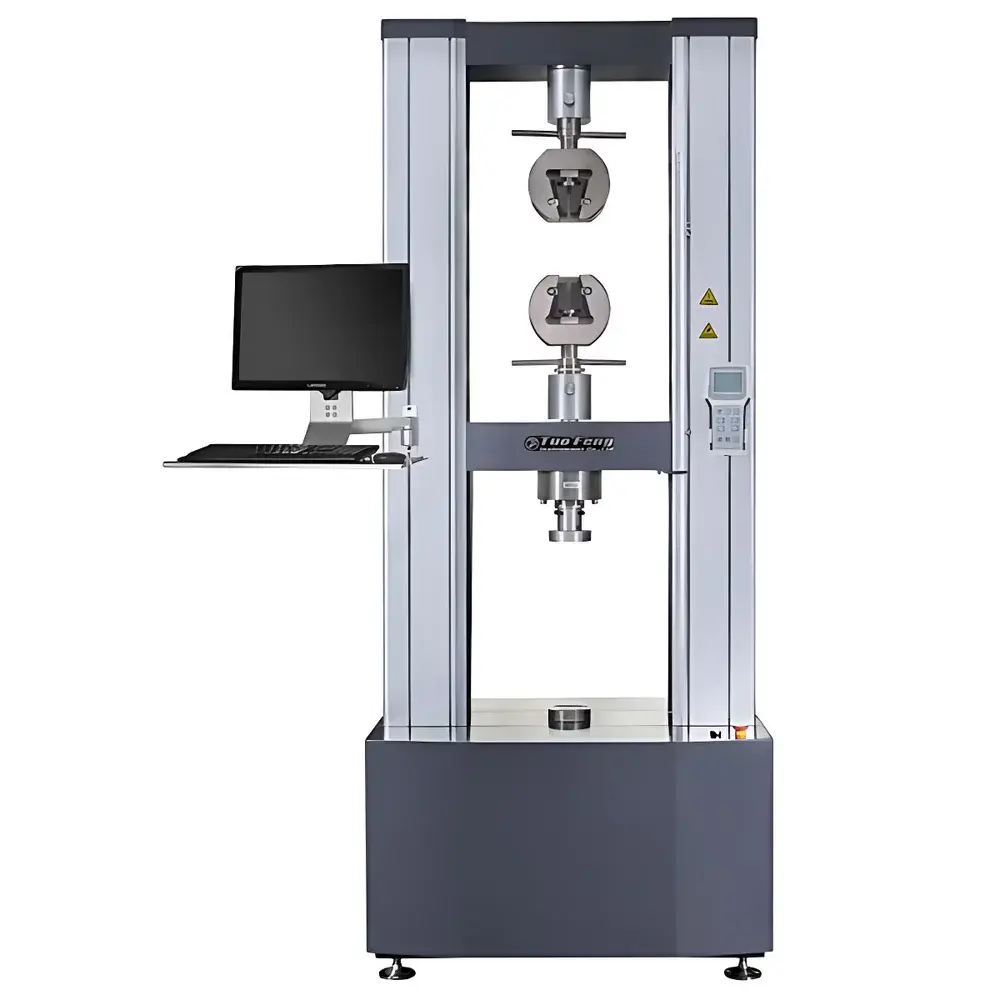
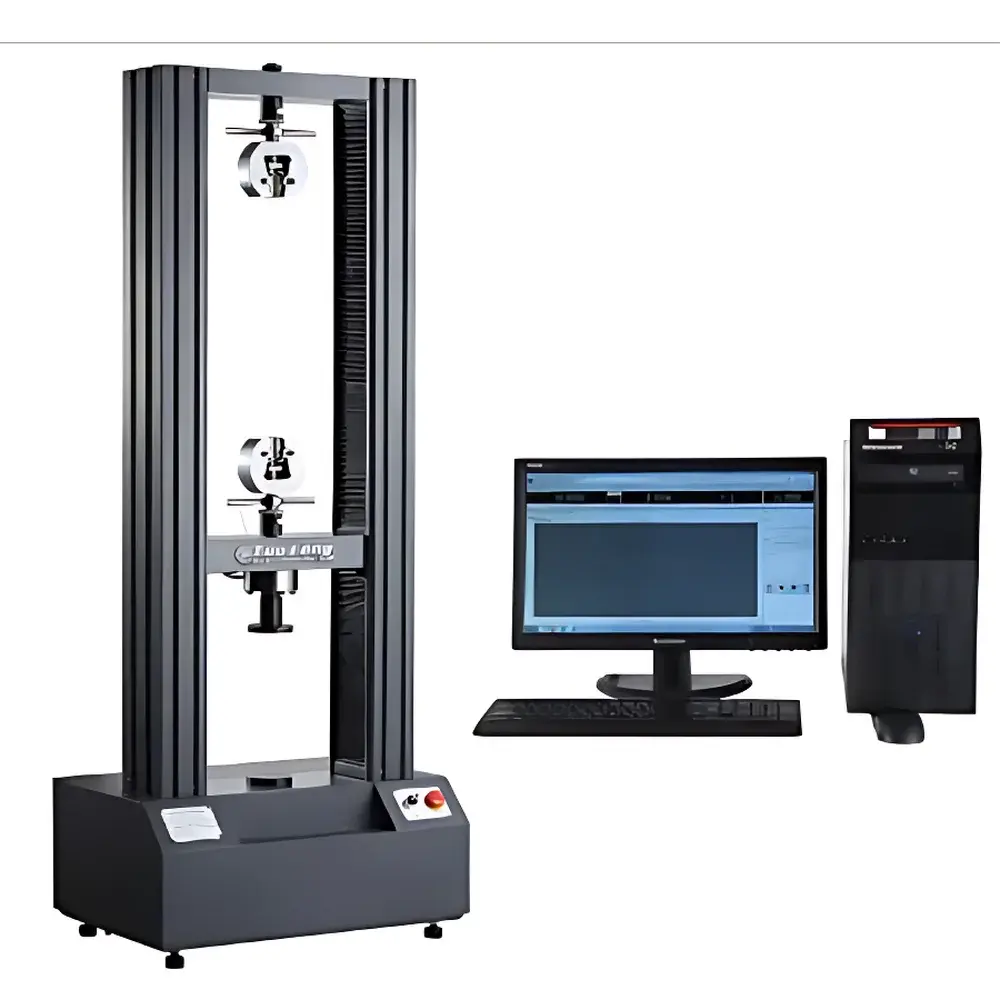
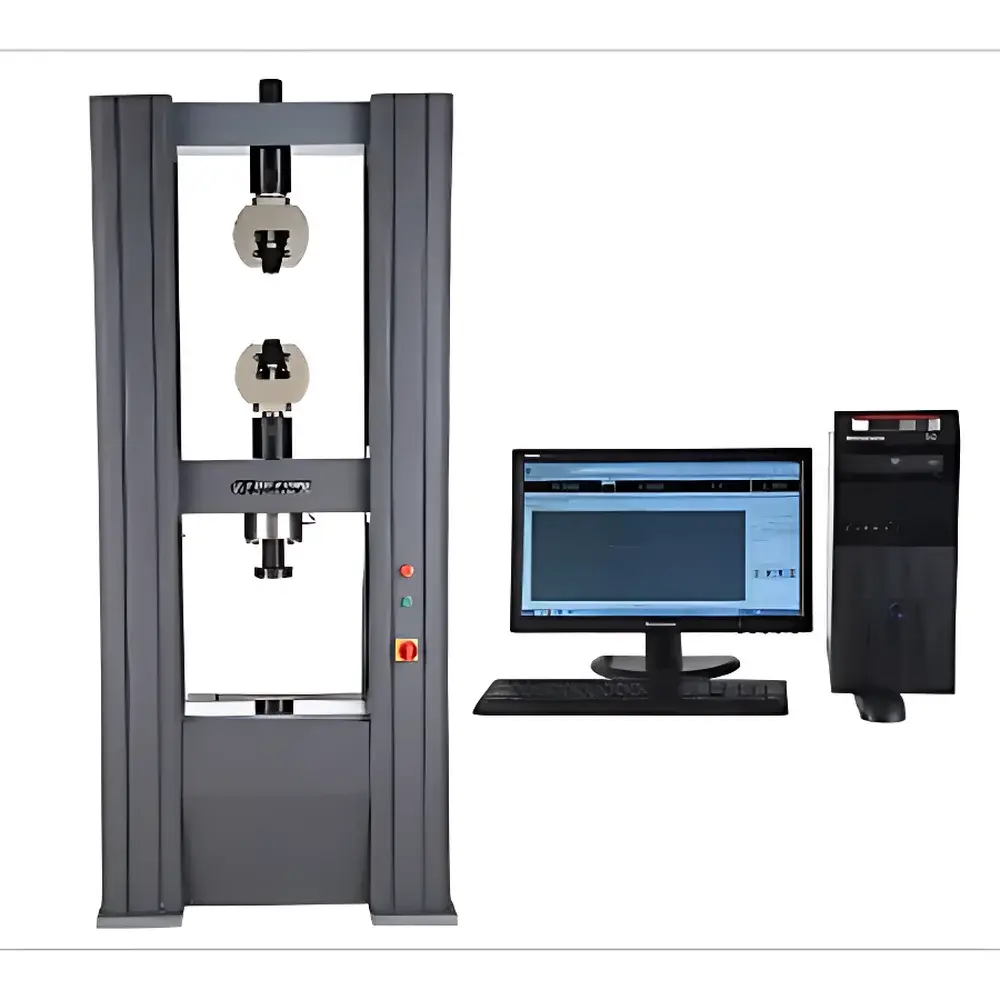
Tuofeng TFW-141 Microcomputer-Controlled Universal Testing Machine for Photovoltaic Solder Ribbon
| Brand | Tuofeng |
|---|---|
| Origin | Shanghai, China |
| Manufacturer Type | Direct Manufacturer |
| Instrument Type | Electromechanical Universal Testing Machine |
| Model | TFW-141 |
| Force Capacity | 14 kN (typical configuration for solder ribbon testing) |
| Accuracy Class | 0.5 |
| Effective Force Range | 0.2–100% of full scale |
| Force Measurement Accuracy | ±0.005% of reading |
| Displacement Measurement Accuracy | ±0.005% of reading |
| Test Speed Range | 0.001–500 mm/min (infinitely variable) |
| Crosshead Travel | 800 mm (customizable) |
| Effective Test Width | 400 mm (expandable) |
| Power Supply | 220 V, 1.0 kW |
| Compliance | GB/T 16491–2008, JJG 475–2008, ASTM E4, ISO 7500-1, DIN 51221 |
Overview
The Tuofeng TFW-141 Microcomputer-Controlled Universal Testing Machine is a precision electromechanical system engineered specifically for high-reproducibility tensile characterization of photovoltaic (PV) solder ribbons—critical interconnects in solar module assembly. Unlike general-purpose mechanical testers, the TFW-141 integrates hardware and software optimizations for low-force, high-resolution measurement of thin, ductile metallic foils (typically 0.1–0.3 mm thick, 1–5 mm wide), where conventional load cells and gripping systems often introduce slippage or premature failure artifacts. Its core architecture follows the principles of servo-controlled force-displacement feedback, utilizing a high-precision ball screw drive, imported AC servo motor with worm-gear reduction, and real-time closed-loop control to maintain stable strain rates across sub-mN to 14 kN ranges. Designed for compliance with international photovoltaic material standards—including IEC 61215-2 (MQT 14: Solder Bond Pull Test), IEC TS 62896 (Solder Joint Reliability), and UL 1703 Annex D—the TFW-141 delivers traceable, audit-ready data essential for module qualification, supplier evaluation, and process validation in Tier-1 PV manufacturing environments.
Key Features
- 0.5-class accuracy per GB/T 16491–2008 and ISO 7500-1, validated via third-party calibration certificates;
- Ultra-high-resolution force transduction: 1/500,000 internal A/D resolution, no range switching required across full capacity;
- Dual-speed crosshead control (fast jog + fine positioning) with programmable return-to-start functionality;
- Integrated electronic limit switches, emergency stop circuitry, and over-load protection (110% F.S. auto-shutdown);
- Modular grip interface supporting custom-designed pneumatic, wedge-action, or self-aligning fixtures for ribbon specimens (e.g., 2 mm × 0.2 mm CuSn-coated tinned copper);
- Real-time displacement feedback via high-line-count optical encoder (≥2000 PPR), synchronized with load acquisition at ≥1 kHz sampling rate;
- Optional extensometer integration (contact or non-contact) for true strain measurement compliant with ASTM E83 Class B-1 requirements.
Sample Compatibility & Compliance
The TFW-141 accommodates standardized PV solder ribbon geometries per IEC 61215-2 Clause 10.14 and JIS C 8992, including flat tinned copper, silver-plated copper, and multi-layer alloy ribbons (e.g., Sn63Pb37, Sn96.5Ag3Cu0.5). Specimen mounting utilizes low-profile, parallel-jaw grips with micro-textured contact surfaces to prevent edge deformation during pre-load application. All test protocols support automated sequence execution per predefined standard methods—including ramp-to-break, constant-rate extension (CRE), and dwell-hold cycles for creep assessment. The system meets metrological traceability requirements under GLP and ISO/IEC 17025 frameworks; raw data files include embedded metadata (operator ID, timestamp, environmental conditions, calibration ID) to satisfy FDA 21 CFR Part 11 audit trail expectations when configured with user-access controls and electronic signatures.
Software & Data Management
Operating on Windows 10/11, the proprietary Tuofeng TestMaster™ v4.x software provides full IEC-compliant test automation. It supports dual-language UI (English/Chinese), customizable unit systems (N/kN/lbf, mm/in, MPa/psi), and dynamic curve overlay for comparative analysis across batches or suppliers. Real-time plotting includes load–displacement, stress–strain, and load–time domains—with automatic detection of yield point (0.2% offset), ultimate tensile strength (UTS), elongation at break, and solder bond pull strength (SBPS). Data export complies with ASTM E1434 and ISO 10360-5 formats (CSV, XML, PDF reports). Audit logs record all parameter changes, test executions, and calibration events. Software modules are extensible via API for integration into MES or LIMS platforms, and firmware updates are delivered remotely with version-controlled release notes and validation documentation.
Applications
- Quantitative evaluation of solder ribbon tensile strength and elongation prior to tabbing/stringing processes;
- Interfacial bond integrity assessment between ribbon and solar cell metallization (Ag paste, Ni/Cu/Ag stacks);
- Thermal cycling-induced embrittlement studies (pre/post thermal stress testing);
- Quality control screening of incoming ribbon lots against supplier specifications (e.g., tensile ≥120 MPa, elongation ≥15%);
- R&D validation of novel ribbon architectures (e.g., textured surfaces, multi-core designs, alternative alloys);
- Failure mode analysis via post-fracture imaging correlation with load–displacement inflection points.
FAQ
What standards does the TFW-141 support for PV solder ribbon testing?
It natively implements test sequences aligned with IEC 61215-2 (MQT 14), IEC TS 62896, UL 1703 Annex D, and JIS C 8992, with configurable parameters for speed, preload, and hold duration.
Can the system be used for other materials beyond solder ribbons?
Yes—when fitted with appropriate fixtures and calibrated load cells, it performs ASTM D638 (plastics), ASTM D3039 (composites), ISO 6892-1 (metals), and EN 10002-1 (steel) tests, though its mechanical design prioritizes ribbon-specific low-force stability.
Is the software compliant with regulatory data integrity requirements?
With optional 21 CFR Part 11 module enabled, it provides role-based access, electronic signatures, immutable audit trails, and secure data archiving—validated per GAMP5 guidelines.
What maintenance is required to sustain 0.5-class accuracy?
Annual third-party verification per JJG 475–2008 is recommended; routine checks include encoder alignment, grip wear inspection, and load cell zero-drift monitoring—documented in the included calibration logbook.
Does Tuofeng provide application support for method development?
Yes—dedicated application engineers assist with fixture design, test protocol optimization, and interpretation of ribbon-specific failure signatures (e.g., cohesive vs. adhesive fracture modes).



