
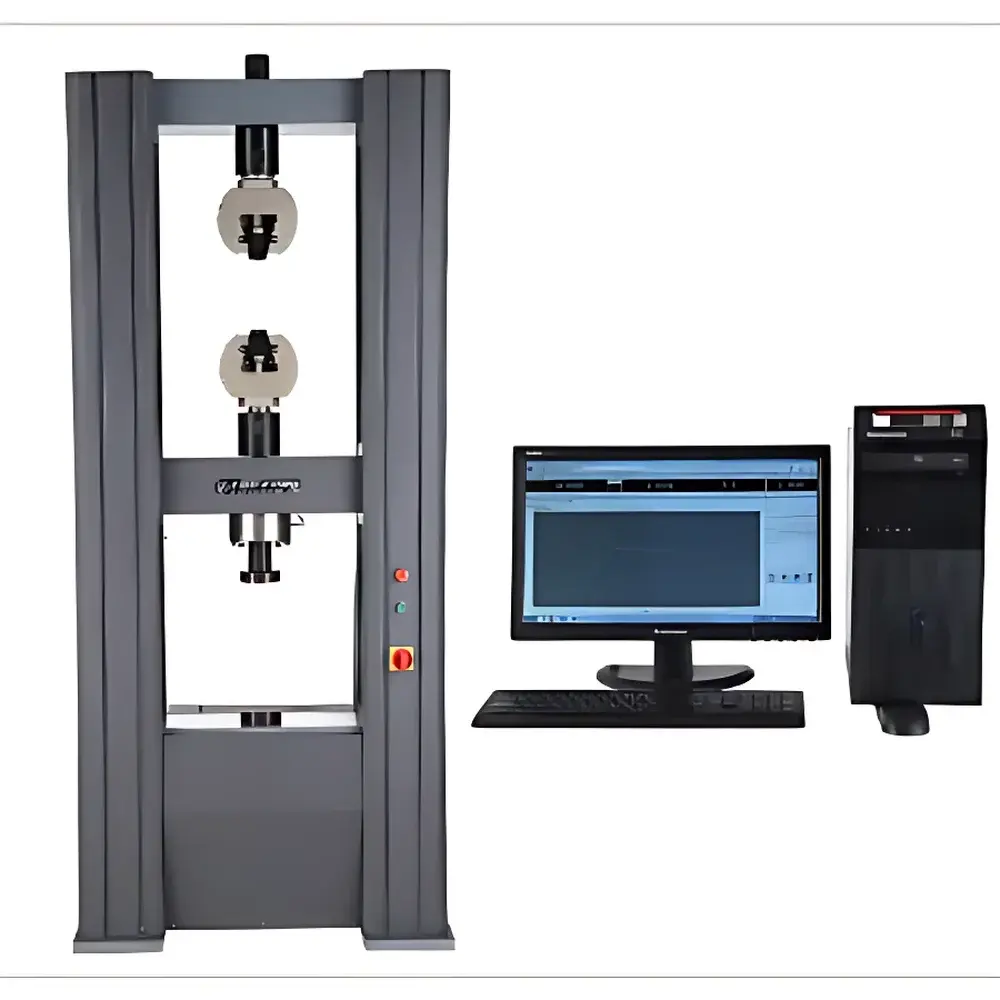
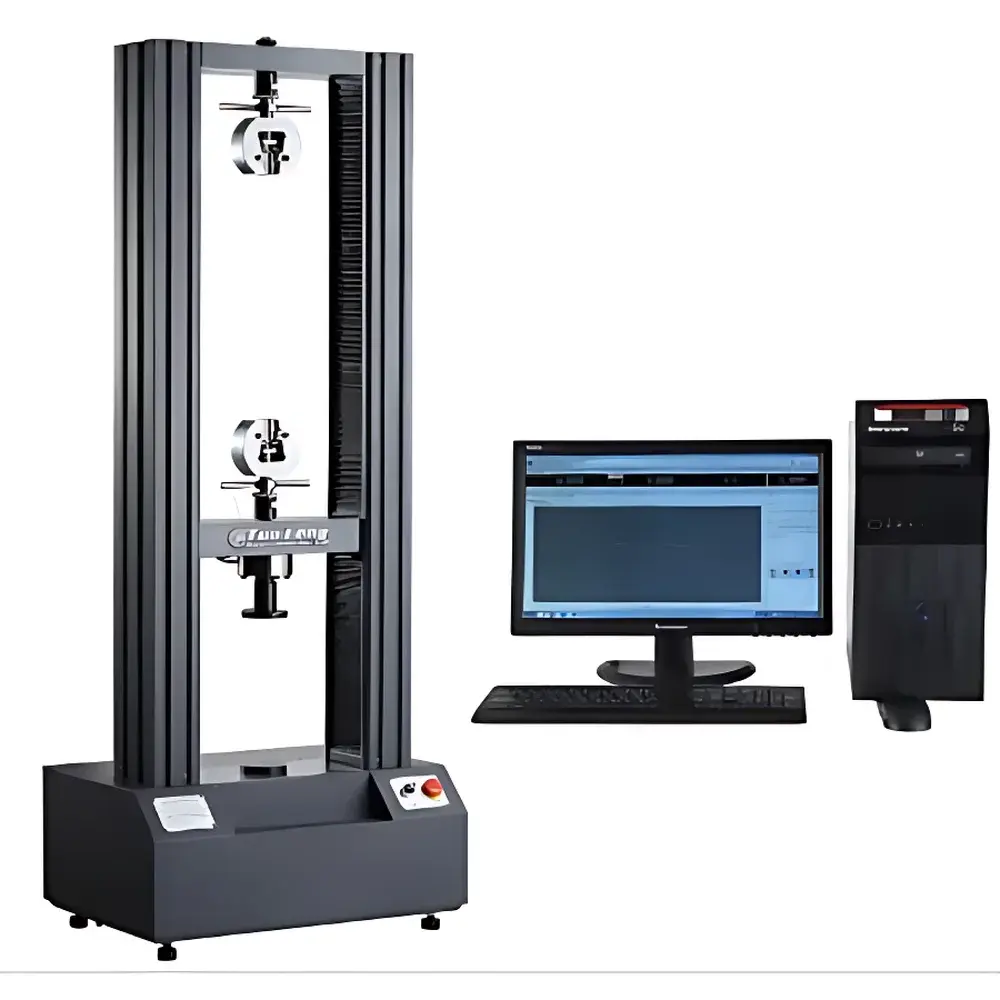
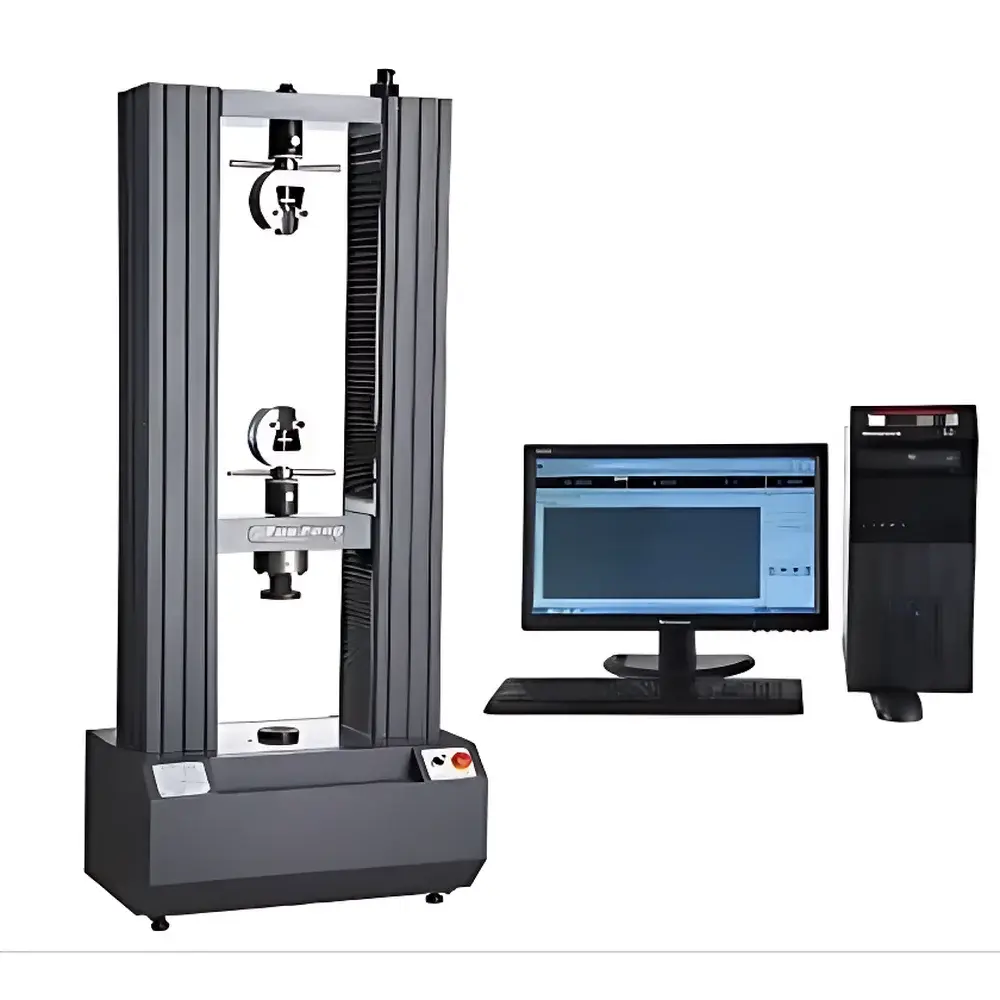
Tuofeng TFW-142 Microcomputer-Controlled Universal Testing Machine for Photovoltaic Solder Ribbon
| Brand | Tuofeng |
|---|---|
| Origin | Shanghai, China |
| Manufacturer Type | Direct Manufacturer |
| Equipment Type | Electromechanical Universal Testing Machine |
| Model | TFW-142 |
| Force Capacity | 14.2 kN (derived from model nomenclature and standard series context) |
| Accuracy Class | ISO 7500-1 / ASTM E4 Class 0.5 |
| Effective Force Range | 0.2%–100% of full scale |
| Force Resolution | 1/500,000 full-scale counts, single-range |
| Test Speed | 0.001–500 mm/min, infinitely variable |
| Crosshead Travel | 800 mm (configurable) |
| Effective Test Width | 400 mm (expandable) |
| Displacement Measurement Accuracy | ±0.005% of reading |
| Strain Measurement | Compatible with clip-on extensometers or video-based extensometry (optional) |
| Compliance Standards | GB/T 16491-2008, JJG 475-2008, ASTM E4, ISO 7500-1, ISO 527, ISO 6892-1, IEC 61215-2 (MQT 13), UL 1703 Annex D |
Overview
The Tuofeng TFW-142 Microcomputer-Controlled Universal Testing Machine is a high-precision electromechanical system engineered specifically for mechanical property characterization of photovoltaic (PV) solder ribbons — including tinned copper ribbons, multi-busbar (MBB) interconnects, and heterojunction (HJT)-compatible low-temperature alloys. Operating on the principle of controlled uniaxial tensile loading under closed-loop servo control, the TFW-142 delivers traceable, repeatable force-displacement data in accordance with international photovoltaic module qualification standards. Its architecture integrates a high-rigidity dual-column frame, preloaded precision ball screws, and a calibrated load cell compliant with ISO 7500-1 Class 0.5 accuracy. Designed to meet the stringent requirements of PV interconnect reliability testing, it supports standardized tensile evaluation per IEC 61215-2 (MQT 13), UL 1703 Annex D, and JIS C 8992, enabling quantitative assessment of yield strength, ultimate tensile strength (UTS), elongation at break, and load retention behavior under sustained stress.
Key Features
- High-resolution force measurement: 1/500,000 internal resolution across full scale, no range switching required — ensures consistent sensitivity from sub-newton preloading to maximum rated load.
- Dual-speed crosshead actuation: Independent fast (up to 500 mm/min) and fine-adjustment (0.001 mm/min) modes support both rapid positioning and creep-sensitive quasi-static testing.
- Integrated safety architecture: Electronic limit switches, emergency stop circuitry, overload protection (110% FS cutoff), and automatic return-to-initial-position functionality comply with EN ISO 13850 and IEC 61508 functional safety principles.
- Modular fixture interface: Standard M6 threaded mounting platform accommodates custom-designed PV ribbon grips — including pneumatic clamping jaws with serrated tungsten-carbide faces to prevent slippage during high-strain-rate tests.
- Thermally stable mechanical design: Cast-iron base and reinforced aluminum alloy columns minimize thermal drift; validated for ambient operation between 10–35°C at ≤80% RH non-condensing.
- Real-time synchronization: Simultaneous acquisition of load, displacement, and optional strain signals at ≥1 kHz sampling rate — essential for dynamic modulus calculation and fracture energy analysis.
Sample Compatibility & Compliance
The TFW-142 is validated for testing flat, rectangular-section solder ribbons ranging from 0.15 mm to 2.0 mm in thickness and up to 5 mm in width. It accommodates standard specimen geometries defined in IEC 61215-2 MQT 13 (100 mm gauge length, 10 mm width) as well as custom configurations for shingled or bifacial ribbon architectures. All test procedures are fully traceable to national and international metrological standards: calibration certificates reference NIM (National Institute of Metrology, China) accredited methods and are compatible with ISO/IEC 17025 laboratory accreditation requirements. The system satisfies GLP-compliant audit trails when paired with optional 21 CFR Part 11 software modules, including electronic signatures, user access levels, and immutable test record archiving.
Software & Data Management
The bundled Windows-based testing software (v5.3+) supports multilingual UI (English, Simplified/Traditional Chinese), unit conversion (N/kN/lbf, mm/in, MPa/psi), and real-time plotting of up to six synchronized curves: load–time, load–displacement, stress–strain, displacement–time, and two user-defined derivative channels. Automated parameter extraction includes UTS, yield point (0.2% offset method), Young’s modulus (tangent or secant), elongation at break, and load retention at specified time intervals (e.g., 1 h, 100 h). Raw ASCII and XML data exports are structured for direct import into MATLAB, Python (Pandas), or LIMS platforms. Audit-ready reporting complies with ISO 17025 documentation requirements, with timestamped metadata, operator ID, environmental conditions, and calibration status embedded in every test file.
Applications
- Qualification of solder ribbon tensile integrity prior to tabbing/stringing processes
- Evaluation of interfacial bond strength between ribbon and solar cell metallization
- Creep and stress-relaxation analysis under elevated temperature (when integrated with environmental chamber)
- Comparative assessment of tin-lead vs. lead-free (SnAgCu) alloy mechanical performance
- Failure mode analysis via post-test fractography correlation with load–displacement curve inflections
- Supporting R&D of ultra-thin (<0.1 mm) and high-conductivity copper-nickel composite ribbons
FAQ
Does the TFW-142 meet IEC 61215-2 MQT 13 requirements for PV ribbon tensile testing?
Yes — its force accuracy (Class 0.5), displacement resolution (±0.005%), and programmable dwell-hold capability fully satisfy the mechanical test protocol outlined in Clause 13 of IEC 61215-2:2016.
Can the system be integrated with an environmental chamber for temperature-dependent testing?
Yes — the machine features standardized I/O ports and analog signal interfaces compatible with third-party thermal chambers (−40°C to +150°C), supporting ASTM D638 and ISO 6892-2 compliant hot/cold tensile protocols.
Is test data export compatible with laboratory information management systems (LIMS)?
Yes — CSV, XML, and PDF reports include machine-readable metadata headers; optional API integration enables direct LIMS synchronization via RESTful endpoints.
What is the recommended recalibration interval for metrological compliance?
Annual calibration is recommended per JJG 475-2008 and ISO/IEC 17025; however, internal verification using certified reference load cells can be performed daily or per shift in production environments.
Are custom grips for irregular ribbon profiles available?
Yes — Tuofeng provides engineering consultation and CNC-manufactured application-specific fixtures, including V-groove clamps for round-profile ribbons and vacuum-assisted holders for fragile metallized foils.



