
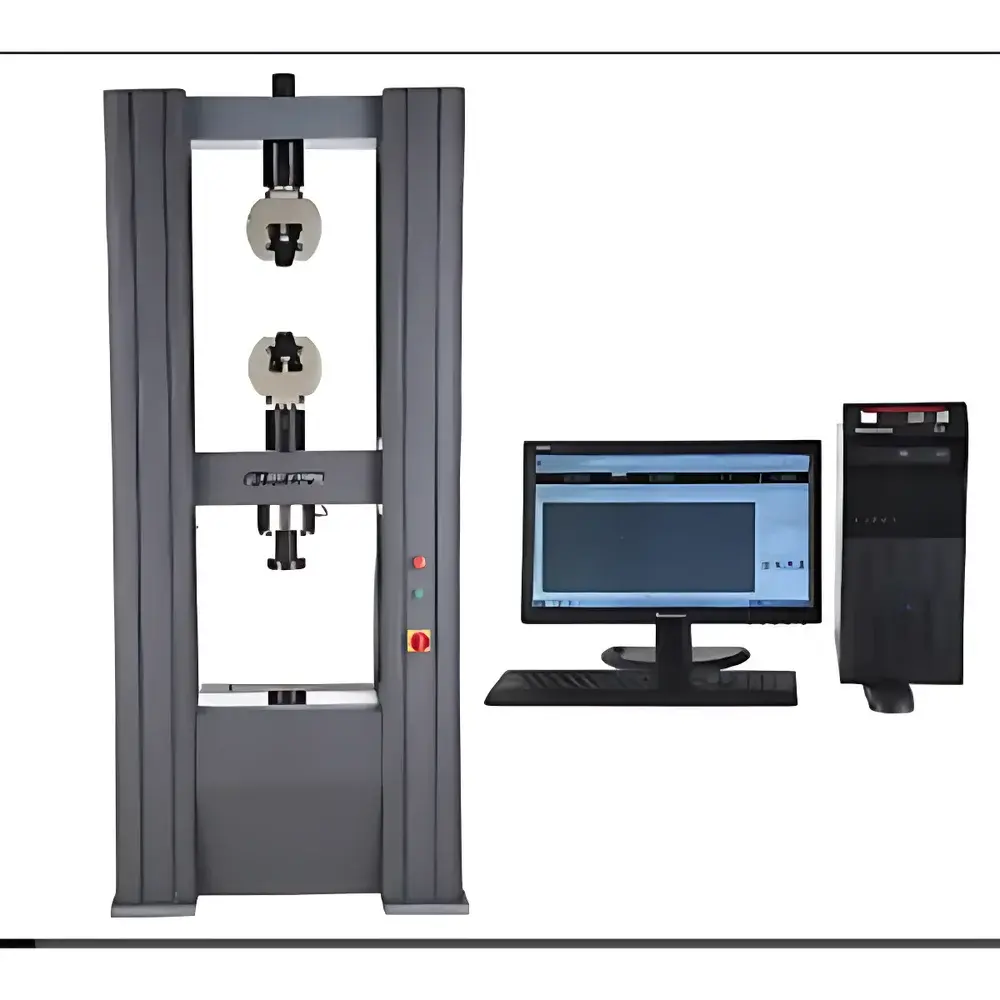
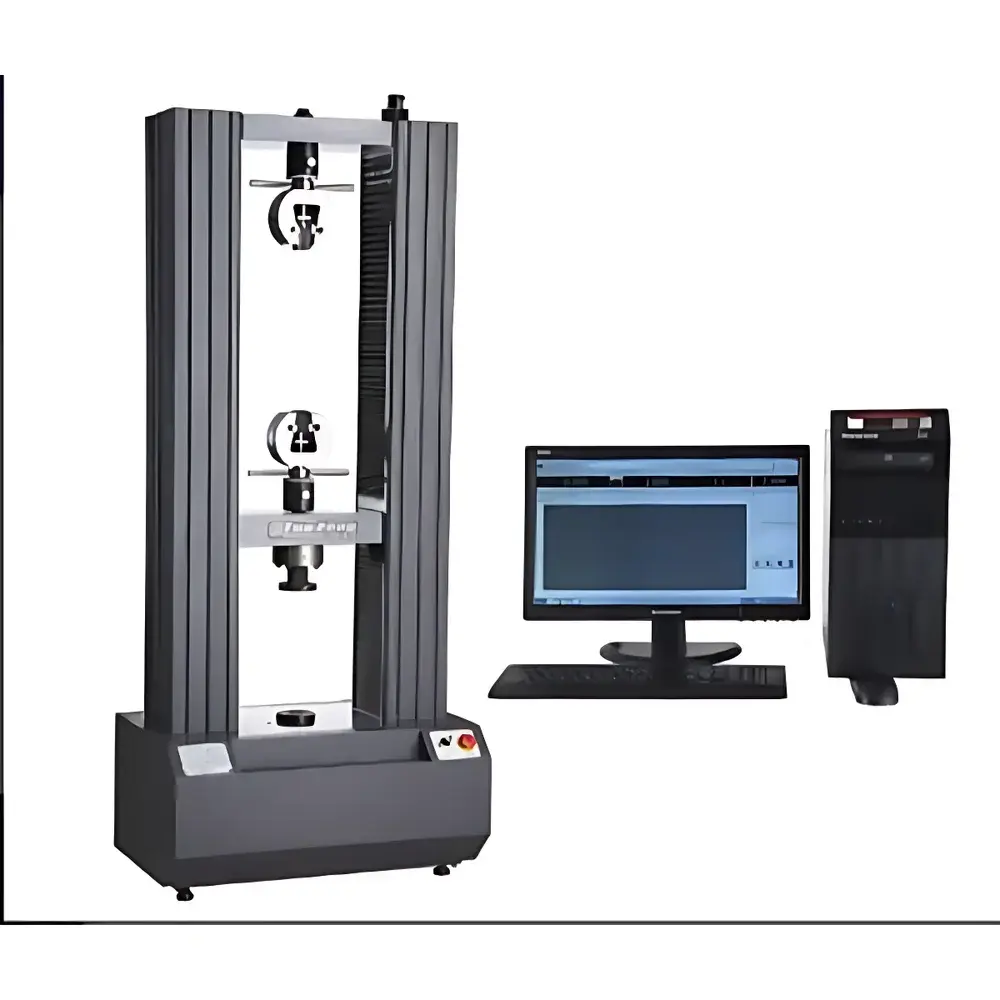
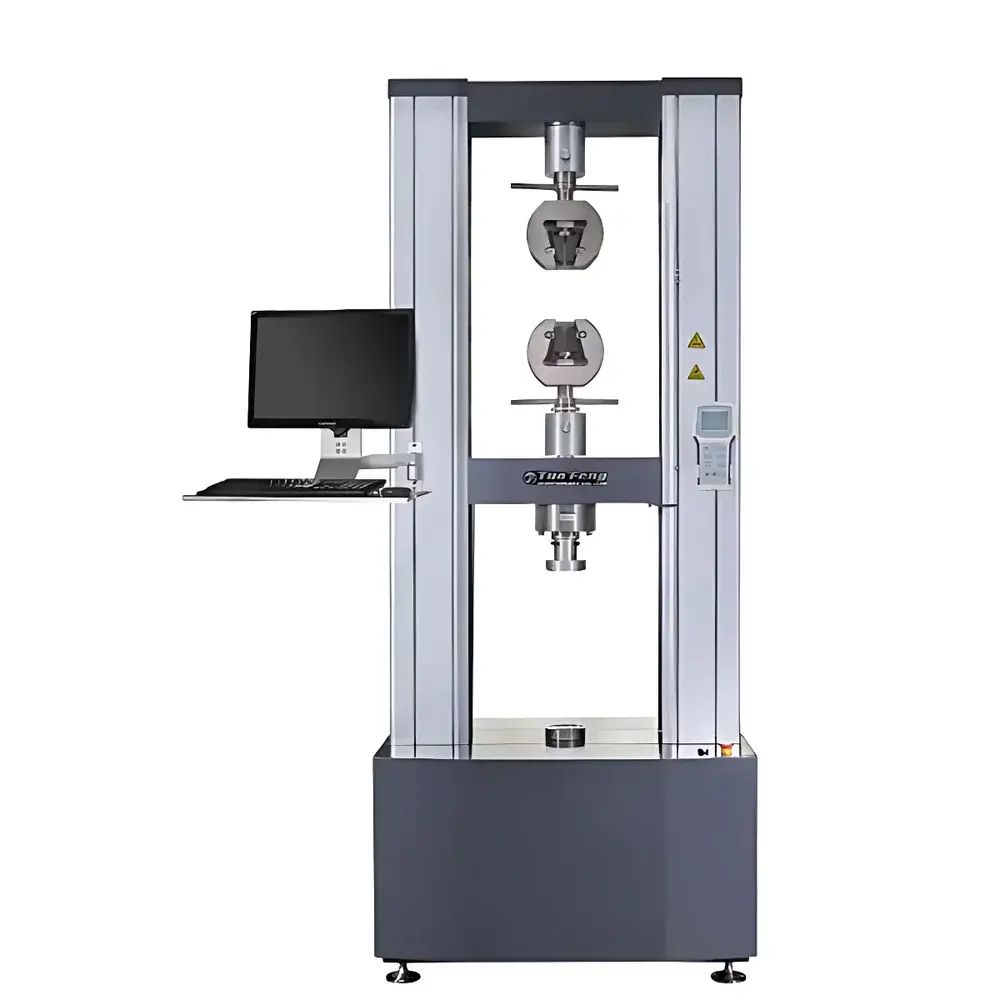
Tuofeng TFW-193 Geogrid Tensile Testing Machine
| Brand | Tuofeng |
|---|---|
| Origin | Shanghai, China |
| Manufacturer Type | Direct Manufacturer |
| Instrument Type | Electromechanical Universal Testing Machine |
| Model | TFW-193 |
| Max Test Load | 193 kN (customizable variants from 5 kN to 200 kN) |
| Accuracy Class | ISO 7500-1 / ASTM E4 Class 0.5 |
| Effective Force Range | 0.2%–100% of full scale |
| Force Measurement Accuracy | ±0.005% of reading |
| Load Cell Resolution | 1 part in ±500,000 full-scale codes, single-range, no auto-ranging |
| Drive System | Imported servo motor with precision worm-gear reducer |
| Lead Screw | High-precision preloaded ball screw |
| Effective Test Width | 600 mm (expandable) |
| Stroke | 800 mm (extendable) |
| Speed Range | 0.001–500 mm/min (infinitely variable, closed-loop controlled) |
| Displacement Measurement | Optical encoder, accuracy ±0.005% of reading |
| Strain Measurement | Optional clip-on extensometer or large-deformation digital extensometer, accuracy ±0.005% of reading |
| Safety Protection | Dual electronic limit switches, emergency stop button, overload cutoff at 110% FS |
| Crosshead Control | Dual-speed (fast/slow) motorized adjustment with jog function and automatic return-to-start |
| Fixture Customization | Application-specific grips for geogrids, geotextiles, geocomposites, and polymer tapes |
| Compliance | GB/T 16491–2008, JJG 475–2008, ASTM D6637, ASTM D4595, ISO 10319, ISO 13432, EN 10002-1, BS 4727-1 |
Overview
The Tuofeng TFW-193 Geogrid Tensile Testing Machine is a high-precision electromechanical universal testing system engineered specifically for the mechanical characterization of geosynthetic reinforcement materials—including woven and nonwoven geotextiles, biaxial and uniaxial geogrids, geocells, and geocomposites—under standardized tensile loading conditions. Built upon a rigid dual-column frame architecture with preloaded ball screws and closed-loop servo control, the system delivers traceable force measurement across a wide dynamic range (0.2%–100% of full scale), enabling accurate determination of key geotechnical parameters such as ultimate tensile strength, yield load, secant modulus, elongation at break, junction efficiency, and creep behavior under sustained load. Its design conforms to international test standards governing geosynthetic performance evaluation, including ASTM D6637 (for geogrids), ASTM D4595 (for geotextiles), ISO 10319 (wide-width tensile testing), and EN 10002-1 (metallic materials tensile testing methodology adapted for polymeric geosynthetics). The machine operates under ISO 7500-1 Class 0.5 and ASTM E4 Class 0.5 calibration protocols, ensuring metrological integrity for QA/QC labs, third-party certification bodies, and R&D institutions engaged in infrastructure material qualification.
Key Features
- High-stiffness structural frame with vibration-damped base and reinforced crosshead assembly to minimize deflection during high-load geogrid testing (up to 193 kN).
- Imported servo drive system with worm-gear reduction ensures smooth, low-noise operation and exceptional speed stability—even at ultra-low rates (0.001 mm/min) required for creep and stress-relaxation studies.
- Single-range, high-resolution load cell (1:500,000 internal resolution) eliminates range-switching artifacts and guarantees consistent accuracy across the entire force spectrum.
- Dual-mode displacement feedback: optical encoder for gross motion tracking and optional high-accuracy extensometers (clip-on or video-based) for localized strain measurement per ISO 9513 compliance.
- Intelligent safety architecture featuring redundant electronic limit switches, hardware-based emergency stop circuitry, and automatic overload shutdown at 110% of rated capacity.
- Motorized crosshead with programmable fast/slow modes and position memory enables rapid setup, repeatable specimen alignment, and post-test auto-return to origin.
- Modular fixture interface supports standardized geosynthetic grips (e.g., pneumatic jaw sets per ASTM D6637 Annex A1) and custom tooling for irregular geometries or multi-layer assemblies.
Sample Compatibility & Compliance
The TFW-193 accommodates geosynthetic specimens up to 600 mm wide and 800 mm active gauge length, with optional width extension kits (to 1100 mm) and stroke extensions (to 1200 mm) for large-format civil engineering samples. It supports both standard-width (200 mm) and wide-width (≥200 mm) tensile configurations per ISO 10319 and ASTM D4595. All mechanical and software functions comply with GLP and GMP documentation requirements: audit trails, user access levels, electronic signatures, and 21 CFR Part 11–compliant data integrity controls are embedded in the firmware and software stack. Calibration certificates are traceable to NIM (National Institute of Metrology, China) and internationally recognized NMIs via DAkkS-accredited reference laboratories.
Software & Data Management
The Windows-based TFW-TestSuite v4.2 software provides full test method scripting per ASTM, ISO, and GB standards. Users may configure multi-step protocols—including preload stabilization, ramp-to-load, dwell-hold, cyclic loading, and relaxation sequences—with real-time monitoring of force–displacement, stress–strain, and time–deformation curves. All raw data (1 kHz sampling rate) are stored in encrypted binary format with metadata embedding (operator ID, environmental conditions, calibration dates). Export options include CSV, XML, and PDF reports compliant with ISO/IEC 17025 technical records. Curve overlay, statistical comparison (min/max/mean), batch analysis, and customizable report templates support inter-laboratory round-robin studies and regulatory submissions. Software updates are delivered remotely with version-controlled changelogs and validation documentation.
Applications
- Tensile strength and elongation testing of HDPE, PET, PP, and polyester geogrids per ASTM D6637 and ISO 10319.
- Junction strength evaluation of node-bonded geogrid structures under axial and lateral loading.
- Cyclic fatigue assessment of geosynthetic reinforcements subjected to repeated traffic or seismic loading profiles.
- Creeep resistance quantification at 20%, 40%, and 60% of ultimate load for long-term design modeling (per ISO 13432).
- Quality conformance verification for ISO 9001-certified manufacturing lines and CE-marked geosynthetic products.
- Research-grade mechanical property mapping for novel bio-based or recycled polymer geosynthetics.
- Third-party certification testing for projects governed by AASHTO, FHWA, or Eurocode 7 specifications.
FAQ
Does the TFW-193 meet ASTM D6637 requirements for geogrid tensile testing?
Yes—the system satisfies all mechanical, control, and data acquisition provisions of ASTM D6637, including minimum crosshead speed accuracy, grip separation tolerance, and force transducer resolution criteria.
Can the software generate reports compliant with ISO/IEC 17025?
Yes—TFW-TestSuite v4.2 includes built-in report generators with mandatory fields for uncertainty statements, equipment traceability, environmental monitoring logs, and analyst sign-offs.
Is remote calibration verification supported?
Yes—via integrated network interface, users may initiate automated self-diagnostic routines and upload calibration certificate archives to cloud-based LIMS platforms.
What extensometer options are available for strain measurement?
Standard configurations include ASTM E83-compliant clip-on extensometers (10–50 mm gauge length) and non-contact digital image correlation (DIC) modules for full-field strain mapping.
How is data integrity ensured during long-duration creep tests?
The system employs battery-backed RAM buffering, dual-storage redundancy (SSD + NAS sync), and CRC-32 checksum validation on every data packet to prevent corruption over multi-day acquisitions.



