
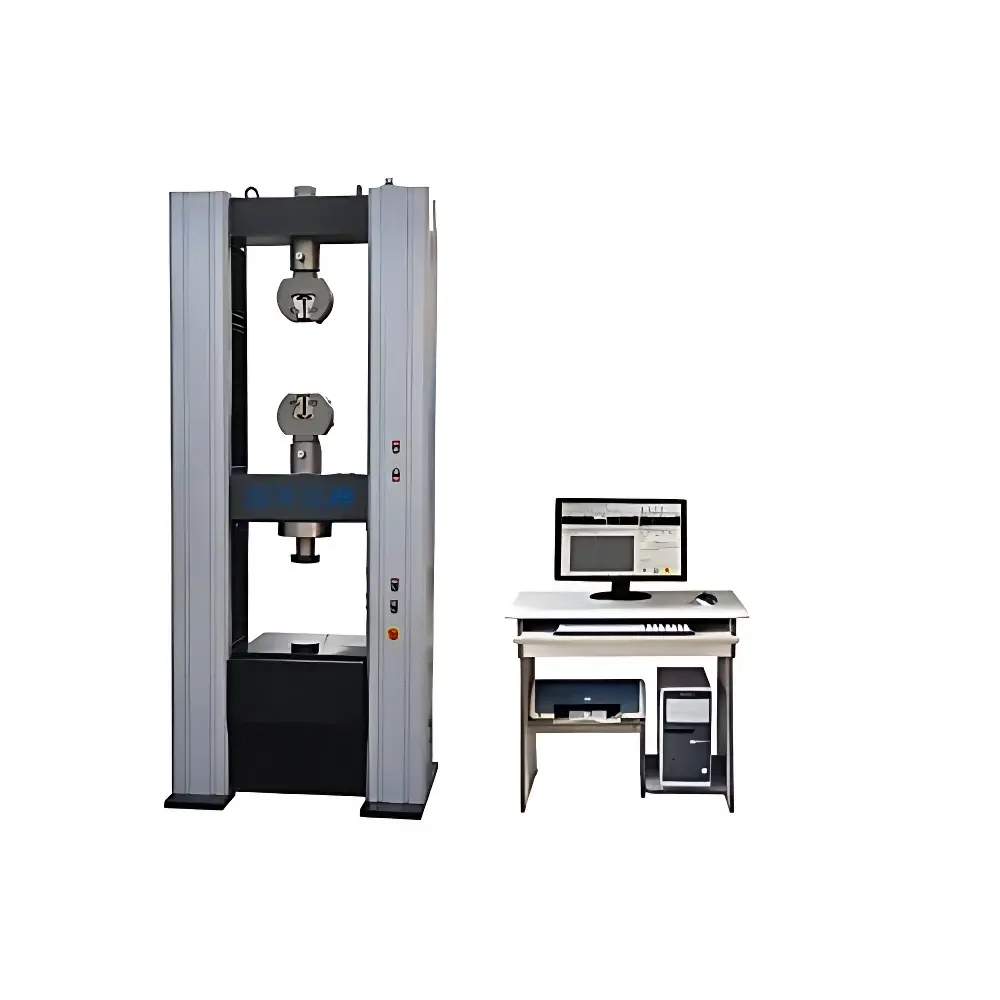
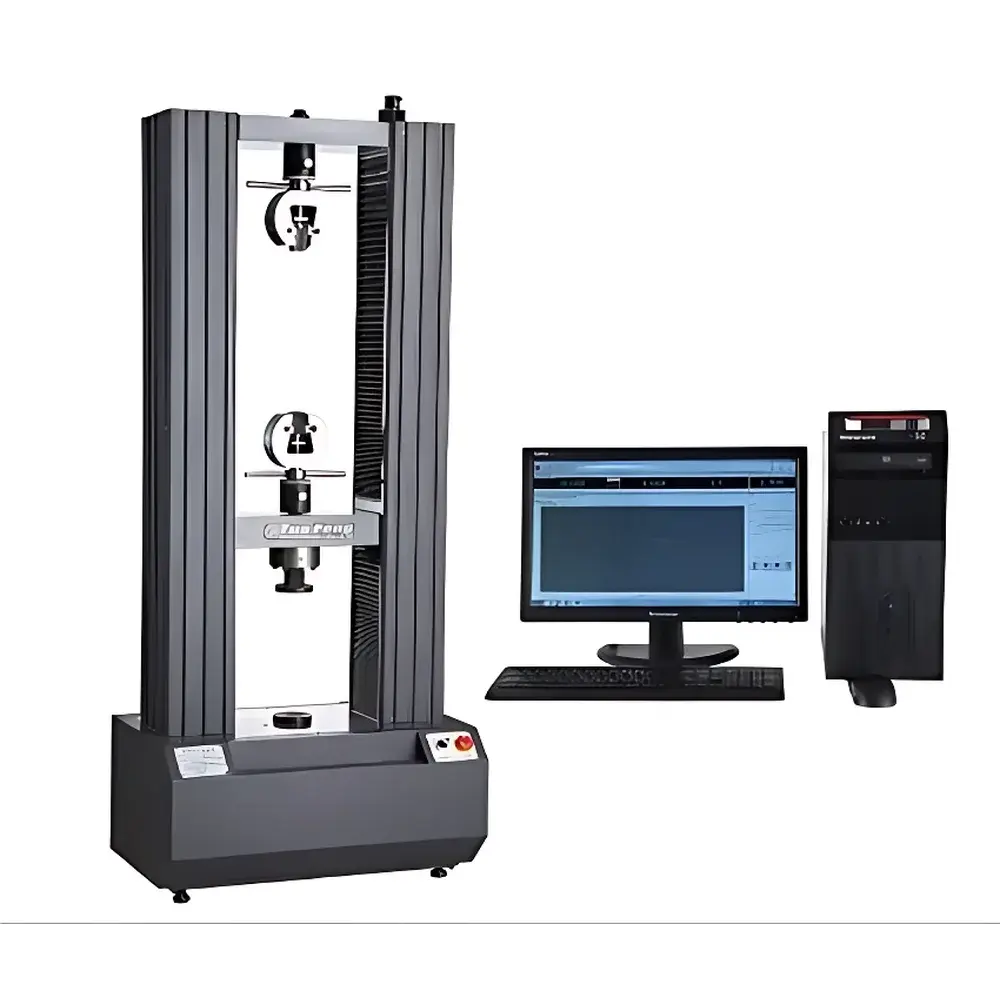
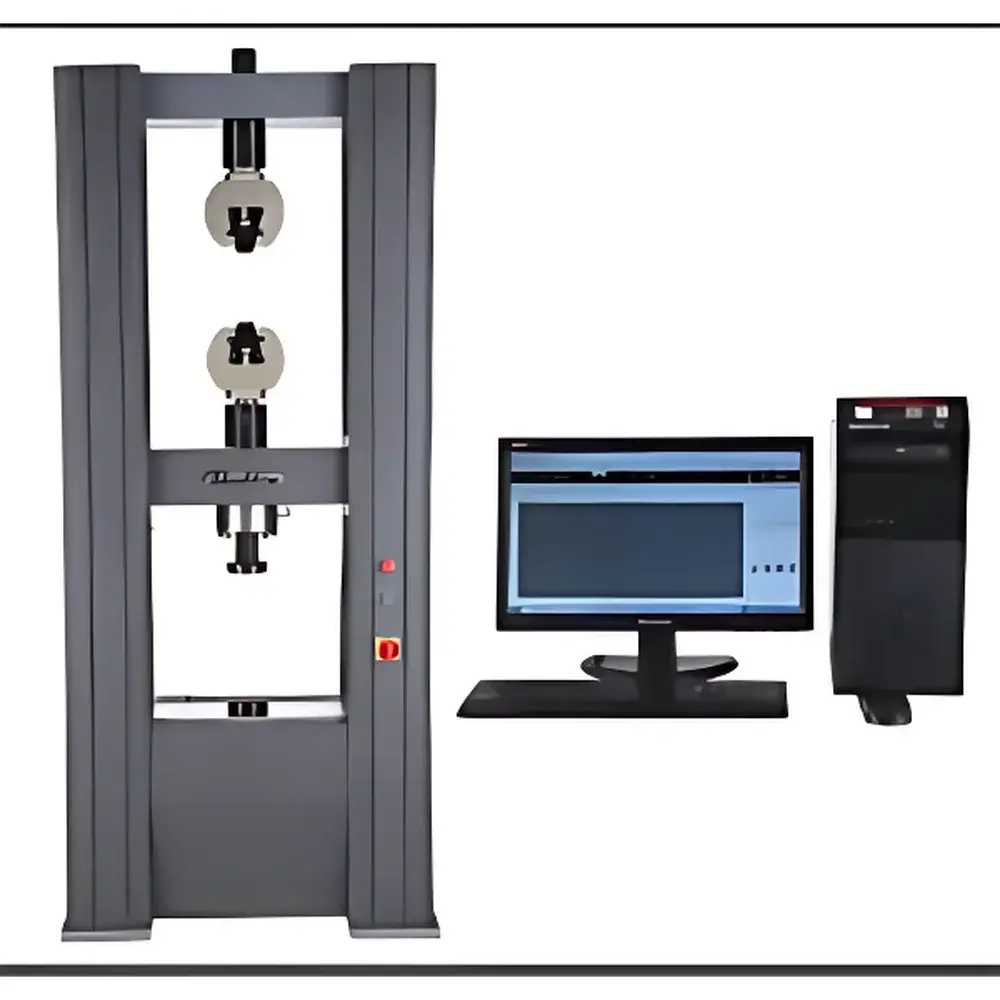
Tuofeng TFW-200S Microcomputer-Controlled Electromechanical Universal Testing Machine
| Brand | Tuofeng |
|---|---|
| Origin | Shanghai, China |
| Manufacturer Type | Direct Manufacturer |
| Country of Origin | China |
| Model | TFW-200S |
| Instrument Type | Electromechanical Universal Testing Machine |
| Maximum Test Load | 200 kN |
| Accuracy Class | 0.5 |
| Effective Force Measurement Range | 0.2–100% of Full Scale |
| Force Measurement Accuracy | ±0.005% of Reading |
| Force Resolution | 1 / ±300,000 counts (full-scale, no range switching) |
| Drive System | Servo Motor + Worm Gear Reducer |
| Lead Screw | High-Precision Ball Screw |
| Effective Test Width | 600 mm (customizable) |
| Tensile Stroke | 600 mm (customizable) |
| Test Speed Range | 0.01–500 mm/min (optional extended range) |
| Displacement Measurement | Optical Encoder |
| Displacement Accuracy | ±0.005% of Reading |
| Strain Measurement (Optional) | Extensometer (gauge lengths: 25/50/100 mm |
| max deformation | 5/10/25 mm) or Large-Deformation System (min gauge length: 10 mm |
| max deformation | 800 mm) |
| strain accuracy | ±0.005% of reading |
| Safety Protection | Electronic Limit Switches, Emergency Stop Button |
| Crosshead Adjustment | Dual-Speed Motorized (Fast/Slow), Jog Control |
| Return Function | Automatic or Manual Return to Initial Position at Max Speed |
| Overload Protection | Auto-shutdown at >110% of rated load |
| Fixture Customization | Application-specific |
| Dimensions (W×D×H) | 1100 × 900 × 2600 mm |
| Power Supply | 380 V AC, 4 kW |
| Approx. Weight | 1500 kg |
Overview
The Tuofeng TFW-200S Microcomputer-Controlled Electromechanical Universal Testing Machine is a high-precision static mechanical testing system engineered for rigorous tensile, compressive, flexural, shear, peel, tear, and adhesion evaluations of metallic, non-metallic, and composite materials. Built upon a rigid C-frame architecture with high-stiffness load train components, it operates on the fundamental principle of controlled displacement actuation via servo-driven ball screw transmission—ensuring stable force application and minimal compliance error across the full test envelope. Its 200 kN capacity, combined with 0.5-class metrological accuracy per ISO 7500-1 and GB/T 16491–2008, positions it for demanding quality control, R&D validation, and third-party certification workflows in metallurgy, aerospace component suppliers, automotive Tier-1 manufacturers, and accredited materials testing laboratories.
Key Features
- High-resolution force measurement system with ±0.005% reading accuracy and true 1/±300,000 full-scale resolution—no range switching required, maintaining consistent sensitivity from 0.2% to 100% of 200 kN.
- Dual-mode displacement sensing: optical encoder for crosshead position (±0.005% accuracy) and optional extensometry for direct strain measurement (25/50/100 mm gauge lengths) or large-deformation tracking (up to 800 mm).
- Robust electromechanical drive architecture: industrial-grade servo motor coupled with self-locking worm gear reducer and preloaded precision ball screw—enabling precise speed control from 0.01 to 500 mm/min with ≤0.1% speed stability under load.
- Integrated safety subsystems: dual electronic limit switches, hardware-based emergency stop circuit, and programmable overload cutoff (>110% FS) compliant with ISO 12100 and EN 60204-1.
- Motorized crosshead with jog-enabled dual-speed adjustment (fast/slow), automatic return-to-start function, and real-time position feedback for repeatable specimen alignment.
- Modular fixture interface supporting standardized wedge-action, hydraulic, pneumatic, and custom-designed grips—fully compatible with ASTM E8/E21, ISO 6892-1, GB/T 228.1, and JIS Z 2241 test configurations.
Sample Compatibility & Compliance
The TFW-200S accommodates specimens ranging from thin foil strips (<0.1 mm thickness) to structural steel sections (up to 100 mm width × 40 mm thickness), with customizable test width (≥600 mm) and stroke (≥600 mm). It supports standard and non-standard geometries—including flat tensile bars, round rods, notched Charpy-style coupons, laminated composites, and polymer films—via interchangeable grip systems and auxiliary tooling. The system complies with international standards including ISO 7500-1 (static calibration), ISO 5893 (displacement verification), ASTM E4 (force verification), and GB/T 16491 (electromechanical UTM requirements). All calibration certificates are traceable to NIM (National Institute of Metrology, China) and support GLP/GMP audit readiness. Optional configuration enables partial compliance with FDA 21 CFR Part 11 when paired with validated software modules and access-controlled user authentication.
Software & Data Management
The embedded Windows-based testing software (compatible with Windows 10/11 LTSB editions) provides full test method scripting, multi-channel real-time data acquisition (1 kHz sampling), and deterministic closed-loop control modes—including constant rate of extension (CRE), constant load ramping, hold-at-load, and displacement-controlled cycling. It natively supports ASTM D638, ISO 527-2, GB/T 1040.2, ISO 178, and EN 13381-3 test templates with auto-parameter calculation (tensile strength, yield point, modulus, elongation at break, Poisson’s ratio, etc.). Raw data export is available in CSV, XML, and universal .tdms formats; graphical overlays permit up to 16 concurrent curve comparisons with statistical summary (mean, min, max, SD). Audit trail functionality logs all operator actions, parameter changes, and calibration events—meeting basic ALCOA+ principles. Software updates are delivered via secure HTTPS portal with version-controlled release notes and installation validation reports.
Applications
- Metallic material qualification: tensile testing of aluminum alloys (e.g., 6061-T6 per ASTM B209), stainless steels (304/316 per ASTM A240), and high-strength low-alloy (HSLA) steels per ISO 6892-1.
- Composite laminate evaluation: interlaminar shear strength (ILSS) per ASTM D2344, flexural modulus per ASTM D7264, and compression-after-impact (CAI) per ASTM D7137.
- Automotive component validation: brake pad shear testing (SAE J661), seat belt webbing tensile performance (FMVSS 209), and gasket compression set per ASTM D395.
- Medical device testing: stainless steel wire fatigue resistance (ISO 14243-2), orthopedic implant bending (ASTM F2118), and suture tensile strength (ISO 10555-1).
- Academic and government lab use: teaching mechanics of materials labs, NDT correlation studies, and inter-laboratory round-robin programs coordinated by CNAS or ILAC signatories.
FAQ
Does the TFW-200S support ASTM E8/E21-compliant high-temperature tensile testing?
No—the base configuration is ambient-temperature only. High-temperature capability (up to 1000°C) requires integration of a certified furnace system, custom load train cooling, and thermal expansion compensation firmware—available as an engineered option.
Can the software generate PDF test reports compliant with ISO/IEC 17025 documentation requirements?
Yes—templates include mandatory fields per ISO/IEC 17025:2017 Clause 7.8.2, with embedded digital signatures, equipment ID traceability, environmental condition logging, and uncertainty estimation placeholders.
Is remote diagnostics and firmware update supported over Ethernet?
Yes—via integrated TCP/IP interface with TLS-secured remote desktop session capability and signed firmware package verification.
What is the recalibration interval recommendation per ISO/IEC 17025?
Annual force and displacement system recalibration is recommended; however, intermediate verification using certified reference standards (e.g., NIST-traceable load cells) should be performed daily or per test batch per ISO 17025:2017 Clause 7.7.1.
Are third-party calibration certificates included with shipment?
A factory calibration certificate (traceable to NIM) is provided. Full ISO/IEC 17025-accredited calibration by an external body is available upon request at additional cost.



