
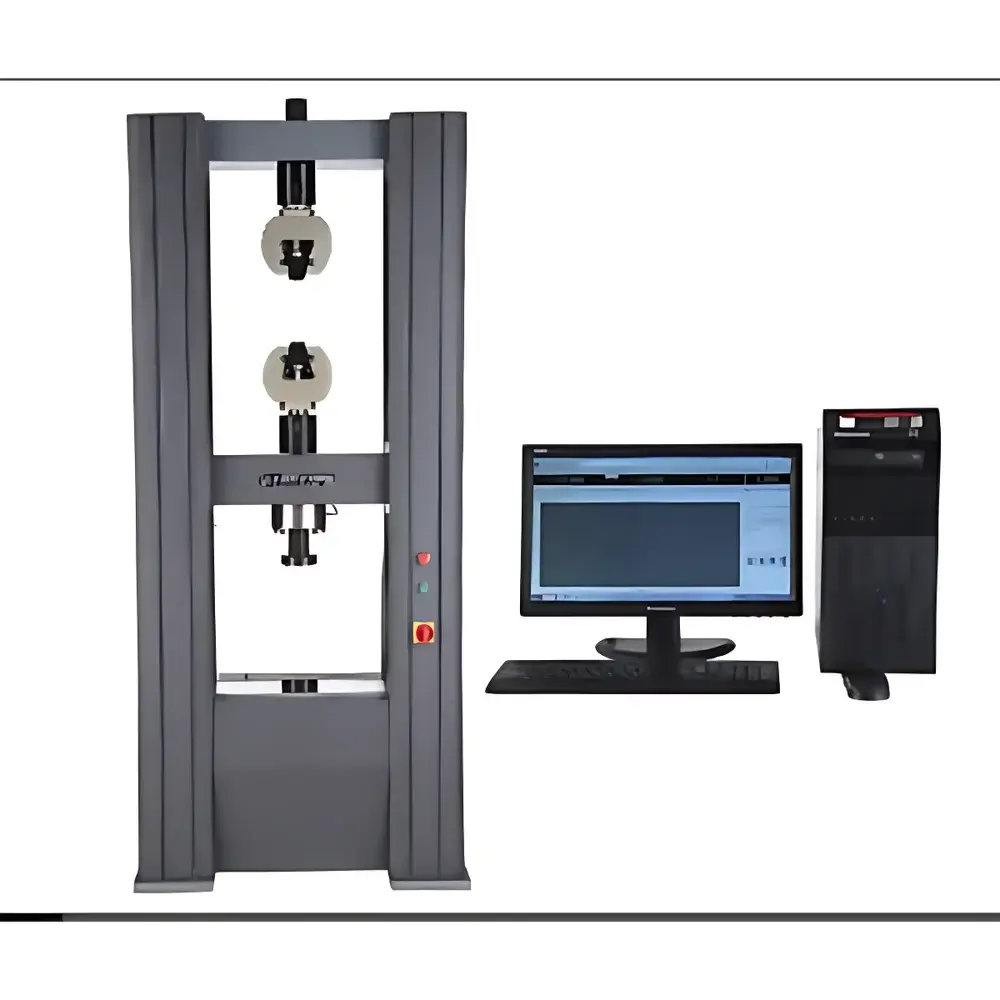
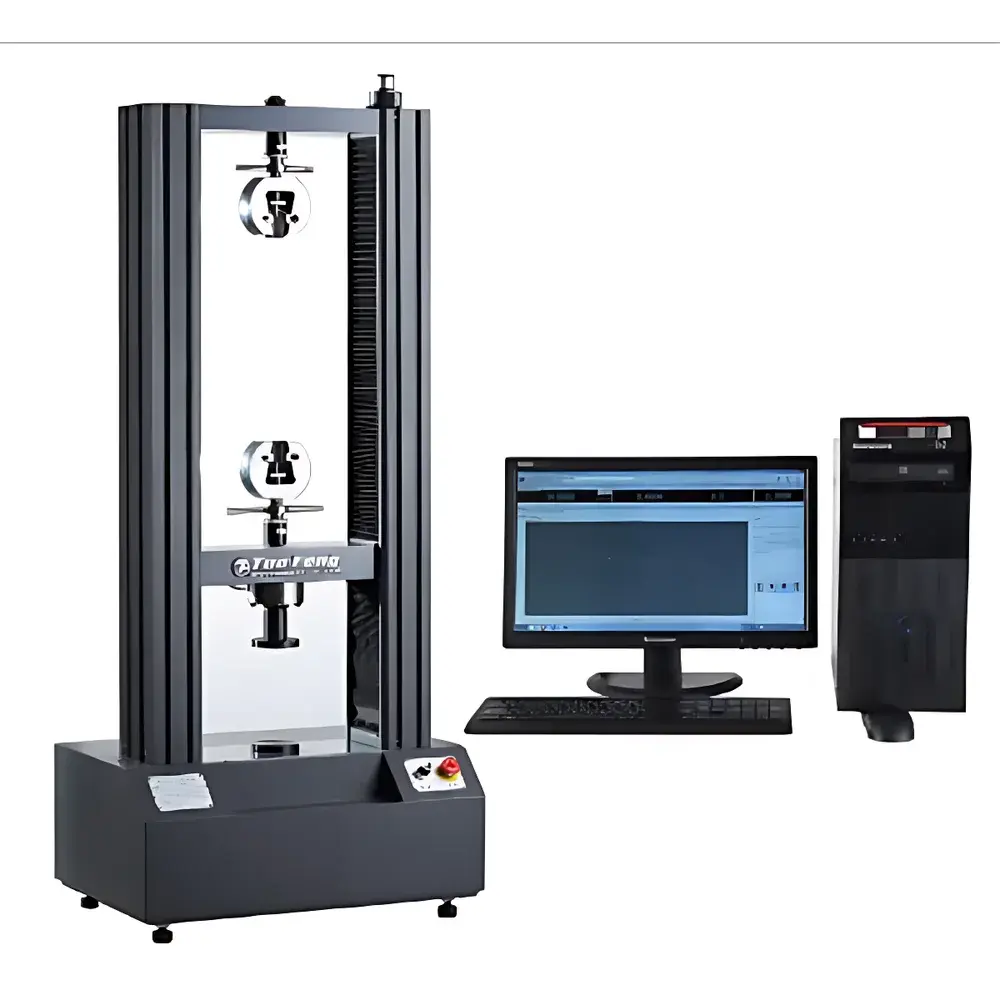
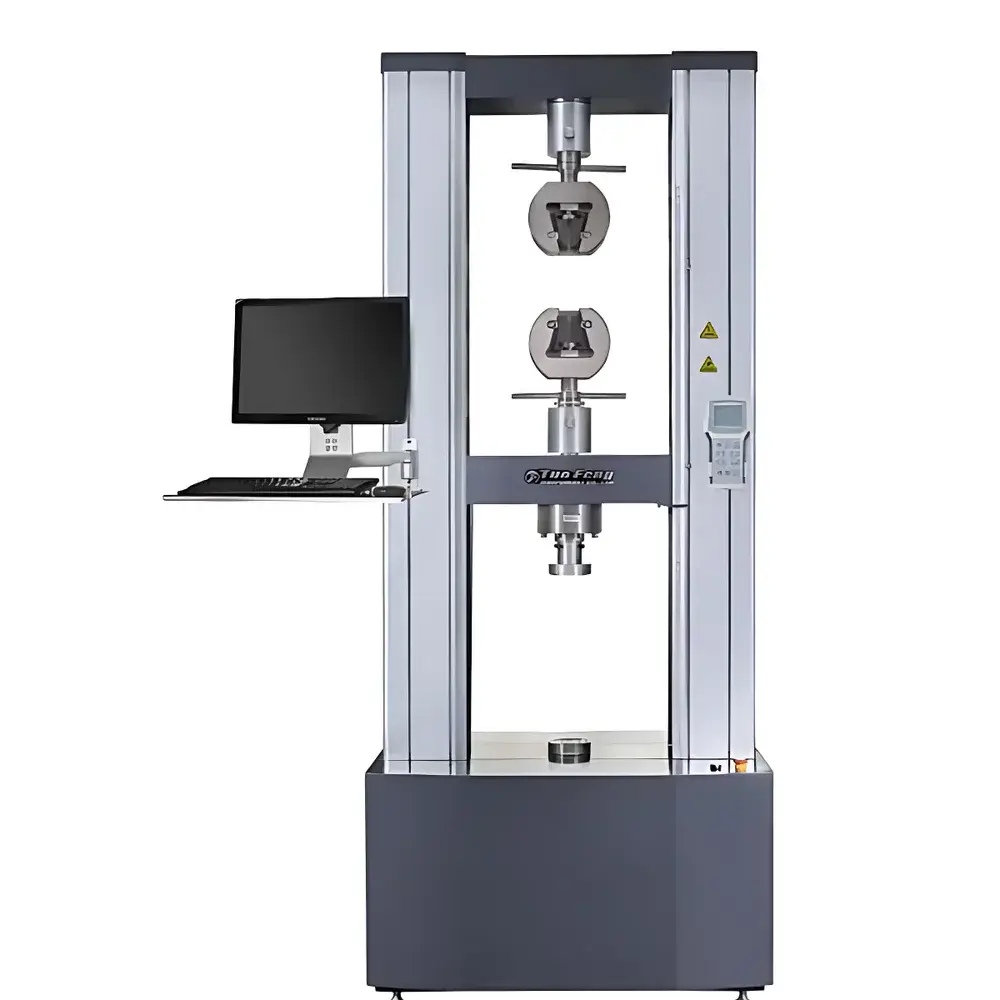
Tuofeng TFW-202 Microcomputer-Controlled Electronic Universal Testing Machine for Lithium Battery Mechanical Characterization
| Brand | Tuofeng |
|---|---|
| Origin | Shanghai, China |
| Manufacturer Type | Direct Manufacturer |
| Instrument Type | Electromechanical Universal Testing Machine |
| Model | TFW-202 |
| Max Test Load | 20 kN |
| Accuracy Class | ISO 7500-1 / ASTM E4 Class 0.5 |
| Effective Force Range | 0.2–100% of full scale |
| Force Measurement Accuracy | ±0.005% of reading |
| Force Resolution | 1/500,000 full-scale codes (no range switching) |
| Drive System | Imported servo motor with precision worm gear reducer |
| Lead Screw | High-accuracy preloaded ball screw |
| Effective Test Width | 600 mm (customizable) |
| Stroke | 800 mm (extendable) |
| Speed Range | 0.001–500 mm/min (infinitely variable) |
| Displacement Measurement | Optical encoder, accuracy ±0.005% of reading |
| Strain Measurement | Optional extensometer or large-deformation sensor, accuracy ±0.005% of reading |
| Safety Protection | Dual-limit electronic positioning, emergency stop, overload cutoff (>110% FS) |
| Software Compliance | Supports ASTM D3039, D638, D790, ISO 527, ISO 178, GB/T 16491–2008, JJG 475–2008, and FDA 21 CFR Part 11 audit trail (optional configuration) |
Overview
The Tuofeng TFW-202 is a microcomputer-controlled electromechanical universal testing machine engineered for high-fidelity mechanical characterization of lithium-ion battery components—including electrode coatings, separator films, current collectors, pouch cell laminates, and structural packaging materials. It operates on the principle of controlled uniaxial force application via a precision servo-driven ball-screw actuation system, enabling accurate measurement of tensile, compressive, flexural, peel, shear, and puncture responses under standardized loading conditions. Designed to meet ISO 7500-1 Class 0.5 and ASTM E4 verification requirements, the system delivers traceable force resolution down to 0.0002% of full scale and sub-micron displacement fidelity—critical for detecting subtle yield transitions, interfacial delamination onset, and viscoelastic relaxation in thin-film battery architectures. Its rigid frame architecture minimizes parasitic deflection, ensuring data integrity across low-force (15 kN) module-level compression evaluations.
Key Features
- ISO 7500-1 Class 0.5 certified load cell with real-time thermal drift compensation and digital filtering to suppress noise from environmental vibration or electromagnetic interference
- Preloaded high-precision ball screw transmission with <0.005 mm backlash, delivering repeatable positioning accuracy across 800 mm stroke
- Dual-speed automatic crosshead control (fast return + fine adjustment mode) for rapid setup and precise strain-rate control during creep or hold tests
- Integrated dual-protection logic: hardware-based emergency stop circuitry combined with software-defined overload threshold (configurable at 105–110% FS)
- Modular fixture interface compliant with ISO 26203-1 mounting standards, supporting custom-designed battery-specific grips (e.g., coated-electrode clamping jaws, anisotropic separator holders)
- Real-time synchronization of force, displacement, and optional strain channels at ≥1 kHz sampling rate for dynamic event capture (e.g., sudden separator rupture)
Sample Compatibility & Compliance
The TFW-202 accommodates specimens ranging from 5 mm wide electrode strips to 200 mm × 200 mm pouch cell stacks, with adjustable test width (up to 600 mm) and height extension capability. It supports standardized test configurations per ASTM D3039 (composite tensile), ASTM D882 (thin plastic film), ISO 11339 (peel adhesion of layered battery structures), and GB/T 34433–2017 (mechanical safety testing of lithium battery cells). All mechanical and metrological performance parameters comply with GB/T 16491–2008 (Chinese national standard for UTM design), JJG 475–2008 (verification regulation), and ISO 17025–accredited calibration traceability pathways. Optional configurations include GLP-compliant audit trails, electronic signatures, and 21 CFR Part 11–enabled user access controls for regulated R&D environments.
Software & Data Management
The Windows-based TFW-TestSuite v4.2 provides multi-mode closed-loop control—including constant-rate, constant-load, constant-strain, and dwell-hold protocols—with programmable ramp profiles for simulating real-world battery deformation scenarios (e.g., swelling-induced compression during cycling). The software supports simultaneous display of up to four synchronized curves (e.g., stress–strain, load–time, displacement–cycle number), automated calculation of ISO/ASTM-defined parameters (tensile strength, Young’s modulus, elongation at break, peel resistance), and statistical comparison of batch data (min/max/mean deviation, coefficient of variation). Raw data exports to CSV, XML, or proprietary .tdf formats; reports are exportable as PDF or printer-ready layouts with embedded calibration certificates. Firmware and software updates are delivered remotely with version-controlled changelogs and backward-compatible data migration tools.
Applications
- Quantification of electrode coating adhesion strength (tape peel per ISO 2409 or ASTM D3359)
- Tensile property mapping of dry and calendered anode/cathode films under ambient and elevated temperature conditions
- Compression modulus and crush resistance evaluation of stacked jelly-roll assemblies under quasi-static and cyclic loading
- Interfacial shear strength measurement between separator and active material layers using customized double-lap shear fixtures
- Mechanical aging assessment of thermal interface materials (TIMs) used in battery module housings
- Validation of structural integrity in aluminum/copper current collector foils subjected to roll-to-roll processing stresses
FAQ
Does the TFW-202 support testing at elevated temperatures?
Yes—when integrated with optional environmental chambers (−40 °C to +200 °C), the system maintains force and displacement accuracy per ISO 20482 specifications, with thermal compensation algorithms active during data acquisition.
Can the software generate compliance reports for ISO/IEC 17025 accreditation?
Yes—the audit trail module logs all operator actions, parameter changes, calibration events, and result modifications with timestamps and user IDs, satisfying ISO/IEC 17025 clause 7.7 documentation requirements.
Is third-party calibration certification included with delivery?
Each unit ships with a factory-issued calibration certificate traceable to NIM (National Institute of Metrology, China) and includes a 12-month recalibration schedule aligned with JJG 475–2008 intervals.
What is the lead time for custom fixture development?
Standard battery-specific fixtures (e.g., pouch cell compression platens, electrode strip grips) are available ex-stock; bespoke designs typically require 3–4 weeks after mechanical drawing approval.
How is data security managed in multi-user laboratory settings?
Role-based access control (RBAC) enforces separation of duties—operators can run tests, supervisors approve results, and administrators manage users and calibration records—all logged in immutable audit files.



