
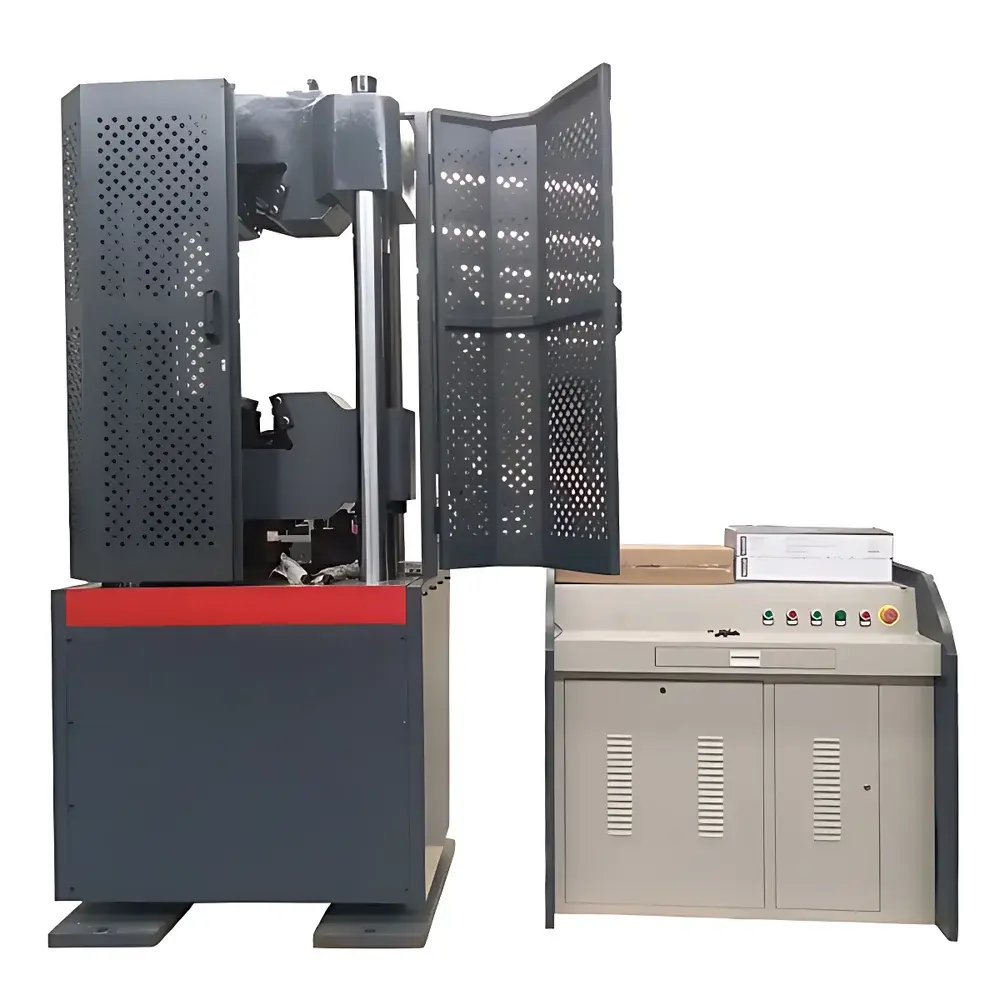
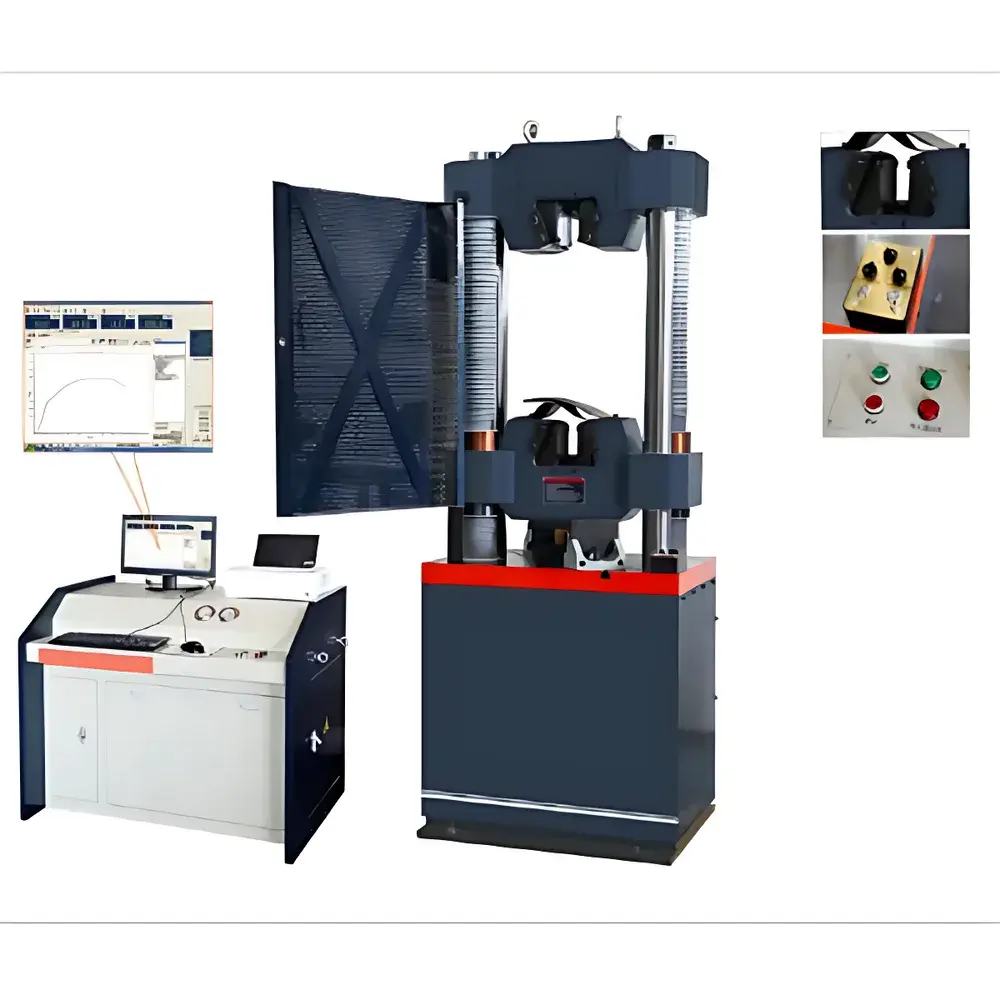
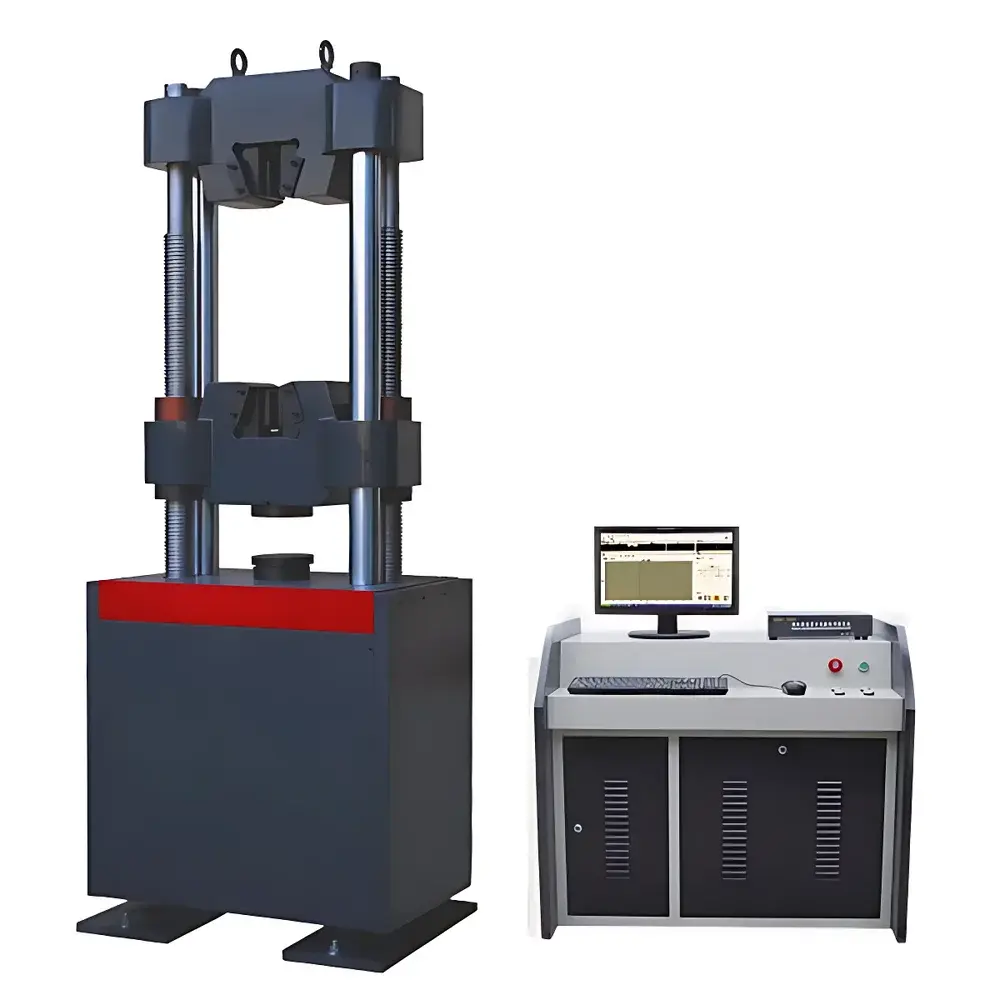
Tuofeng TFW-235 Microcomputer-Controlled Electro-Hydraulic Servo Universal Testing Machine
| Brand | Tuofeng |
|---|---|
| Origin | Shanghai, China |
| Manufacturer Type | Direct Manufacturer |
| Product Category | Domestic |
| Model | TFW-235 |
| Price Range | USD 1,400 – 42,000 |
| Instrument Type | Electro-Hydraulic Servo Testing Machine |
Overview
The Tuofeng TFW-235 is a microcomputer-controlled electro-hydraulic servo universal testing machine engineered for high-precision mechanical property evaluation of metallic and non-metallic materials under static loading conditions. It operates on the principle of closed-loop hydraulic force actuation combined with digital multi-channel feedback control, enabling accurate execution of tensile, compressive, flexural, and shear tests in accordance with international standards including ASTM E4, ASTM E8/E8M, ISO 6892-1, and GB/T 228.1–2021. The machine features a robust four-column, two-screw, oil-cylinder-underneath structural design — optimized for rigidity, thermal stability, and long-term repeatability. With the tensile test zone located above the upper crosshead and compression/bending zones situated between the lower crosshead and base platform, the architecture ensures optimal load path alignment and minimal frame deflection during high-force applications up to 235 kN (custom-configurable variants support up to 1000 kN). Force transduction is achieved via a high-stability load cell with integrated temperature compensation, while displacement measurement employs a high-resolution linear variable differential transformer (LVDT) mounted directly on the piston rod.
Key Features
- Full-digital, multi-channel closed-loop control system supporting simultaneous stress-, strain-, and displacement-controlled test modes with seamless, impact-free mode switching
- Electro-hydraulic servo actuation with proportional servo valve regulation, delivering precise flow control for constant-rate force, displacement, or strain ramping
- Motor-driven crosshead adjustment via planetary gear reducer, chain transmission, and precision ground ball screws — enabling rapid and repeatable test space configuration
- High-fidelity hydraulic power unit incorporating pressure-compensated variable-displacement pump, high-efficiency heat exchanger, and dual-stage filtration (including high-pressure particulate filter and differential pressure monitoring)
- Hydraulic clamping system with real-time pressure feedback and adjustable clamping force — ensuring uniform grip without specimen slippage or premature yielding
- Dual-level user management (administrator and operator) with role-based access control, audit trail logging, and password-protected parameter editing
Sample Compatibility & Compliance
The TFW-235 accommodates a broad spectrum of standardized and custom specimens: round bars (Φ6–Φ40 mm), flat strips (up to 30 mm thick × 75 mm wide), compression cylinders (φ160 mm platen), and three-point bending fixtures (300 mm support span, 140 mm roller width). All mechanical and software functionalities are designed to meet GLP-compliant laboratory requirements. Test procedures adhere to traceable calibration protocols aligned with ISO/IEC 17025, and force measurement uncertainty complies with Class 1 accuracy per ISO 7500-1. The system supports full compliance documentation generation for FDA 21 CFR Part 11 readiness when deployed in regulated environments — including electronic signatures, data integrity logs, and immutable audit trails for all test parameters, results, and user actions.
Software & Data Management
The proprietary Windows-based testing software provides an open-architecture interface built on .NET Framework, supporting customizable test method creation, standard library import/export (XML/JSON), and step-by-step procedural scripting. Real-time data acquisition occurs at ≥1 kHz sampling rate, with synchronized storage of force, displacement, strain (via extensometer input), and time stamps. Reporting follows an Excel-native template engine — allowing users to define field order, units, statistical calculations (e.g., yield strength, ultimate tensile strength, modulus of elasticity, elongation at break), and graphical overlays (stress–strain, load–displacement). All raw datasets are stored in binary-encoded, timestamped files with SHA-256 checksums to ensure data authenticity and prevent tampering. Export options include CSV, PDF, and XML formats compatible with LIMS integration.
Applications
This system serves as a primary mechanical characterization tool in metallurgical R&D labs, quality control departments of automotive and aerospace component suppliers, construction material certification centers, and academic materials science programs. Typical use cases include: determination of tensile yield strength and fracture toughness in structural steels; compressive strength and modulus evaluation of concrete, ceramics, and polymer composites; flexural performance assessment of laminates and reinforced plastics per ASTM D790; and shear strength validation of adhesive joints and weldments. Its modular design allows integration with environmental chambers (−70°C to +300°C), video extensometry systems, and acoustic emission sensors for advanced failure analysis workflows.
FAQ
What standards does the TFW-235 comply with for force calibration and verification?
It conforms to ISO 7500-1 (Class 1) for static force measurement accuracy, with verification traceable to national metrology institutes via accredited third-party calibration certificates.
Can the system perform cyclic or fatigue testing?
No — the TFW-235 is configured exclusively for quasi-static monotonic loading. For dynamic or high-cycle fatigue applications, Tuofeng offers complementary electrodynamic or servo-hydraulic fatigue testing systems.
Is remote operation or network deployment supported?
Yes — the software supports TCP/IP-based client-server architecture, enabling secure remote monitoring and test initiation from authorized workstations within local area networks.
What is the recommended maintenance interval for the hydraulic system?
Oil analysis and filter replacement are advised every 1,500 operating hours or annually, whichever occurs first; full hydraulic fluid exchange is required every 5,000 hours or biennially.
Does the system support extensometer inputs for true strain measurement?
Yes — it includes analog and digital (TTL/RS422) interfaces for clip-on, video, or laser extensometers, with automatic zeroing and calibration coefficient entry in the software.



