
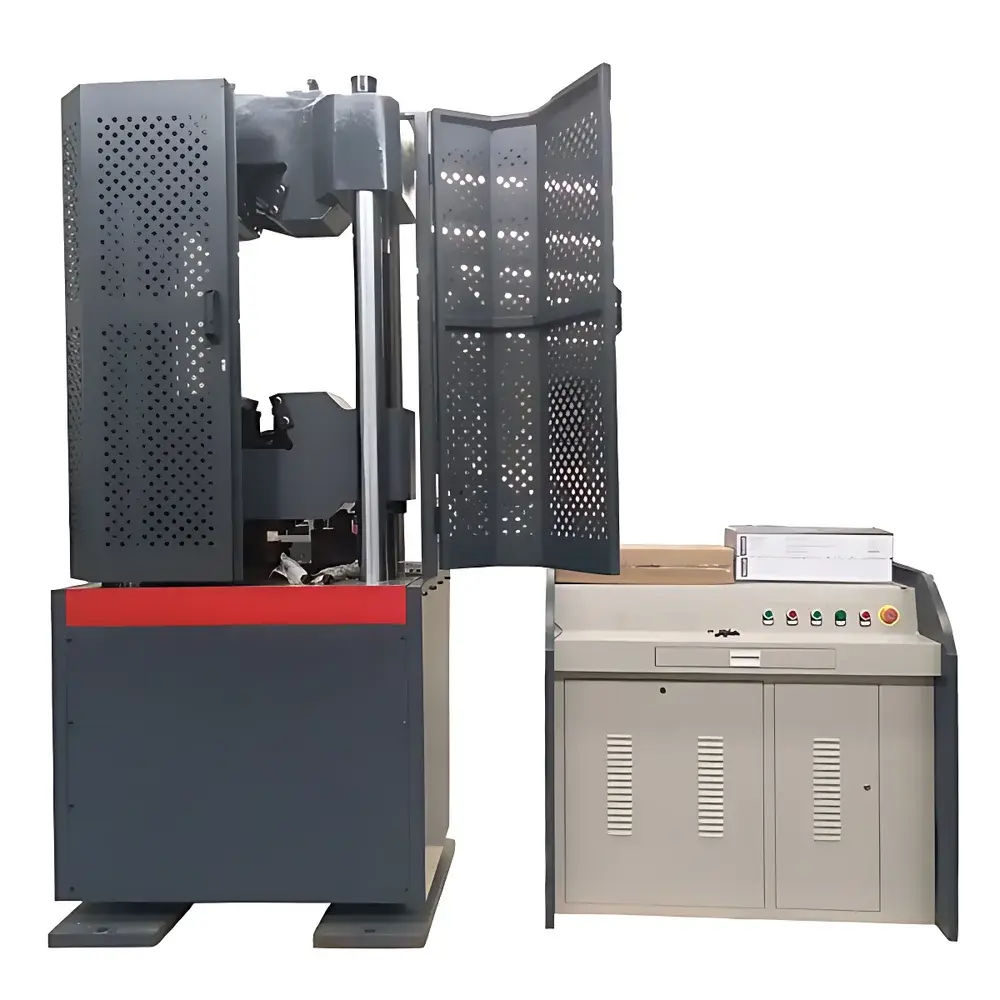
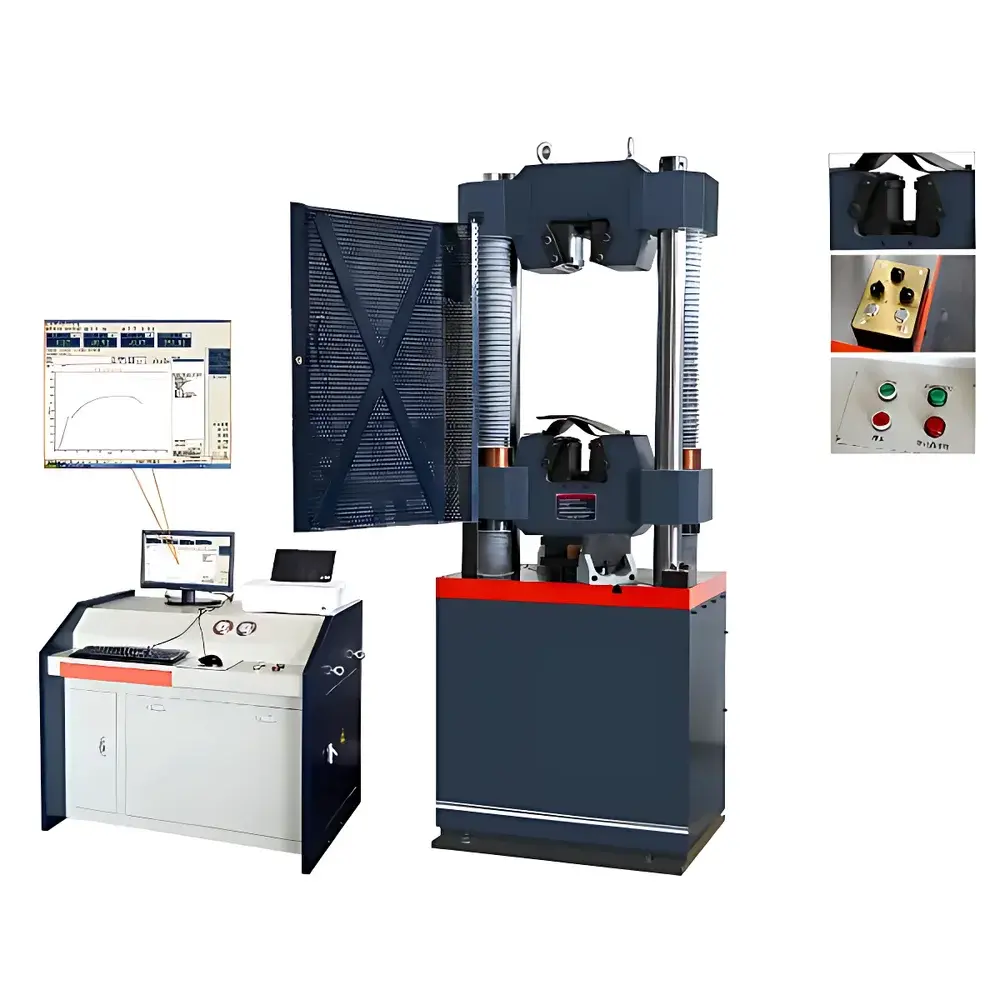
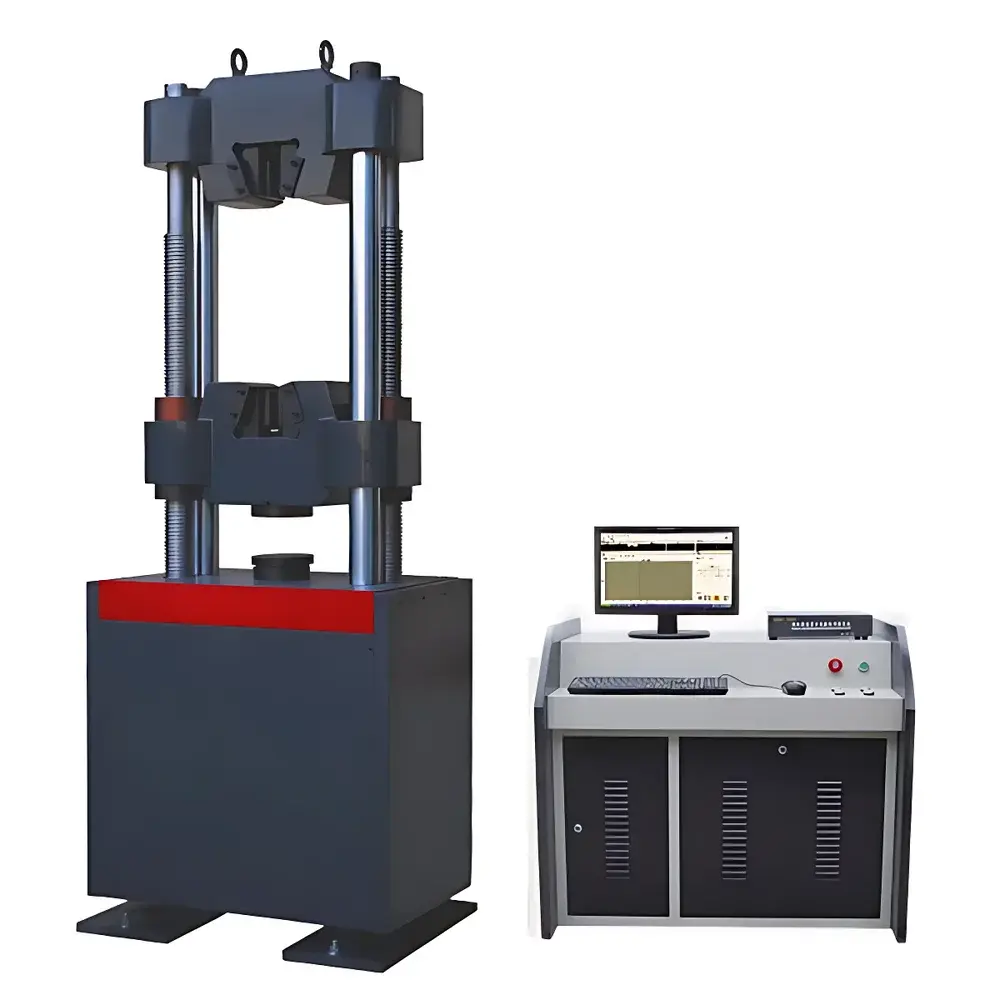
Tuofeng TFW-248 Electro-Hydraulic Servo Universal Testing Machine for Insulator Materials
| Brand | Tuofeng |
|---|---|
| Origin | Shanghai, China |
| Manufacturer Type | Direct Manufacturer |
| Instrument Type | Electro-Hydraulic Servo Universal Testing Machine |
| Model | TFW-248 |
| Key Specifications | 4-Column, Bottom-Loaded Hydraulic Frame |
| Load Capacity | Up to 1000 kN (configurable) |
| Force Measurement Range | 2–100% of Full Scale |
| Force Accuracy | ±1% of Reading |
| Displacement Resolution | 1/300,000 of Full Stroke |
| Test Space (Tension) | 600 mm |
| Compression Space | 500 mm |
| Piston Stroke | 200 mm |
| Column Spacing | 585 mm |
Overview
The Tuofeng TFW-248 Electro-Hydraulic Servo Universal Testing Machine is an industrial-grade mechanical testing system engineered for high-precision static mechanical characterization of insulator materials—including porcelain, composite polymer, and glass-reinforced epoxy—used in high-voltage transmission and distribution infrastructure. Designed around a rigid four-column, bottom-mounted hydraulic actuation architecture, the machine delivers stable load application under both tension and compression loading modes, with fully programmable control of stress rate, strain rate, and displacement velocity per ISO 6892-1 and GB/T 228.1–2010 requirements. Its electro-hydraulic servo system integrates a high-response servo valve, precision pressure transducer, and dual-loop digital controller to ensure repeatable force fidelity across dynamic ramping, hold, and cyclic protocols. The system’s structural stiffness (>1.5 × 10⁶ N/mm) and low parasitic compliance minimize measurement uncertainty during brittle fracture or creep-sensitive evaluations typical of ceramic insulators.
Key Features
- Four-column, two-screw, bottom-actuated frame with reinforced cast-iron base and hardened steel guide columns for minimal deflection under full-load conditions
- Electro-hydraulic servo control with real-time triple-closed-loop capability—simultaneous independent regulation of force, displacement, and strain—enabling seamless mode switching without mechanical shock
- High-resolution force measurement using calibrated S-type load cells (up to 1000 kN), traceable to national metrology standards, with resolution of 1/300,000 FS and linearity error < ±0.5%
- Hydraulic wedge-action clamping system with adjustable pressure control, accommodating cylindrical specimens (Φ6–Φ40 mm) and flat coupons (0–30 mm thickness, up to 75 mm width)
- Motor-driven crosshead positioning via planetary gearbox and precision-ground ball screws, enabling rapid adjustment of test space (tension: 600 mm; compression: 500 mm)
- Dual-channel digital controller supporting user-defined test profiles, stepwise loading sequences, and conditional branching logic (e.g., “hold at 80% yield until strain stabilizes”)
Sample Compatibility & Compliance
The TFW-248 is optimized for standardized mechanical evaluation of insulator substrates and structural components per IEC 60383 (Insulators for overhead lines), IEC 62217 (Polymer insulators), and ANSI C29. This includes tensile strength testing of shed ribs, compressive strength assessment of core rods, flexural modulus determination of housing materials, and interfacial adhesion verification between fiberglass and silicone rubber housings. All hardware and firmware comply with electromagnetic compatibility (EMC) requirements per IEC 61326-1 and safety standards IEC 61000-6-2/6-4. Mechanical calibration procedures follow ISO 7500-1 Class 1 accuracy certification, and system validation reports include as-found/as-left data per GLP audit trails.
Software & Data Management
The embedded Windows-based control software provides ISO/IEC 17025-aligned data integrity features: time-stamped audit logs, role-based access control (administrator and operator tiers), electronic signatures, and 21 CFR Part 11-compliant user authentication. Test definitions—including custom standards, specimen geometry inputs, and pass/fail criteria—are stored in encrypted XML format. Real-time plotting supports dual-axis visualization (load vs. displacement, stress vs. strain), with automated yield point detection (0.2% offset method), ultimate tensile strength, elongation at break, and modulus calculation. Export options include native .XLSX templates with formula-locked cells, CSV for LIMS integration, and PDF reports with embedded calibration certificates. Raw channel data (1 kHz sampling) is archived in binary HDF5 format for post-test reprocessing.
Applications
- Mechanical qualification of polymeric insulator housing materials under ambient and accelerated aging (UV, thermal cycling, salt fog)
- Compression testing of porcelain insulator cores to assess crack initiation thresholds under axial loading
- Three-point bending evaluation of composite long-rod insulators per IEC 61109 Annex D
- Interlaminar shear strength measurement of fiber-reinforced resin systems used in hollow-core designs
- Creep rupture testing at sustained loads (50–90% UTS) for lifetime prediction modeling per IEEE Std 1313.2
- Validation of adhesive bond strength between metal end-fittings and composite rods in crimped assemblies
FAQ
Does the TFW-248 support automatic yield point detection per ASTM E8/E21?
Yes—the software implements ASTM-compliant offset methods (0.2% strain offset, tangent modulus, and second-derivative peak detection) with configurable tolerance bands and manual override capability.
Can test sequences be exported and shared across multiple TFW-248 units in a multi-lab network?
Yes—test configurations, standard definitions, and step templates are portable via encrypted .TST files and synchronize with centralized SQL database deployments.
Is third-party calibration documentation included with shipment?
Each unit ships with a factory calibration certificate traceable to CNAS-accredited laboratories, including force, displacement, and strain channel verification data.
What maintenance intervals are recommended for the hydraulic power unit?
Oil filtration and viscosity verification every 1,000 operational hours; full hydraulic oil replacement and servo valve inspection every 5,000 hours or biannually—whichever occurs first.
Can the system interface with external environmental chambers for temperature-controlled testing?
Yes—digital I/O ports and Modbus TCP support enable synchronized control of chamber temperature, humidity, and voltage bias during combined mechanical-electrical stress testing.



