
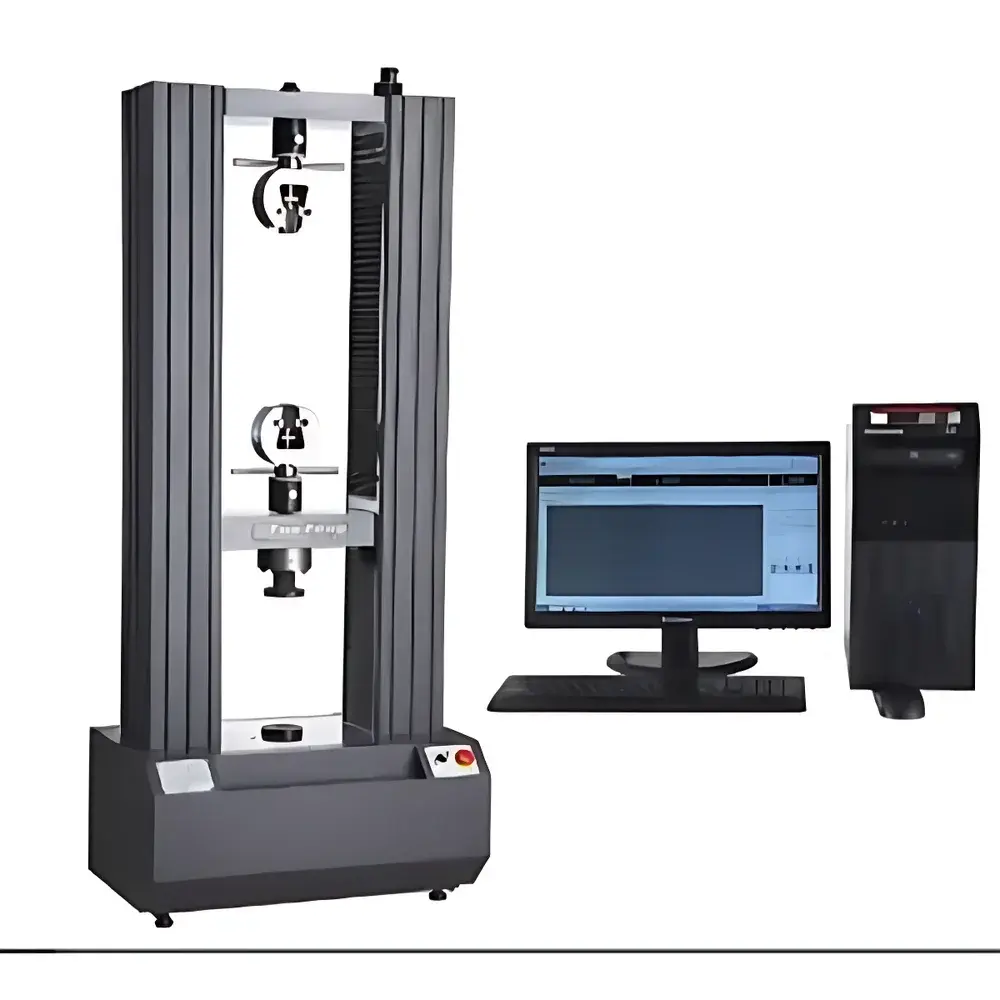
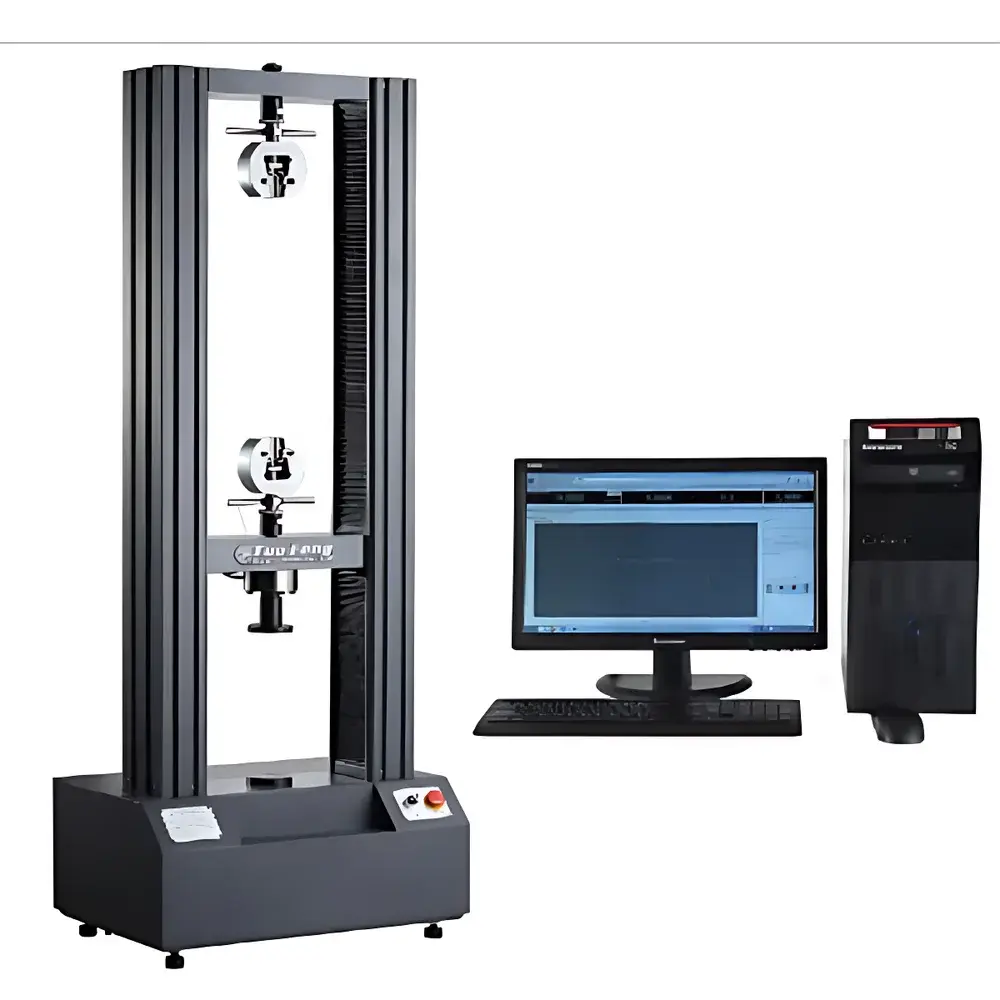
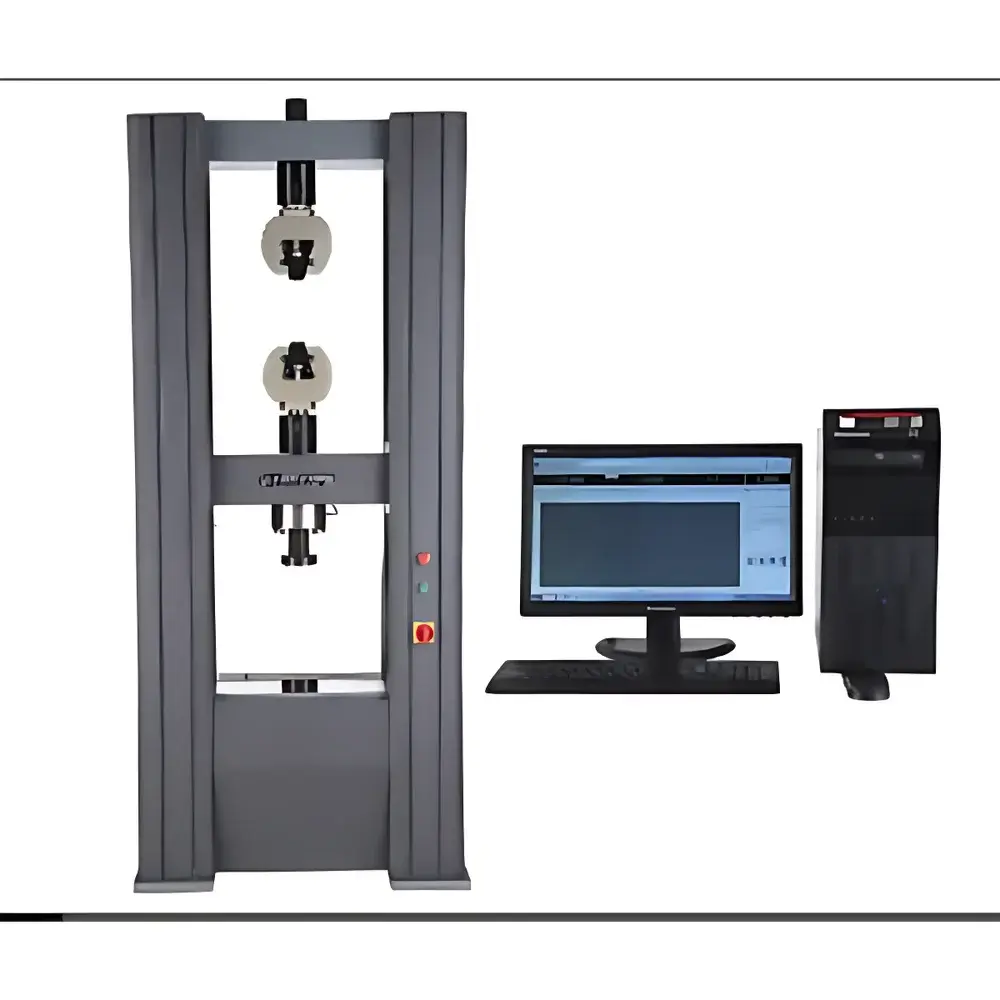
Tuofeng TFW-294 Microcomputer-Controlled Electronic Universal Testing Machine
| Brand | Tuofeng |
|---|---|
| Origin | Shanghai, China |
| Manufacturer Type | Direct Manufacturer |
| Instrument Type | Electromechanical Universal Testing Machine |
| Maximum Load Capacity | 300 kN |
| Load Accuracy | ±0.5% |
| Load Cell Resolution | 1 part in 500,000 full scale (fixed resolution, no range switching) |
| Test Speed Range | 0.001–500 mm/min (infinitely variable) |
| Effective Test Width | 400 mm (customizable up to 600 mm) |
| Stroke | 800 mm (extendable) |
| Displacement Measurement Accuracy | ±0.005% of reading |
| Strain Measurement | Compatible with extensometers (standard electronic or large-deformation types) |
| Compliance | GB/T 16491-2008, JJG 475-2008, ASTM E4, ISO 7500-1, DIN 51221, JIS B 7721 |
Overview
The Tuofeng TFW-294 Microcomputer-Controlled Electronic Universal Testing Machine is a high-precision electromechanical system engineered for static mechanical property characterization of metallic, non-metallic, and composite materials. Based on servo-controlled closed-loop force and displacement feedback architecture, it operates under the fundamental principles of uniaxial quasi-static loading—applying controlled tensile, compressive, flexural, shear, tear, peel, and puncture forces per standardized test protocols. Its modular design supports interchangeable load cells, grips, fixtures, and extensometry systems, enabling traceable, repeatable measurements of mechanical response parameters including ultimate tensile strength, yield strength, modulus of elasticity, elongation at break, compressive strength, flexural modulus, tear strength, and peel adhesion. The machine meets Class 0.5 accuracy requirements per ISO 7500-1 and GB/T 16491-2008, ensuring metrological integrity for R&D validation, quality control, and regulatory submission workflows.
Key Features
- High-stiffness dual-column frame with precision-ground ball-screw actuation and imported servo motor drive for smooth, low-noise operation and minimal thermal drift.
- Full-scale load resolution of 1/500,000 without range switching—maintaining consistent sensitivity across 0.2% to 100% of full-scale capacity (300 kN).
- Dual-speed crosshead positioning (fast/slow modes) with programmable return-to-start functionality and emergency stop circuitry compliant with IEC 60204-1.
- Integrated overload protection: automatic shutdown at >110% of rated load, plus hardware-based electronic limit switches and mechanical safety stops.
- Modular grip interface accommodating wedge-action, pneumatic, hydraulic, and custom fixtures for diverse specimen geometries—from thin films to structural composites.
- Real-time synchronization of force, displacement, and strain data streams at ≥1 kHz sampling rate, supporting high-fidelity curve capture for nonlinear material analysis.
Sample Compatibility & Compliance
The TFW-294 accommodates specimens ranging from polymer films (≥0.05 mm thick), elastomeric sheets, textile laminates, ceramic tiles, fiber-reinforced composites, and engineering plastics to reinforced concrete cores and metal alloys. It supports standardized specimen configurations per ASTM D638 (tensile), ASTM D790 (flexure), ASTM D695 (compression), ASTM D624 (tear), ASTM D903 (peel), ISO 527, ISO 178, ISO 604, and GB/T 2567. All measurement subsystems—including load cell, encoder, and optional extensometer—are calibrated and certified to national metrological standards (JJG 475-2008). The system architecture supports audit-ready documentation for GLP, GMP, and ISO/IEC 17025 environments, with optional 21 CFR Part 11-compliant software modules available upon request.
Software & Data Management
The Windows-based testing software provides multi-mode control (load-controlled, displacement-controlled, strain-controlled, hold, ramp-hold, cyclic), real-time graphical overlays (stress–strain, load–displacement, load–time), and automated parameter extraction per user-defined calculation templates. Units are freely convertible between SI, imperial, and legacy systems; language support includes English, Simplified Chinese, Traditional Chinese, and German. Data export complies with ASTM E1434 and ISO/IEC 17025 reporting requirements—generating PDF/CSV/XLSX reports with embedded metadata (operator ID, timestamp, calibration certificate IDs, environmental conditions). Raw data files retain full-resolution time-series records for post-test reprocessing. Software updates are provided free-of-charge throughout the instrument’s service life, with version-controlled release notes traceable to ISO 9001 development practices.
Applications
This system serves as a primary mechanical characterization platform in academic laboratories, industrial QC labs, and third-party certification bodies. Typical use cases include: qualification of aerospace-grade carbon-fiber prepregs per ASTM D3039; tensile evaluation of medical-grade silicone elastomers per ISO 37; compression testing of architectural insulation boards per EN 826; peel strength verification of automotive adhesive bonds per SAE J2243; and flexural performance assessment of 3D-printed thermoplastics per ISO 178. Its adaptability to both routine batch testing and advanced constitutive modeling makes it suitable for failure mode analysis, creep/stress-relaxation studies, and material database generation aligned with Digital Twin initiatives.
FAQ
What international standards does the TFW-294 comply with for calibration and verification?
It conforms to ISO 7500-1 (static calibration of force-proving instruments), GB/T 16491-2008 (Chinese national standard for electronic UTM), JJG 475-2008 (verification regulation), ASTM E4 (load verification), and DIN 51221 (testing machine classification).
Can the system be integrated into an existing LIMS or MES environment?
Yes—via TCP/IP API and configurable OPC UA interface, supporting bidirectional data exchange with laboratory information management systems and manufacturing execution systems.
Is extensometer compatibility limited to specific brands or models?
No—the system features standardized analog/digital input channels compatible with industry-standard clip-on, video, and laser extensometers from MTS, ZwickRoell, Instron, and国产 OEM suppliers meeting ISO 9513 specifications.
What is the warranty coverage and service response timeline?
Standard warranty is 24 months parts-and-labor; extended service agreements include on-site calibration, preventive maintenance, and remote diagnostics with ≤72-hour response for critical issues in APAC regions.
Does the software support automated pass/fail decision logic based on specification limits?
Yes—users can define acceptance criteria per test method, enabling real-time go/no-go flagging, statistical process control (SPC) charting, and auto-generation of non-conformance reports (NCRs).



