
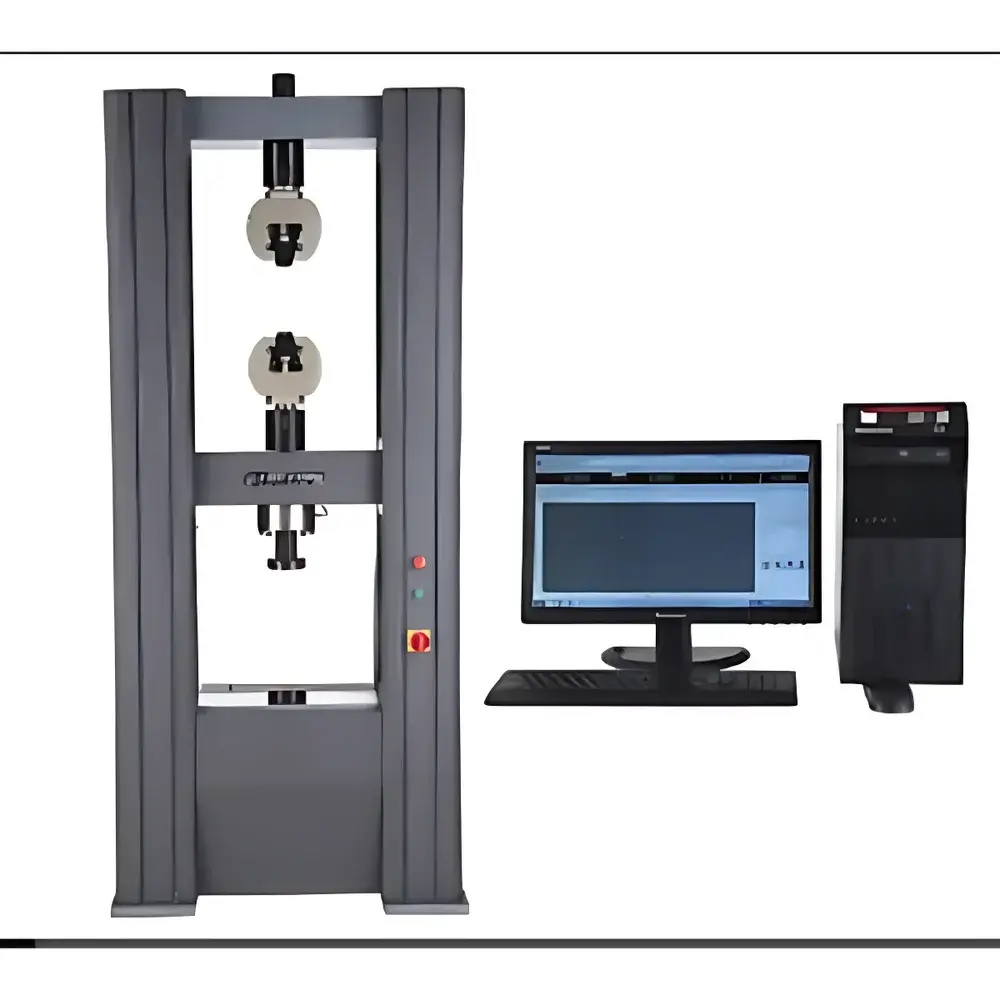
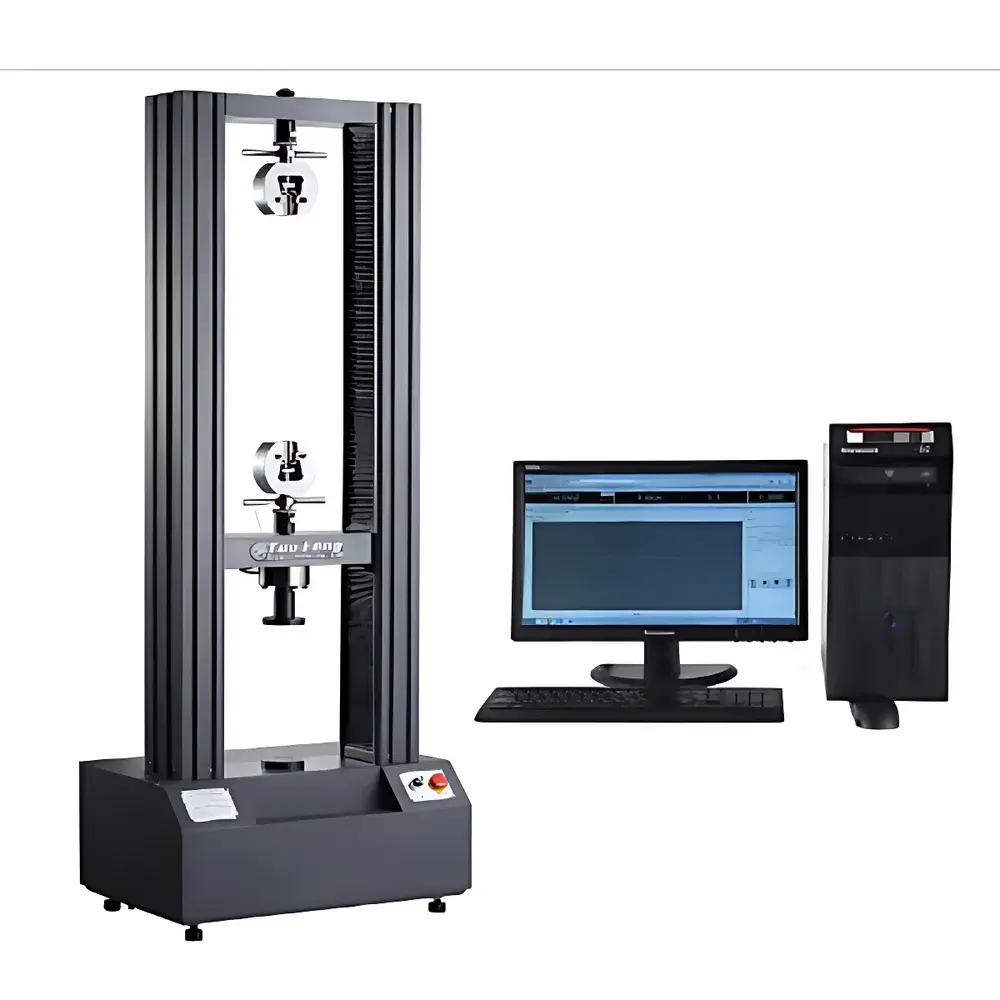
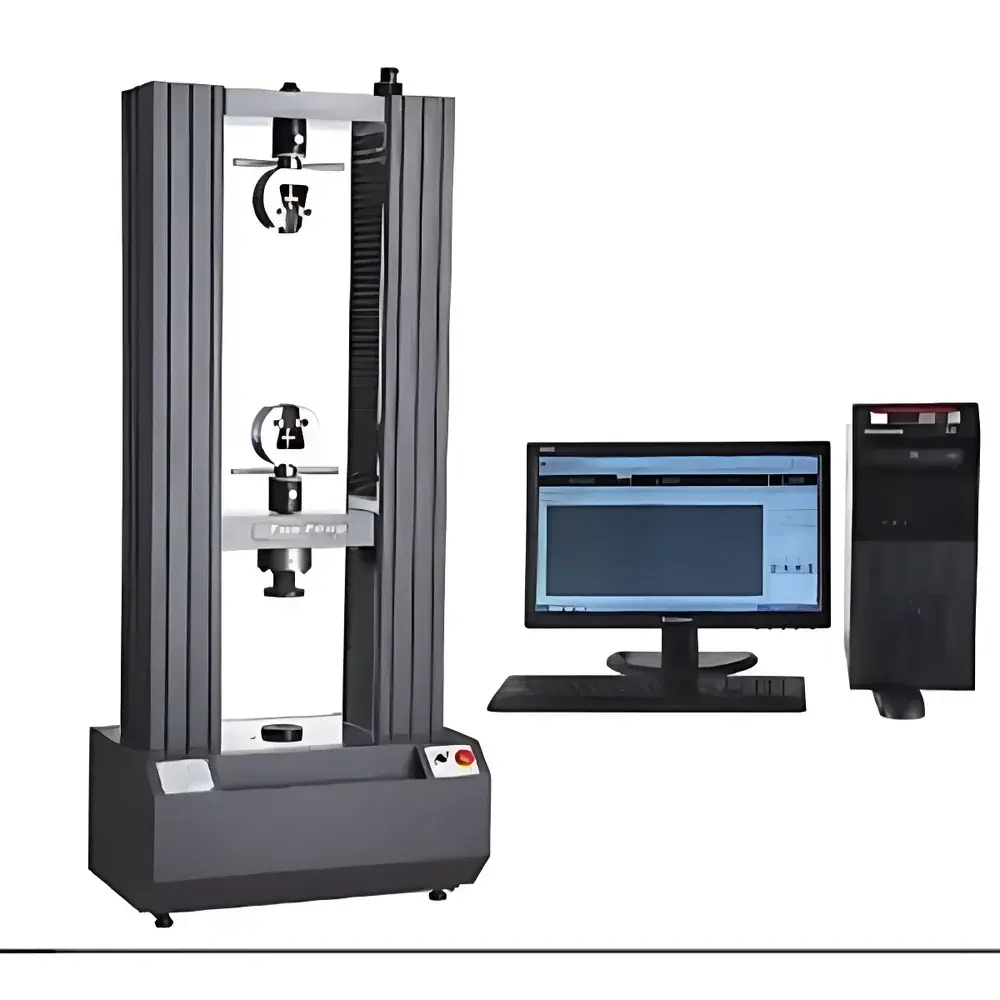
Tuofeng TFW-295 High-Voltage Wire Terminal Pull-Off Tester
| Brand | Tuofeng |
|---|---|
| Origin | Shanghai, China |
| Manufacturer Type | Direct Manufacturer |
| Equipment Type | Electromechanical Universal Testing Machine |
| Model | TFW-295 |
| Load Capacity | 300 kN |
| Load Accuracy | ±0.5% |
| Compliance | GB/T 16491–2008, JJG 475–2008, ASTM E4, ISO 7500-1, DIN 51221 |
Overview
The Tuofeng TFW-295 High-Voltage Wire Terminal Pull-Off Tester is a precision-engineered electromechanical universal testing machine designed specifically for the quantitative mechanical evaluation of crimped, soldered, or compression-connected wire terminations used in high-voltage power transmission, railway traction systems, electric vehicle battery packs, and industrial switchgear assemblies. Operating on the principle of controlled axial tensile loading under closed-loop servo control, the system applies calibrated force to simulate real-world pull-out, shear, and peel stresses experienced at conductor–terminal interfaces. Unlike general-purpose tensile testers, the TFW-295 integrates terminal-specific fixtures—including radial compression clamps, multi-angle swivel adapters, and insulated grip assemblies—to replicate IEC 61238-1, UL 486A-B, and GB/T 14315 test configurations. Its 300 kN capacity accommodates heavy-gauge aluminum and copper conductors (up to 2400 mm² cross-section), while its ±0.5% load accuracy meets Class 0.5 requirements per ISO 7500-1 and supports traceable calibration against national metrology standards.
Key Features
- High-stiffness dual-column frame with preloaded high-precision ball screws and imported servo motor–driven worm-gear reduction system for smooth, low-noise actuation and minimal thermal drift.
- Full-range load measurement from 0.2% to 100% of full scale using a hermetically sealed, temperature-compensated load cell with internal digital filtering and 500,000-count resolution (no range switching required).
- Integrated safety architecture: dual-channel electronic limit switches, hardware-based emergency stop circuitry, overload protection at 110% of rated capacity, and programmable soft limits within test profiles.
- Motorized crosshead with dual-speed (fast/slow) positioning and automatic return-to-start functionality after test completion—configurable via software or front-panel controls.
- Modular fixture interface compliant with ISO 26203-2 mounting patterns, enabling rapid interchange of terminal-specific jaws, bending mandrels, and insulation-piercing adapters.
- Real-time displacement measurement via optical encoder with ±0.005% FS accuracy; optional extensometer support for strain-controlled protocols per ASTM E83 or ISO 9513.
Sample Compatibility & Compliance
The TFW-295 supports standardized test specimens per major international specifications including IEC 61238-1 (compression-type connectors), UL 486A-B (wire connectors), GB/T 14315 (power cable terminations), and EN 50343 (railway rolling stock wiring). It accommodates rigid and flexible stranded conductors (Cu/Al, bare or insulated), busbar terminations, lug assemblies, and hybrid metal–polymer interfaces. All mechanical and electrical safety design elements conform to CE Machinery Directive 2006/42/EC and IEC 61000-6-2/6-4 EMC requirements. The system’s structural integrity and measurement uncertainty budget are validated per JJG 475–2008 (China National Verification Regulation) and GB/T 16491–2008 (National Standard for Electronic Universal Testing Machines).
Software & Data Management
The Windows-based testing software provides full compliance with GLP and GMP data integrity principles. It supports audit-trail-enabled user authentication, electronic signatures per FDA 21 CFR Part 11, and configurable test method templates aligned with ASTM D3039, ISO 527-1, and IEC 60851-5. Real-time plotting includes force–time, force–displacement, stress–strain, and displacement–time curves with overlay capability for comparative analysis across batches or materials. Automatic calculation outputs include ultimate pull-off force, yield force, displacement at specified loads, and energy absorption up to failure. Test reports are exportable in PDF, CSV, and XML formats, with embedded metadata (operator ID, calibration certificate ID, environmental conditions). Software updates are delivered remotely with version-controlled release notes and validation documentation.
Applications
- Qualification testing of crimped HV cable lugs per IEC 61238-1 Annex B (pull-out resistance, deformation, and visual inspection criteria).
- Validation of ultrasonic-welded battery interconnects under dynamic load cycling (programmable hold-and-ramp sequences).
- Interlaboratory round-robin studies supporting ASTM WK76293 (new standard for EV high-current terminal reliability).
- Production line in-process verification of termination integrity prior to potting or encapsulation.
- Failure mode analysis of cold-welded aluminum–copper transition joints in solar farm combiner boxes.
- Research into creep behavior of polymer-insulated terminals under sustained DC voltage and thermal cycling.
FAQ
Does the TFW-295 comply with ISO/IEC 17025 requirements for accredited testing laboratories?
Yes—the system’s traceable calibration chain, documented uncertainty budgets, and software audit trail features support ISO/IEC 17025:2017 Clause 6.4 and 6.6 implementation.
Can the machine perform constant-rate-of-extension (CRE) tests per ISO 527-1?
Yes—test speed is continuously adjustable from 0.001 to 500 mm/min with closed-loop position control and real-time feedback compensation.
Is third-party calibration certification included with delivery?
A NIST-traceable calibration certificate (covering load, displacement, and speed) is provided upon shipment, with optional UKAS or CNAS accreditation available upon request.
What is the maximum specimen height accommodated without modification?
The standard vertical test space is 1700 mm; extended-height columns (up to 2600 mm) are available as factory-configured options.
Are software licenses tied to hardware or transferable between instruments?
Licenses are node-locked to the controller’s MAC address but can be reissued upon formal hardware decommissioning and proof of ownership.



