
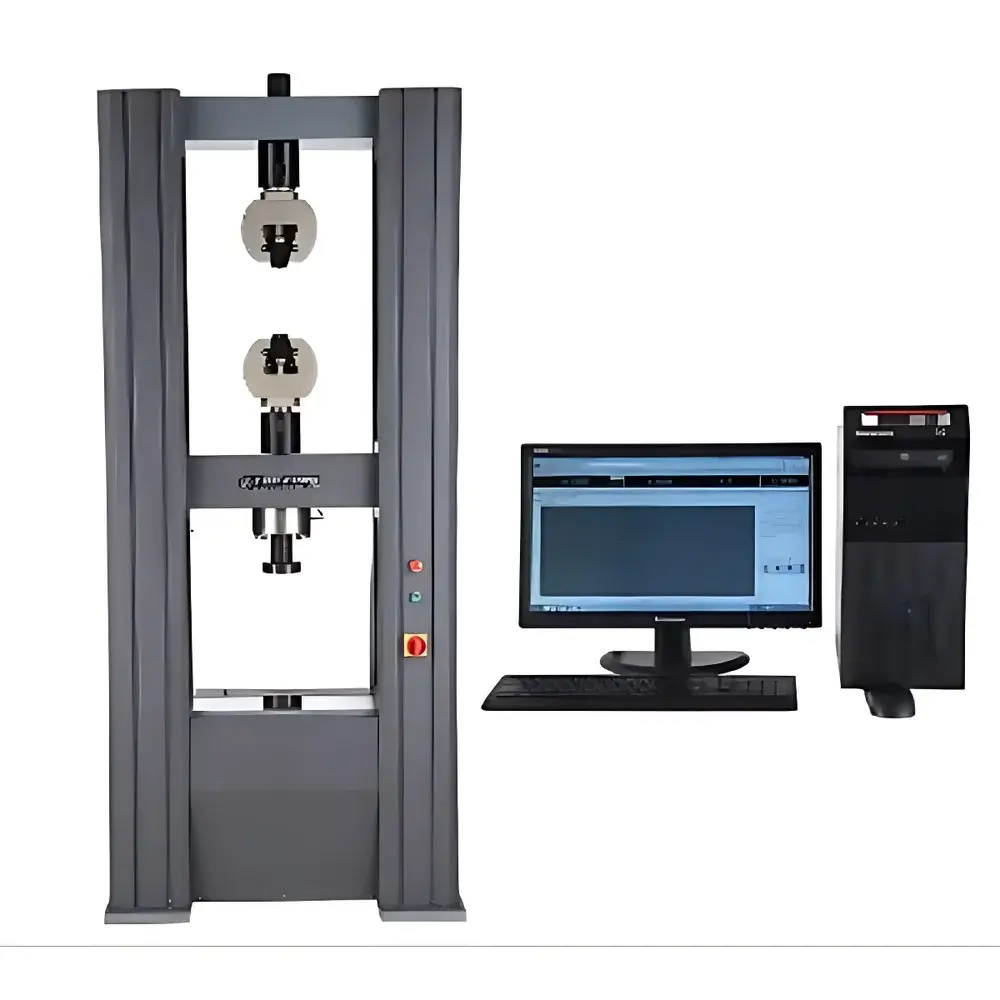
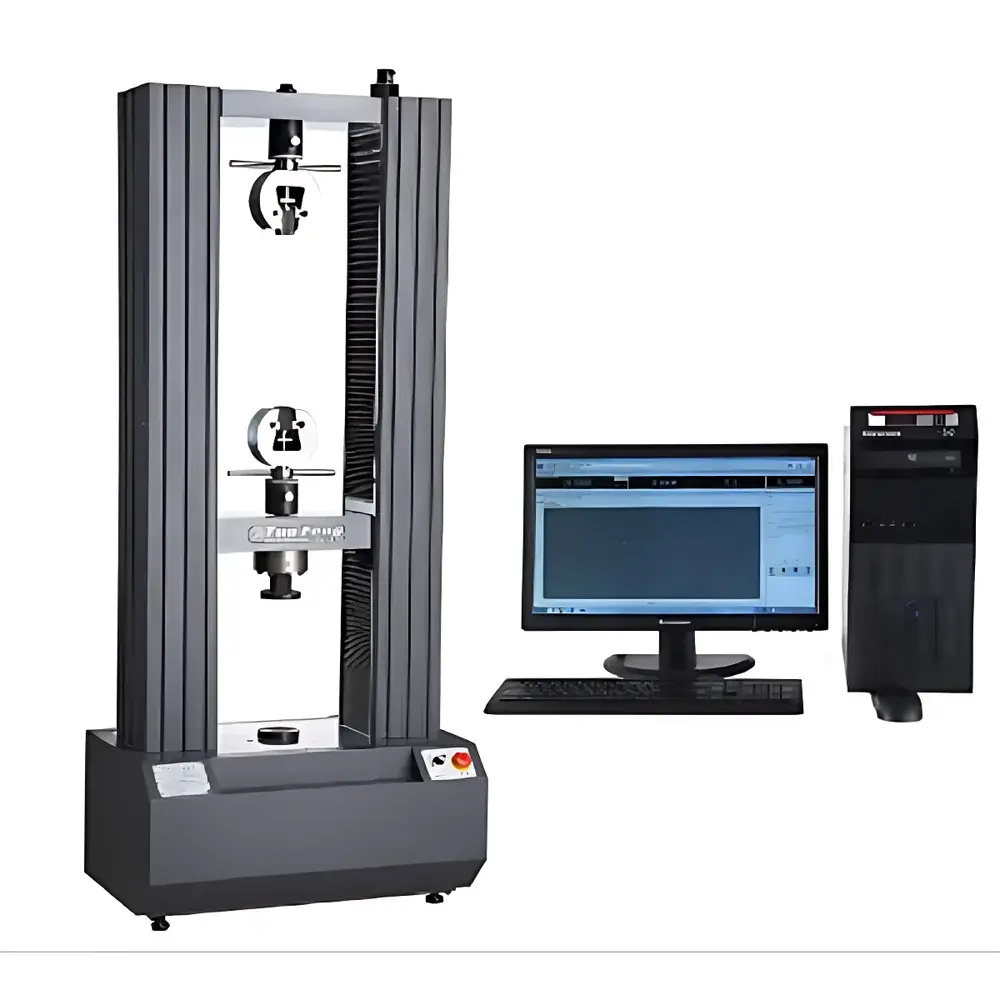
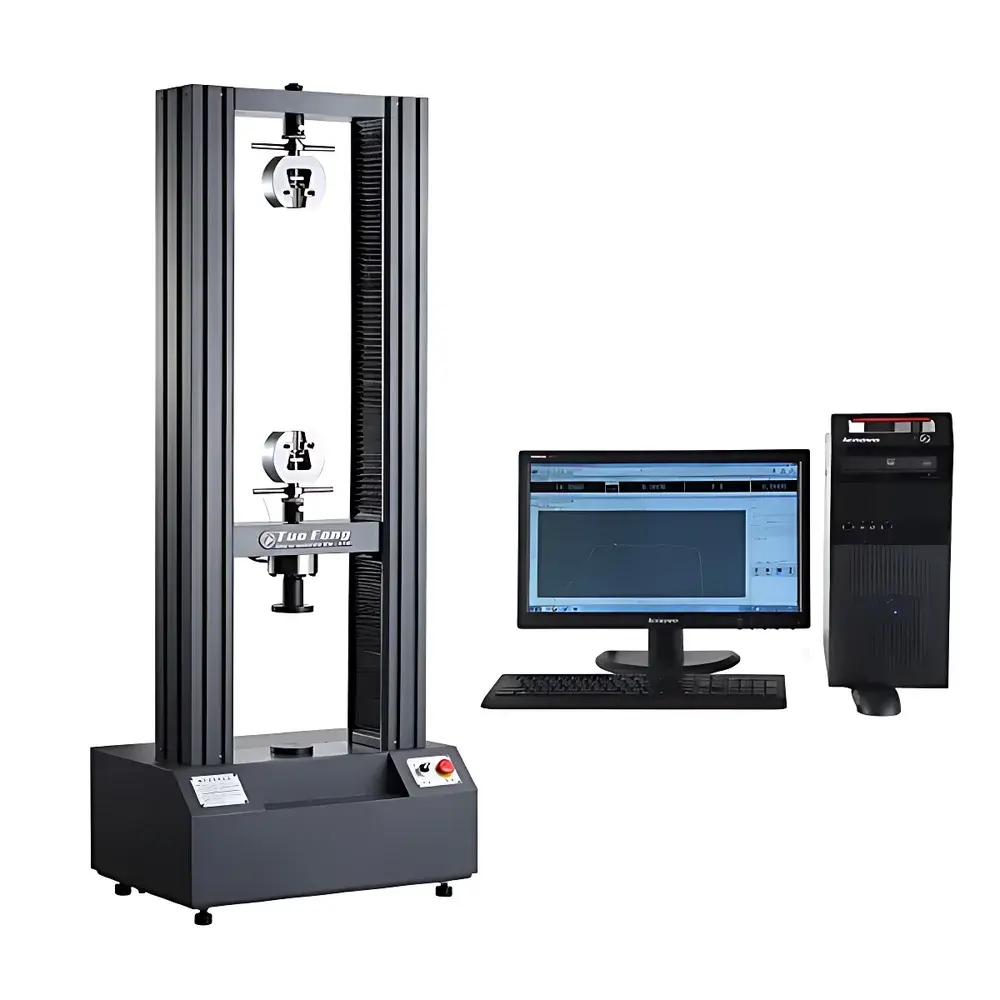
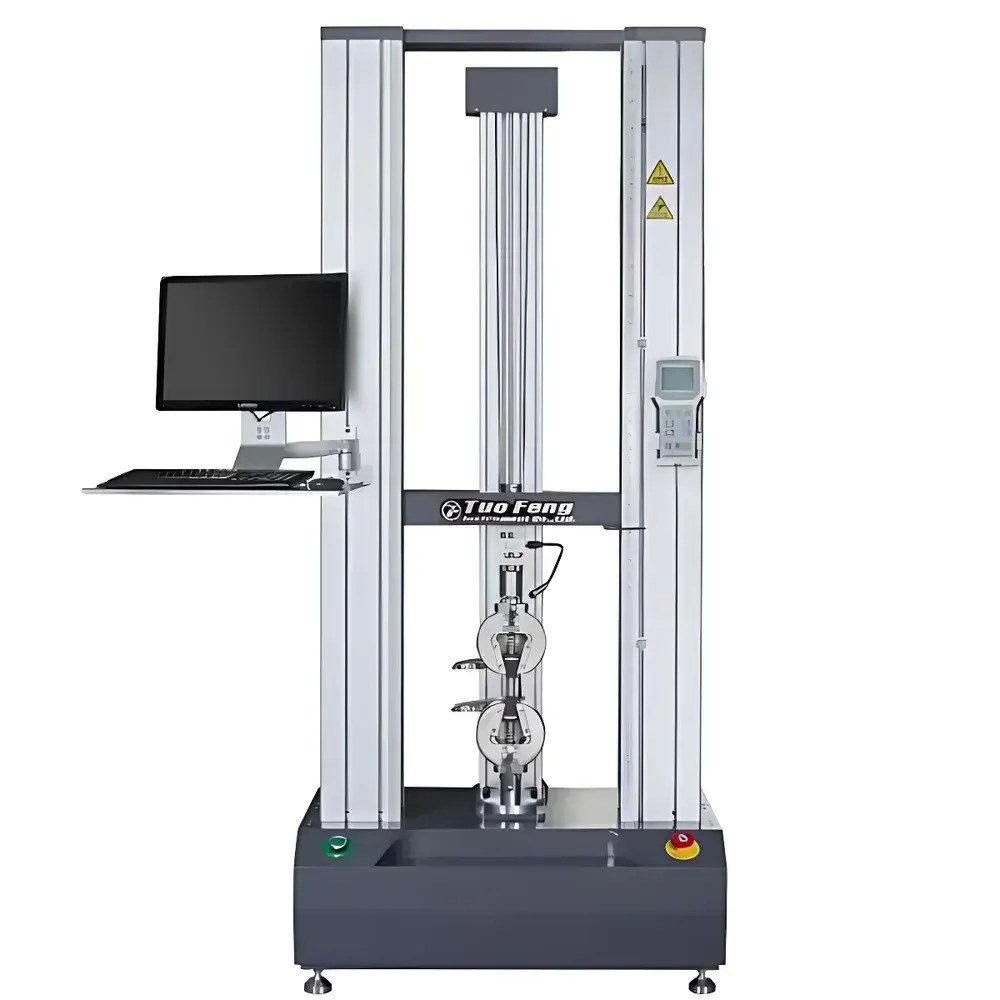
Tuofeng TFW-316 Intelligent Electromechanical Universal Testing Machine
| Brand | Tuofeng |
|---|---|
| Origin | Shanghai, China |
| Manufacturer Type | Direct Manufacturer |
| Instrument Type | Electromechanical Universal Testing Machine |
| Model | TFW-316 |
| Load Capacity Range | 0.02 N to 300 kN |
| Load Accuracy | ±0.5% |
| Force Resolution | 1 part in 500,000 full scale (fixed resolution, no range switching) |
| Test Speed | 0.001–500 mm/min (infinitely variable) |
| Displacement Accuracy | ±0.005% of reading |
| Strain Measurement | Compatible with extensometers (clip-on or video-based) |
| Compliance Standards | GB/T 16491-2008, JJG 475-2008, ASTM E4, ASTM E8, ISO 6892-1, ISO 7500-1, DIN 51221, JIS Z2241 |
Overview
The Tuofeng TFW-316 Intelligent Electromechanical Universal Testing Machine is a high-precision, servo-controlled static mechanical testing system engineered for quantitative evaluation of tensile, compressive, flexural, shear, tear, peel, and puncture properties of metallic, polymeric, ceramic, composite, and elastomeric materials. Based on closed-loop electromechanical actuation—employing a precision ball-screw drive coupled with a high-torque imported servo motor—the system delivers stable force application and repeatable displacement control across its full 0.02 N–300 kN load range. Its architecture conforms to ISO 7500-1 Class 0.5 accuracy requirements and supports traceable calibration per ASTM E4 and GB/T 16491-2008. Designed for integration into R&D labs, QC environments, and accredited testing facilities, the TFW-316 provides deterministic mechanical property derivation—including ultimate tensile strength, yield strength (0.2% offset), Young’s modulus, elongation at break, compressive yield stress, and fracture toughness indices—under standardized loading protocols.
Key Features
- Full-range force measurement with ±0.5% accuracy and 1:500,000 internal resolution—no manual range switching required
- Infinitely variable crosshead speed (0.001–500 mm/min), enabling low-strain-rate creep tests and high-speed impact simulation
- Dual-speed motorized crosshead positioning with jog control and programmable return-to-start functionality
- Integrated safety architecture: electronic travel limits, emergency stop circuitry, overload protection (auto-shutdown at >110% F.S.), and hardware-based torque limiting
- Modular fixture interface supporting ASTM- and ISO-compliant grips, bend fixtures, compression platens, peel jigs, and custom tooling
- High-rigidity frame with optimized column geometry minimizing deflection during high-load compression testing
- Real-time synchronization of force, displacement, and strain signals at ≥1 kHz sampling rate for dynamic event capture
Sample Compatibility & Compliance
The TFW-316 accommodates specimens ranging from micro-scale filaments (<1 mm diameter) to structural beams (up to 600 mm wide × 800 mm height). Standard configurations include 400 mm, 500 mm, and 600 mm test widths, with extended-height columns available for long-buckling or high-elongation applications. The system complies with international mechanical testing standards including ASTM D638 (tensile plastics), ASTM D790 (flexural rigidity), ISO 527-1 (plastics tensile), ISO 178 (flexural), ASTM D1876 (peel), ASTM D624 (tear), and EN 10002-1 (metals). Calibration certificates are traceable to national metrology institutes (e.g., NIM, NIST, PTB), and the machine meets GLP audit requirements for data integrity when operated with optional 21 CFR Part 11–compliant software modules.
Software & Data Management
The Windows-based Tuofeng TestSuite™ software provides multi-mode control (constant load, constant displacement, constant strain rate, hold-to-target, cyclic ramping) and real-time visualization of up to four synchronized plots: force–time, force–displacement, stress–strain, and displacement–time. All curves are exportable in CSV, XML, and PDF formats; raw data files include embedded metadata (operator ID, sample ID, environmental conditions, calibration timestamps). The software supports multi-language UI (English, Simplified Chinese, Traditional Chinese), customizable unit systems (N/kN/MPa/GPa, mm/inch, %/mm/mm), and automated calculation of mechanical parameters per ASTM E8/E9/E111 and ISO 6892-1. Audit trails record all user actions, parameter changes, and test modifications. Optional modules enable statistical process control (SPC) charting, batch comparison overlays, and integration with LIMS via ODBC or REST API.
Applications
This system serves as a core platform for material qualification in aerospace (composite laminate interlaminar shear, titanium alloy tensile ductility), automotive (polymer bumper impact resistance, brake pad compressive creep), medical device manufacturing (suture tensile strength, stent radial force), construction (rebar yield behavior, concrete cylinder compression), and electronics (flex circuit peel adhesion, solder joint shear). It is routinely deployed in university mechanics laboratories for teaching fundamental stress–strain theory and in third-party certification bodies for ISO/IEC 17025-accredited testing. The TFW-316 also supports advanced research workflows—such as temperature-controlled testing (with external environmental chambers), fatigue pre-conditioning, and digital image correlation (DIC) synchronization.
FAQ
What standards does the TFW-316 support for calibration and verification?
It complies with GB/T 16491-2008, JJG 475-2008, ISO 7500-1 Class 0.5, and ASTM E4 for force calibration and ASTM E83 for extensometer verification.
Can the system perform cyclic or fatigue testing?
Yes—via optional waveform generation module, it supports sinusoidal, triangular, trapezoidal, and user-defined load/displacement waveforms with programmable dwell periods and cycle counting.
Is the software compliant with FDA 21 CFR Part 11 requirements?
A validated version with electronic signatures, audit trail logging, and role-based access control is available upon request for regulated pharmaceutical and medical device applications.
What extensometer options are supported?
Both clip-on axial extensometers (0–50 mm gauge length, ±0.5% accuracy) and non-contact video extensometers (for high-temperature or fragile samples) can be integrated via standard analog/digital I/O ports.
Does the machine support remote diagnostics and firmware updates?
Yes—through secure TLS-enabled remote maintenance port; all firmware and software upgrades are provided free of charge for the lifetime of the instrument.



