
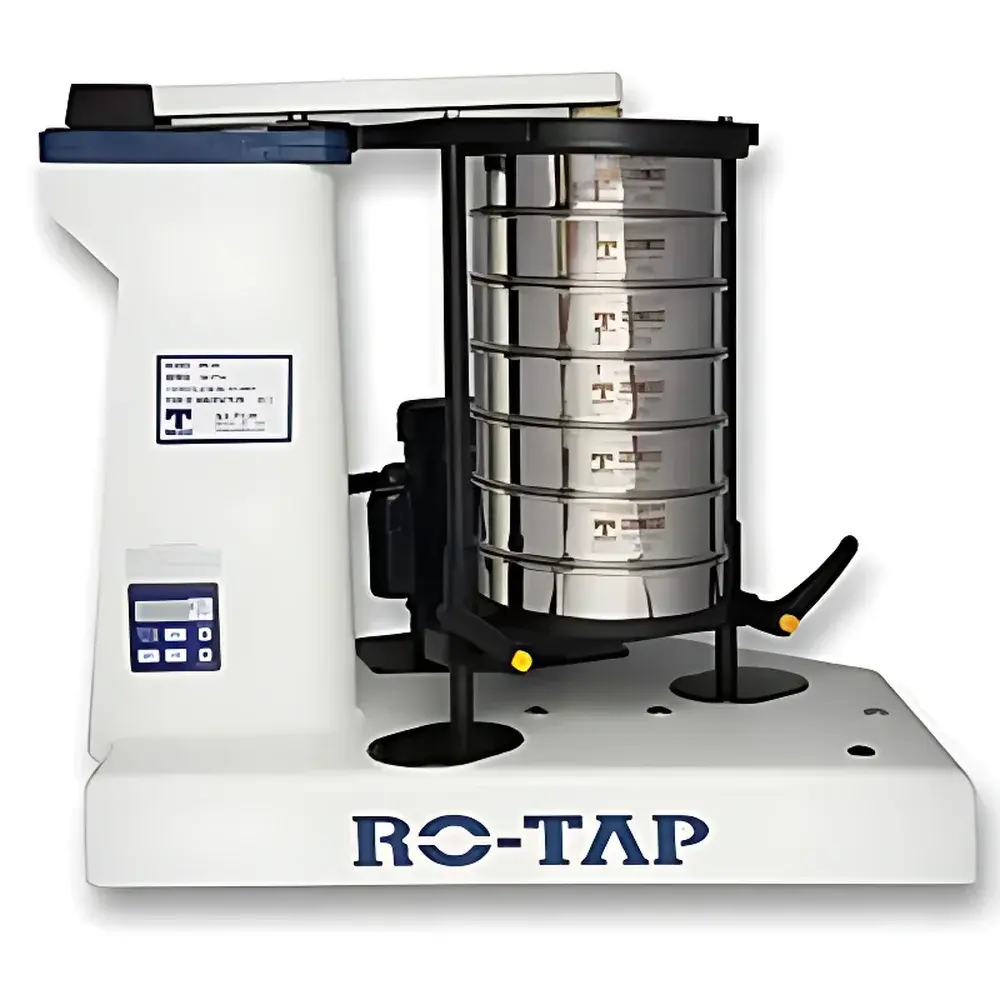
Tyler RO-TAP RX-29-10 Sieve Shaker
| Brand | Tyler |
|---|---|
| Origin | USA |
| Model | RX-29-10 |
| Sieve Diameter | 200 mm (8") |
| Tap Frequency | 150 ± 10 taps/min |
| Rotary Speed | 278 ± 10 rpm |
| Timer Range | 0–99 min, 0.1-sec increment |
| Compliance | ASTM E11-09, ISO 3310-1, NIST-traceable calibration support |
| Dimensions (W×D×H) | 710 × 530 × 635 mm |
| Weight | 86 kg |
| Power Supply | 230 V, 50 Hz |
| Max. Sieve Stack Capacity | 6 full-height + 13 half-height sieves |
| Particle Size Range | 20 µm – 100 mm |
| Screen Mesh Options | 3.5–500 mesh (5.6 mm – 25 µm), including stainless steel, brass, polyester, nylon, and wet-sieving configurations |
Overview
The Tyler RO-TAP RX-29-10 is a precision-engineered mechanical sieve shaker designed to replicate standardized manual sieving protocols with high reproducibility and regulatory compliance. Based on the proven RO-TAP® motion principle—combining controlled vertical tapping (150 ± 10 taps/min) with horizontal orbital rotation (278 ± 10 rpm)—this instrument induces particle stratification through synchronized mechanical agitation, enabling efficient separation of dry granular or powdered materials across defined size fractions. Unlike purely vibratory or gyratory systems, the RX-29-10’s dual-motion profile ensures uniform energy transfer throughout the sieve stack, minimizing particle nesting, blinding, and segregation artifacts commonly observed in static or single-axis shakers. Its fully enclosed ¼-horsepower motor assembly operates at low thermal load and delivers consistent torque over extended duty cycles, making it suitable for routine QC testing as well as method development under GLP/GMP environments.
Key Features
- Standardized dual-motion mechanism: Simultaneous vertical tapping and horizontal orbital rotation per ASTM E11-09 and ISO 3310-1 requirements
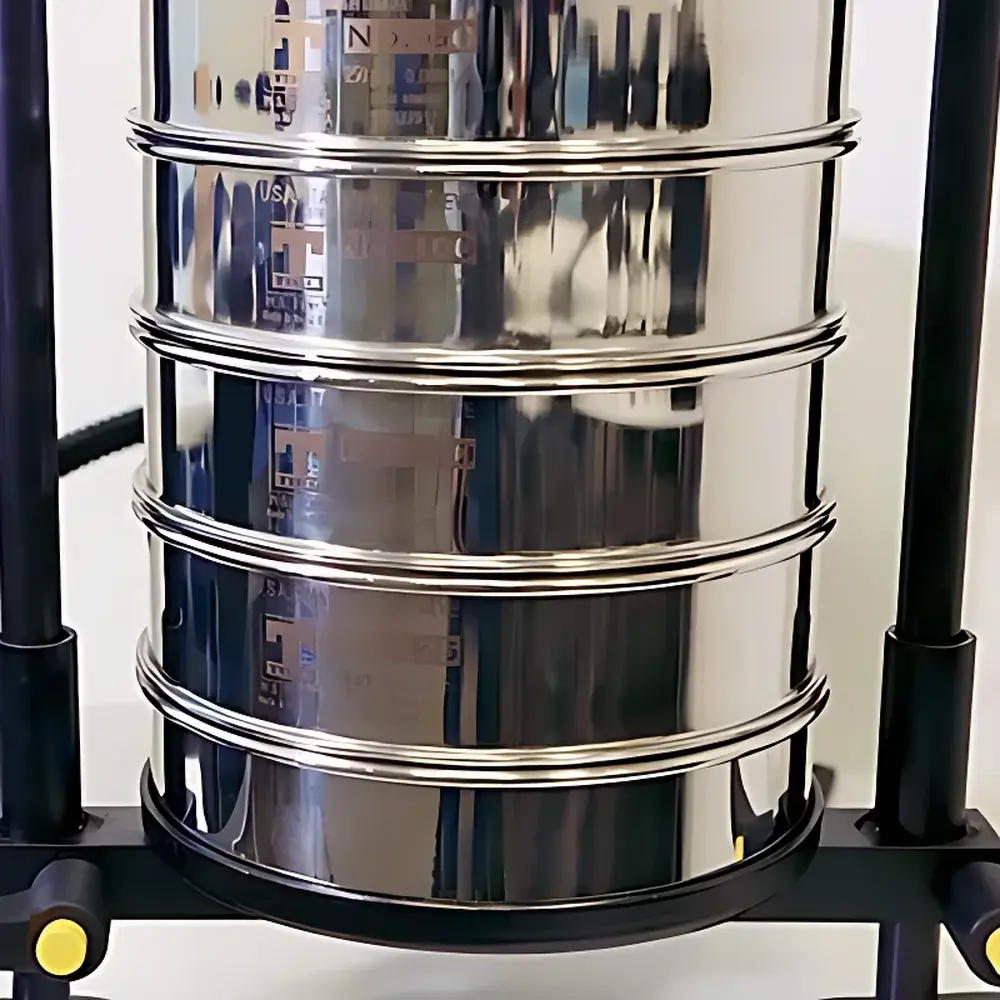
- Large-capacity sieve tower: Accommodates up to six full-height (200 mm diameter) and thirteen half-height sieves in a single run
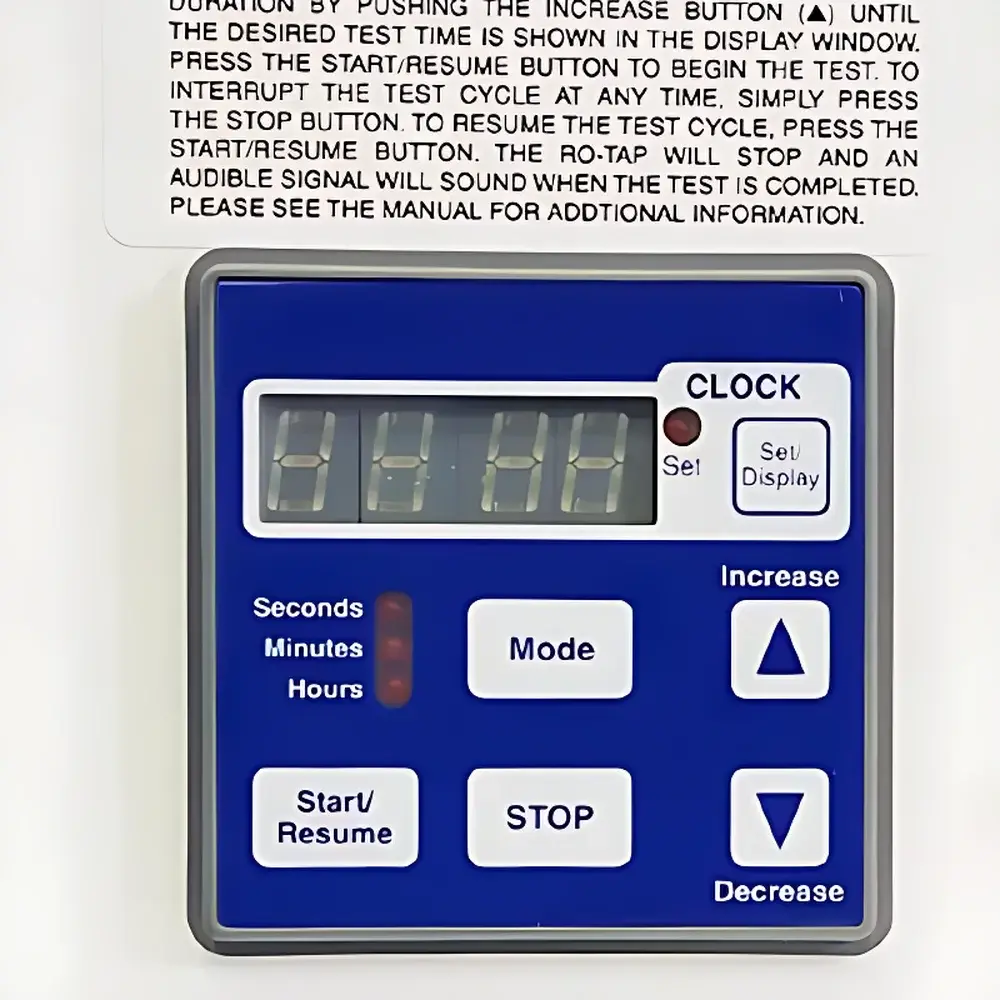
- Digital LCD timer with 0.1-second resolution and programmable range from 0.1 seconds to 99 minutes
- NIST-aligned calibration support: Traceable performance verification available via certified reference standards and documented maintenance logs
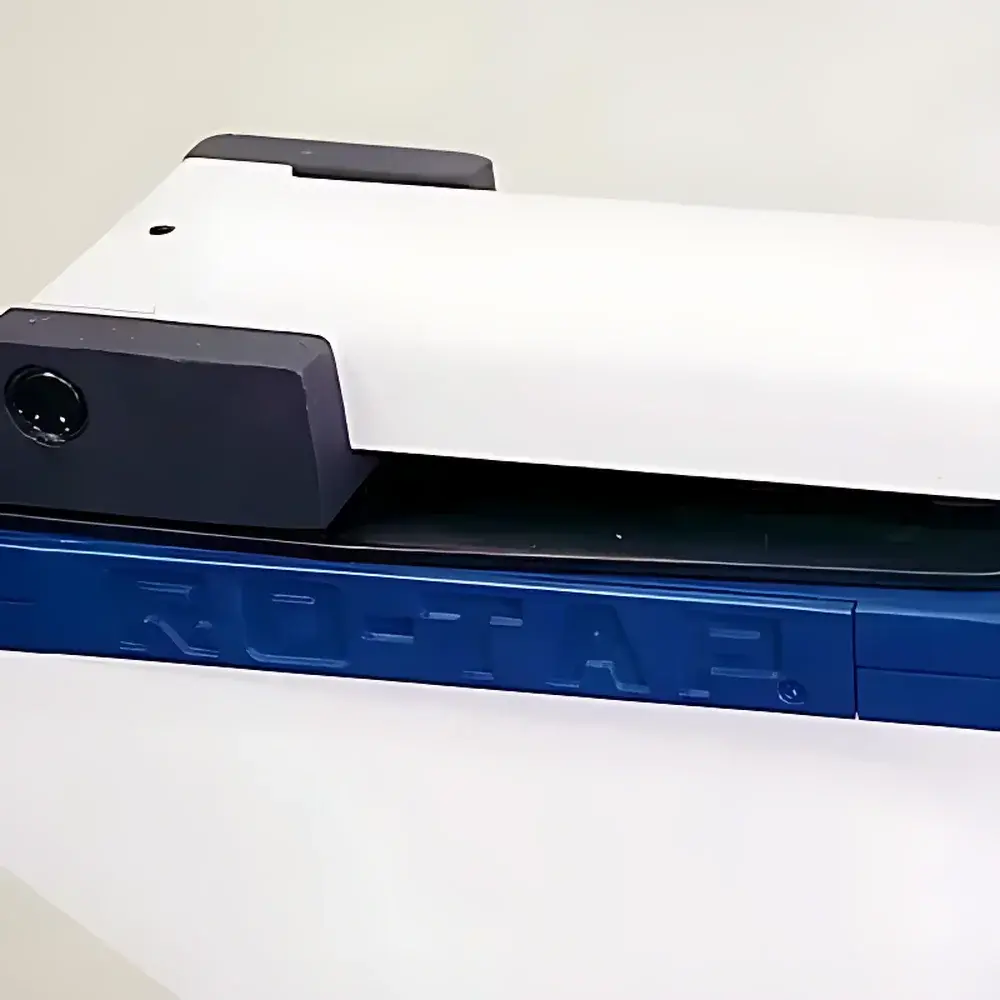
- Robust cast-iron frame and vibration-damped base reduce operational drift and improve long-term repeatability
- Modular accessory ecosystem: Compatible with R-30500 acoustic enclosure (reduces noise to ≤65 dB(A)), R-40041 leveling stand, LA11112 water-sieving kit, and ISO/ASTM-compliant sieve sets
- Electrical safety compliance: CE-marked design with overcurrent protection, thermal cutoff, and grounded chassis
Sample Compatibility & Compliance
The RX-29-10 supports dry-sieving applications across pharmaceutical powders (e.g., API excipient blends per USP ), food-grade particulates (flour, spices, dairy powders), metallurgical concentrates, catalyst substrates, ceramic precursors, and agricultural feedstocks. It is validated for use with all standard 200 mm (8″) sieve formats—including brass full-height, stainless steel full/half-height, polyester, nylon, and nickel alloy wet-screens—enabling analysis of both free-flowing and cohesive materials. When paired with the optional LA11112 water-sieving module, the system complies with ASTM D422 and ISO 17892-4 for dispersion-sensitive soils and insoluble particulates. All sieve meshes meet ASTM E11-09 dimensional tolerances and are supplied with individual certification documents indicating nominal aperture, wire diameter, and open-area percentage. The instrument itself supports audit-ready documentation workflows required under FDA 21 CFR Part 11 when integrated with compliant LIMS or ELN platforms.
Software & Data Management
The RX-29-10 operates as a standalone hardware platform without embedded firmware or proprietary software. This architecture eliminates validation overhead associated with embedded operating systems and aligns with laboratory policies favoring vendor-neutral data acquisition. Users record timing parameters, sieve stack configuration, and mass-on-sieve results manually or via external digital scales interfaced through RS-232 or USB-to-serial adapters. For regulated environments, raw data—including start/stop timestamps, operator ID, and environmental conditions (temperature/humidity logged separately)—can be entered into validated spreadsheets or electronic lab notebooks (ELNs) that enforce version control, electronic signatures, and audit trails per ALCOA+ principles. Optional accessories such as the R-30500 acoustic enclosure include mechanical interlock switches that log door-open events, supporting integrity monitoring during unattended operation.
Applications
- Pharmaceutical: Granule size distribution analysis for tablet compression batches (ICH Q5A), excipient qualification, and blend uniformity assessment
- Food & Agriculture: Flour extraction rate verification (ICC Standard No. 105/1), grain grading per USDA standards, and pet food kibble consistency control
- Minerals & Metals: Ore liberation analysis, flotation feed sizing, and abrasive grit classification (ANSI B74.12)
- Chemicals & Polymers: Catalyst support particle sizing, pigment dispersion screening, and polymer resin pellet homogeneity testing
- Research & Standards Labs: Reference material characterization per ISO Guide 35, proficiency testing schemes, and interlaboratory comparison studies
FAQ
What sieve standards does the RX-29-10 support?
It accepts all 200 mm (8″) diameter sieves conforming to ASTM E11-09, ISO 3310-1, and BS 410-1 specifications—including brass, stainless steel, polyester, nylon, and specialized wet-sieving configurations.
Can the RX-29-10 perform wet sieving?
Yes—when equipped with the LA11112 water-sieving kit, it enables dispersion-controlled particle sizing of non-soluble materials in aqueous suspension, complying with ASTM D422 and ISO 17892-4.
Is the instrument suitable for GMP-regulated environments?
The RX-29-10 meets mechanical and electrical safety requirements for Class I, Division 2 hazardous locations and supports full traceability when used with calibrated sieves, documented SOPs, and externally managed electronic records.
What is the maximum allowable sample mass per run?
Recommended loading is ≤25% of total sieve area per deck; typical upper limit is 500 g for coarse materials (≥1 mm) and 100 g for fine powders (<100 µm), depending on bulk density and flow characteristics.
Does Tyler provide calibration services?
Yes—factory-certified calibration includes tap frequency verification, rotational speed measurement, timer accuracy validation, and mechanical alignment checks, with NIST-traceable certificates issued upon request.



