
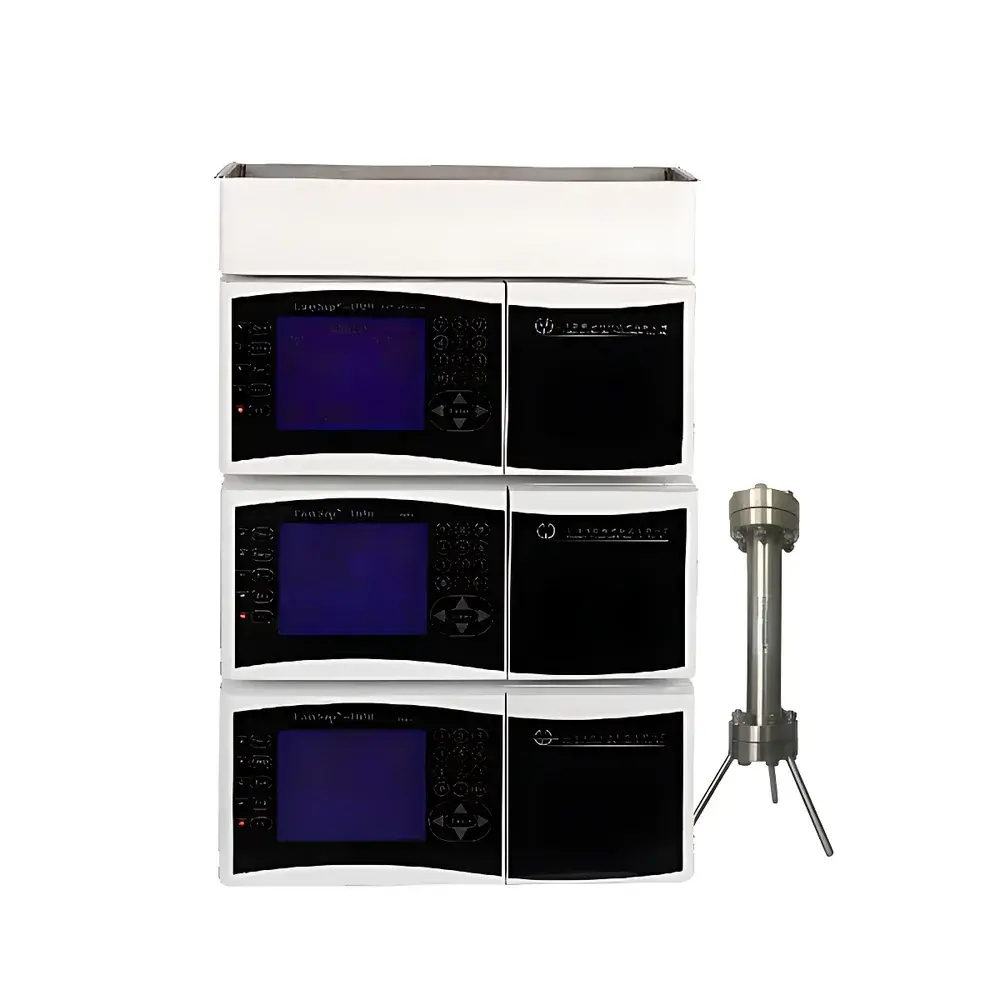
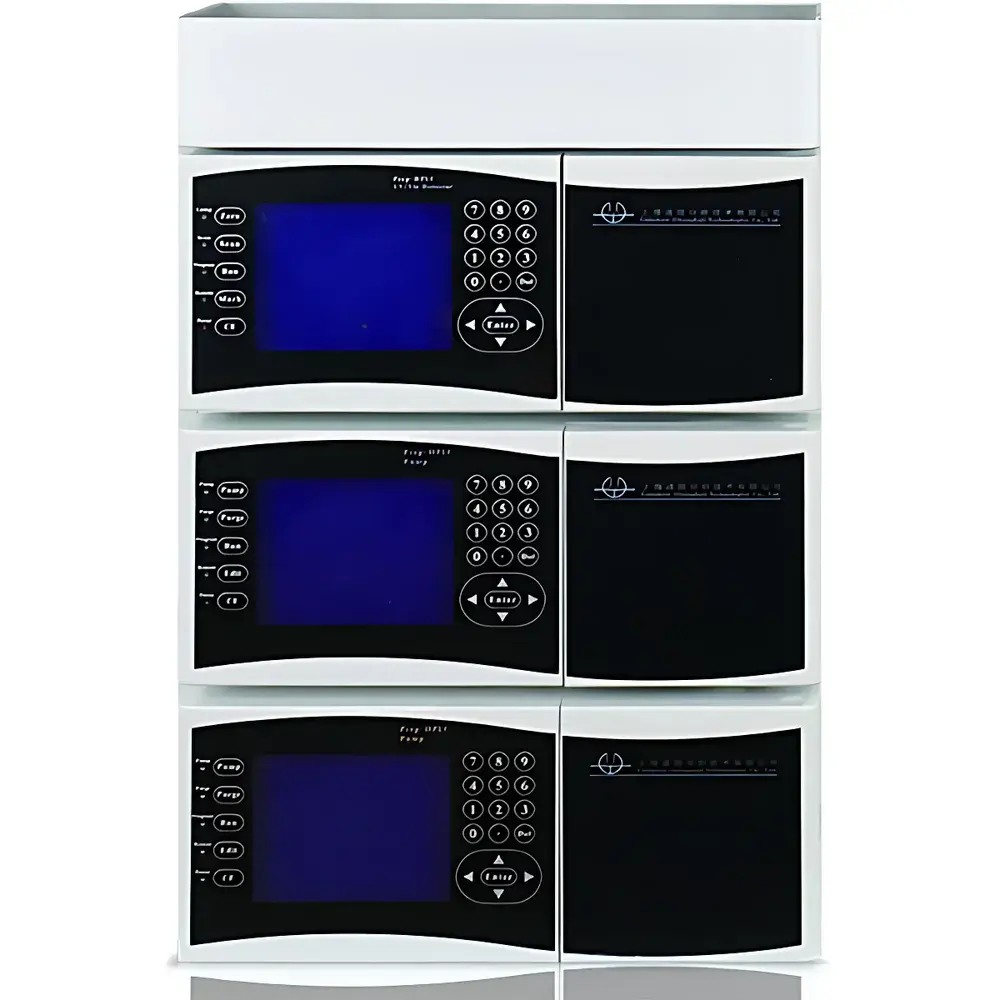
Unimicro Technologies EasySep®-1050 Automated Gel Permeation Chromatography (GPC) Cleanup System
| Brand | Unimicro Technologies |
|---|---|
| Origin | Shanghai, China |
| Manufacturer Type | Direct Manufacturer |
| Product Category | Domestic |
| Model | EasySep®-1050 |
| Instrument Type | Ambient-Temperature GPC System |
| Pump Flow Range | 0–50 mL/min |
| Pump Pressure Range | 0–35 MPa |
| Refractive Index Detector Drift | ≤2.5 nRIU |
| RI Detector Flow Cell Volume | 8 µL |
| UV Detector Wavelength Range | 190–700 nm |
| UV Detector Noise | ≤1.0 × 10⁻⁵ AU |
| Column Oven Temperature Range | Ambient to 100 °C |
Overview
The Unimicro Technologies EasySep®-1050 Automated Gel Permeation Chromatography (GPC) Cleanup System is a purpose-engineered solution for high-throughput, reproducible sample cleanup prior to quantitative analysis by GC, GC-MS, LC, or LC-MS. Based on size-exclusion separation principles, the system separates macromolecular matrix interferences—such as lipids, proteins, pigments, and polymers—from target analytes (e.g., pesticides, pharmaceutical residues, PAHs, PCBs) in complex environmental, food, and pharmaceutical matrices. Unlike conventional manual or semi-automated GPC systems, the EasySep®-1050 integrates fully programmable solvent delivery, precision injection, multi-detector compatibility, and intelligent fraction collection into a unified, modular architecture—enabling unattended operation over extended run times with minimal operator intervention.
Key Features
- Modular, field-upgradable architecture supporting both isocratic and gradient elution modes—facilitating method development flexibility and long-term system scalability.
- High-pressure, dual-piston reciprocating pump delivering precise flow control from 0.1 to 50 mL/min at pressures up to 35 MPa—ensuring stable mobile phase delivery across diverse column dimensions and packing materials (e.g., cross-linked polystyrene-divinylbenzene gels).
- Dual-detector capability: Integrated refractive index (RI) detector with low-drift performance (≤2.5 nRIU) and 8 µL flow cell volume; plus a high-sensitivity UV/VIS detector (190–700 nm range, noise ≤1.0 × 10⁻⁵ AU) for orthogonal detection of chromophoric analytes.
- Automated sample introduction via optional autosampler module—supporting 100+ vial capacity, programmable injection volume (1–500 µL), and syringe wash protocols compliant with GLP traceability requirements.
- Intelligent fraction collector with four collection modes: peak-triggered, time-based, volume-based, and manual override—compatible with standard microtiter plates (96-well), 1.5 mL vials, 4 mL vials, 15 mL centrifuge tubes, and up to 250 mL collection bottles.
- Column oven with PID-controlled temperature regulation from ambient to 100 °C—critical for retention time stability and method robustness when processing thermally sensitive or high-viscosity samples.
Sample Compatibility & Compliance
The EasySep®-1050 is validated for use in regulated laboratories performing residue analysis according to internationally recognized protocols, including EPA Method 3640A (for pesticide residue cleanup), ASTM D6986 (for polymer molecular weight distribution), and ISO 17025-accredited workflows. It supports organic solvents commonly used in GPC (e.g., tetrahydrofuran, chloroform, dichloromethane, toluene) and accommodates samples dissolved in lipid-rich extracts (e.g., fish tissue, vegetable oil, soil extracts), biological fluids, and formulated pharmaceutical products. All wetted components—including pump heads, injector rotor seals, and detector flow cells—are chemically resistant to aggressive solvents and compatible with routine cleaning validation procedures. The system meets CE marking requirements and conforms to IEC 61010-1 safety standards for laboratory equipment.
Software & Data Management
Controlled via Unimicro’s proprietary EasyControl™ software (Windows-based, English-language interface), the EasySep®-1050 provides full audit trail functionality, electronic signature support, and user-access-level management aligned with FDA 21 CFR Part 11 and EU Annex 11 expectations. Method parameters—including pump gradient profiles, detector wavelength/RI settings, column oven ramp rates, and fraction collection logic—are stored as encrypted, version-controlled files. Raw chromatograms, fraction log files, and system event logs are timestamped and exportable in CSV, PDF, and CDF formats for integration into LIMS environments. Optional instrument connectivity (Ethernet or RS-232) enables remote monitoring and centralized fleet management in multi-instrument labs.
Applications
- Environmental analysis: Cleanup of soil, sediment, wastewater, and air particulate extracts prior to GC-MS determination of semi-volatile organics—including polycyclic aromatic hydrocarbons (PAHs), polychlorinated biphenyls (PCBs), organochlorine pesticides (OCPs), and brominated flame retardants (BFRs).
- Food safety testing: Removal of triglycerides and sterols from animal fat, dairy, and plant oil matrices to improve sensitivity and reduce matrix-induced ion suppression in LC-MS/MS quantitation of veterinary drug residues and mycotoxins.
- Pharmaceutical R&D: Purification of natural product extracts (e.g., herbal tinctures, botanical concentrates) for subsequent identification of active constituents using preparative-scale GPC coupled with offline NMR or HRMS.
- Materials science: Molecular weight distribution profiling of synthetic polymers, biopolymers, and dendrimers using calibrated calibration standards traceable to NIST SRMs.
FAQ
What types of columns are compatible with the EasySep®-1050?
The system supports standard 7.8 mm × 300 mm analytical GPC columns packed with cross-linked polystyrene-divinylbenzene gels (e.g., Agilent PLgel, Waters Styragel, Tosoh TSK-GEL), as well as preparative columns (up to 21.5 mm ID) for bulk fractionation.
Can the system be integrated with mass spectrometry?
Yes—the UV and RI detectors feature standard analog/digital outputs, and the system’s fraction collector supports timed collection synchronized with external MS acquisition triggers for offline coupling. Direct LC-MS interfacing requires optional post-column flow splitting and make-up solvent modules.
Is method transfer from legacy GPC systems supported?
Method parameters—including flow rate, column temperature, injection volume, and solvent composition—can be directly imported via CSV templates. Retention time alignment is facilitated by built-in column calibration tools and reference standard libraries.
What maintenance intervals are recommended for routine operation?
Pump seal replacement every 6 months under continuous use; RI detector cell cleaning after every 50 runs; UV lamp replacement every 2,000 hours; and annual performance qualification (PQ) per ISO/IEC 17025 guidelines.
Does the system support 21 CFR Part 11 compliance out of the box?
Yes—EasyControl™ software includes role-based access control, electronic signatures, audit trail generation, and data integrity safeguards required for regulated environments; full validation documentation (IQ/OQ/PQ protocols) is available upon request.






