
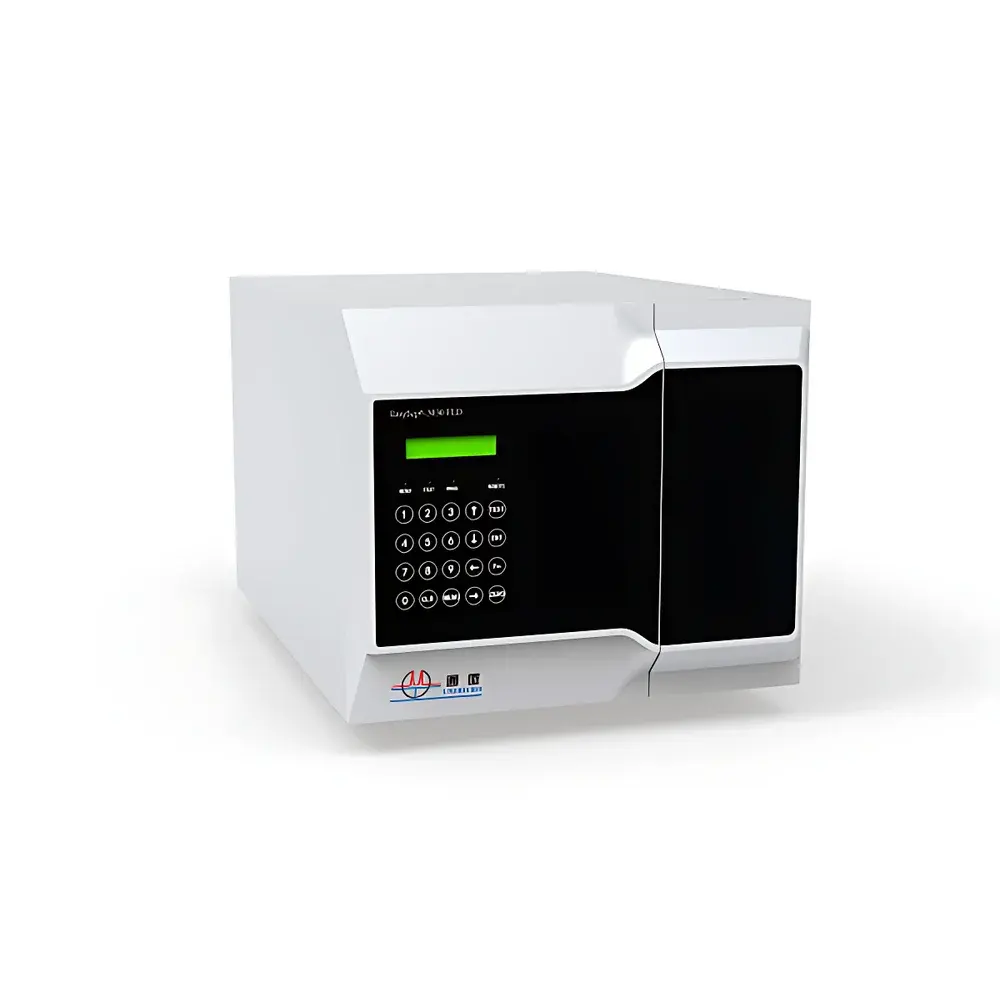
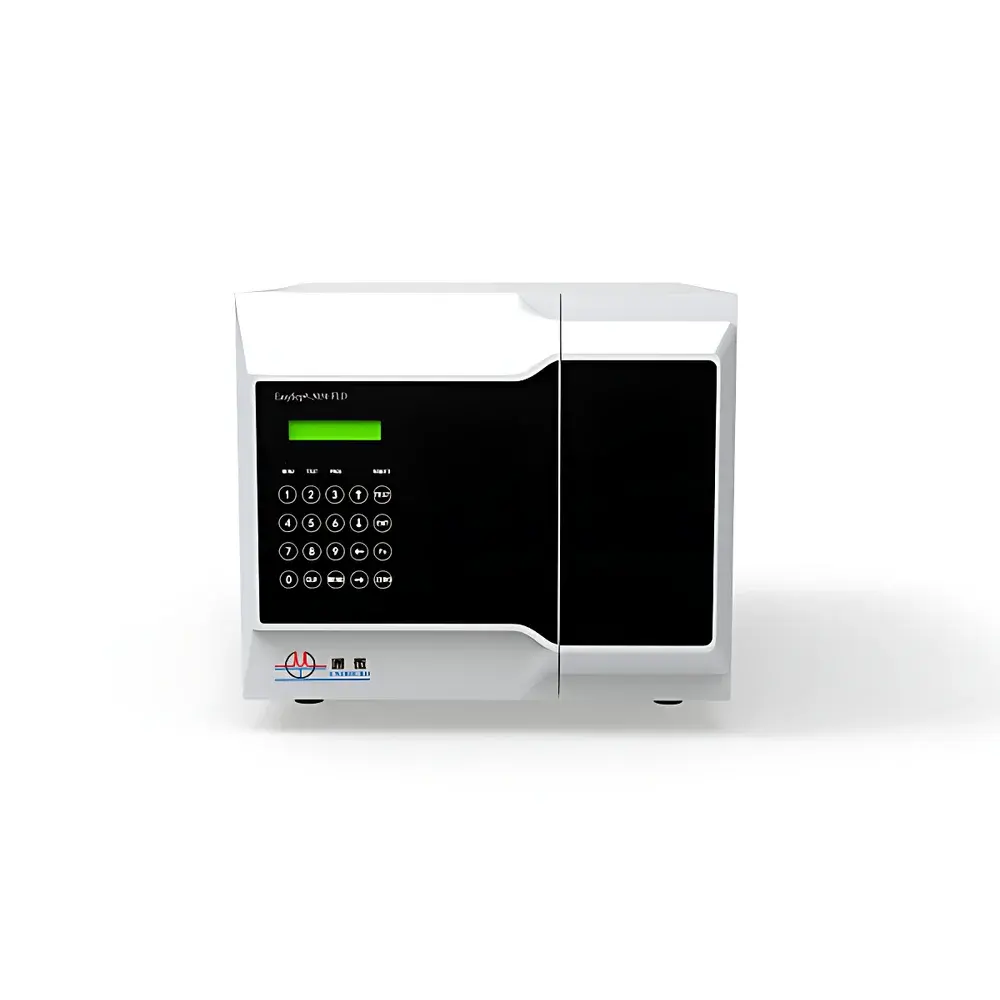
Unimicro Technologies EasySep®-3030FLD Fluorescence Detector
| Brand | Unimicro Technologies |
|---|---|
| Origin | Shanghai, China |
| Manufacturer Type | Original Equipment Manufacturer (OEM) |
| Product Category | Domestic |
| Model | EasySep®-3030FLD |
| Instrument Type | Fluorescence Detector (FD) |
| Wavelength Range | 200–800 nm |
| Light Source | Xenon Lamp |
Overview
The Unimicro Technologies EasySep®-3030FLD Fluorescence Detector is a high-performance, modular chromatographic detector engineered for precise and reproducible fluorescence-based quantification in liquid chromatography (LC) systems. It operates on the fundamental principle of molecular fluorescence emission: analytes are excited by incident light at a specific wavelength (excitation), and their resultant fluorescent emission—typically at a longer wavelength—is captured and quantified. This inherent selectivity enables exceptional signal-to-noise ratios for native or derivatized fluorophores, making the EasySep®-3030FLD particularly suited for trace-level analysis in regulated and research environments. Designed to meet the operational demands of modern QC/QA laboratories, it integrates seamlessly into both legacy and contemporary HPLC/UHPLC platforms without requiring proprietary interfaces.
Key Features
- Optimized optical architecture featuring a high-stability, short-arc xenon lamp as the excitation source—delivering broad spectral output from 200 nm to 800 nm with stable intensity over extended duty cycles.
- Dual-detection pathway incorporating both silicon photodiode and photomultiplier tube (PMT) configurations, enabling dynamic range extension and adaptive sensitivity selection based on analyte concentration and matrix complexity.
- Programmable gain control across multiple discrete amplification levels, allowing real-time optimization of signal response without hardware recalibration.
- Full excitation/emission wavelength scanning capability—supporting acquisition of full fluorescence excitation-emission matrices (EEMs) to identify optimal λex/λem pairs and verify spectral purity of peaks.
- Modular mechanical design with tool-free access to lamp housing, flow cell, and optical alignment components—reducing mean time to repair (MTTR) and supporting routine maintenance under GLP-compliant laboratory conditions.
Sample Compatibility & Compliance
The EasySep®-3030FLD is compatible with standard stainless steel, PEEK, and fused-silica capillary flow cells (10 µL pathlength, 1 mm i.d. typical), supporting flow rates from 0.1 to 5.0 mL/min. Its 200–800 nm excitation/emission coverage accommodates a wide spectrum of native fluorophores—including aflatoxins (B1, B2, G1, G2), polycyclic aromatic hydrocarbons (e.g., benzo[a]pyrene), vitamins (B2, K1), amino acids (tryptophan, tyrosine), and pharmaceutical metabolites. The detector conforms to core instrumentation requirements outlined in USP , ICH Q2(R2), and ISO/IEC 17025:2017 for analytical instrument qualification. Analog voltage output (0–1 V or 0–10 V, selectable) ensures interoperability with third-party data systems compliant with ASTM E1319 or EU Pharmacopoeia Chapter 2.2.46.
Software & Data Management
While the EasySep®-3030FLD operates as a standalone analog detector, its output is fully compatible with industry-standard chromatography data systems (CDS) such as Waters Empower, Thermo Chromeleon, Agilent OpenLab CDS, and Shimadzu LabSolutions. When paired with Unimicro’s optional EasyControl™ LC software suite (v3.2+), users gain access to instrument parameter logging, wavelength scan visualization, baseline noise monitoring, and audit-trail-enabled method storage—supporting compliance with FDA 21 CFR Part 11 requirements for electronic records and signatures. All configuration changes, lamp usage hours, and calibration events are timestamped and exportable in CSV format for internal QA review.
Applications
This detector is routinely deployed in applications requiring high selectivity and low detection limits: quantification of mycotoxins in cereal commodities per AOAC 2005.02; multi-residue PAH analysis in soil and water extracts following EPA Method 8310; stability-indicating assays for fluorescent APIs (e.g., quinolones, tetracyclines); and nutritional profiling of B-vitamins in fortified foods per AOAC 985.32. Its broad spectral range also supports method development for novel fluorogenic probes in life science research—particularly in glycoprotein characterization and oxidative stress biomarker studies.
FAQ
What types of LC systems is the EasySep®-3030FLD compatible with?
It interfaces directly via standard analog BNC or DB9 outputs with any HPLC/UHPLC system equipped with a voltage-input detector channel—including instruments from Waters, Agilent, Shimadzu, Thermo Fisher, and国产 OEM platforms.
Does the detector support dual-wavelength ratioing or synchronous scanning?
No—synchronous scanning is not implemented; however, sequential excitation and emission scans are supported, and post-acquisition spectral ratioing (e.g., λex/λem = 365/435 nm vs. 280/350 nm) can be performed in compatible CDS software.
Is lamp replacement user-serviceable?
Yes—the xenon lamp module is designed for field replacement without optical realignment; each lamp includes a factory-set hour counter and integrated thermal cutoff.
What is the typical detection limit for fluorescein under standard HPLC conditions?
Using a 10 µL flow cell and 0.1 mL/min flow rate, the limit of detection (LOD, S/N = 3) is ≤50 fmol injected for fluorescein sodium under optimized λex/λem settings (490/520 nm).
Can the detector be validated for GMP use?
Yes—its analog architecture, deterministic signal path, and compatibility with 21 CFR Part 11–enabled CDS allow full IQ/OQ/PQ execution per ASTM E2500 and Annex 11 guidelines.





