
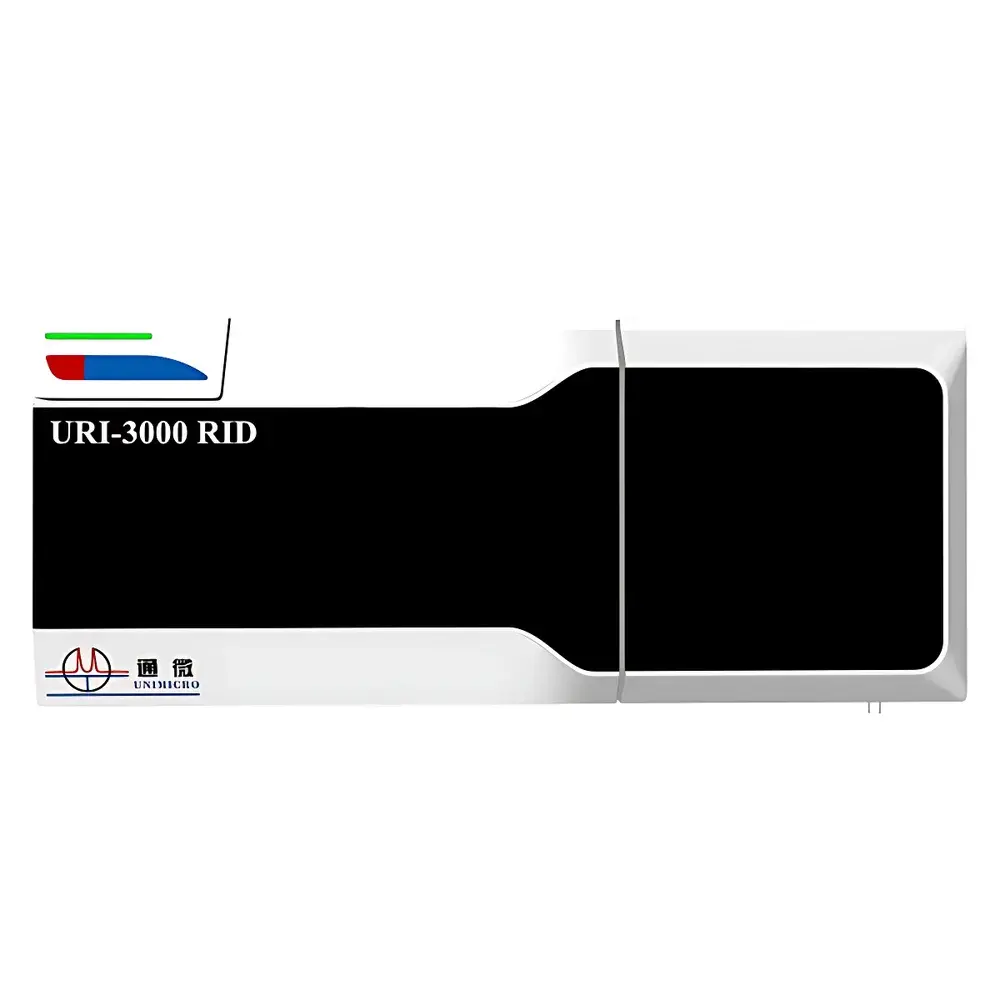
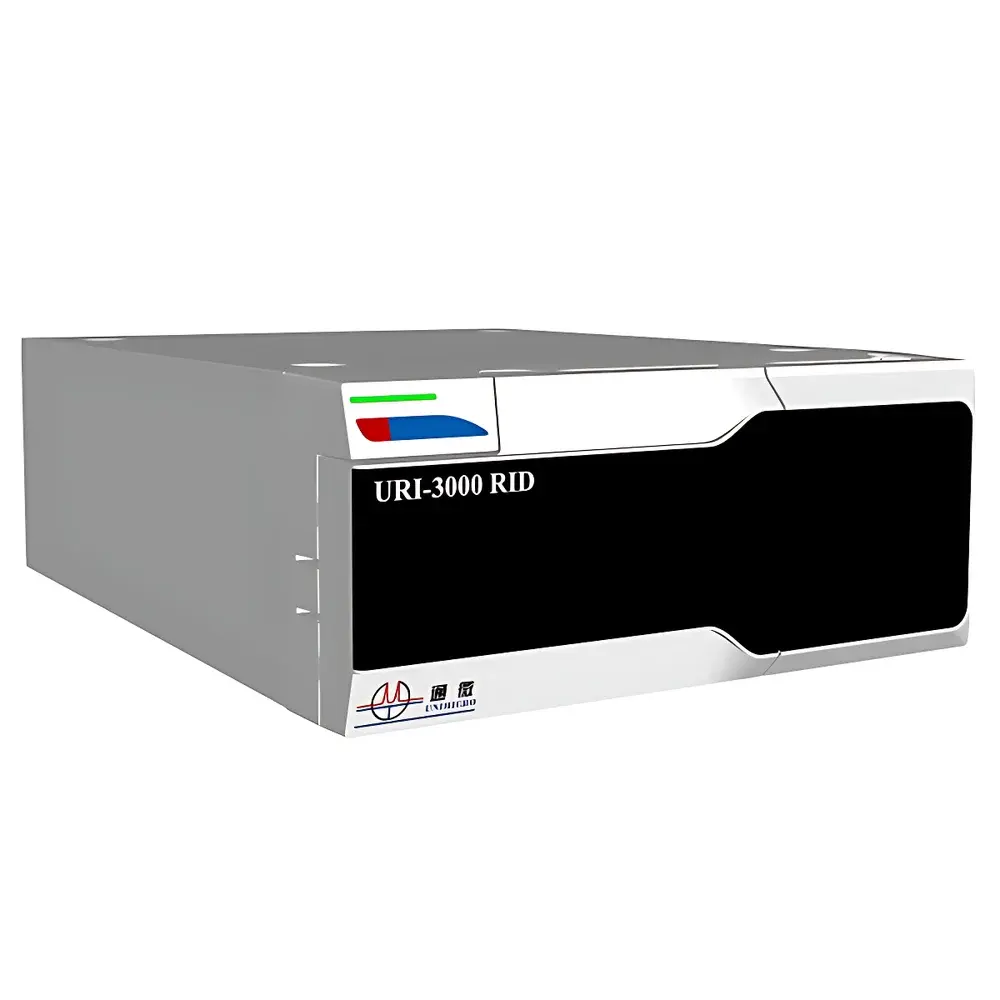
Unimicro Technologies URI-3000 Refractive Index Detector
| Brand | Unimicro Technologies |
|---|---|
| Origin | Shanghai, China |
| Manufacturer Type | Original Equipment Manufacturer (OEM) |
| Regional Classification | Domestic (PRC) |
| Model | URI-3000 RID |
| Detection Principle | Differential Refractive Index (dRI) |
| Wavelength Range | 0.25–512 µRIU |
| Light Source | Tungsten Halogen Lamp |
| Compatible Systems | HPLC (Universal Analog Output + Optional Digital Interface) |
| Compliance | Designed for GLP/GMP-aligned QC environments |
| Software Integration | Unimicro ChromaControl™ (Optional) |
Overview
The Unimicro Technologies URI-3000 Refractive Index Detector is a precision-engineered differential refractometer designed for integration into high-performance liquid chromatography (HPLC) systems. Operating on the fundamental principle of measuring minute changes in the refractive index (Δn) between eluent and analyte-containing mobile phase, the URI-3000 delivers quantitative detection of non-UV-absorbing compounds without chemical derivatization or labeling. This makes it indispensable for the analysis of carbohydrates (e.g., glucose, sucrose, fructose), polyols (e.g., sorbitol, mannitol), organic acids, alcohols, surfactants, and food-grade additives—compounds that lack chromophores in the UV–Vis range and thus remain invisible to conventional UV/Vis detectors. The detector employs a dual-beam optical configuration with a tungsten halogen lamp as its broadband light source, ensuring stable intensity output across the visible spectrum and minimizing thermal drift-induced signal artifacts. Its measurement sensitivity is calibrated in micro-refractive index units (µRIU), with a dynamic response range spanning 0.25 to 512 µRIU—optimized for both trace-level quantitation and high-concentration process monitoring.
Key Features
- Ultra-low baseline noise (<0.5 µRIU RMS, 1 Hz bandwidth) achieved through thermally isolated optical path design and full-chamber active temperature control (±0.01 °C stability)
- Integrated auto-zeroing and optical path balancing algorithms enable reproducible baseline establishment within <90 seconds after system startup
- Patented bubble-resistant flow cell architecture featuring straight-through optical alignment and minimized dead volume, reducing susceptibility to air entrapment and pressure-induced signal spikes
- Front-access fluidic interface with quick-release fittings simplifies routine maintenance, cleaning, and seal replacement—reducing instrument downtime and technician training requirements
- Universal analog output (0–1 V, 0–5 V, or 0–10 V selectable) ensures seamless compatibility with third-party HPLC data systems (e.g., Waters Empower, Agilent OpenLab, Thermo Chromeleon)
- Digital communication option via RS-485 or optional USB-to-serial adapter supports bidirectional control and real-time parameter adjustment through Unimicro ChromaControl™ software
Sample Compatibility & Compliance
The URI-3000 is validated for use with common HPLC mobile phases including aqueous buffers (e.g., phosphate, acetate), alcohols (methanol, ethanol, isopropanol), acetonitrile–water gradients, and low-viscosity polymer solutions. It complies with standard operational requirements for regulated environments: flow cell materials are chemically inert (316L stainless steel housing, sapphire windows); all wetted surfaces meet USP Class VI biocompatibility criteria. While the detector itself does not perform spectral identification, its output meets ASTM D6429–22 (Standard Practice for Determination of Refractive Index by Differential Refractometry) and supports method validation under ICH Q2(R2) guidelines. When deployed with audit-trail-enabled software (e.g., ChromaControl™ v3.2+), it satisfies FDA 21 CFR Part 11 requirements for electronic records and signatures in pharmaceutical QC laboratories.
Software & Data Management
Unimicro ChromaControl™ is a dedicated acquisition and control platform supporting real-time detector parameter monitoring (temperature, zero offset, gain), automatic baseline correction, peak integration with customizable retention time windows, and export of ASCII- or CSV-formatted chromatograms. The software implements secure user role management (admin/operator/auditor), electronic signature capture, and immutable audit trails—including timestamps for all calibration events, method changes, and data exports. Raw dRI signal files (.rid) retain full resolution (100 Hz sampling rate) and are compatible with third-party chemometric tools (e.g., MATLAB, Python SciPy) for advanced baseline correction or multivariate curve resolution.
Applications
- Quality control of mono- and disaccharides in beverage, dairy, and confectionery manufacturing
- Quantification of glycerol, ethylene glycol, and propylene glycol in pharmaceutical excipient batches
- Monitoring of polyethylene glycol (PEG) molecular weight distribution in biopolymer synthesis
- In-process verification of surfactant concentration in detergent formulations
- Stability-indicating assays for non-UV-active degradation products in API forced-degradation studies
- Process analytical technology (PAT) deployment in continuous chromatographic purification trains
FAQ
What types of solvents are compatible with the URI-3000 flow cell?
Aqueous buffers, alcohols, acetonitrile, tetrahydrofuran (THF), and chlorinated solvents (e.g., chloroform) are supported; avoid strong oxidizers (e.g., concentrated nitric acid) or highly viscous polymers (>50 cP) without prior dilution.
Does the URI-3000 support gradient elution?
Yes—its dual-beam design compensates for bulk solvent refractive index shifts during gradients; optimal performance requires matched reference and sample flow paths and consistent temperature control.
Is temperature control mandatory for reliable operation?
Yes—refractive index is inherently temperature-sensitive (typically ~10–50 µRIU/°C); the URI-3000’s integrated Peltier-based chamber maintains ±0.01 °C stability, which is critical for baseline reproducibility over multi-hour runs.
Can the detector be used offline for static solution measurements?
No—the URI-3000 is designed exclusively for continuous-flow HPLC applications; it lacks static cell configuration or manual injection capability.
How frequently should the flow cell be cleaned?
Recommended after every 50–100 injections with complex biological or viscous samples; cleaning protocol includes sequential flushes with water, methanol, and isopropanol at ≤1 mL/min flow rate.



