
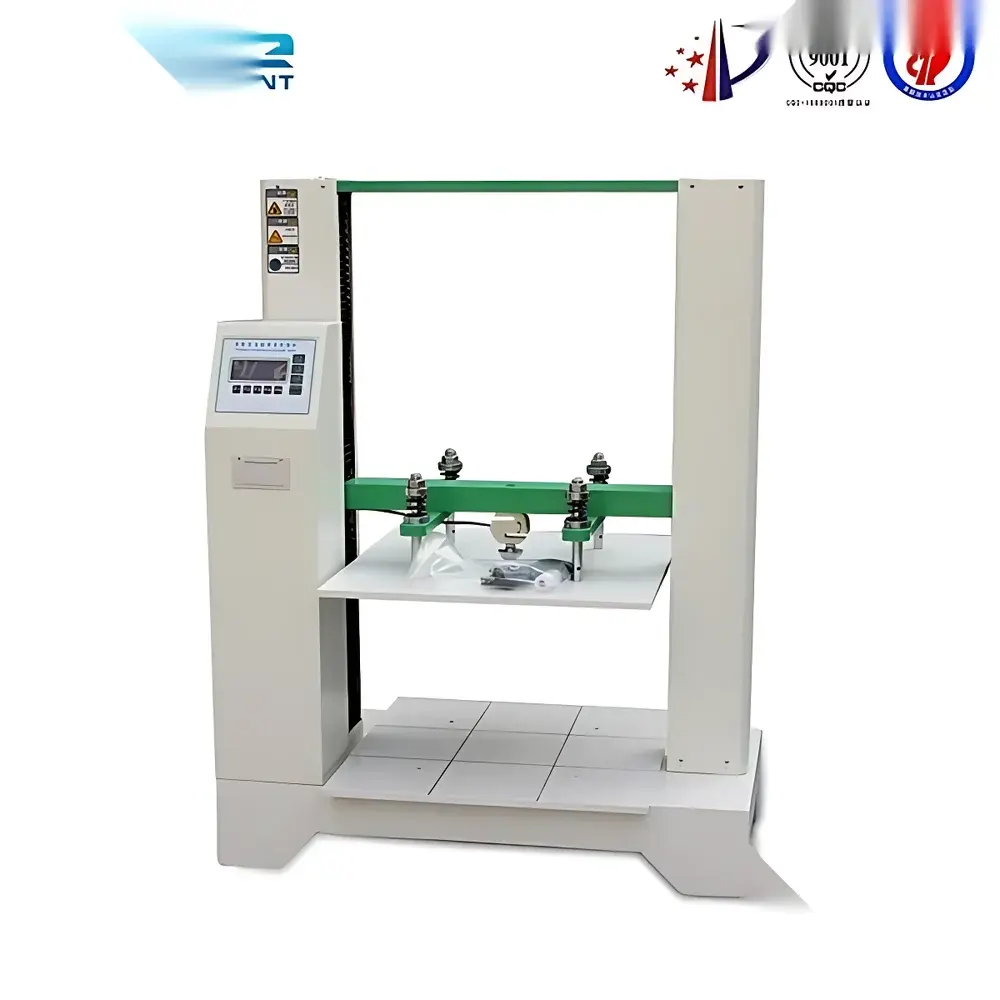
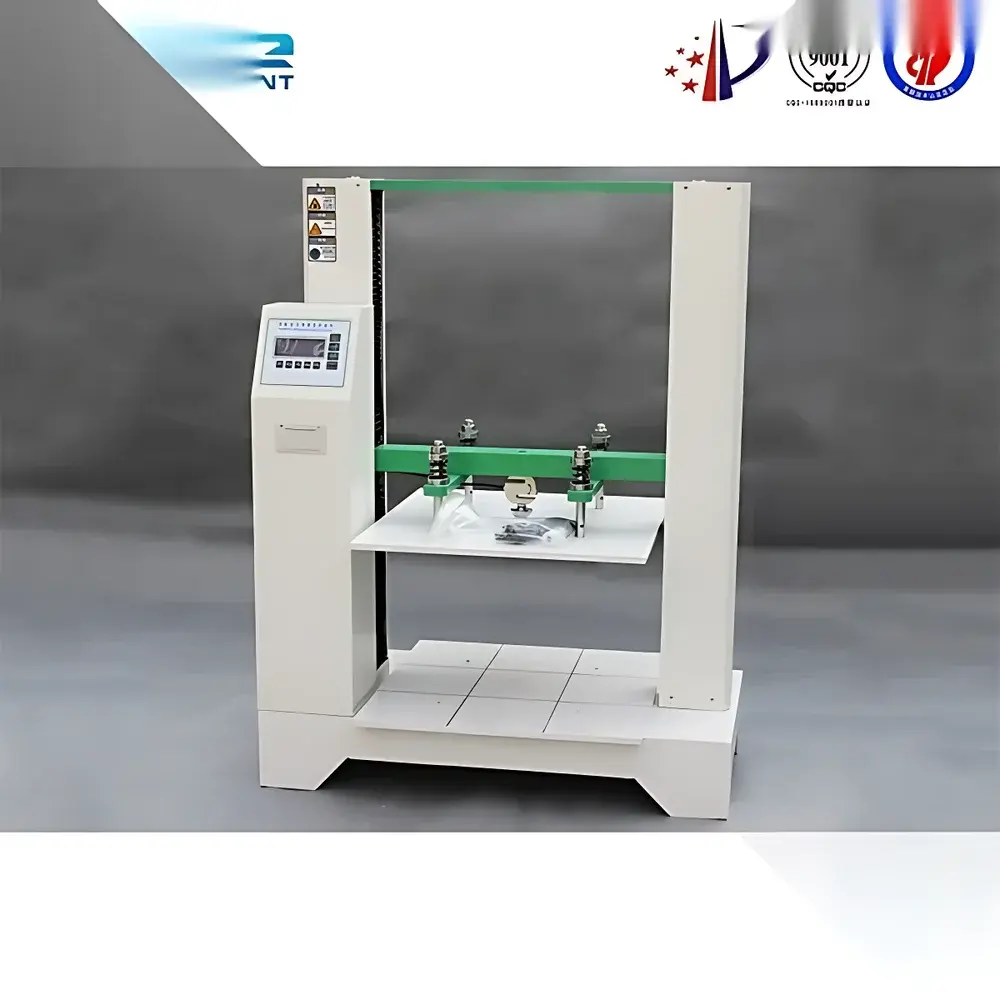
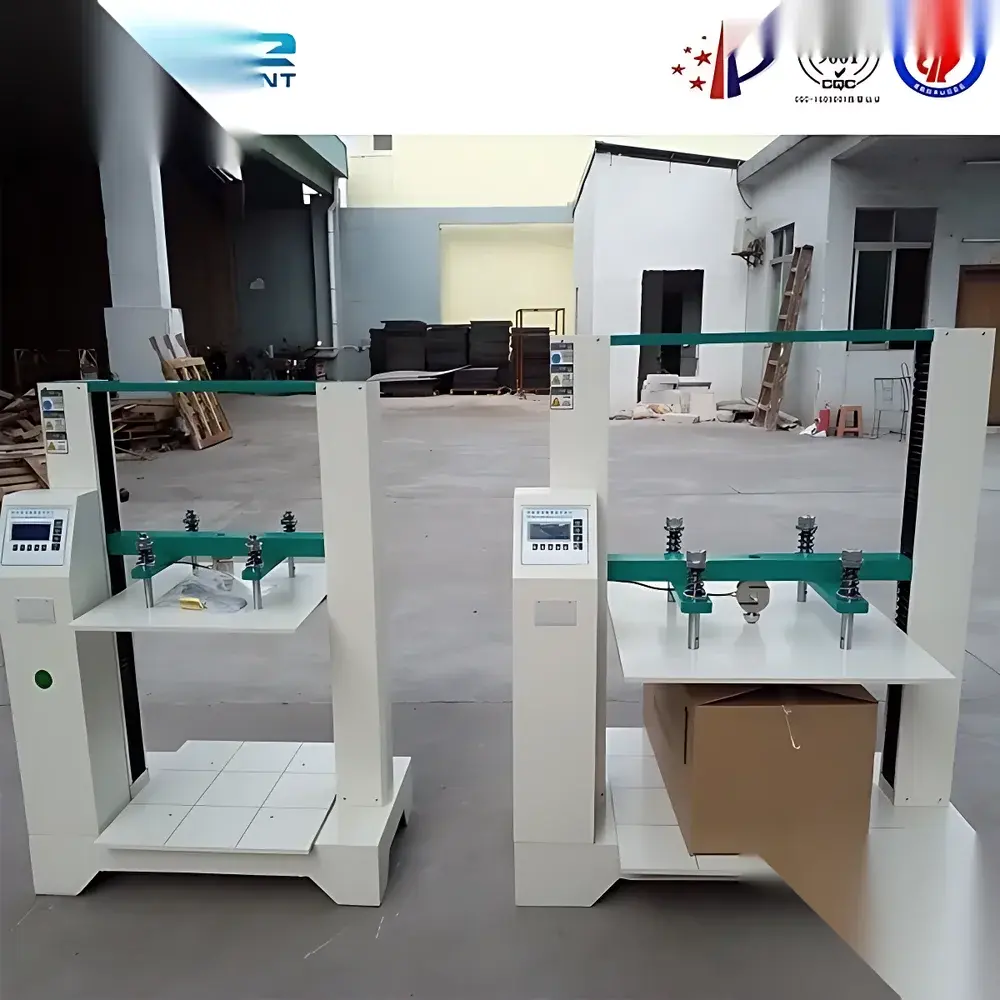
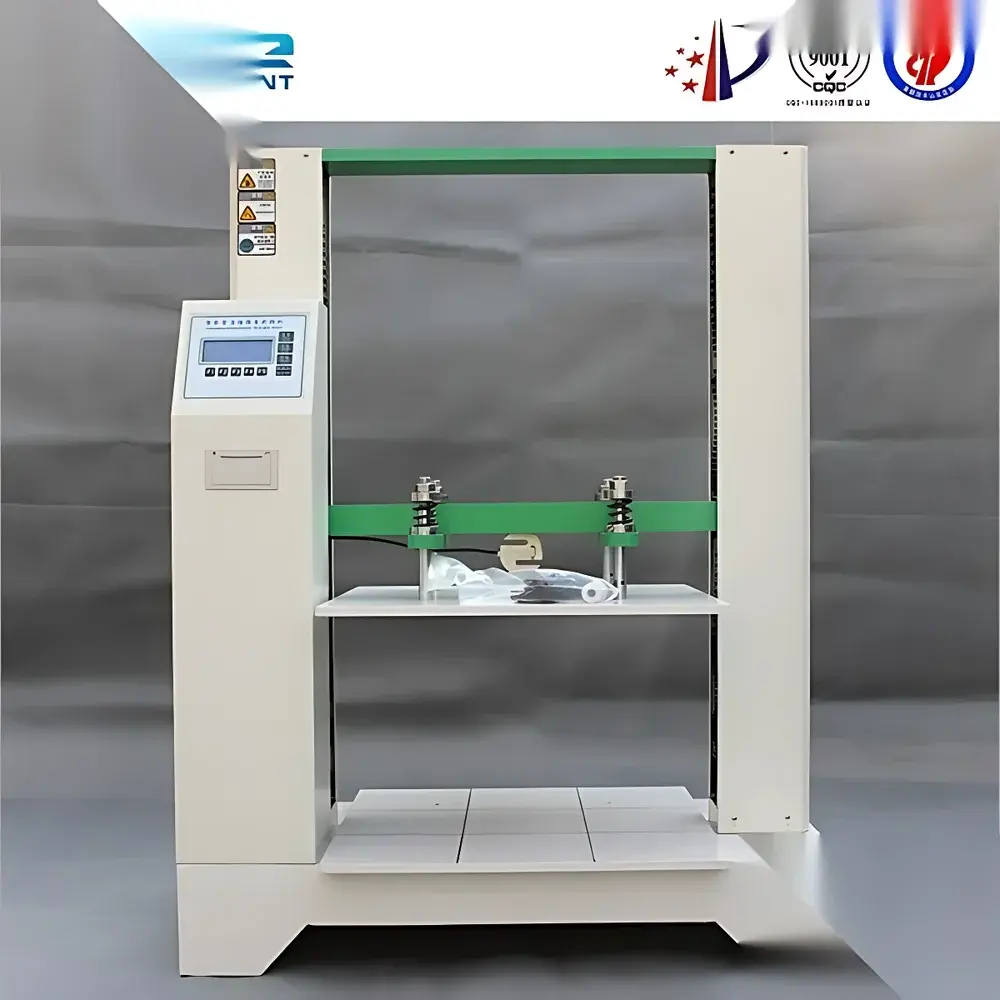
Universal Compression Testing Machine for Packaging Materials
| Brand | Other Brands |
|---|---|
| Origin | Imported |
| Manufacturer Type | Authorized Distributor |
| Capacity Options | 1000 kg / 2000 kg / 5000 kg |
| Test Area | 1200 × 1200 mm (customizable) |
| Resolution | 1/10,000 |
| Display Units | kg, N, lbf |
| Test Speed | 10 ± 3 mm/min |
| Overall Dimensions | 1200 × 1000 × 1400 mm |
| Approx. Weight | 750 kg |
| Power Supply | 220 V AC, 50 Hz |
| Load Cell | High-precision explosion-proof load cell (US-sourced) |
| Drive System | Taiwan-made AC frequency-controlled motor |
| Motion Mechanism | Precision ball screw actuation |
| Control System | Microprocessor-based controller with real-time compression monitoring and automatic crush detection |
Overview
The Universal Compression Testing Machine for Packaging Materials is a dedicated mechanical testing system engineered to quantify the compressive strength and stacking performance of corrugated cardboard boxes, fiberboard containers, and other rigid packaging structures. Based on fundamental principles of axial compression testing per ASTM D642 and ISO 12048, this machine applies controlled, uniaxial compressive force until specimen failure or predefined load/time thresholds are reached. Its primary function is to simulate static stack loading conditions encountered during warehouse storage and transportation—enabling laboratories and quality assurance departments to validate packaging integrity, optimize box design, and establish safe pallet stacking heights in compliance with logistics safety standards.
Key Features
- Precision-engineered ball screw actuation system ensures smooth, backlash-free vertical movement with high positional repeatability across full stroke range.
- High-stability, explosion-rated load cell (sourced from a U.S. manufacturer) delivers long-term calibration stability and immunity to electromagnetic interference in industrial environments.
- AC frequency-controlled motor drive (Taiwan-sourced) enables consistent speed control at 10 ± 3 mm/min, meeting the velocity tolerance requirements specified in ASTM D642 for compression testing of shipping containers.
- Microprocessor-based digital controller provides real-time load monitoring, automatic crush detection via dynamic threshold analysis, and immediate emergency stop upon peak load collapse.
- Integrated thermal printer outputs calibrated test reports including maximum compressive load, deformation curve data points, and pass/fail status—formatted for internal QA documentation and audit readiness.
- Modular frame architecture supports customizable test platens and optional accessories such as environmental enclosures or humidity-controlled chambers for accelerated aging correlation studies.
Sample Compatibility & Compliance
This system accommodates standard-sized packaging specimens up to 1200 × 1200 mm footprint, with configurable platen dimensions to address non-standard container geometries. It complies with core international packaging testing standards including ASTM D642 (Standard Test Method for Determining Compressive Resistance of Shipping Containers), ISO 12048 (Packaging—Complete, Filled Transport Packages—Compression and Stacking Tests), and TAPPI T 810 (Compressive Strength of Corrugated Fiberboard Boxes). The controller firmware supports GLP-compliant operation through timestamped data logging, operator ID input, and immutable test record generation—facilitating traceability under FDA 21 CFR Part 11 and ISO/IEC 17025 laboratory accreditation frameworks.
Software & Data Management
While the base configuration operates via embedded microcontroller interface, optional PC connectivity (RS-232 or USB) enables integration with third-party LIMS or enterprise QA platforms. Exportable ASCII-formatted data files include time-stamped load-deformation sequences, peak load values, and cycle metadata—structured for direct import into statistical process control (SPC) software such as Minitab or JMP. Audit trails capture all user-initiated actions—including calibration events, parameter modifications, and test execution—with read-only archival capability to meet internal quality system requirements.
Applications
- Validation of corrugated box compression resistance prior to mass production release.
- Determination of safe vertical stacking height for palletized goods in cold chain distribution networks.
- Comparative evaluation of alternative packaging materials (e.g., recycled fiber vs. virgin kraft board).
- Correlation of laboratory compression results with field failure data to refine predictive packaging models.
- Supporting ISTA 3A/3E and ASTM D4169 transport simulation protocols through controlled static load application.
- Supplier qualification testing per OEM packaging specifications requiring documented compressive performance evidence.
FAQ
What standards does this machine support out-of-the-box?
It is configured to execute ASTM D642, ISO 12048, and TAPPI T 810 test methods without hardware modification. Calibration certificates are provided traceable to NIST or equivalent national metrology institutes.
Can the test speed be adjusted beyond the standard 10 mm/min?
Yes—the controller allows manual speed override within 1–20 mm/min range; however, deviations from 10 ± 3 mm/min require explicit method validation per ISO/IEC 17025 Clause 7.2.2 for accredited testing.
Is remote diagnostics or firmware update capability available?
Firmware updates are performed locally via USB flash drive. Remote diagnostic access is not supported in the base model but can be enabled through optional Ethernet-enabled controller modules compliant with Modbus TCP protocol.
How often does the load cell require recalibration?
Annual recalibration is recommended under normal usage. A built-in zero-balance verification routine and reference weight check procedure are included in the operator manual to support daily operational checks.
Does the system support multi-specimen batch testing with automated reporting?
Batch mode is supported via sequential test queuing; each test generates an individual report. Consolidated summary reports must be generated externally using exported CSV data.



