
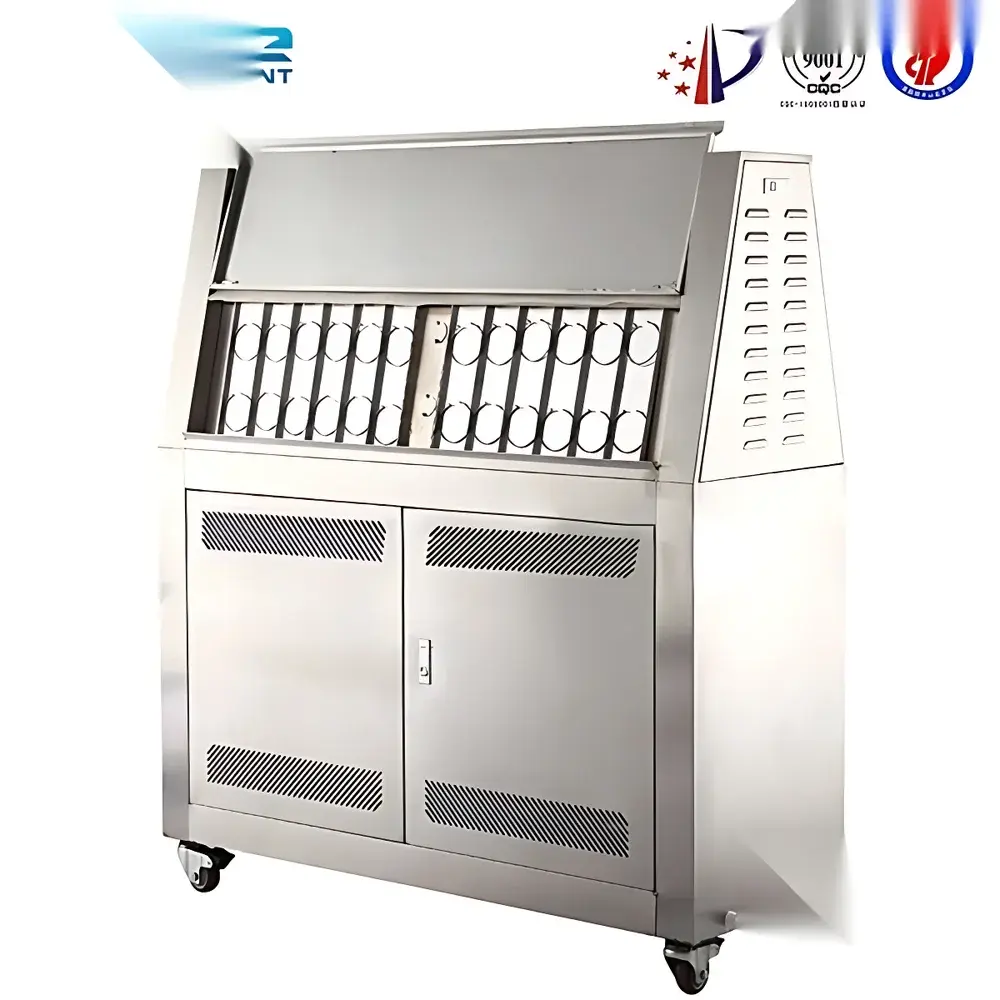
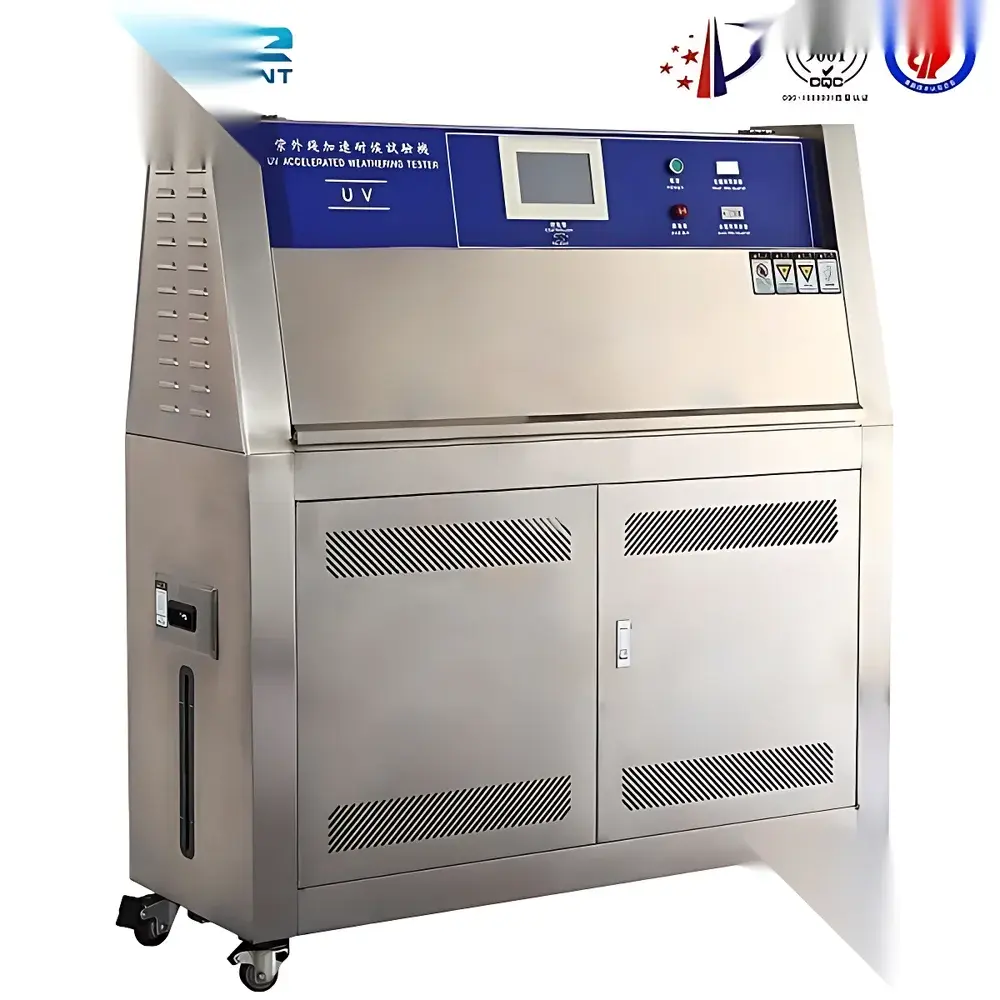
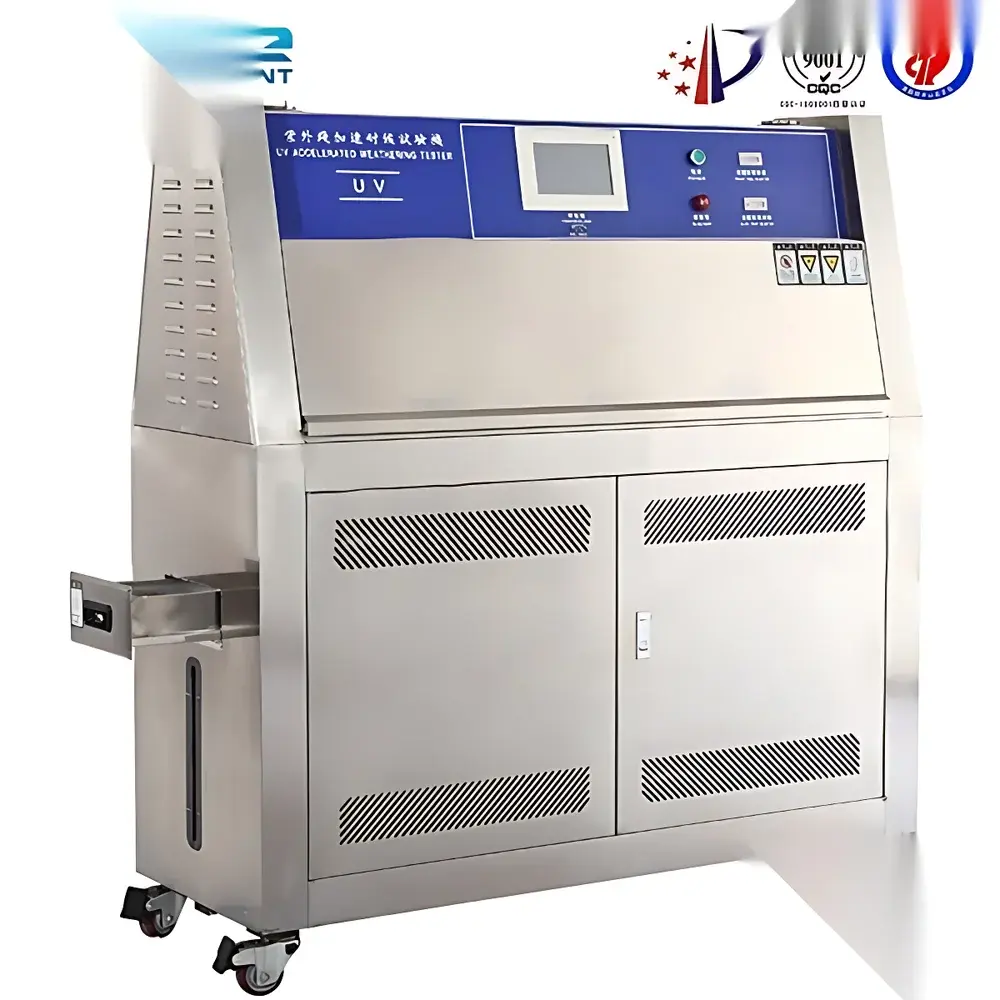
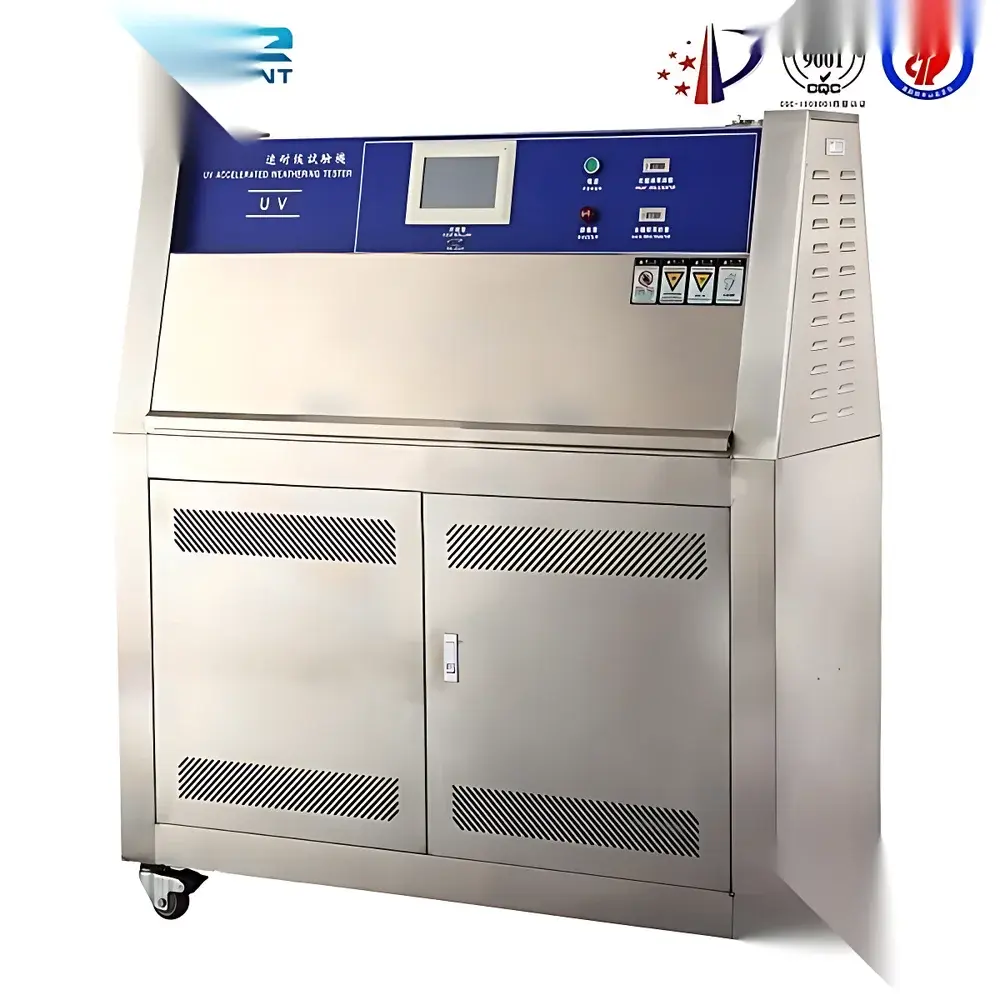
UV Aging Test Chamber – Fluorescent UV Accelerated Weathering Tester
| Brand | Other Brands |
|---|---|
| Origin | Imported |
| Manufacturer Type | General Distributor |
| Price | USD 2,600 (Reference Only) |
| UV Source | Fluorescent UVA-340 / UVB-313 Lamps |
| Condensation Cycle | Humidity-controlled Cold Dew Simulation |
| Temperature Range | 40–70 °C (Operational) |
| Irradiance Control | Yes (Calibrated Sensor) |
| Spray Function | Integrated Water Spray System |
| Compliance | ASTM G154, ISO 4892-3, JIS D0205, SAE J2020 |
| Sample Capacity | Standard 3–5 Specimen Holders (75 × 150 mm) |
| Cabinet Construction | Stainless Steel 304 Interior, Powder-Coated Steel Exterior |
Overview
The UV Aging Test Chamber – Fluorescent UV Accelerated Weathering Tester is an engineered environmental test system designed to simulate and accelerate the damaging effects of solar ultraviolet radiation, moisture condensation, and thermal cycling on polymeric, coating, automotive, and architectural materials. Based on the fundamental principles of photochemical degradation, the chamber employs calibrated fluorescent UV lamps—primarily UVA-340 (to closely replicate terrestrial sunlight UV spectrum below 365 nm) and optionally UVB-313 (for aggressive, high-intensity testing)—to induce photo-oxidative reactions. Simultaneously, a controlled condensation cycle generates dew-like moisture on specimen surfaces at elevated temperatures, replicating nocturnal humidity exposure. This dual-stress methodology enables reproducible, quantitative assessment of material degradation mechanisms—including polymer chain scission, pigment fading, surface oxidation, and loss of mechanical integrity—in days or weeks rather than months or years of outdoor exposure.
Key Features
- Fluorescent UV lamp array with interchangeable UVA-340 and UVB-313 lamp configurations, each traceable to NIST-calibrated irradiance standards
- Precise black-panel temperature control (40–70 °C) via PID-regulated heating elements and forced-air circulation
- Automated condensation cycle: saturated humid air cools internal specimen surfaces to induce dew formation without water immersion
- Integrated spray function delivers deionized water pulses to simulate rain erosion and thermal shock effects
- Stainless steel 304 interior chamber with seamless welds and corrosion-resistant hardware for long-term chemical stability
- Digital touchscreen controller with programmable multi-step test profiles (e.g., 4-hr UV/4-hr condensation, UV/spray cycles)
- Real-time monitoring of irradiance (W/m² @ 340 nm), chamber temperature, and black-panel temperature with data logging capability
- Over-temperature protection, lamp overheat cutoff, and door interlock safety circuitry compliant with IEC 61000-6-2 EMC requirements
Sample Compatibility & Compliance
This UV aging tester accommodates flat sheet specimens up to 75 mm × 150 mm × 10 mm thickness, mounted on standardized aluminum or quartz sample holders. It supports testing of paints, varnishes, plastics (PP, PE, PVC, ABS), automotive trim, roofing membranes, textiles, and aerospace composites. The system is fully aligned with internationally recognized accelerated weathering standards: ASTM G154 (Standard Practice for Operating Fluorescent Ultraviolet (UV) Lamp Apparatus for Exposure of Non-Metallic Materials), ISO 4892-3 (Plastics — Methods of Exposure to Laboratory Light Sources — Part 3: Fluorescent UV Lamps), JIS D0205 (Automotive Paint Durability), and SAE J2020 (Accelerated Exposure of Automotive Exterior Materials Using Fluorescent UV and Condensation). All operational parameters are documented for GLP-compliant test reporting and audit-ready traceability.
Software & Data Management
The embedded controller provides non-volatile storage for ≥100 test programs and 30 days of continuous parameter logging (irradiance, temperature, cycle phase). Export options include CSV files via USB port for post-processing in Excel or statistical analysis platforms (e.g., JMP, Minitab). Optional PC-based software enables remote monitoring, alarm notification via email/SNMP, and automated generation of test reports compliant with ISO/IEC 17025 documentation requirements. Audit trail functionality records user logins, parameter changes, and system events—supporting FDA 21 CFR Part 11 readiness when paired with electronic signature modules.
Applications
- Quality assurance of exterior automotive coatings and plastic components under OEM durability specifications
- Formulation screening of UV stabilizers, HALS additives, and pigment systems in R&D laboratories
- Comparative ranking of polymer photostability for construction sealants and roofing materials
- Regulatory prequalification testing per EN 1092-1 (flange gasket aging) and ASTM D4329 (plastic pipe UV resistance)
- Failure analysis of field-failed components by correlating lab-induced degradation morphology (via SEM/FTIR) with outdoor exposure history
- Supporting ISO 11341 (paints and varnishes — artificial weathering) compliance validation for certification bodies
FAQ
What UV lamp types are supported, and how do they differ?
UVA-340 lamps replicate the solar UV spectrum from 295–365 nm and are recommended for realistic daylight simulation. UVB-313 lamps emit shorter, more energetic wavelengths (280–365 nm) and are used for rapid screening or severe-condition qualification.
Is calibration of irradiance required, and how often?
Yes. Radiometric calibration using a NIST-traceable UV radiometer is recommended before each test campaign or at least every 500 hours of lamp operation to ensure measurement integrity.
Can this chamber operate unattended for extended durations?
Yes—provided the water reservoir is adequately filled, ambient room temperature remains within 15–30 °C, and ventilation meets minimum airflow requirements (≥200 m³/h). Remote monitoring is advised for >72-hr runs.
What personal protective equipment (PPE) is mandatory during operation?
ANSI Z87.1-compliant UV-blocking safety goggles and nitrile gloves must be worn whenever accessing the chamber during UV illumination; exposure time should not exceed 60 seconds without interlock override.
How is condensate water managed to prevent corrosion or microbial growth?
The condensate collection tray is drained automatically after each cycle; users must empty and wipe the tray weekly and sanitize the interior monthly using 70% isopropyl alcohol to inhibit biofilm formation.



