
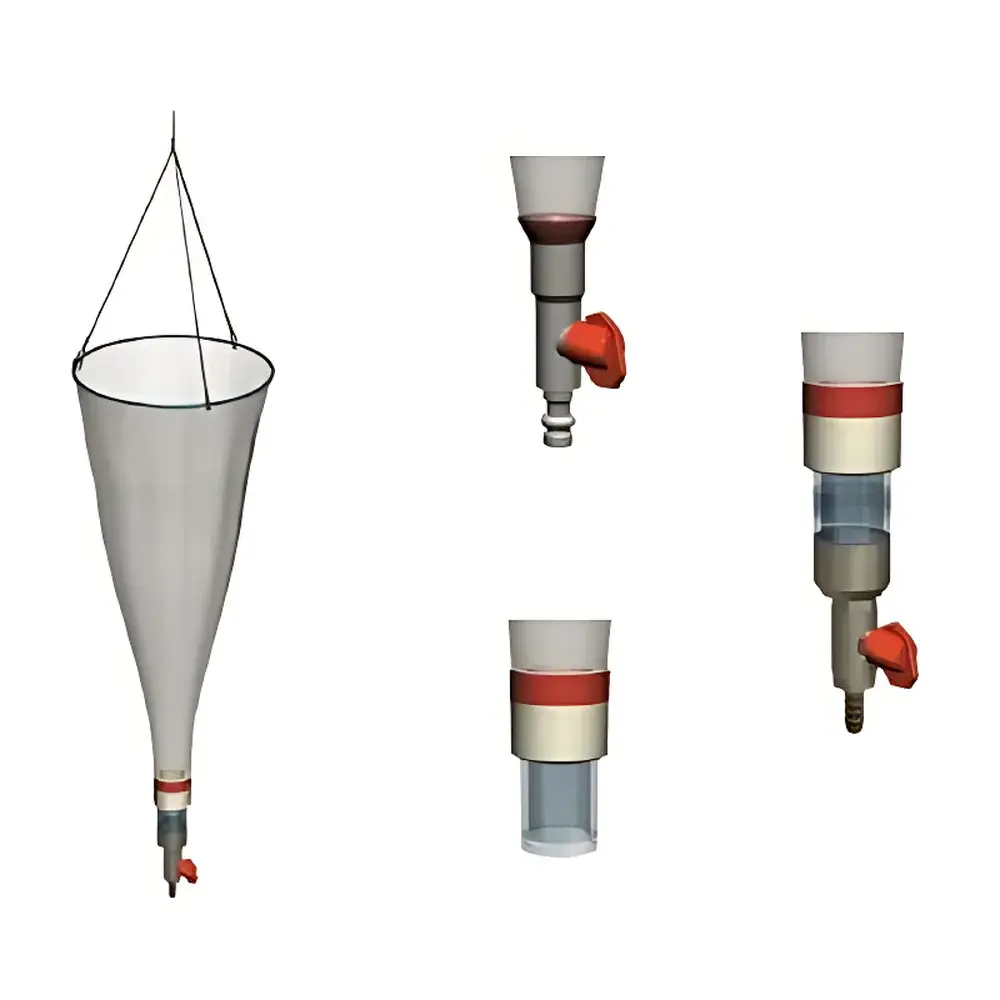
UWITEC PN Series Modular Plankton Net
| Origin | Austria |
|---|---|
| Manufacturer Type | Authorized Distributor |
| Origin Category | Imported |
| Model | UWITEC PN |
| Pricing | Available Upon Request |
Overview
The UWITEC PN Series Modular Plankton Net is a precision-engineered, field-deployable sampling instrument designed for quantitative collection of planktonic organisms across a broad size spectrum—from picoplankton-associated particles to macrozooplankton. Based on the principle of horizontal or vertical towing filtration, the system operates via controlled water flow through calibrated mesh apertures, enabling size-fractionated capture under defined hydrodynamic conditions. Unlike fixed-mesh legacy nets, the PN series implements a standardized modular architecture compliant with ISO 2146:2010 (Water quality — Sampling — Guidance on sampling of plankton), supporting reproducible, traceable, and methodologically consistent data acquisition in limnological and marine monitoring programs.
Key Features
- Full-size mesh range: 14 interchangeable mesh sizes—6 µm, 10 µm, 20 µm, 30 µm, 40 µm, 50 µm, 60 µm, 80 µm, 100 µm, 200 µm, 300 µm, 400 µm, 500 µm, and 1000 µm—each manufactured from monofilament nylon or polyester with certified aperture tolerance ≤ ±5%.
- Modular frame-and-cone assembly: Stainless steel (AISI 316) frame with quick-release bayonet coupling; detachable conical net body secured via O-ring–sealed flange interface.
- Interchangeable bottom units: Choice of sterile polycarbonate sample collection tubes (250 mL, 500 mL, or 1 L) or valve-equipped flow-through chambers compatible with in situ fixation protocols.
- Integrated flow meter mounting port: Enables real-time volumetric flow calibration using external propeller or electromagnetic flow sensors (not included).
- Hydrodynamic optimization: Streamlined cone geometry (120° apex angle) minimizes flow distortion and particle re-entrainment; drag coefficients validated per ASTM D7551-19 for towed aquatic samplers.
Sample Compatibility & Compliance
The UWITEC PN net is validated for use in freshwater, brackish, and marine environments—including eutrophic lakes, coastal upwelling zones, and open-ocean transects. Its mesh selection supports taxon-specific targeting: 6–20 µm for pico- and nanophytoplankton (e.g., Synechococcus, Prochlorococcus); 50–200 µm for diatoms, dinoflagellates, and rotifers; and 300–1000 µm for copepodites, cladocerans, and early-stage meroplankton. All components comply with EU REACH Annex XVII restrictions on heavy metals and phthalates. Mesh certification documentation includes traceable calibration reports issued by TÜV Austria, satisfying GLP audit requirements for environmental monitoring laboratories.
Software & Data Management
While the PN net itself is a passive mechanical sampler, its operational metadata (tow speed, depth profile, duration, mesh ID, and volume filtered) are structured for integration into standardized ecological data pipelines. UWITEC provides a free companion Excel-based logsheet template aligned with the UNESCO-IOC Ocean Biogeographic Information System (OBIS) metadata schema. When paired with optional UWITEC WinLog data logger (sold separately), raw flow and depth signals can be time-synchronized and exported as CSV/NetCDF for ingestion into R packages (plankton* , ecocomDP) or Python-based workflows (pyobis, xarray). Full audit trails—including operator ID, calibration date, and mesh lot number—are retained per ISO/IEC 17025:2017 clause 7.11.
Applications
- Long-term ecological research: Supporting LTER (Long Term Ecological Research) sites requiring interannual comparability of plankton community structure.
- Environmental impact assessment: Pre- and post-construction monitoring for offshore wind farms, dredging operations, and aquaculture lease expansions.
- Toxic algal bloom surveillance: Size-resolved enumeration of harmful dinoflagellate cysts (e.g., Alexandrium spp.) and filamentous cyanobacteria aggregates.
- Microplastic co-sampling: Paired deployment with 10–50 µm meshes enables concurrent quantification of microplastic fibers and biofouled planktonic aggregates per EPA Method 1613B guidelines.
- Method validation studies: Serving as reference hardware in inter-laboratory comparisons evaluating filtration efficiency, retention bias, and mesh clogging kinetics.
FAQ
What mesh size should I select for phytoplankton biomass estimation?
For total chlorophyll-a–based biomass, ISO 10260 recommends 20 µm mesh for nano- and microphytoplankton; however, 10 µm is preferred when picophytoplankton contribution must be included.
Can the PN net be used for vertical profiling?
Yes—the frame includes dual stainless-steel lifting eyes and standardized NMEA 0183-compatible mounting lugs for integration with CTD rosette frames or winch-controlled profiling systems.
Is sterilization possible between deployments?
All wetted components are autoclavable at 121°C for 20 minutes (polycarbonate tubes) or compatible with 70% ethanol immersion (mesh cones); mesh integrity is verified post-sterilization using scanning electron microscopy per ISO 2146 Annex B.
Does UWITEC provide mesh certification documentation?
Each mesh batch is supplied with a TÜV-certified calibration certificate listing mean pore diameter, standard deviation, and sieve analysis histogram, traceable to PTB (Physikalisch-Technische Bundesanstalt) reference standards.
How does the modular design reduce cross-contamination risk?
Independent replacement of the collection tube, valve assembly, and net cone eliminates shared interfaces between sequential samples—critical for molecular analyses requiring DNA-free handling per MIQE guidelines.







