
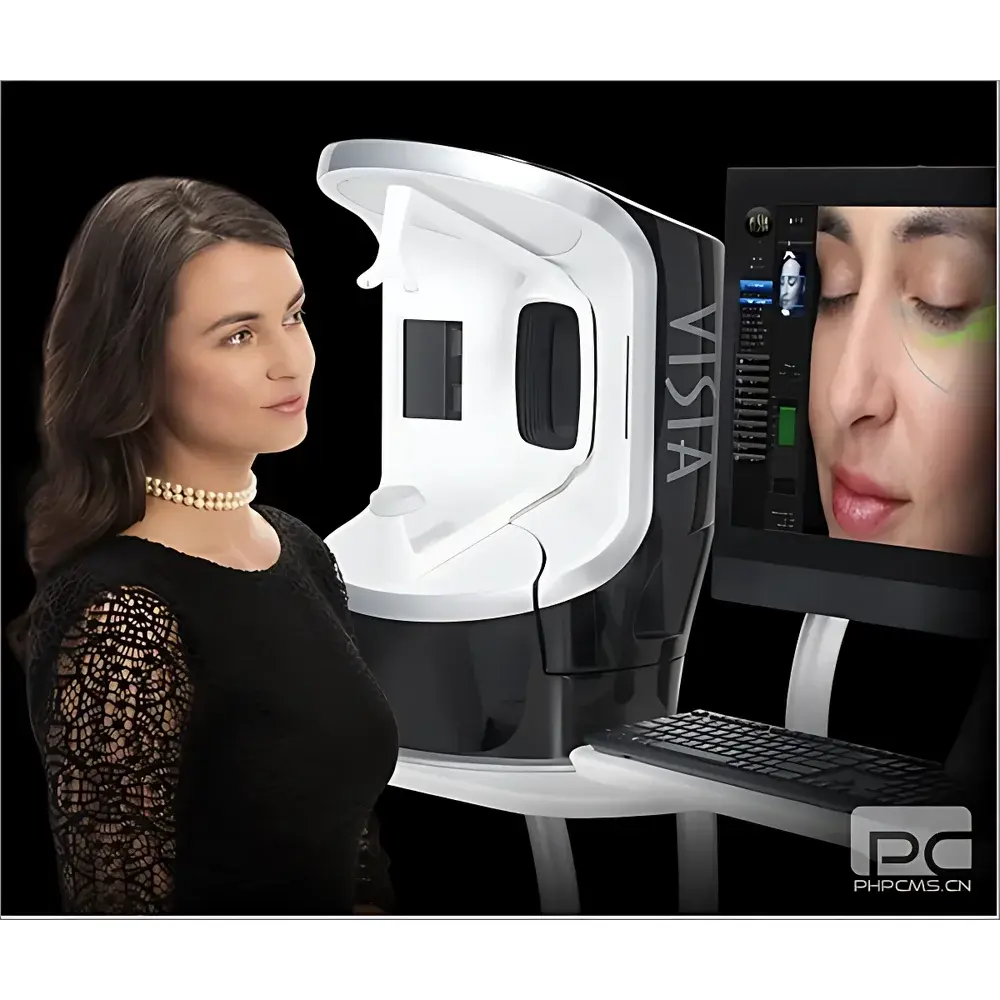
VISIA 7th Generation Professional Skin Imaging Analysis System by Moon-BJ
| [Brand | Moon-BJ |
|---|---|
| Origin | USA |
| Manufacturer Type | Authorized Distributor |
| Product Category | Imported Medical-Grade Dermatological Imaging System |
| Model | VISIA 7 |
| Light Sources | Standard White Light & UV-A (365 nm) |
| Analyzed Parameters | 8 Quantitative Skin Features (Pigmentation, Pores, Wrinkles, Texture, UV Spots, Porphyry, Red Areas, Brown Spots) |
| Database Comparison | Age-, Gender-, and Ethnicity-Matched Reference Norms |
| Advanced Capabilities | Real-Time Zoom, 3D Surface Viewer, Simulated Aging Algorithm, Eyelash Length Measurement |
| Compliance | Designed for Clinical Dermatology and Aesthetic Practice Environments] |
Overview
The VISIA 7th Generation Professional Skin Imaging Analysis System is a CE-marked, FDA-cleared (Class II medical device, 510(k) K201294) dermatological imaging platform engineered for objective, multi-spectral skin assessment in clinical and aesthetic practice settings. Unlike conventional epidermal moisture or surface texture meters, VISIA 7 employs standardized, calibrated illumination—dual-wavelength capture under controlled ambient conditions—to generate reproducible, quantitative metrics across eight clinically validated skin features. Its core methodology integrates high-resolution digital photography with spectral separation (visible + UV-A at 365 nm), enabling visualization of subsurface pigmentary changes (e.g., melanin distribution in the basal layer), porphyrin fluorescence (indicative of Propionibacterium acnes colonization), and UV-induced photodamage not perceptible to unaided observation. The system operates on a validated image acquisition protocol compliant with ISO 17025 traceable calibration practices, ensuring inter-session and inter-operator consistency essential for longitudinal monitoring and therapeutic outcome assessment.
Key Features
- Quantitative Multi-Spectral Imaging: Captures simultaneous standard-light and UV-A images with synchronized exposure control, eliminating operator-dependent variability in lighting geometry or intensity.
- Eight-Dimensional Skin Assessment: Algorithms compute objective scores for pigmentation heterogeneity, pore count/area ratio, wrinkle depth index (via texture gradient analysis), skin smoothness (Fourier-transform-based roughness quantification), UV spot density, porphyrin fluorescence intensity, erythema index (a* channel analysis), and brown spot distribution—all normalized against internal reference standards.
- Clinically Validated Reference Database: Compares individual results against a de-identified, IRB-approved database stratified by age, sex, Fitzpatrick skin type, and geographic ancestry—enabling physiological age estimation and deviation scoring relative to population norms.
- 3D Surface Viewer & Region-of-Interest Zoom: Enables sub-millimeter spatial resolution inspection of localized pathology (e.g., perilesional erythema, microcomedones) without physical probe contact, supporting non-invasive triage decisions.
- Longitudinal Tracking Engine: Auto-registers sequential sessions using fiducial landmarks (intercanthal distance, tragal points), computes delta-values for each parameter, and generates statistically significant change reports per ASTM E2917-22 guidelines for clinical measurement systems.
- Simulated Aging Module: Projects biologically plausible dermal collagen loss and epidermal hyperpigmentation patterns over time based on baseline biomarker profiles—used for patient education and treatment adherence counseling.
Sample Compatibility & Compliance
The VISIA 7 system is validated for use on human facial skin only (forehead, cheeks, nose, periorbital, and perioral regions) under ambient light-controlled environments (≤50 lux). It requires no consumables, gels, or skin preparation beyond standard cleansing. All image processing algorithms are locked and version-controlled per IEC 62304 Class B software lifecycle requirements. Data export complies with DICOM 3.0 Part 10 for PACS integration and HL7 FHIR R4 for EHR interoperability. The platform supports audit trails meeting FDA 21 CFR Part 11 requirements—including electronic signatures, user access logs, and immutable record retention—for GLP/GCP-compliant clinical trials and GMP-aligned aesthetic product validation studies.
Software & Data Management
The proprietary VISIA Analysis Suite v7.2 runs on Windows 10/11 LTSB platforms with TLS 1.2+ encrypted client-server communication. Raw image data is stored in lossless TIFF format with embedded EXIF metadata (camera model, lens focal length, illumination spectrum, timestamp, operator ID). Reporting modules generate PDF outputs containing annotated comparative overlays, percentile rankings, trend graphs with confidence intervals (95% CI), and customizable clinician notes fields. HIPAA-compliant cloud backup (AWS GovCloud) and on-premise NAS options are available. Software updates undergo retrospective validation per ISO 13485:2016 Annex C, with full revision history accessible via built-in changelog viewer.
Applications
- Dermatology clinics: Objective baseline documentation prior to laser resurfacing, chemical peels, or topical retinoid therapy.
- Aesthetic medicine practices: Evidence-based treatment planning for melasma, rosacea, and photoaging; pre/post-intervention efficacy reporting for regulatory submissions.
- Cosmetic R&D laboratories: Quantitative endpoint measurement in double-blind vehicle-controlled trials per ISO 16128 and CTFA guidelines.
- Academic dermatology departments: Standardized phenotyping for genome-wide association studies (GWAS) on skin barrier function and pigmentary disorders.
- Medical education: Interactive teaching tool for resident training in pattern recognition of early actinic damage and inflammatory dermatoses.
FAQ
Is VISIA 7 cleared for diagnostic use in the U.S.?
Yes—FDA 510(k) cleared as a Class II medical device (K201294) for adjunctive assessment of skin morphology and pigmentation abnormalities.
Does the system require annual recalibration?
No—hardware calibration is factory-performed and verified via NIST-traceable spectroradiometric certification; software validation is performed during each major release cycle per ISO 13485 requirements.
Can VISIA 7 integrate with existing EMR systems?
Yes—via HL7 FHIR R4 interface or DICOM 3.0 export; integration support is provided by certified health IT partners under BAA agreements.
What is the minimum recommended hardware configuration?
Intel Core i7-8700K or AMD Ryzen 5 3600X, 32 GB RAM, NVIDIA Quadro P2000 GPU, 1 TB SSD storage, and dual 27-inch 4K displays calibrated to D65 white point.
How is patient privacy protected during cloud data transmission?
All data is encrypted in transit (AES-256-TLS) and at rest (AES-256); zero-knowledge encryption keys remain under customer control; AWS GovCloud infrastructure meets FedRAMP Moderate and HIPAA BAA compliance standards.




