
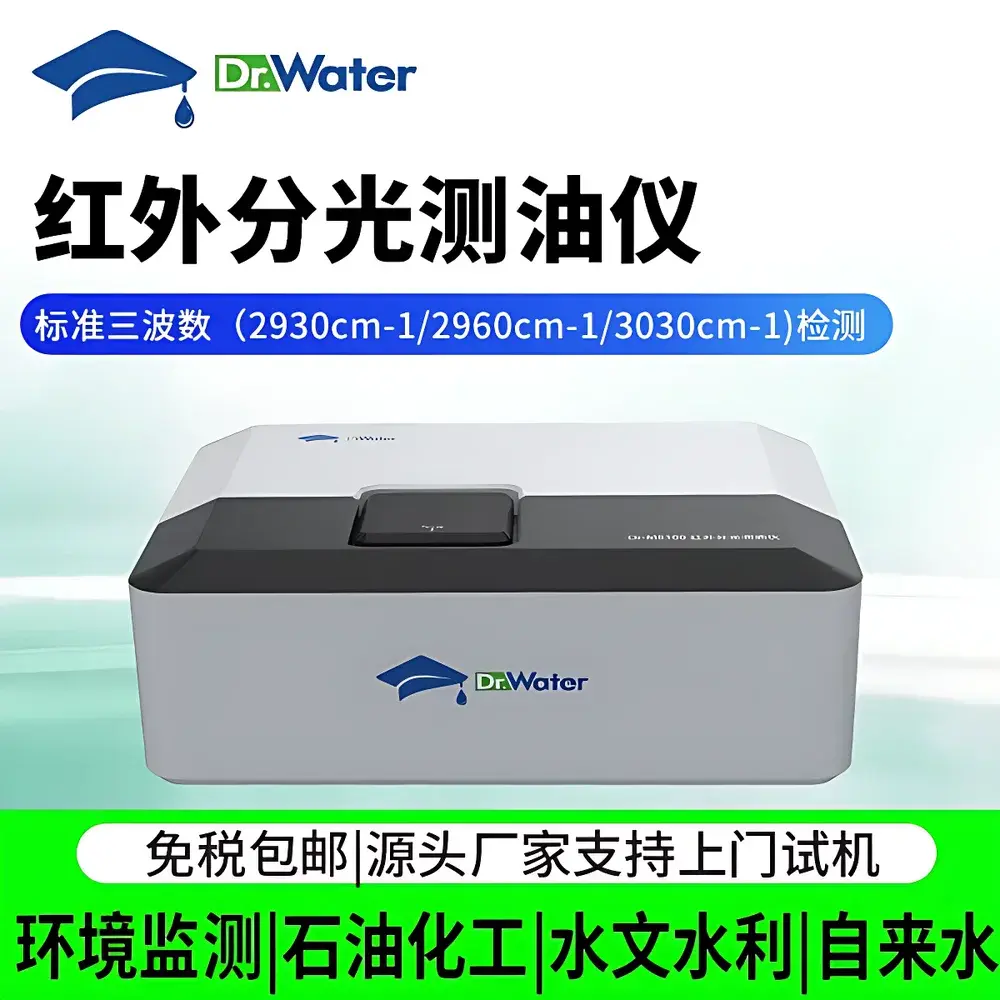
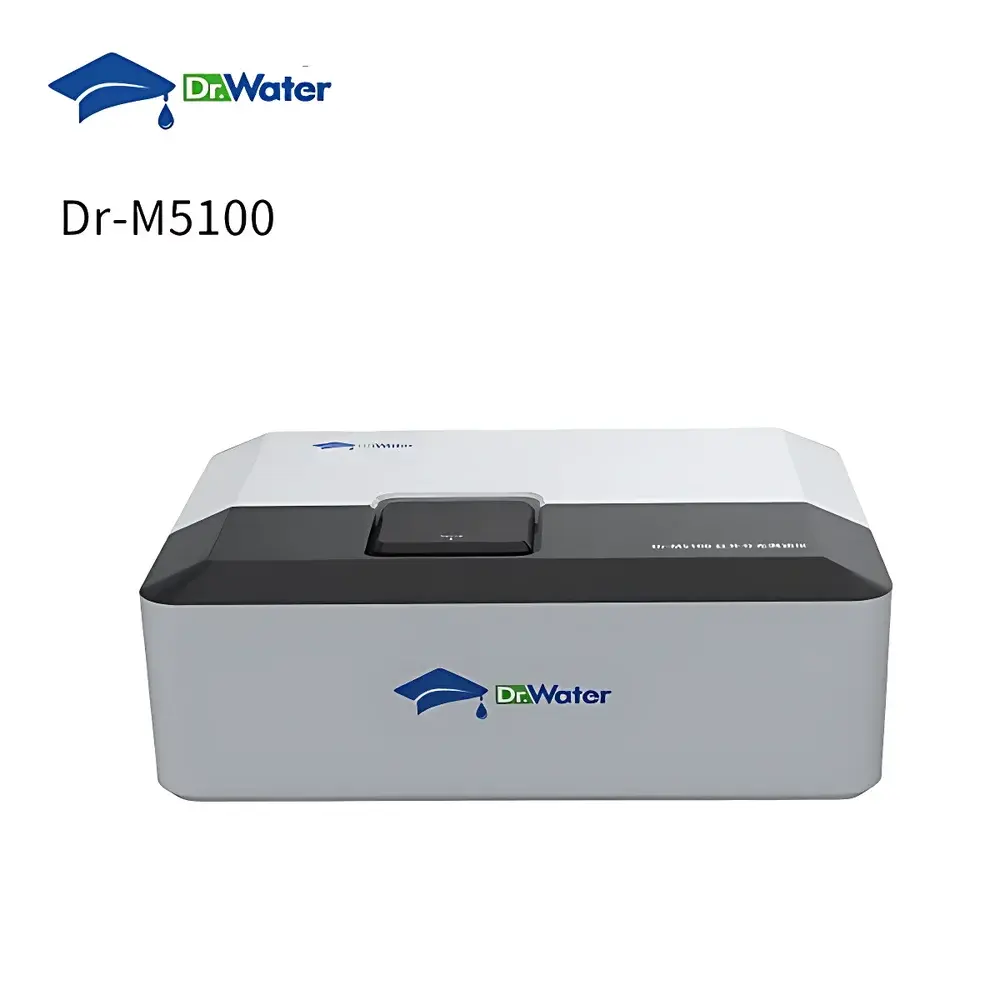
Water Doctor Dr-M5100 Infrared Spectrophotometric Oil Analyzer
| Brand | Water Doctor |
|---|---|
| Origin | Hunan, China |
| Manufacturer Type | Authorized Distributor |
| Country of Origin | China |
| Model | Dr-M5100 |
| Instrument Type | Laboratory Benchtop Analyzer |
| Principle | Infrared Spectrophotometry (Triple-Wavelength Absorption at 2930 cm⁻¹, 2960 cm⁻¹, and 3030 cm⁻¹) |
| Measurement Range | 0.0–800 mg/L (water matrix) |
| Detection Limit | 3σ ≤ 0.03 mg/L (based on 11 blank measurements) |
| Accuracy | ±2% relative error |
| Wavenumber Range | 2400–3400 cm⁻¹ (equivalent to 2941–4167 nm) |
| Wavenumber Accuracy | ±1 cm⁻¹ |
| Absorbance Range | 0.0000–2.0000 AU (T = 100%–1%) |
| Extraction Solvents | Perchloroethylene or Carbon Tetrachloride (compliant with HJ 637–2018) |
Overview
The Water Doctor Dr-M5100 Infrared Spectrophotometric Oil Analyzer is a laboratory-grade benchtop instrument engineered for precise quantification of total oil, petroleum hydrocarbons, and animal/vegetable oils in aqueous, gaseous, and solid matrices. It operates on the principle of mid-infrared absorption spectroscopy—specifically measuring absorbance at three critical wavenumbers (2930 cm⁻¹, 2960 cm⁻¹, and 3030 cm⁻¹) corresponding to C–H stretching vibrations in aliphatic CH₂, CH₃, and aromatic groups. This triple-wavelength algorithm conforms rigorously to the Chinese national standard HJ 637–2018, enabling differentiation between total oil (unadsorbed extract) and petroleum hydrocarbons (post-silica gel adsorption), with animal/vegetable oil calculated as the difference. The system supports both perchloroethylene (C₂Cl₄) and carbon tetrachloride (CCl₄) as extraction solvents—fully aligned with regulatory flexibility requirements under HJ 637–2018, HJ 1077–2019 (for stack gas油烟/oil mist), and HJ 1051–2019 (for soil petroleum analysis).
Key Features
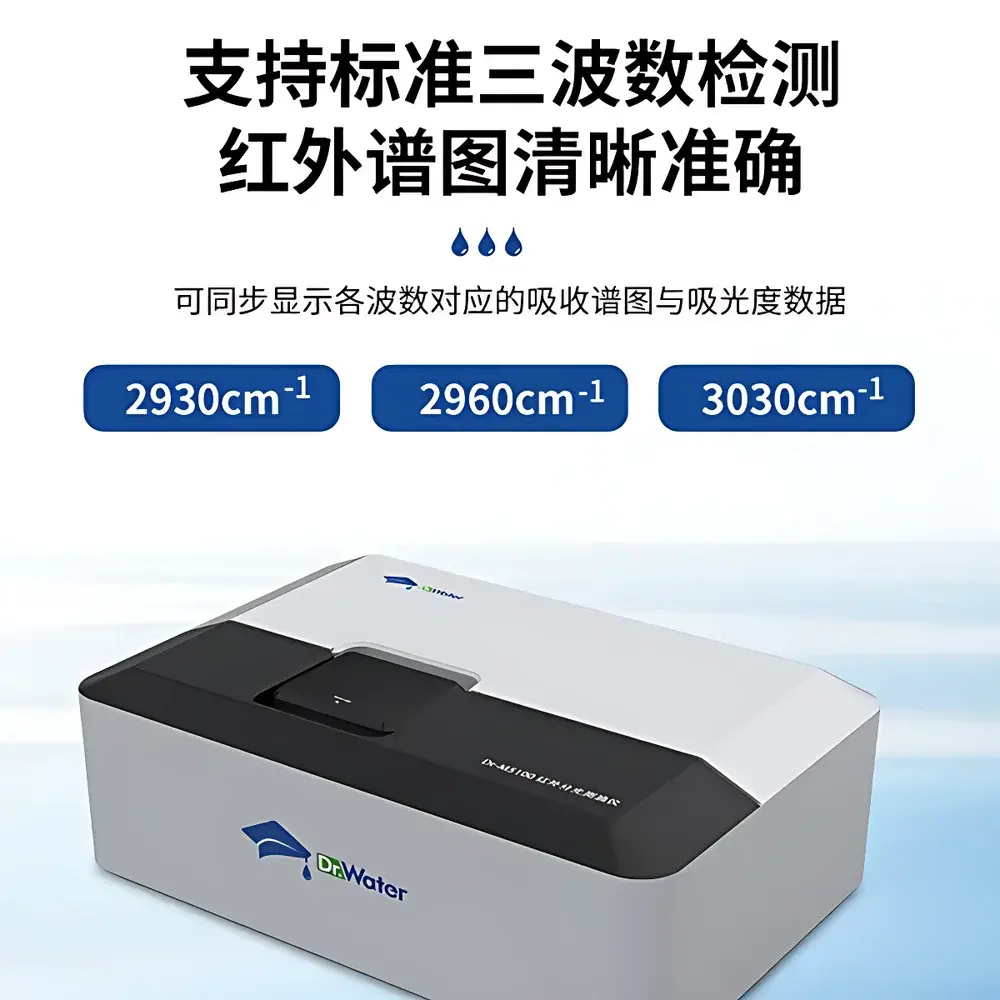
- Triple-wavelength infrared detection (2930 cm⁻¹, 2960 cm⁻¹, 3030 cm⁻¹) with real-time spectral display and simultaneous absorbance readout per band
- Imported stepper motor-driven diffraction grating with automated wavelength calibration—ensuring long-term photometric stability and wavenumber accuracy within ±1 cm⁻¹
- Modular optical architecture: detachable, compact pre-dispersive design with short optical path length, high energy throughput, and minimal thermal drift
- Electronically modulated IR source replacing mechanical filter wheels—reducing thermal load, eliminating moving-part wear, and enhancing signal-to-noise ratio
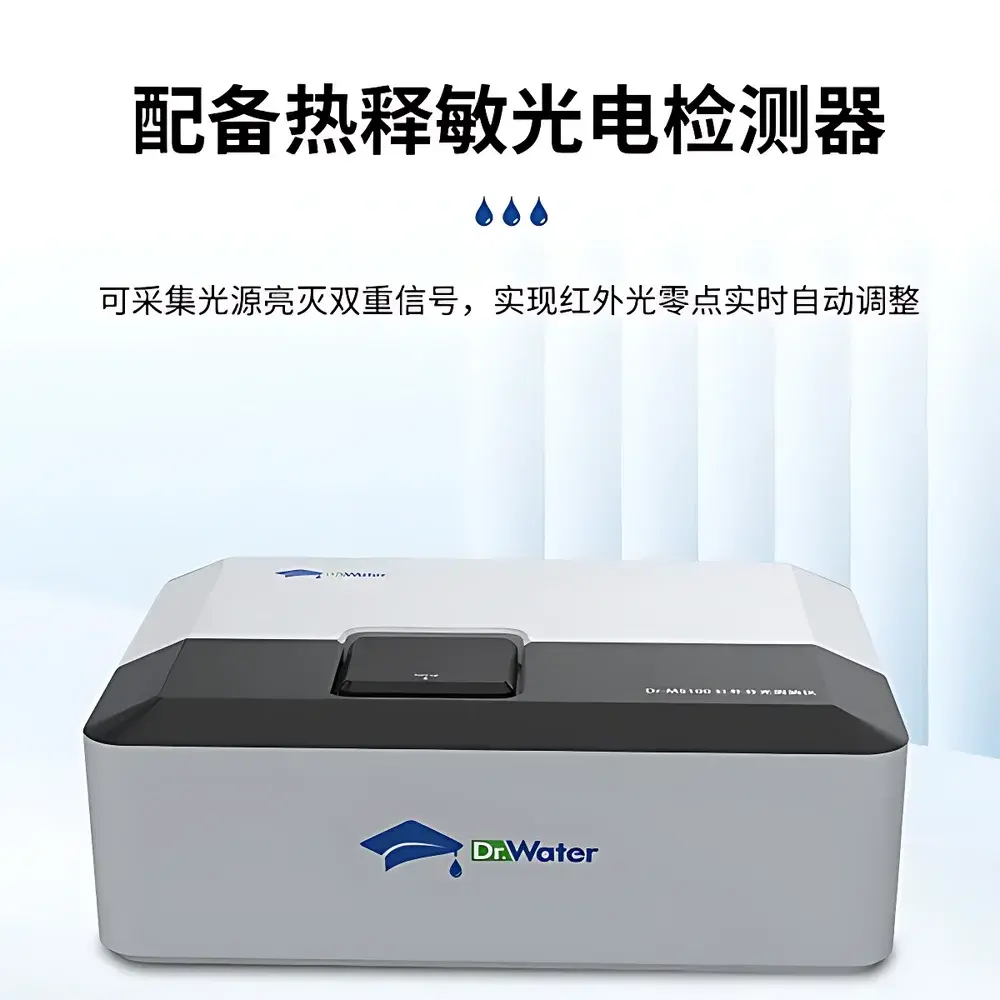
- Pyroelectric detector with dual-phase acquisition (light-on/light-off) enabling real-time zero-point compensation and baseline correction
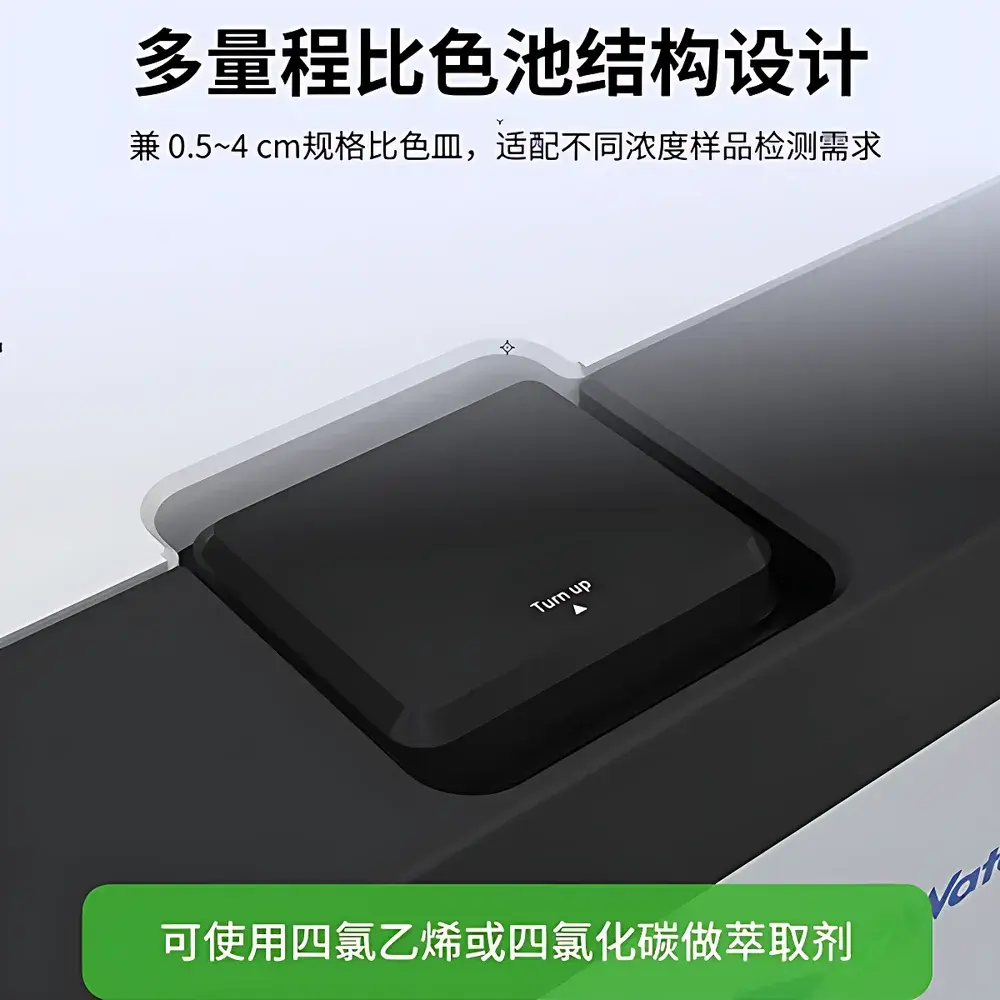
- Multi-pathlength cell holder accommodating 0.5 cm to 4.0 cm pathlength cuvettes—optimizing sensitivity across low- and high-concentration samples without manual dilution
- Fully compliant solvent compatibility: validated for both perchloroethylene and carbon tetrachloride, including full spectral deconvolution and matrix correction protocols
Sample Compatibility & Compliance
The Dr-M5100 is validated for use across heterogeneous sample types per established environmental testing standards. For water samples (surface, groundwater, industrial effluent), analysis follows acidification to pH ≤2 followed by liquid–liquid extraction. For stack emissions, it quantifies油烟 (cooking fume oil) and oil mist per HJ 1077–2019 using impinger collection and solvent extraction. For soil and sediment, the method aligns with HJ 1051–2019, incorporating Soxhlet or ultrasonic-assisted extraction prior to IR measurement. All workflows support GLP-compliant documentation when integrated with traceable calibration standards and certified reference materials. Instrument performance meets ISO/IEC 17025 requirements for analytical competence when operated within defined environmental conditions (20–25°C, <70% RH) and maintained per scheduled verification protocols.
Software & Data Management
The embedded control software provides full method setup, spectral acquisition, multi-point calibration (including blank subtraction, linear/nonlinear curve fitting), and automatic calculation of oil concentration using standardized correction coefficients per HJ 637–2018. Raw absorbance values (A2930, A2960, A3030) are exportable in CSV format for external audit or statistical validation. Audit trail functionality records user ID, timestamp, parameter changes, and calibration events—supporting compliance with FDA 21 CFR Part 11 when deployed in regulated laboratories. Data integrity is reinforced via password-protected method locking and electronic signature options for report finalization.
Applications
The Dr-M5100 serves as a primary analytical tool in municipal and provincial environmental monitoring stations, third-party testing laboratories (CMA/CNAS-accredited), wastewater treatment plants, petrochemical refineries, power generation facilities, and university environmental science departments. It is routinely employed for routine discharge monitoring, compliance verification against GB 8978–1996 (Comprehensive Wastewater Discharge Standard), and source identification studies involving hydrocarbon fingerprinting. Its adaptability to air and soil matrices further extends utility in industrial hygiene assessments, landfill leachate characterization, and agricultural runoff surveillance.
FAQ
Does the Dr-M5100 comply with international standards such as ISO 9377-2 or ASTM D7066?
The instrument is designed and validated per Chinese national standards (HJ 637–2018, HJ 1077–2019, HJ 1051–2019). While not pre-certified to ISO or ASTM methods, its optical architecture and algorithmic framework are technically compatible with those standards’ core principles; method adaptation requires lab-specific validation per ISO/IEC 17025.
Can the instrument perform quantitative analysis without silica gel treatment?
Yes—it measures total oil directly. Petroleum hydrocarbon quantification requires post-extraction silica gel adsorption to remove polar interferents; the instrument supports both workflows with independent calibration curves.
Is remote data export supported?
Raw spectral data and result reports can be exported via USB interface in CSV or PDF format; Ethernet/Wi-Fi connectivity is not natively integrated but may be enabled via optional peripheral gateways.
What maintenance intervals are recommended?
Optical alignment verification every 6 months; detector sensitivity check annually; solvent delivery tubing replacement every 12 months under continuous operation; full system performance qualification per HJ 637–2018 Annex B every 24 months.
How is the detection limit (0.03 mg/L) determined?
Based on 11 replicate measurements of solvent blank (perchloroethylene), calculating three times the standard deviation (3σ) of absorbance at 2930 cm⁻¹—consistent with IUPAC recommendations and HJ 637–2018 Section 8.3.
Related Products







