
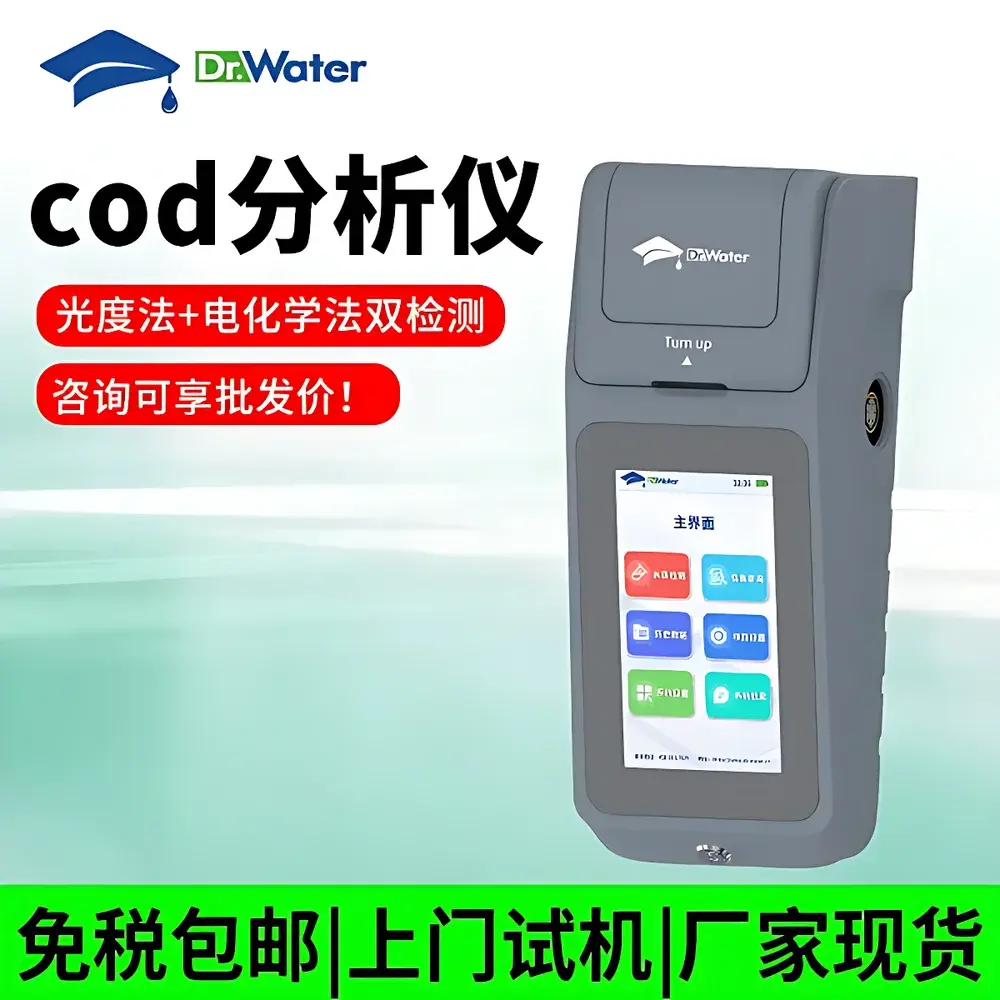
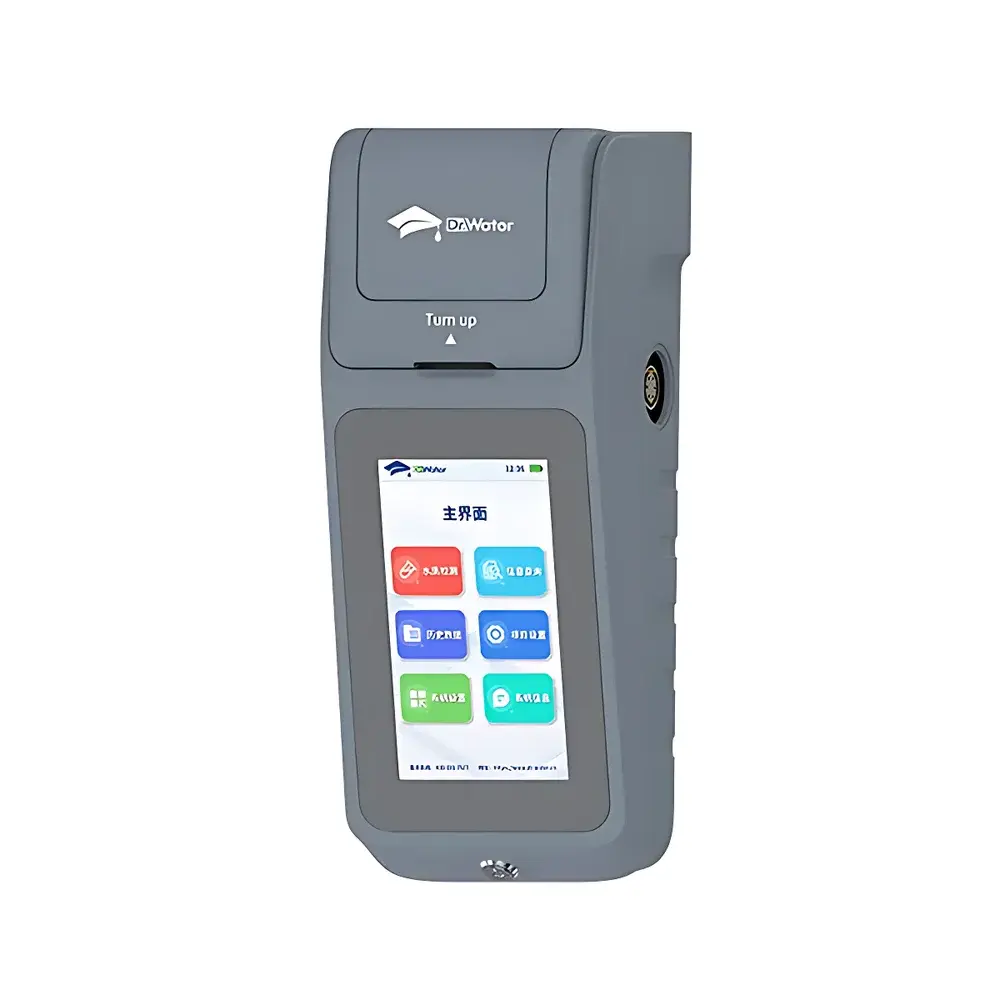
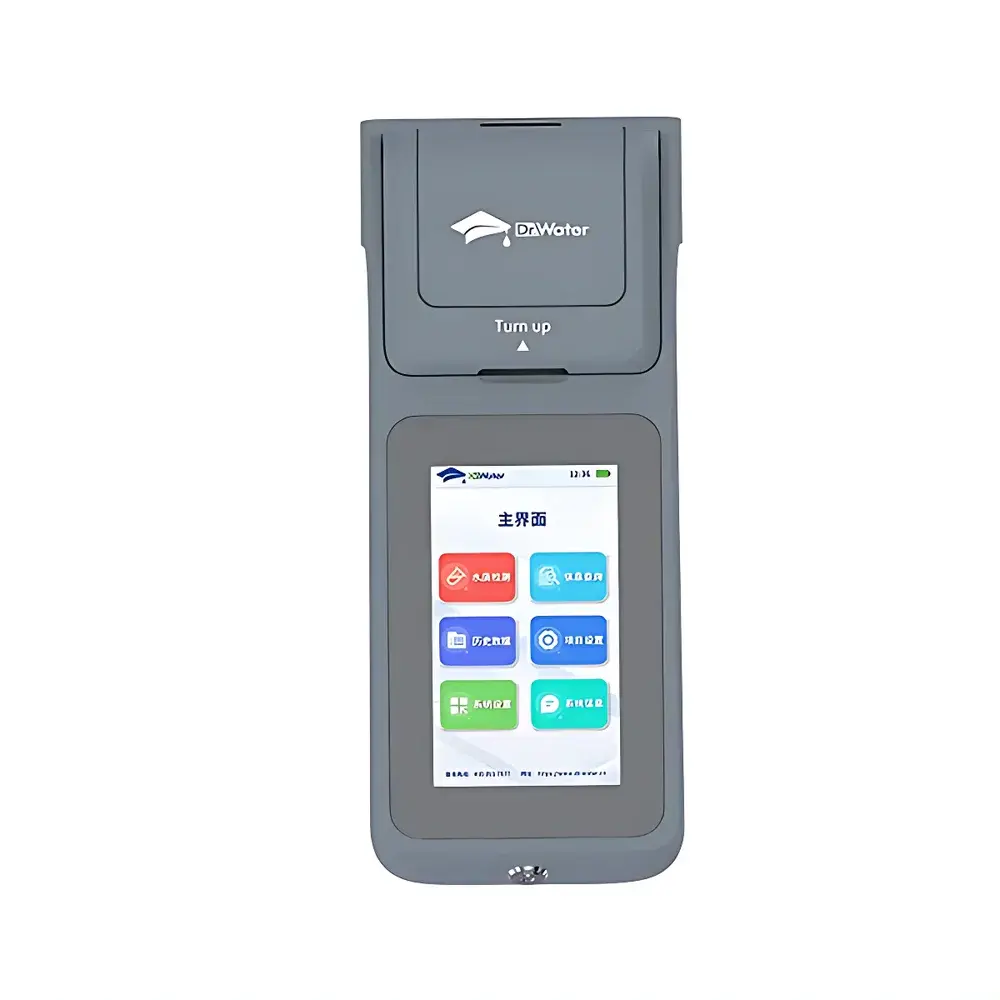
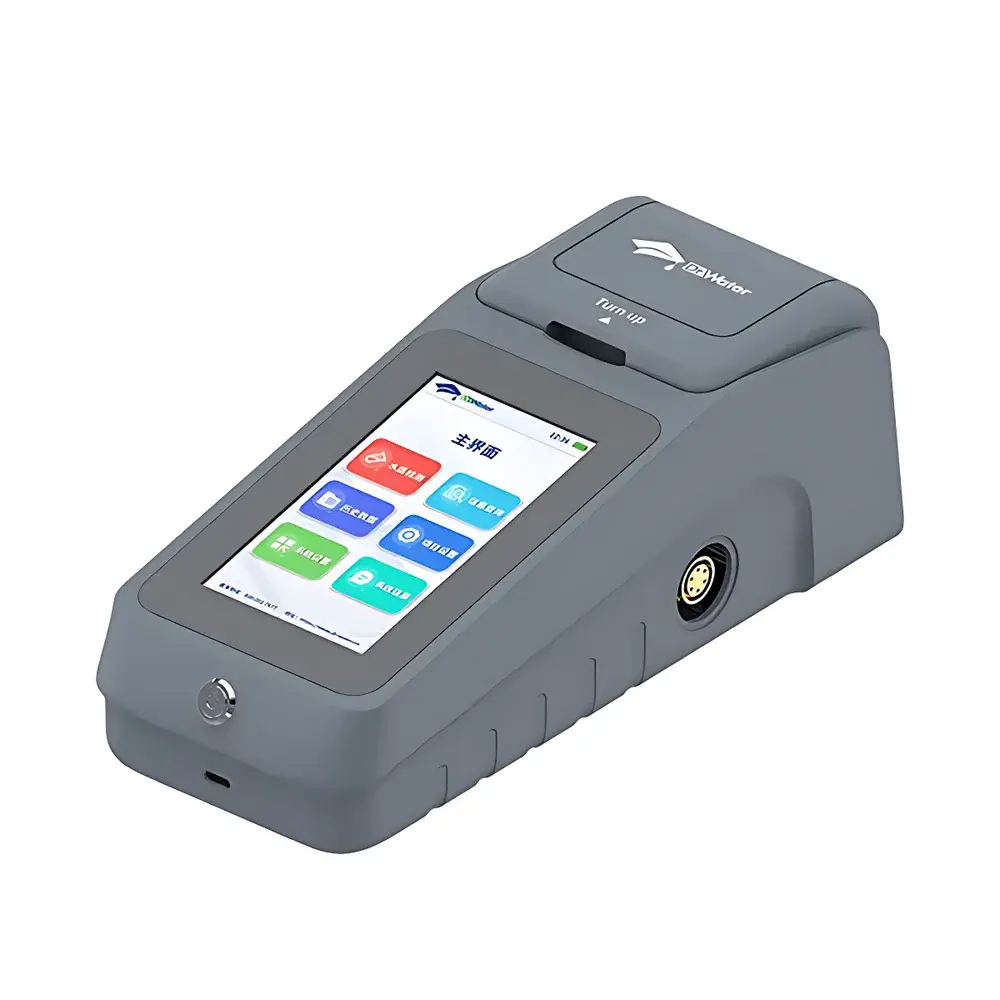
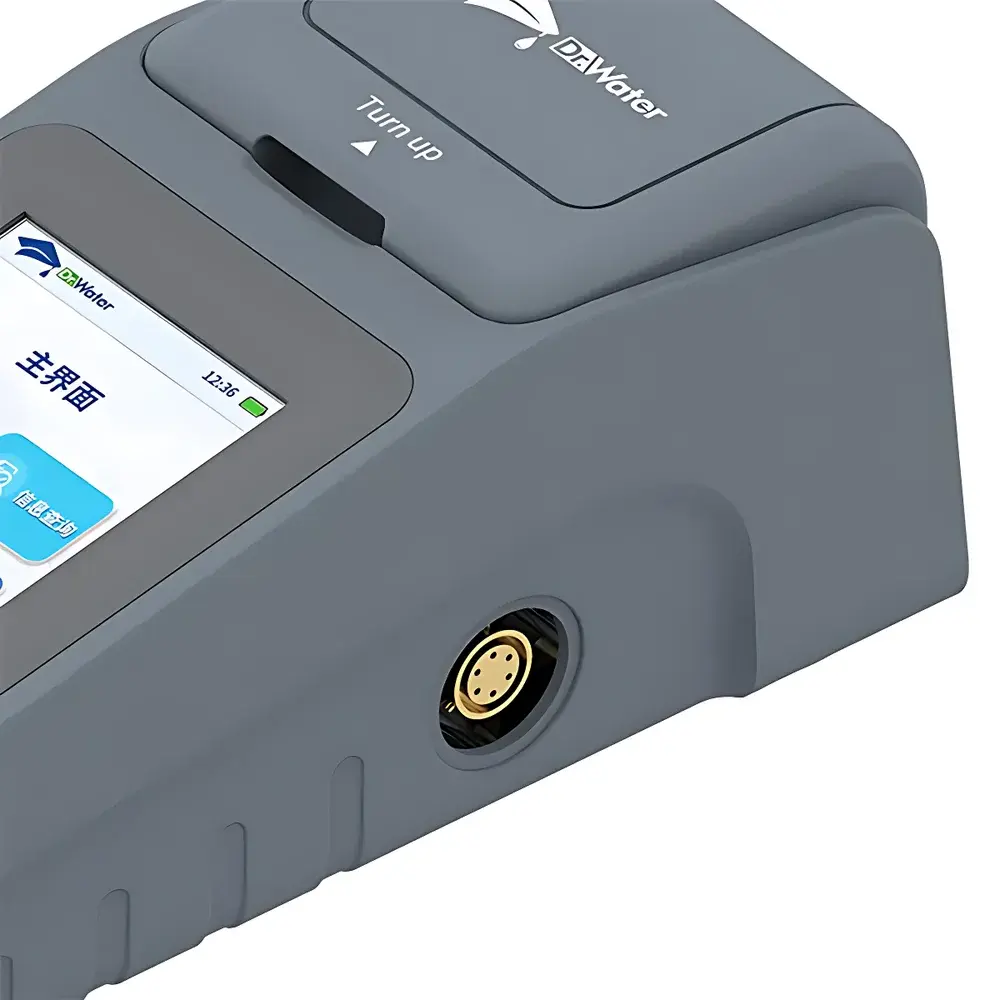
Water Doctor Dr-T9901 Portable COD Analyzer with Dual-Mode Photometric & Electrochemical Detection
| Brand | Water Doctor (DoctorWater) |
|---|---|
| Origin | Hunan, China |
| Model | Dr-T9901 |
| Instrument Type | Portable |
| Measurement Principle | Rapid Digestion Spectrophotometry (Lab-Grade) |
| Wavelength Range | 340–900 nm |
| Wavelength Accuracy | ±1 nm |
| Wavelength Repeatability | <0.2 nm |
| Spectral Bandwidth | 4 nm |
| Transmittance Error | ±0.5% |
| Transmittance Repeatability | ≤0.2% T |
| COD Range | 2–20,000 mg/L |
| COD Accuracy | ≤±5% |
| LOD (COD) | 2 mg/L |
| Optical Stability | ≤±0.005 Abs/20 min |
| Resolution | 0.001 Abs |
| Photometric System | Fiber-Optic Detection |
| Display | 5-inch HD Touchscreen |
| Calibration Modes | Single-point & Multi-point |
| Pre-stored Curves | 600 |
| Data Storage | 1,000,000 records |
| Power Supply | Rechargeable Li-ion Battery + AC Adapter |
| Housing Material | Corrosion-Resistant ABS |
Overview
The Water Doctor Dr-T9901 is a field-deployable, dual-mode water quality analyzer engineered for precise, regulatory-compliant determination of Chemical Oxygen Demand (COD) and up to 17 additional water quality parameters—including ammonia nitrogen, total phosphorus, total nitrogen, heavy metals (via ion-selective electrodes), pH, dissolved oxygen (DO), conductivity, turbidity, temperature, ORP, TDS, chlorophyll-a, phycocyanin (blue-green algae), suspended solids (SS), residual chlorine, oil-in-water, and salinity. It integrates rapid digestion spectrophotometry—validated per HJ/T 399–2007—with an embedded electrochemical detection module, enabling simultaneous optical and potentiometric measurements within a single compact platform. The instrument operates on the principle of absorbance quantification at user-selectable wavelengths across a broad 340–900 nm spectral range, leveraging a high-stability cold-light source (rated >100,000 hours) and fiber-optic light path architecture to minimize thermal drift and ensure long-term photometric fidelity. Designed for both laboratory validation and unattended field deployment, the Dr-T9901 meets the optical performance criteria specified in ISO 7027 (turbidity), ISO 8467 (COD), and ASTM D1253 (residual chlorine), while supporting method traceability required under GLP and ISO/IEC 17025 frameworks.
Key Features
- Dual optical detection geometry: 360° rotating tube cuvette holder for uniform path-length illumination and fixed-cell cuvette slot for standardized EPA-compliant measurements
- Dedicated digital electrode interface supporting interchangeable ISE, DO, pH, ORP, and conductivity probes with auto-recognition and calibration logging
- Fiber-optic photometric system with <0.2 nm wavelength repeatability and ±1 nm absolute accuracy—ensuring compliance with HJ/T 399–2007 and US EPA Method 410.4
- Pre-loaded method library: 600 factory-validated calibration curves covering COD (dichromate digestion), NH₃-N (Nesslerization), TP (ammonium molybdate), TN (persulfate digestion), and heavy metal ions (e.g., Pb²⁺, Cd²⁺, Cu²⁺)
- 5-inch capacitive touchscreen with configurable UI—English language firmware available upon request; supports GMP audit trail mode with operator ID login and electronic signature
- Built-in Bluetooth thermal printer and USB 2.0 host port for direct data export; 1 million measurement records stored with timestamp, operator ID, method ID, and raw absorbance values
- Robust ABS enclosure rated IP67 for dust/water ingress protection; integrated shock-absorbing carry case with acid-resistant interior lining and modular probe storage
Sample Compatibility & Compliance
The Dr-T9901 accommodates liquid samples from diverse matrices—including municipal wastewater, industrial effluents (e.g., electroplating rinse water, pulp & paper discharge), groundwater, surface water, aquaculture ponds, and reclaimed water—without requiring dilution for most routine applications within its 2–20,000 mg/L COD range. All photometric methods adhere to Chinese national standards HJ/T 399–2007 (COD), HJ 535–2009 (NH₃-N), GB 11893–89 (TP), and GB/T 5750.5–2023 (heavy metals). Electrochemical modules comply with ISO 7888 (conductivity), ISO 5814 (DO), and ASTM D3693 (pH). Data integrity features include 21 CFR Part 11–compatible electronic signatures, automatic calibration verification logs, and tamper-evident audit trails—enabling use in regulated environments such as municipal water utilities, pharmaceutical manufacturing QA/QC labs, and third-party environmental testing facilities accredited to CNAS or UKAS.
Software & Data Management
The embedded firmware provides full method lifecycle management: curve selection, multi-point calibration with R² validation, blank subtraction, and outlier rejection per ISO 5725-2. Raw data (absorbance, mV, µS/cm, mg/L) are stored with metadata including digestion time, reagent lot number, ambient temperature, and GPS coordinates (when paired with optional external GNSS module). USB export generates CSV files compatible with LIMS platforms (e.g., LabWare, STARLIMS) and statistical software (Minitab, JMP). Optional PC software (Dr-Link v4.2) enables remote firmware updates, spectral scan visualization, QC charting (X-bar/R), and automated report generation compliant with ISO 17025 clause 7.8.2.
Applications
- Real-time process monitoring in wastewater treatment plants (influent/effluent COD tracking, nitrification/denitrification control)
- Compliance verification for industrial discharge permits (e.g., textile dyeing, food processing, semiconductor fabs)
- Environmental impact assessment (EIA) field surveys and baseline water quality mapping
- Academic research on nutrient cycling, eutrophication dynamics, and redox-sensitive contaminant speciation
- Emergency response screening during chemical spills or algal bloom events
- Validation of online COD sensors and cross-calibration against laboratory-grade TOC analyzers
FAQ
Does the Dr-T9901 meet international regulatory requirements for COD reporting?
Yes—it implements rapid digestion spectrophotometry per HJ/T 399–2007, which is harmonized with ISO 8467 and accepted by multiple ASEAN and African regulatory bodies for routine effluent monitoring.
Can the instrument perform simultaneous COD and ammonia nitrogen analysis without manual reconfiguration?
Yes—the dual optical path and independent electrode interface allow concurrent measurement of COD (at 600 nm post-digestion) and NH₃-N (at 420 nm) using pre-programmed sequential protocols.
What is the calibration verification frequency recommended for GLP-compliant operation?
Per ISO/IEC 17025:2017, daily verification with certified reference materials (CRMs) is required; the Dr-T9901’s built-in CRM check function automates this via NIST-traceable COD standard solutions (100 mg/L & 1000 mg/L).
Is method customization supported for non-standard analytes or proprietary reagents?
Yes—users may import custom calibration curves via USB or define new wavelength-specific methods using the onboard editor, with version-controlled curve archiving and change logs.
How is optical drift compensated during extended field deployments?
The fiber-optic system incorporates real-time dark-current correction and dual-beam referencing; optical stability is maintained at ≤±0.005 Abs/20 min, verified automatically every 15 minutes when idle.
Related Products







