
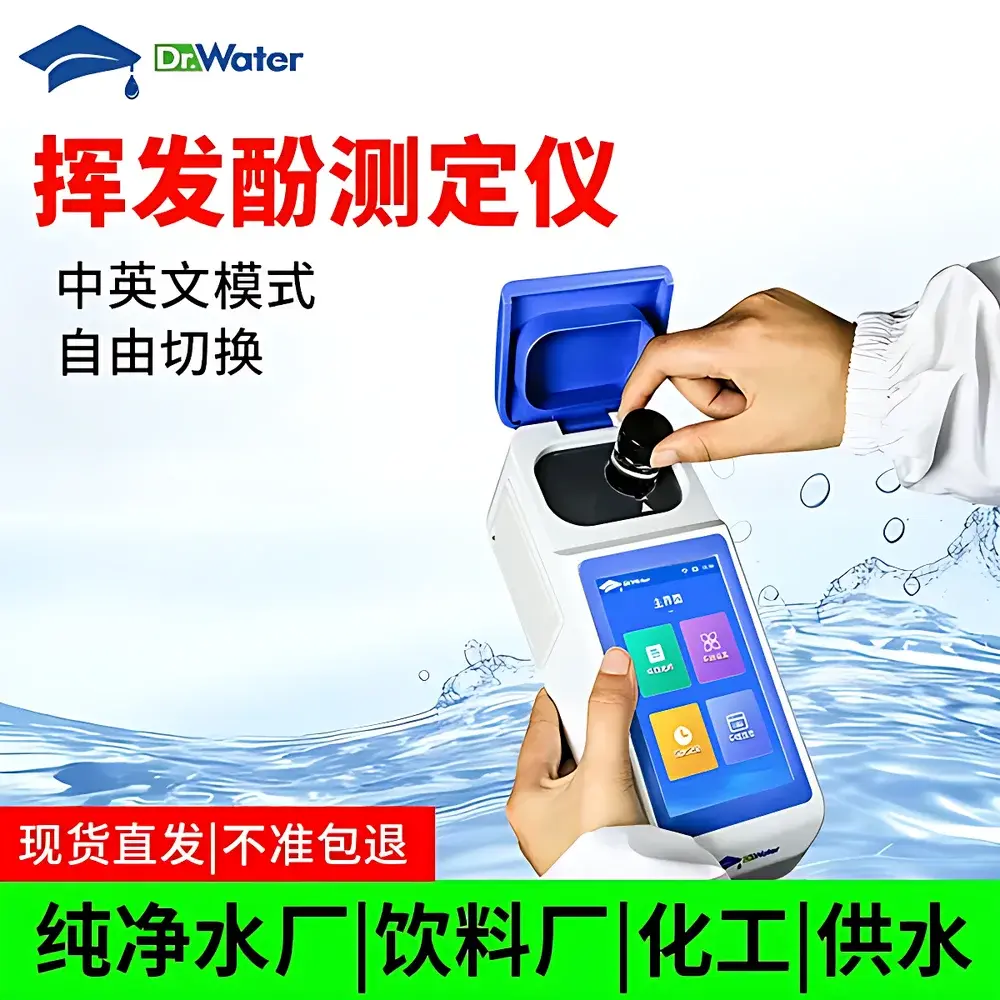
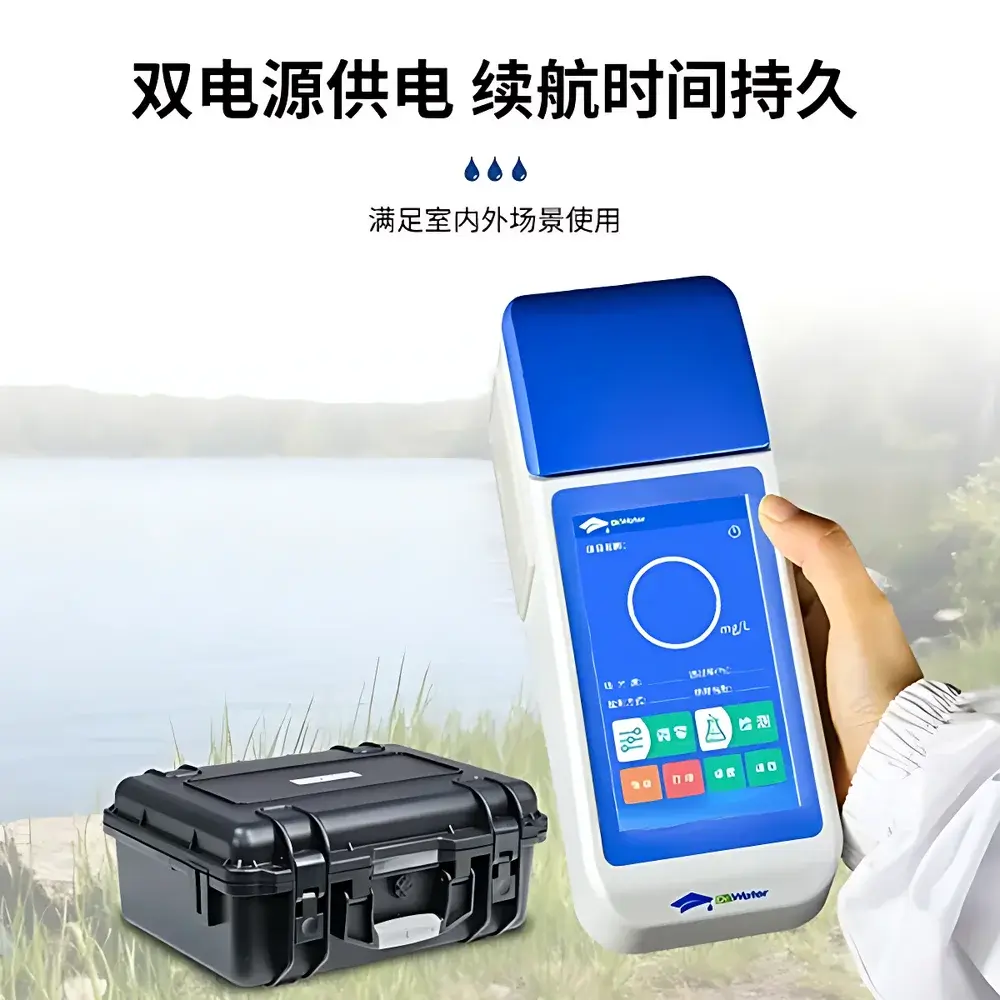
Water Doctor Dr-W112 Portable Volatile Phenol & Multi-Parameter Water Quality Analyzer
| Brand | Water Doctor |
|---|---|
| Origin | Hunan, China |
| Model | Dr-W112 |
| Instrument Type | Portable/HANDHELD Water Quality Analyzer |
| Detection Principle | Spectrophotometric (4-AAP Method per HJ 503-2009 / ISO 6439) |
| Primary Target Analyte | Volatile Phenols |
| Measured Parameters | Turbidity (0–20 NTU / 0–200 NTU / 0–1000 NTU), Color, Free Chlorine, Chlorine Dioxide, Total Hardness, Permanganate Index (COD<sub>Mn</sub>), Ammonia Nitrogen, Ozone, Urea, Iron, Manganese |
| Wavelength Range | 330–900 nm |
| Wavelength Accuracy | ±5 nm |
| Photometric Resolution | 0.001 Abs |
| Optical Stability | ≤±0.005 Abs/20 min |
| Repeatability | ≤±2% |
| Accuracy | ≤±5% |
| Light Source | Imported Long-Life Cold LED (≥100,000 h) |
| Sample Cell | 16 mm and 25 mm round cuvettes |
| Display | 5-inch HD color TFT capacitive touchscreen |
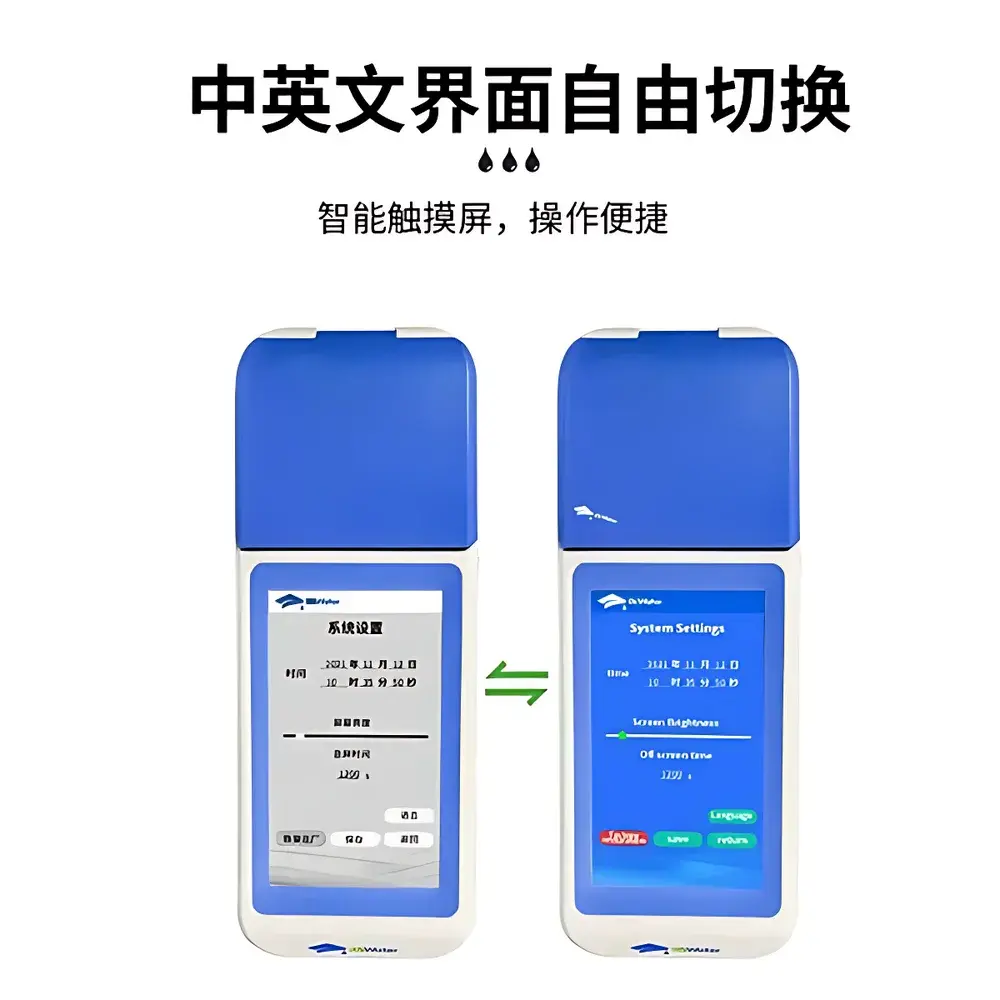
| Language Support | English & Chinese |
| Power Supply | Rechargeable Li-ion battery + AC adapter (dual-mode operation) |
| Data Storage | Up to 1,000,000 measurement records |
| Connectivity | USB Type-C (charging + data transfer) |
| Printing | Built-in thermal printer |
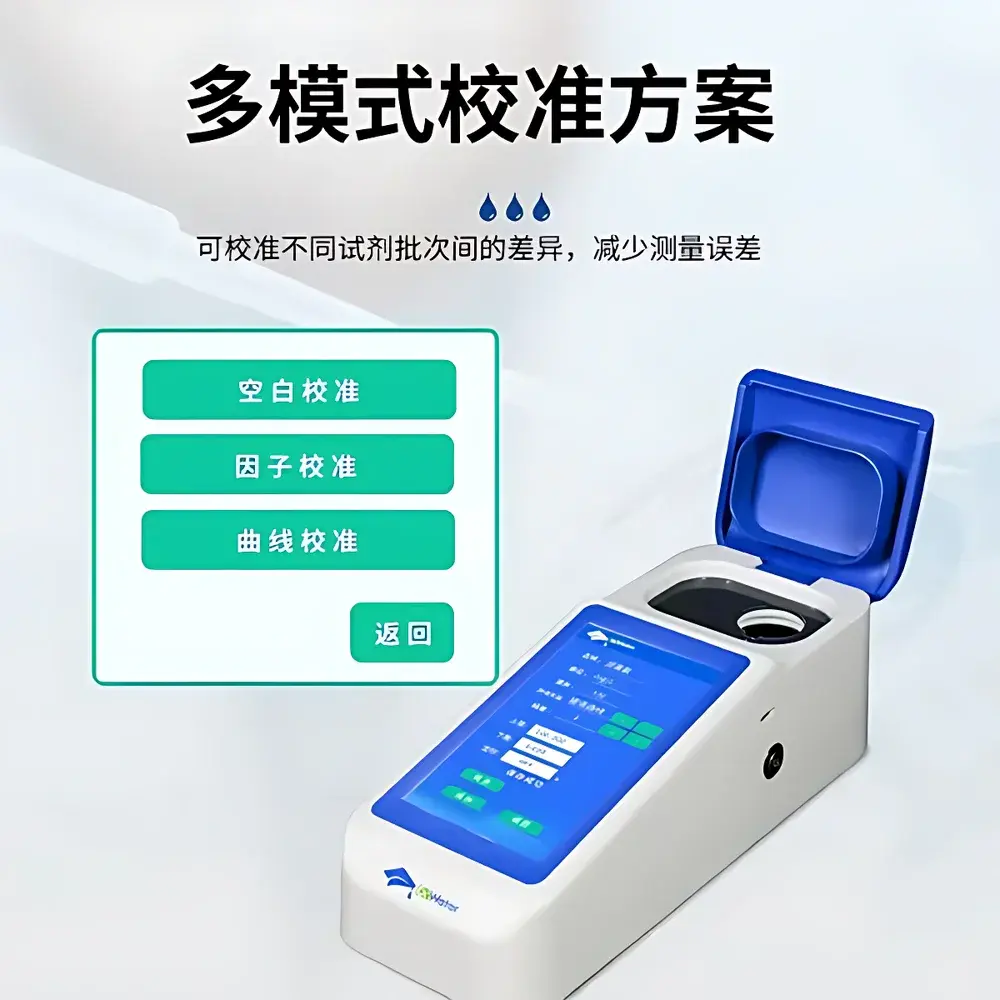
| Calibration Modes | Blank, Factor, and Multi-point Curve Calibration |
| Interference Compensation | Integrated chromaticity & optical attenuation correction algorithm |
| Housing Material | Corrosion-resistant ABS with IP67-rated enclosure |
| Compliance | Designed in accordance with HJ 503-2009 (China), ISO 6439:1984, and ASTM D1209/D5810 for phenolic compounds |
Overview
The Water Doctor Dr-W112 is a field-deployable, multi-parameter spectrophotometric analyzer engineered for the quantitative determination of volatile phenols in water matrices—primarily via the 4-aminoantipyrine (4-AAP) colorimetric method standardized in HJ 503-2009 and aligned with ISO 6439:1984. Unlike generic photometers, the Dr-W112 integrates a precision optical detection system featuring an auto-wavelength positioning mechanism, high-stability cold LED light source (rated >100,000 hours), and dual-cuvette compatibility (16 mm and 25 mm). Its core analytical architecture supports not only volatile phenol quantification but also simultaneous assessment of 11 additional water quality parameters—including turbidity across three dynamic ranges (0–20 NTU, 0–200 NTU, 0–1000 NTU), free chlorine, ammonia nitrogen, permanganate index, and heavy metals such as iron and manganese. The instrument operates on first-principles photometry: sample absorbance is measured at analyte-specific wavelengths (e.g., 500 nm for phenol-4-AAP complex), converted to concentration using preloaded or user-defined calibration curves, and corrected in real time for chromatic interference and signal drift.
Key Features
- 5-inch HD capacitive touchscreen with intuitive GUI and seamless English/Chinese language switching
- Auto-initialization diagnostic routine that suppresses transient photometric instability during power-on warm-up
- Dual-algorithm processing engine combining interpolation and polynomial regression for enhanced calibration fidelity
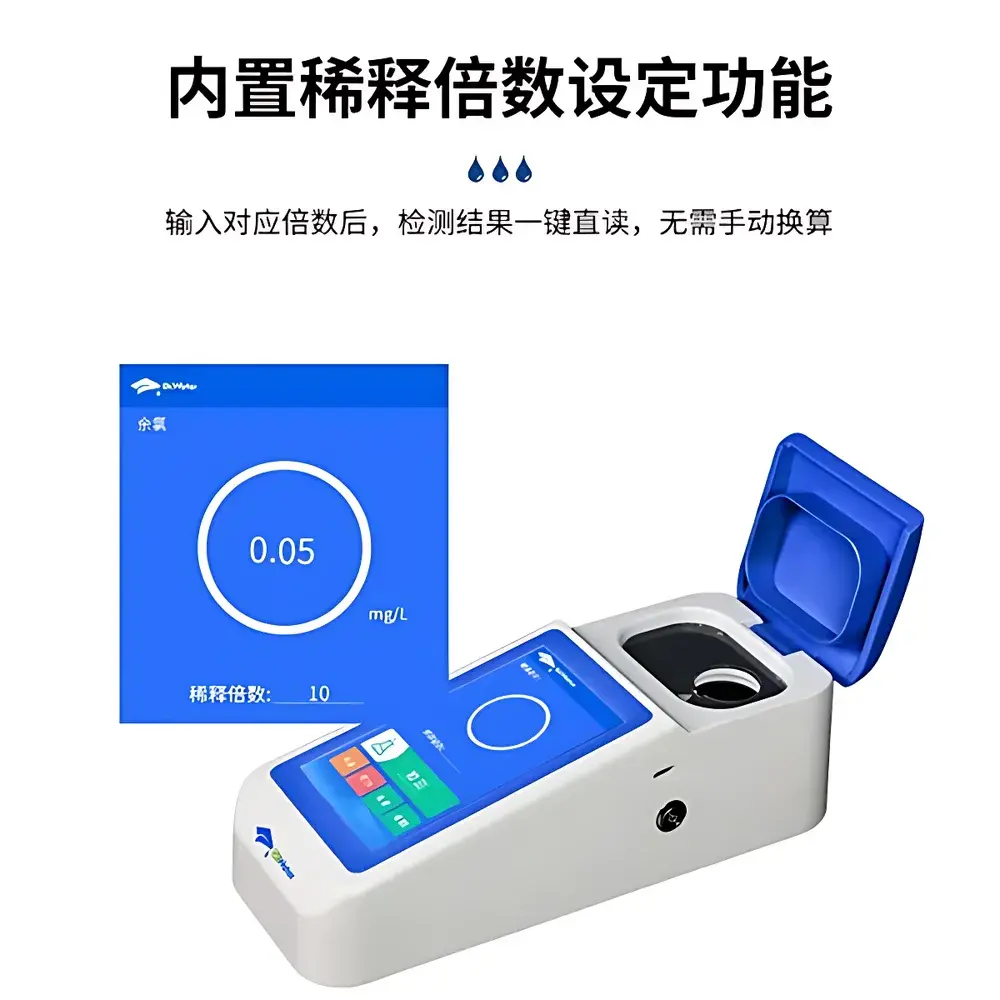
- On-device dilution factor input: direct concentration readout without manual calculation or unit conversion
- Programmable timed measurement mode for unattended batch analysis in remote or high-throughput settings
- Three-tier calibration flexibility—blank, factor-based, and multi-point curve—to accommodate reagent lot variability and matrix effects
- User-configurable alarm thresholds with audible and visual alerts upon exceedance
- Proprietary optical interference compensation module mitigating errors from sample coloration and path-length-dependent light attenuation
- Four turbidity acquisition modes: standard, low-turbidity (optimized for drinking water), signal averaging (for noisy samples), and rapid sedimentation profiling
- USB Type-C interface supporting simultaneous charging, firmware updates, and bulk data export
Sample Compatibility & Compliance
The Dr-W112 accommodates standard glass or quartz cuvettes (16 mm and 25 mm pathlengths), ensuring compatibility with both routine field sampling and laboratory validation workflows. Its optical design conforms to the spectral requirements of HJ 503-2009 for volatile phenol analysis and meets photometric performance benchmarks defined in ISO 7027-1:2016 (turbidity) and ASTM D1209 (color). While not certified under FDA 21 CFR Part 11 or EU Annex 11, the device supports GLP-aligned documentation practices through timestamped, operator-ID-tagged records and full audit trail capability when paired with optional PC software. All internal algorithms are traceable to national standard reference materials (GBW series), and the instrument’s ABS housing complies with IEC 60529 IP67 for dust/water ingress protection—critical for field use in wastewater treatment plants, reservoirs, and distribution networks.
Software & Data Management
Embedded firmware provides complete local control over measurement execution, calibration management, and report generation. Each stored record includes parameter ID, wavelength, absorbance/concentration value, date/time stamp, operator ID (if enabled), and raw spectral metadata. With 1 million record capacity and on-screen filtering by date range or parameter type, users can conduct immediate trend analysis without external tools. Data export via USB Type-C yields CSV-formatted files compatible with LIMS platforms (e.g., LabWare, STARLIMS) and statistical packages (Minitab, JMP). Optional Windows-based desktop software enables advanced curve fitting, inter-laboratory comparison reports, and PDF certificate generation compliant with ISO/IEC 17025 documentation standards. Thermal printing delivers hard-copy verification at point-of-use—essential for regulatory inspections or chain-of-custody documentation.
Applications
The Dr-W112 serves as a primary screening tool across municipal, industrial, and public health domains. In drinking water utilities, it verifies compliance with GB 5749-2022 limits for phenolic compounds (<0.002 mg/L) and monitors disinfection byproduct precursors. Environmental monitoring agencies deploy it for surface water surveillance near petrochemical facilities, pharmaceutical effluent discharge points, and landfill leachate collection systems. Public health laboratories utilize its ammonia nitrogen and urea modules to assess recreational water safety (e.g., swimming pools, hot springs). Food and beverage producers apply the total hardness and iron assays to validate pretreatment efficacy in boiler feedwater and process rinse streams. Its portability and dual-power architecture make it suitable for emergency response—such as post-flood contamination mapping or industrial spill characterization—where lab access is unavailable.
FAQ
What regulatory methods does the Dr-W112 support for volatile phenol analysis?
It implements the 4-AAP colorimetric method per China’s HJ 503-2009 and aligns with ISO 6439:1984 for phenolic compound quantification in aqueous samples.
Can the instrument store calibration curves for multiple reagent lots?
Yes—users may save and recall up to 50 independent calibration curves, each tagged with lot number, expiration date, and analyst ID.
Is the turbidity measurement traceable to NIST standards?
While the instrument itself is not NIST-calibrated, it accepts NIST-traceable formazin or AMCO AEPA standards for on-site verification and adjustment.
Does the device meet requirements for ISO/IEC 17025 accredited laboratories?
It supports key technical requirements—including measurement uncertainty estimation, calibration traceability, and data integrity—but final accreditation depends on site-specific validation protocols and QA/QC implementation.
How is optical drift compensated during extended field use?
The system performs automatic zero-tracking every 20 minutes and applies real-time baseline correction using dual-beam referencing logic embedded in the optical path.
Related Products







