
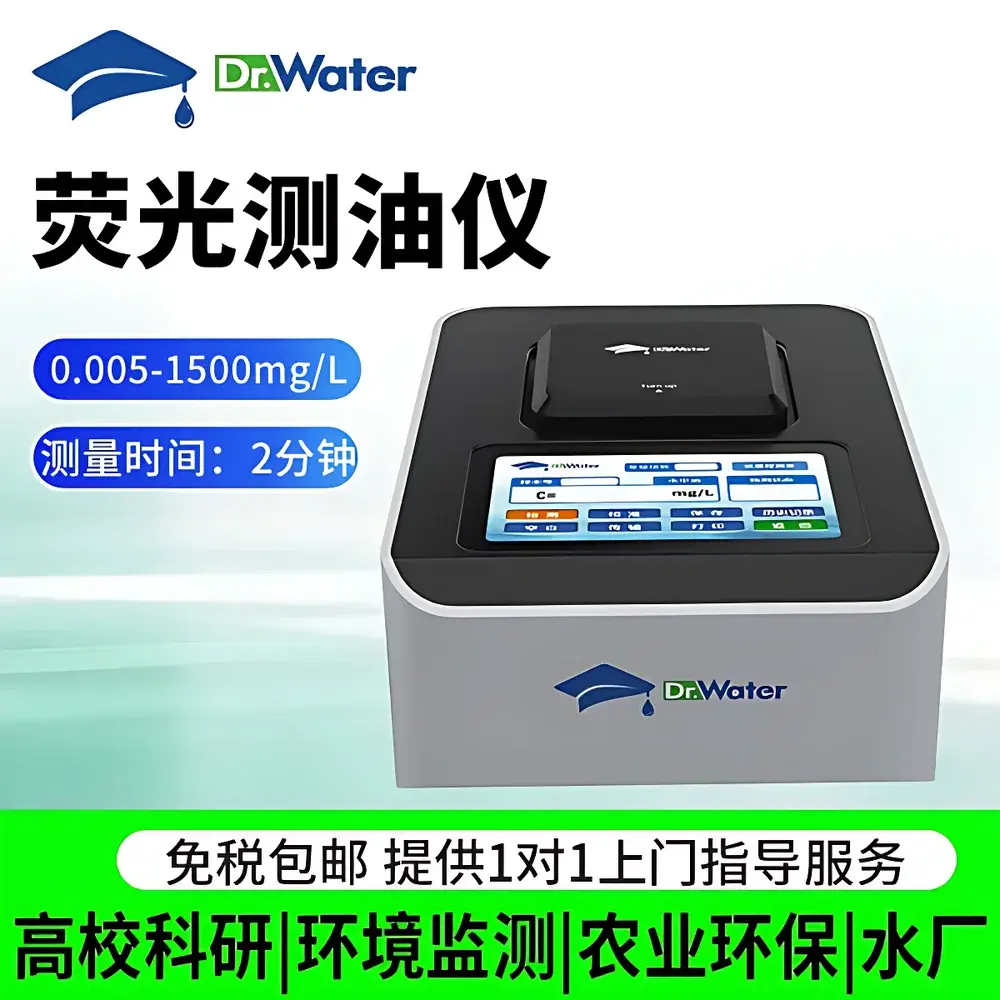
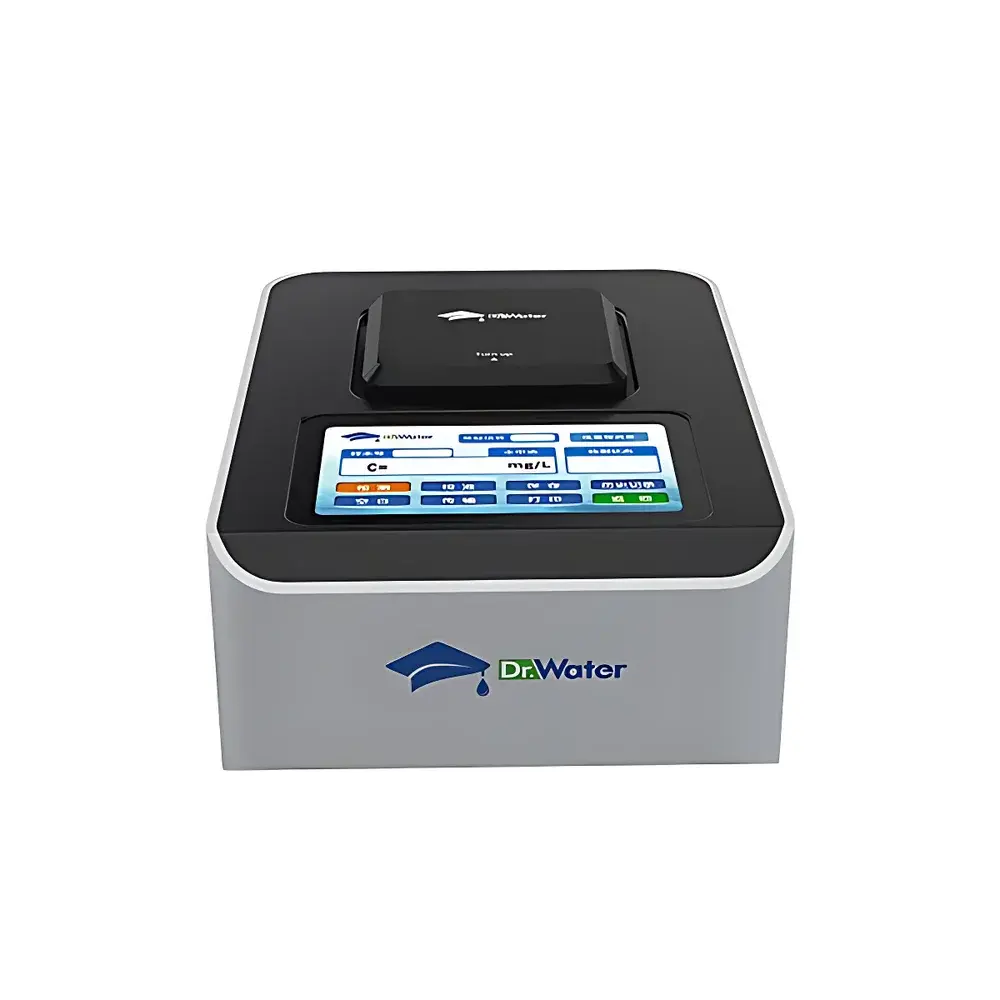
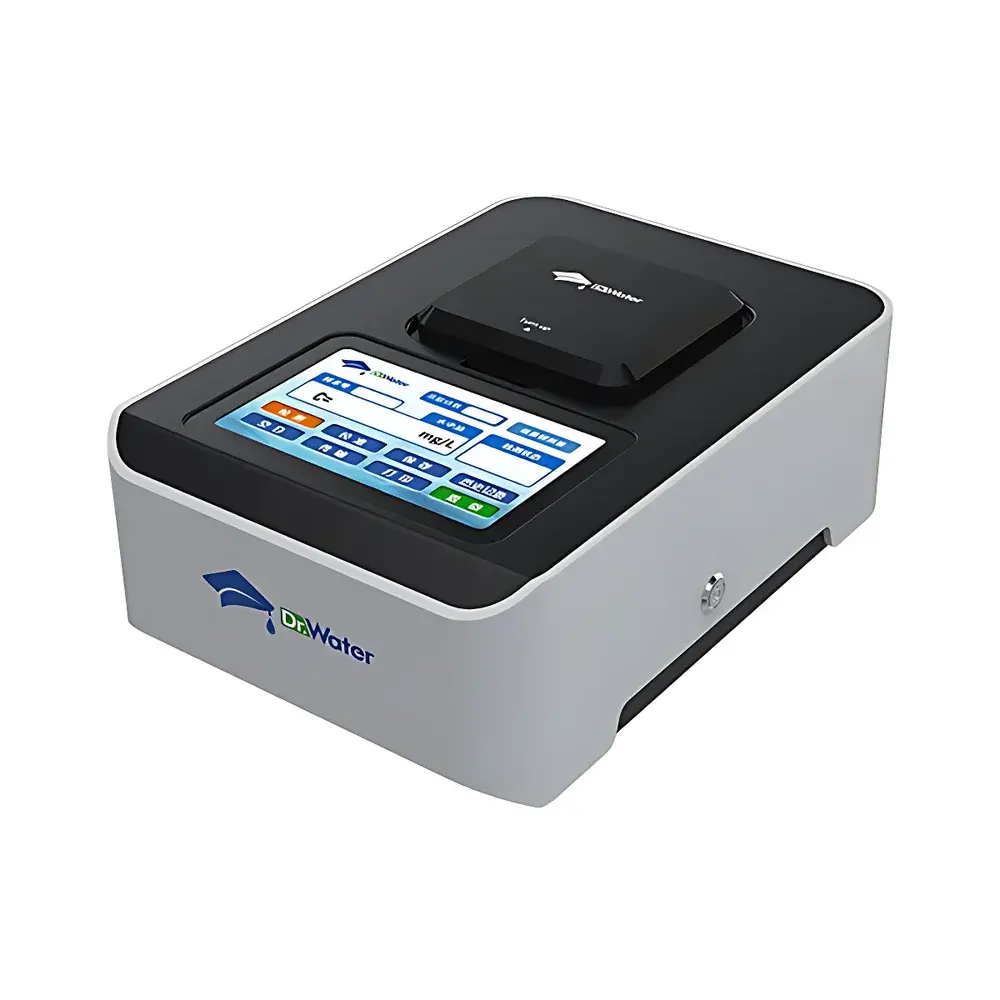
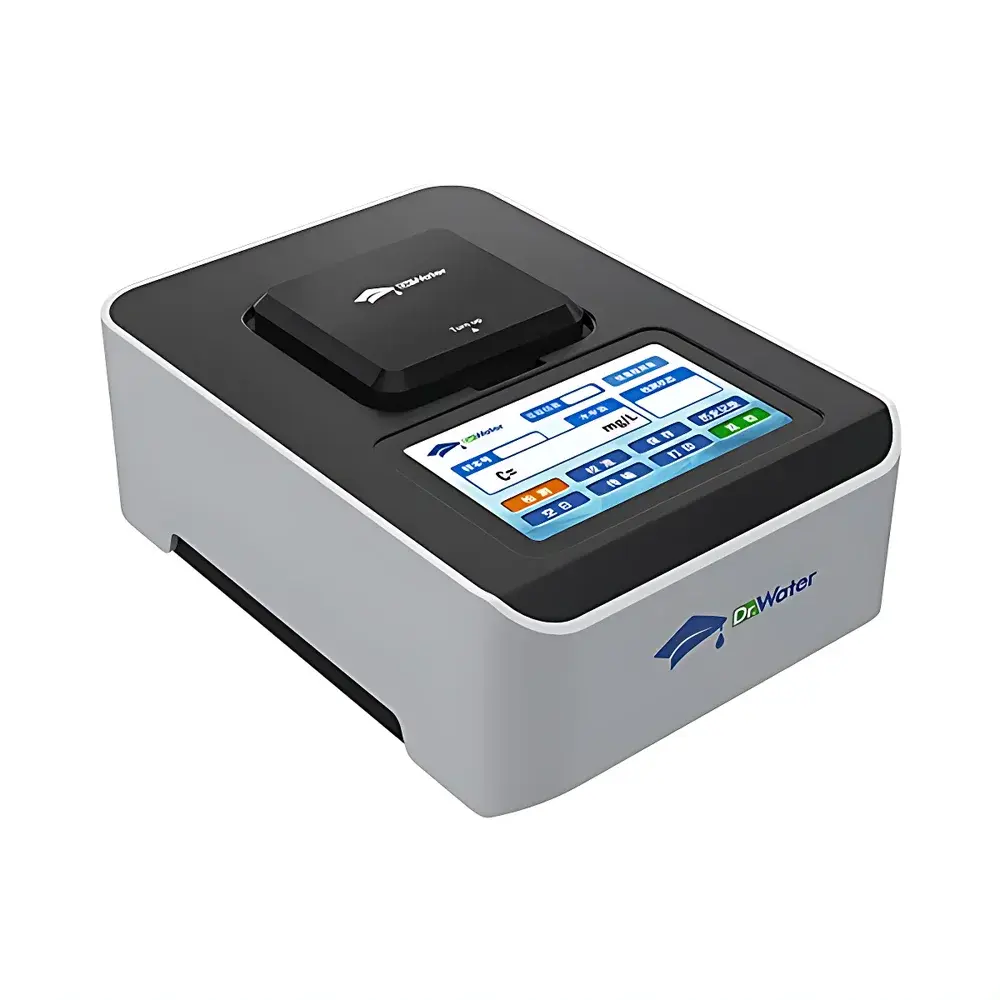
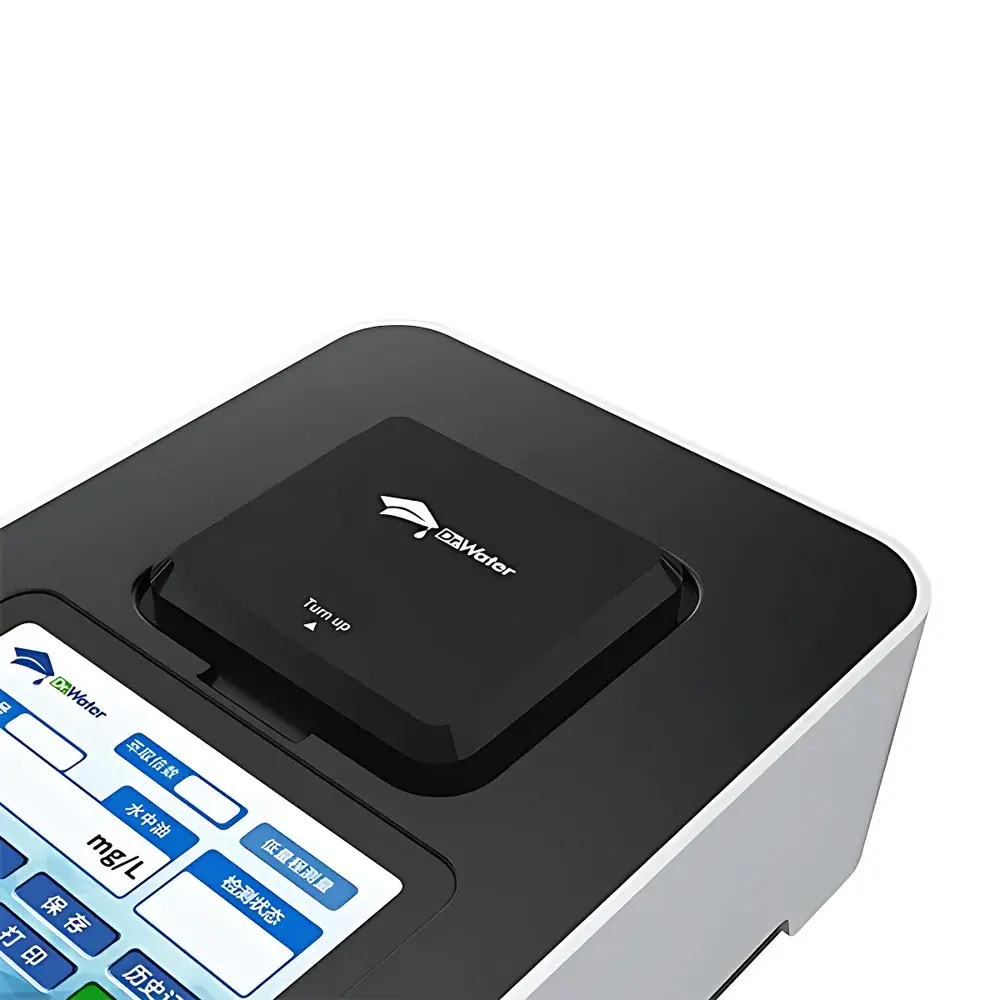
Water Doctor Dr-W5000 Portable Fluorescence-Based Oil-in-Water Analyzer
| Brand | Water Doctor |
|---|---|
| Origin | Hunan, China |
| Model | Dr-W5000 |
| Instrument Type | Portable |
| Measurement Principle | Ultraviolet Fluorescence Spectrometry |
| Measurement Range | 0.005–1500 mg/L (as petroleum hydrocarbons) |
| Detection Limit | 0.005 mg/L |
| Accuracy | ±5% of reading |
| Detector | UV-optimized photomultiplier tube (PMT) with excitation at 254 nm and emission detection at 365 nm |
| Measurement Time | ≤120 seconds per sample |
| Display | 5-inch high-resolution color TFT touchscreen |
| Power Supply | Rechargeable lithium-ion battery (standby >30 days |
| Data Storage | 1,000,000 measurement records with timestamp, sample ID, and calibration history |
| Connectivity | USB 2.0 for data export and firmware update |
| Operating Environment | 5–40 °C, relative humidity <85% RH (non-condensing) |
| Sample Vessel | Dedicated quartz-cuvette-compatible disposable glass tubes (10 mm pathlength) |
| Extraction Solvent | n-Hexane (ASTM D7066-compliant) |
| Auto-Sleep | Activated after 5 minutes of inactivity |
| Built-in Thermal Printer | Yes |
| Color Compensation Algorithm | Real-time spectral correction for chromophoric interference |
| Onboard Calibration Module | User-accessible zero/span and multi-point calibration routines |
| Compliance | Designed to support ASTM D7678, ISO 9377-2, and EPA Method 1664B workflows (extraction-dependent) |
Overview
The Water Doctor Dr-W5000 is a field-deployable, fluorescence-based oil-in-water analyzer engineered for rapid, trace-level quantification of petroleum hydrocarbons in aqueous matrices. It operates on the principle of ultraviolet-induced fluorescence (UVF), where polycyclic aromatic hydrocarbons (PAHs) and aliphatic components in extracted oil emit characteristic fluorescence upon excitation at 254 nm. Emission is captured at 365 nm using a thermally stabilized photomultiplier tube (PMT) detector, delivering high signal-to-noise ratio and minimal matrix interference. Unlike absorbance-based methods, UVF provides superior selectivity for hydrocarbon species over common interferents such as humic substances or turbidity—particularly critical in wastewater, surface water, and industrial effluent analysis. The Dr-W5000 is not a standalone extraction system; it requires prior liquid–liquid extraction using n-hexane (per ASTM D7066 or EPA 1664B), ensuring compatibility with regulatory laboratory protocols while enabling on-site screening prior to confirmatory lab analysis.
Key Features
- Portable architecture with integrated rechargeable lithium-ion battery supporting >30 days standby and ≥8 hours continuous operation—validated for extended field campaigns and emergency response.
- 5-inch capacitive-touch TFT display with intuitive icon-driven interface; supports both Chinese and optional English firmware localization for international deployment.
- Real-time color compensation algorithm dynamically corrects for sample chromaticity, mitigating bias from colored dissolved organic matter (CDOM) without manual dilution or filtration.
- Onboard calibration module enables full user-performed zero, span, and 3-point calibration—eliminating dependency on service visits and maintaining measurement traceability between scheduled maintenance intervals.
- Dedicated optical path design using standardized 10-mm-pathlength glass tubes ensures consistent light transmission and eliminates cell-to-cell variability inherent in reusable cuvettes.
- Built-in thermal printer provides immediate hard-copy output with sample ID, timestamp, concentration, and calibration status—essential for chain-of-custody documentation in regulated environments.
Sample Compatibility & Compliance
The Dr-W5000 is validated for use with n-hexane extracts of water samples containing petroleum hydrocarbons—including crude oil, diesel, gasoline, lubricants, and transformer oils. It complies with the optical detection requirements of ISO 9377-2:2000 (Water quality — Determination of hydrocarbons — Part 2: Method using fluorescence), and aligns with the instrumental detection segment of EPA Method 1664B and ASTM D7066-15. While the instrument itself does not perform extraction, its sensitivity (LOD = 0.005 mg/L) and dynamic range (0.005–1500 mg/L) meet Tier 1 screening thresholds for environmental monitoring programs under national discharge permits and ISO 14001-certified facilities. Its design supports GLP-aligned data integrity: all measurements include embedded metadata (operator ID, calibration epoch, ambient temperature), and internal storage retains full audit trails for up to one million records.
Software & Data Management
Data acquisition and reporting are managed via the embedded WaterDoctor Analytical OS—a deterministic real-time operating system with no background processes or third-party dependencies. Each measurement is timestamped, tagged with operator credentials, and linked to the active calibration profile. Export is performed via USB 2.0 mass-storage mode, generating CSV files compatible with LIMS platforms (e.g., Thermo Fisher SampleManager, LabVantage) and statistical software (Minitab, JMP). Firmware updates are signed and verified to prevent unauthorized modification. No cloud connectivity or remote telemetry is implemented—ensuring data sovereignty and compliance with ITAR-restricted or air-gapped facility requirements.
Applications
The Dr-W5000 serves as a primary field-screening tool across multiple regulated sectors: municipal wastewater treatment plants (influent/effluent monitoring), drinking water intake surveillance, offshore platform runoff assessment, refinery outfall verification, rail yard stormwater compliance, and post-spill remediation verification. It is routinely deployed by environmental consultancies conducting Phase I/II site assessments, university research groups studying hydrocarbon biodegradation kinetics, and national hydrological survey bureaus performing basin-wide oil pollution mapping. Its portability and two-minute assay time make it especially suited for time-critical applications such as leak detection in pipeline right-of-ways, fire training pond monitoring, and marine harbor sediment pore-water screening.
FAQ
Does the Dr-W5000 perform solvent extraction?
No—the instrument measures fluorescence intensity of pre-extracted n-hexane phases only. Users must follow ASTM D7066 or EPA 1664B for sample preparation.
Can it distinguish between mineral oil and biodiesel?
Not inherently—the method responds to fluorescent PAHs and certain aliphatics; compositional differentiation requires GC-MS confirmation.
Is the calibration traceable to NIST standards?
Yes—calibration solutions are prepared from NIST-traceable petroleum hydrocarbon reference materials (e.g., NIST SRM 2781), and the onboard routine logs all standard lot numbers and expiration dates.
What maintenance is required beyond user calibration?
Annual PM includes PMT gain verification, optical path cleaning, and battery health diagnostic—no consumable parts other than disposable sample tubes.
Does it support 21 CFR Part 11 compliance?
It provides electronic signatures, audit trails, and role-based access control; however, full Part 11 validation requires site-specific IQ/OQ/PQ protocols executed by the end user.
Related Products







