
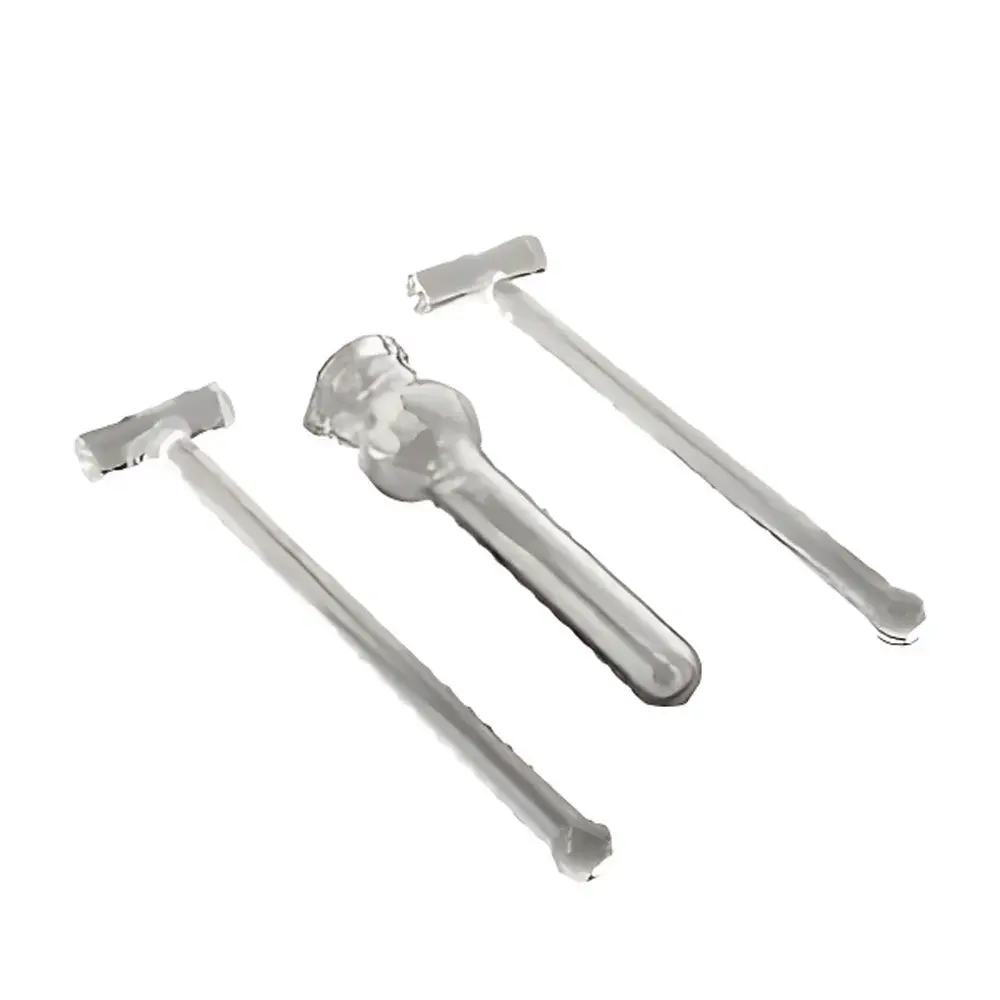
WHEATON Dounce Tissue Homogenizer
| Brand | SOCOREX |
|---|---|
| Origin | USA |
| Manufacturer Type | Authorized Distributor |
| Import Status | Imported |
| Model | Dounce / Dura-Grind |
| Ultrasonic Power | 25 W |
| Operating Frequency | 50 Hz |
| Max Temperature | 100 °C |
| Sample Volume | 1 mL |
| Throughput | 1 sample per run |
| Material (Glass) | Low-extractable borosilicate glass (WHEATON 33) |
| Sterilization | Autoclavable (glass models only) |
| Clearance (Loose Pestle) | 0.089–0.14 mm |
| Clearance (Tight Pestle) | 0.025–0.076 mm |
| Dura-Grind Material | ASTM F138-certified 316 stainless steel |
| Dura-Grind Clearance | 0.013 mm |
| Dura-Grind Chamber | Flat-bottomed, upright-stable design |
Overview
The WHEATON Dounce Tissue Homogenizer is a precision-engineered manual homogenization system designed for gentle yet effective mechanical lysis of soft biological tissues and cultured cells. Based on the classic Dounce principle—utilizing controlled clearance between a cylindrical pestle and a matching glass or stainless-steel cylinder—it generates shear forces sufficient to disrupt cell membranes while preserving subcellular integrity and labile macromolecules such as native proteins, intact RNA, and high-molecular-weight DNA. Unlike ultrasonic or high-pressure methods, this device operates without cavitation, heat generation, or foaming, making it ideal for applications requiring minimal thermal and oxidative stress. The system is widely employed in molecular biology, proteomics, virology, and primary cell isolation workflows where reproducible, low-shear homogenization is critical.
Key Features
- Two-pestle configuration: Each unit includes both a loose-fitting pestle (clearance 0.089–0.14 mm) for initial tissue disaggregation and a tight-fitting pestle (clearance 0.025–0.076 mm) for final cellular disruption—enabling stepwise, controllable lysis.
- WHEATON 33 low-extractable borosilicate glass construction (glass models): Complies with USP Class A requirements; exhibits exceptional chemical resistance, thermal stability (up to 500 °C), and minimal leachables—critical for sensitive downstream assays including qPCR and mass spectrometry.
- Fully autoclavable (121 °C, 15 psi, 20 min): Glass components maintain dimensional stability and surface finish after repeated sterilization cycles—supporting GLP-compliant lab practices.
- Dura-Grind stainless-steel variant: Precision-machined from ASTM F138 316 surgical-grade stainless steel; optimized for viral particle release with ultra-tight 0.013 mm clearance and flat-bottom chamber design enabling stable vertical orientation during use.
- Ergonomic pestle geometry: Tapered handle and balanced weight distribution reduce operator fatigue during repetitive homogenization protocols.
Sample Compatibility & Compliance
The WHEATON Dounce Homogenizer is validated for use with mammalian tissues (e.g., liver, brain, spleen), cultured adherent and suspension cells, plant protoplasts, and bacterial pellets. It is incompatible with fibrous, calcified, or highly viscous samples (e.g., cartilage, bone, collagen gels). Glass models conform to ISO 8536-1 (glass containers for pharmaceutical use) and meet extractables profiling standards per USP . Dura-Grind units comply with ASTM F899 for stainless-steel biomaterials and are suitable for BSL-2 and BSL-3 virology labs under appropriate containment. Neither variant meets FDA 21 CFR Part 11 requirements for electronic records, as the device is analog and non-instrumented.
Software & Data Management
This is a purely mechanical, non-electronic instrument—no embedded firmware, connectivity, or software interface is present. All operational parameters (e.g., stroke count, speed, dwell time) are manually controlled and documented per user-defined SOPs. For traceability in regulated environments, users integrate the device into paper-based or LIMS-linked batch records. Pestle clearance tolerances are verified at time of manufacture using coordinate measuring machine (CMM) metrology and certified per ISO/IEC 17025-accredited calibration reports available upon request.
Applications
- Nuclear isolation and chromatin shearing prior to ChIP-seq
- Preparation of cytosolic extracts for enzyme activity assays
- Isolation of intact mitochondria and synaptosomes from neural tissue
- Viral titer preparation (Dura-Grind variant) for plaque assays and neutralization studies
- RNA extraction from RNase-rich tissues (e.g., pancreas, thymus) where rapid, cold homogenization minimizes degradation
- Generation of single-cell suspensions for flow cytometry and scRNA-seq library prep
FAQ
Can the glass Dounce homogenizer be used with organic solvents such as chloroform or phenol?
Yes—WHEATON 33 borosilicate glass exhibits excellent resistance to most organic solvents; however, prolonged exposure to hydrofluoric acid or strong alkalis (>10 M NaOH) must be avoided.
Is the Dura-Grind model compatible with acidic lysis buffers (e.g., pH 2–3)?
Yes—316 stainless steel provides superior corrosion resistance in low-pH environments compared to 304 grade; verify buffer composition against ASTM G48 ferric chloride testing data for extended use.
How often should pestle clearance be re-verified?
For GLP/GMP workflows, clearance should be confirmed annually via calibrated micrometer or optical interferometry; more frequent checks are recommended if abrasive additives (e.g., silica beads) are co-used.
Why is the Dura-Grind chamber flat-bottomed?
Flat-bottom design ensures stable upright positioning during manual homogenization—eliminating tipping risk and enabling consistent pestle immersion depth across operators and shifts.
Can I substitute a SOCOREX pestle into a non-SOCOREX cylinder?
No—clearance tolerances are pair-specific; cross-manufacturer interchange compromises lysis efficiency and risks glass fracture due to mismatched thermal expansion coefficients.





