
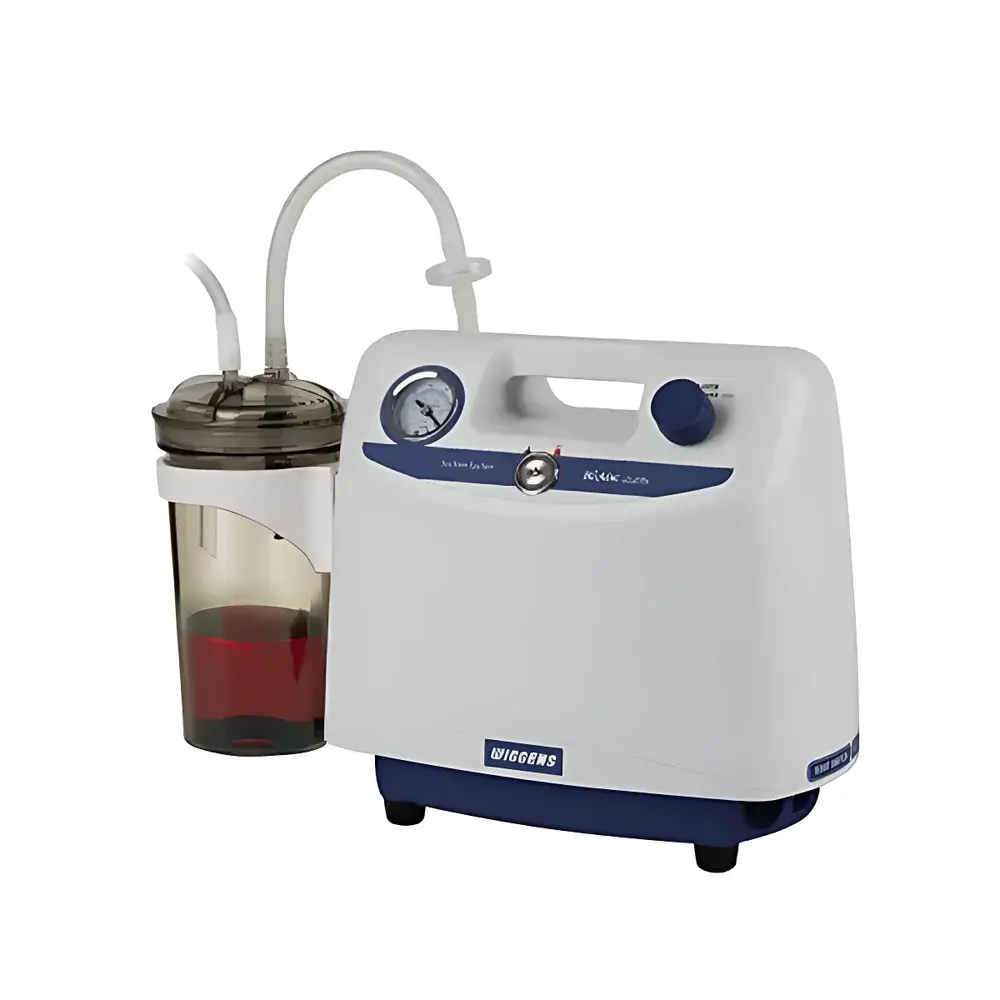
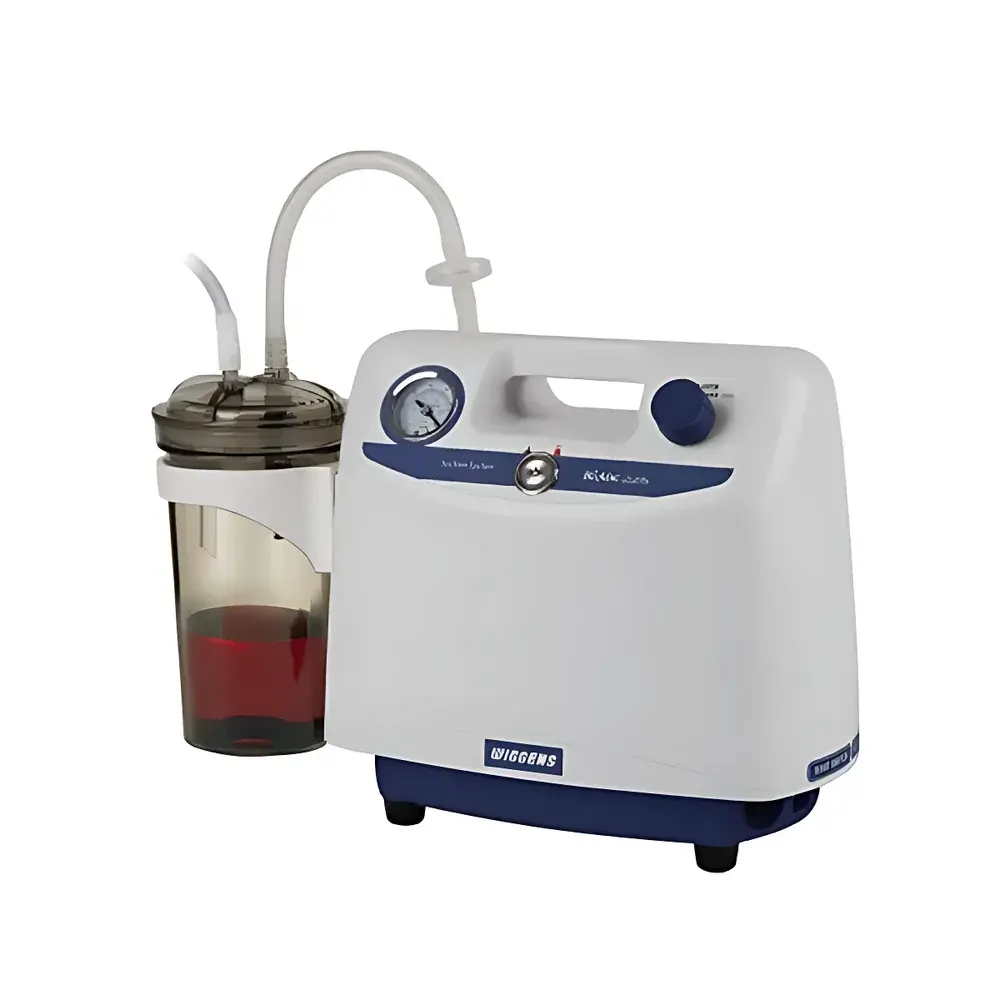
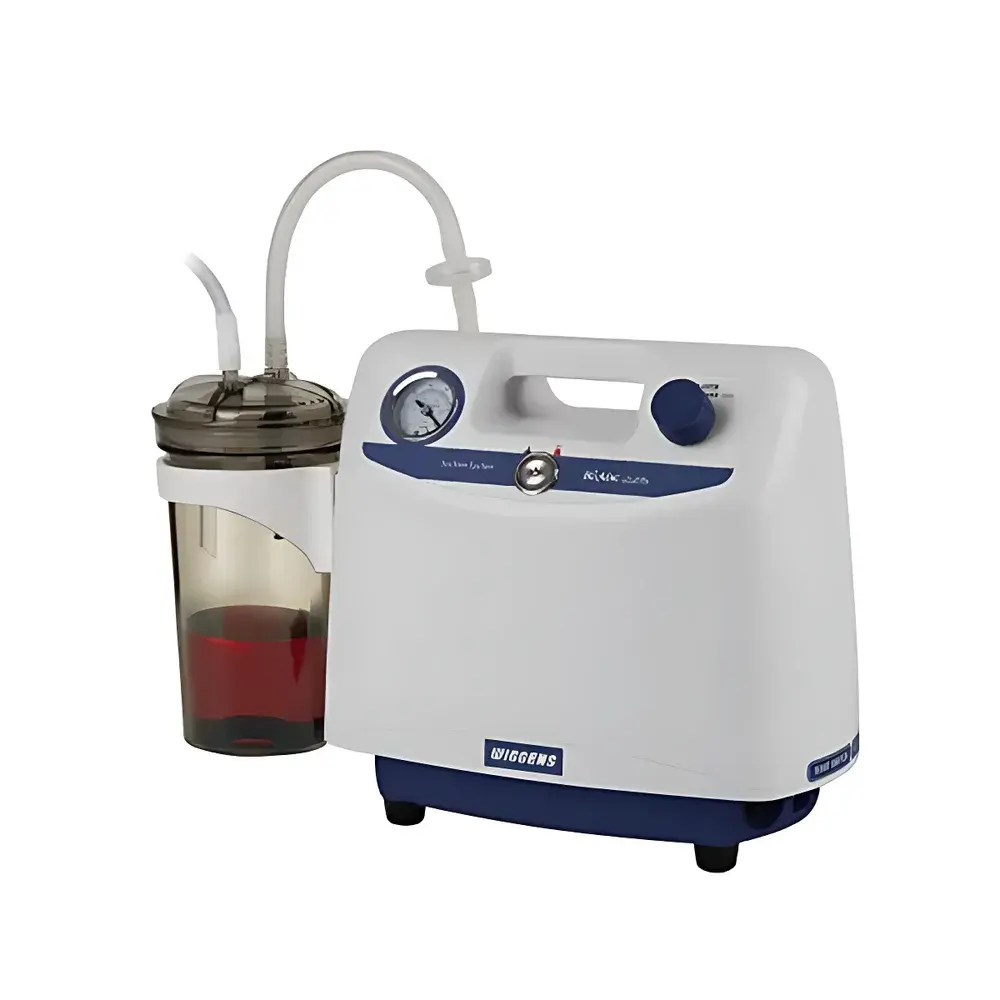
WIGGENS BioVac 225 Portable Liquid Aspiration System
| Brand | WIGGENS |
|---|---|
| Origin | Germany |
| Model | BioVac 225 |
| Vacuum Level | ≥100 mbar |
| Flow Rate | ≤25 L/min |
| Weight | 4.3 kg |
| Dimensions (L×W×H) | 37 × 15 × 25 cm |
| Waste Bottle Capacity | 1000 mL (1 pc) |
| Filtration | 0.2 µm PTFE disc filter |
| Sterilization | Autoclavable (waste bottle & filter) |
| Foot Switch | Included |
| Accessories | 4 suction sets |
Overview
The WIGGENS BioVac 225 Portable Liquid Aspiration System is an engineered solution for controlled, aseptic liquid removal in bioscience laboratories. Designed specifically for post-culture processing—such as spent medium aspiration from cell culture flasks, T-plates, or bioreactor vessels—the system operates on a dry, oil-free vacuum principle. Unlike traditional oil-lubricated pumps, the BioVac 225 employs a maintenance-free diaphragm vacuum pump that eliminates risk of oil contamination, ensures consistent vacuum stability under variable load, and complies with ISO 8573-1 Class 0 air purity requirements for critical biological workflows. Its compact footprint and integrated ergonomic design enable seamless integration into laminar flow hoods, biosafety cabinets (Class II A2/B2), and mobile lab setups without compromising sterility or workspace efficiency.
Key Features
- Oil-free diaphragm vacuum pump: No lubricants required; zero risk of hydrocarbon carryover into vacuum lines or waste stream—essential for sensitive cell cultures and downstream molecular applications.
- Dual-stage overflow protection: Integrated float valve in the 1000 mL autoclavable borosilicate glass waste bottle + upstream 0.2 µm hydrophobic PTFE disc filter prevent liquid ingress into the pump head, ensuring long-term operational integrity.
- Full autoclave compatibility: Both the waste bottle and PTFE filter are rated for repeated sterilization at 121 °C, 15 psi for 20 minutes—fully compliant with GLP and GMP environmental control standards for sterile technique validation.
- Ergonomic operation: Includes a hands-free foot switch for precise start/stop control during delicate aspiration tasks; minimizes cross-contamination risk and improves workflow continuity in high-throughput cell culture labs.
- Quiet performance: Acoustic noise level <52 dB(A) at 1 m distance—engineered for low-disturbance environments including shared core facilities and teaching laboratories.
Sample Compatibility & Compliance
The BioVac 225 is validated for aspiration of aqueous biological fluids including DMEM/F12, PBS, trypsin-EDTA solutions, conditioned media, and low-viscosity suspension cultures (e.g., HEK293, CHO-K1). It is not intended for organic solvents, highly viscous suspensions (>100 cP), or corrosive acids/bases beyond pH 4–10. All wetted components—including tubing connectors, bottle gaskets, and filter housing—are USP Class VI-certified and free of leachable plasticizers. The system meets IEC 61000-6-3 (EMC emission) and IEC 61000-6-2 (immunity) standards. Documentation supports audit readiness per FDA 21 CFR Part 11 when paired with validated electronic logbooks (e.g., LabArchives, Benchling) for aspiration event tracking.
Software & Data Management
As a standalone analog aspiration device, the BioVac 225 does not incorporate embedded firmware or digital interfaces. However, its foot-switch actuation and stable vacuum output are fully compatible with external process logging systems via auxiliary relay outputs (optional add-on module W108-RELAY). Vacuum stability is monitored passively using the built-in analog pressure gauge (±5 mbar accuracy). For regulated environments, users may implement manual SOP-based recordkeeping aligned with ISO/IEC 17025 clause 7.5.2 (control of technical records) or integrate aspiration events into ELN entries with timestamped operator ID and batch context.
Applications
- Cell culture maintenance: Rapid, sterile removal of spent medium prior to subculturing or feeding—reducing handling time by up to 40% versus manual pipetting.
- Transfection and transduction workflows: Gentle aspiration of supernatant after viral vector incubation without disturbing adherent monolayers.
- Primary tissue dissociation: Controlled aspiration of enzymatic digestion supernatants while preserving viable single-cell suspensions.
- Quality control labs: Routine aspiration of QC sample aliquots in pharmaceutical manufacturing cleanrooms (ISO Class 5–7).
- Field-deployable diagnostics: Battery-powered variants (BioVac 225-BT, sold separately) support aspiration in mobile biocontainment units or resource-limited settings.
FAQ
Is the BioVac 225 suitable for aspiration of infectious samples?
Yes—when used with the supplied 0.2 µm PTFE filter and sealed waste bottle, it provides physical containment equivalent to Biosafety Level 2 (BSL-2) aspiration practices per CDC/NIH guidelines.
Can the vacuum level be adjusted?
No—the system delivers fixed vacuum output ≥100 mbar; fine control is achieved via foot-switch modulation and suction tip geometry selection.
What is the expected service life of the pump under continuous use?
Rated for >10,000 hours MTBF (mean time between failures) under typical intermittent lab usage (≤4 hrs/day, 5 days/week) per manufacturer’s accelerated life testing per DIN EN 60068-2-64.
Are replacement filters and bottles available as consumables?
Yes—PTFE disc filters (W108-FIL02) and autoclavable glass bottles (W108-BOT1000) are stocked globally with traceable lot documentation supporting ISO 9001 quality assurance.
Does the system require calibration?
Not routinely—the analog vacuum gauge is factory-calibrated; periodic verification against a NIST-traceable reference manometer is recommended annually per ISO/IEC 17025 Section 6.5.



