
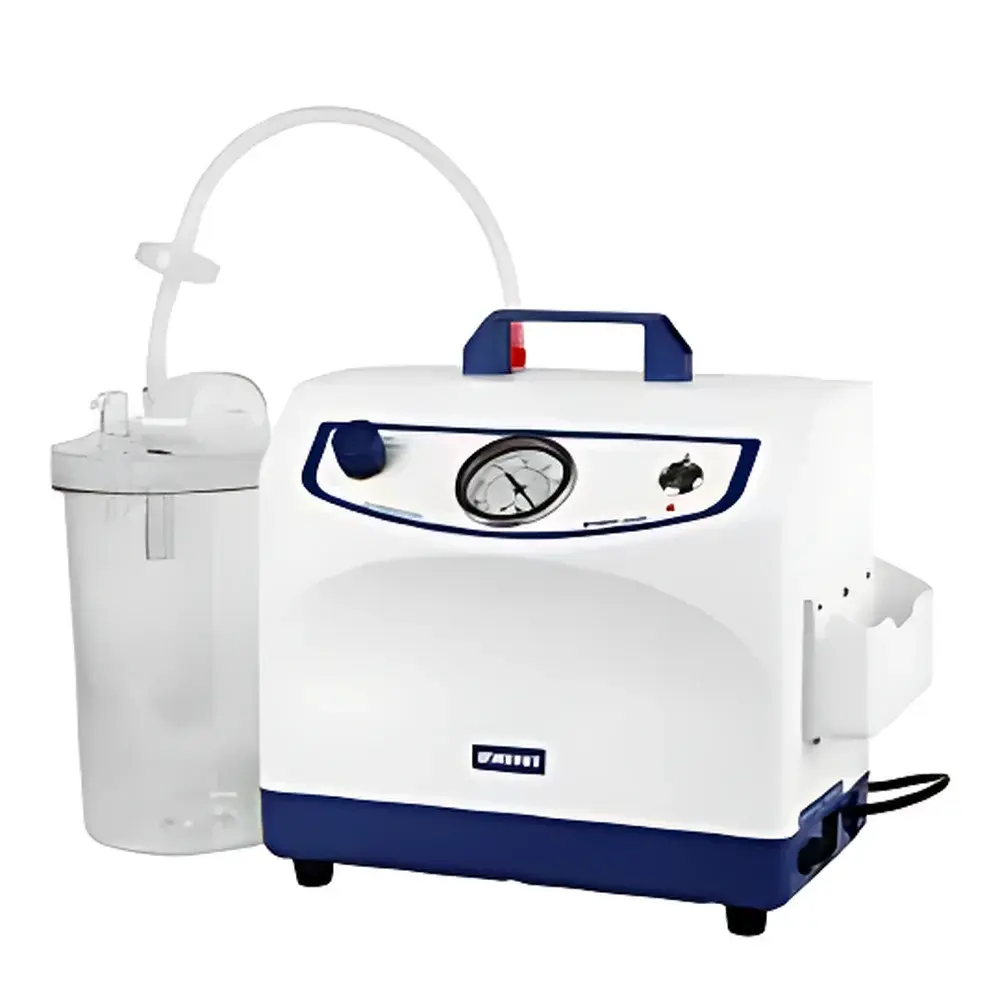
WIGGENS BioVac240 Portable Vacuum Liquid Aspiration System
| Brand | WIGGENS |
|---|---|
| Origin | Germany |
| Model | BioVac240 |
| Ultimate Vacuum | 100 mbar |
| Maximum Flow Rate | 34 L/min |
| Dimensions | 54 × 26 × 35 cm |
| Weight | 12 kg |
| Waste Bottle Capacity | 3000 mL |
| Filtration | 0.2 µm PTFE disc filter |
| Sterilization Compatibility | Autoclavable (121 °C, 20 min) |
| Foot Switch | Included |
| Oil-Free Vacuum Pump | Yes |
Overview
The WIGGENS BioVac240 Portable Vacuum Liquid Aspiration System is an engineered solution for rapid, sterile, and controlled removal of supernatants, culture media, wash buffers, and other aqueous liquids in biosafety cabinets, laminar flow hoods, and benchtop cell culture workflows. Designed around a maintenance-free, oil-free diaphragm vacuum pump, the BioVac240 delivers stable suction performance without risk of oil contamination—critical for aseptic processing, stem cell handling, primary tissue dissociation, and diagnostic sample preparation. Its compact footprint (54 × 26 × 35 cm) and integrated ergonomic design enable seamless integration into confined biosafety environments while maintaining full operational autonomy. The system operates at an ultimate vacuum level of 100 mbar with a maximum volumetric flow rate of 34 L/min, providing sufficient aspiration power for high-throughput liquid decanting without compromising laminar airflow integrity in Class II cabinets.
Key Features
- Oil-free diaphragm vacuum pump: Eliminates lubricant dependency, ensures zero hydrocarbon vapor emission, and reduces long-term maintenance requirements—fully compliant with ISO 8573-1 Class 0 air purity standards for critical biological applications.
- Dual-stage overflow protection: Includes a float-activated shut-off mechanism inside the autoclavable 3000 mL polycarbonate waste bottle and a sterilizable 0.2 µm hydrophobic PTFE disc filter positioned between the bottle and pump head to prevent liquid ingress into the vacuum chamber.
- Full autoclave compatibility: Both the waste bottle and PTFE filter are rated for repeated steam sterilization at 121 °C for 20 minutes under saturated steam conditions per EN 285 and ISO 17665-1, supporting GLP/GMP-aligned workflow validation.
- Ergonomic foot switch control: Enables hands-free operation during sensitive manipulations—particularly valuable during multi-step aspiration protocols in BSCs where glove integrity and operator posture must be preserved.
- Low-noise operation: Acoustic emission <52 dB(A) at 1 m distance, minimizing auditory fatigue in shared laboratory environments and complying with EU Directive 2003/10/EC occupational noise exposure limits.
Sample Compatibility & Compliance
The BioVac240 is validated for use with aqueous solutions, buffered saline, enzymatic digestion mixtures, serum-containing media, and low-viscosity biological suspensions (e.g., PBMC washes, bacterial pellet resuspensions). It is not intended for organic solvents, strong acids/bases, or viscous fluids (>100 mPa·s). All wetted components—including bottle, tubing, and filter housing—are chemically resistant to 70% ethanol, isopropanol, and common disinfectants (e.g., Virkon™, sodium hypochlorite ≤0.5%). Device construction adheres to IEC 61010-1:2010 safety standards for laboratory electrical equipment and carries CE marking under the EU Medical Devices Regulation (MDR 2017/745) Annex XVI classification for non-invasive ancillary equipment used in biological sample handling.
Software & Data Management
The BioVac240 is a standalone electromechanical system with no embedded firmware or digital interface. It requires no software installation, network connectivity, or electronic data logging—making it inherently compatible with laboratories operating under strict cybersecurity policies or FDA 21 CFR Part 11–regulated environments where audit-trail generation is managed externally via procedural documentation. Operational parameters (e.g., run duration, sterilization cycles, filter replacement dates) are recorded manually in lab notebooks or integrated into existing LIMS/QMS platforms using standardized SOP templates.
Applications
- Cell culture maintenance: Rapid aspiration of spent media from adherent monolayers or suspension cultures prior to trypsinization or passaging.
- Tissue processing: Gentle removal of fixatives, cryoprotectants, or embedding reagents during histology specimen preparation.
- Molecular biology workflows: Decanting wash buffers during column-based nucleic acid purification or magnetic bead-based extractions.
- Clinical diagnostics: Safe disposal of residual patient-derived fluids (e.g., centrifuged serum, urine supernatants) under biosafety level 2 (BSL-2) containment.
- Teaching laboratories: Robust, intuitive platform for undergraduate instruction in aseptic technique, vacuum physics, and biosafety principles.
FAQ
Is the BioVac240 suitable for use inside a Class II biosafety cabinet?
Yes—the unit’s dimensions, low acoustic signature, and absence of heat-generating components allow safe placement within the working area of most standard Class II A2 and B2 cabinets without disrupting inward airflow velocity profiles.
Can the PTFE filter be reused after autoclaving?
Yes—provided the filter remains physically intact and shows no signs of discoloration, warping, or hydrophobicity loss after each sterilization cycle; users should inspect filters visually before reuse and replace after a maximum of five autoclave cycles.
What type of tubing is recommended for optimal flow and chemical resistance?
Pharmaceutical-grade silicone or fluoropolymer-reinforced PVC tubing (ID 8 mm, OD 12 mm) is recommended; avoid standard latex or polyethylene tubing due to permeability and compression set issues under continuous vacuum.
Does the system include vacuum regulation capability?
No—the BioVac240 operates at fixed pump speed; variable vacuum control requires external inline needle valves or pressure regulators installed downstream of the waste bottle outlet.
How often should the diaphragm pump be serviced?
None—the oil-free diaphragm pump is sealed and designed for >10,000 hours of continuous operation; periodic visual inspection of pump housing seals and foot switch actuation is advised every six months.



