
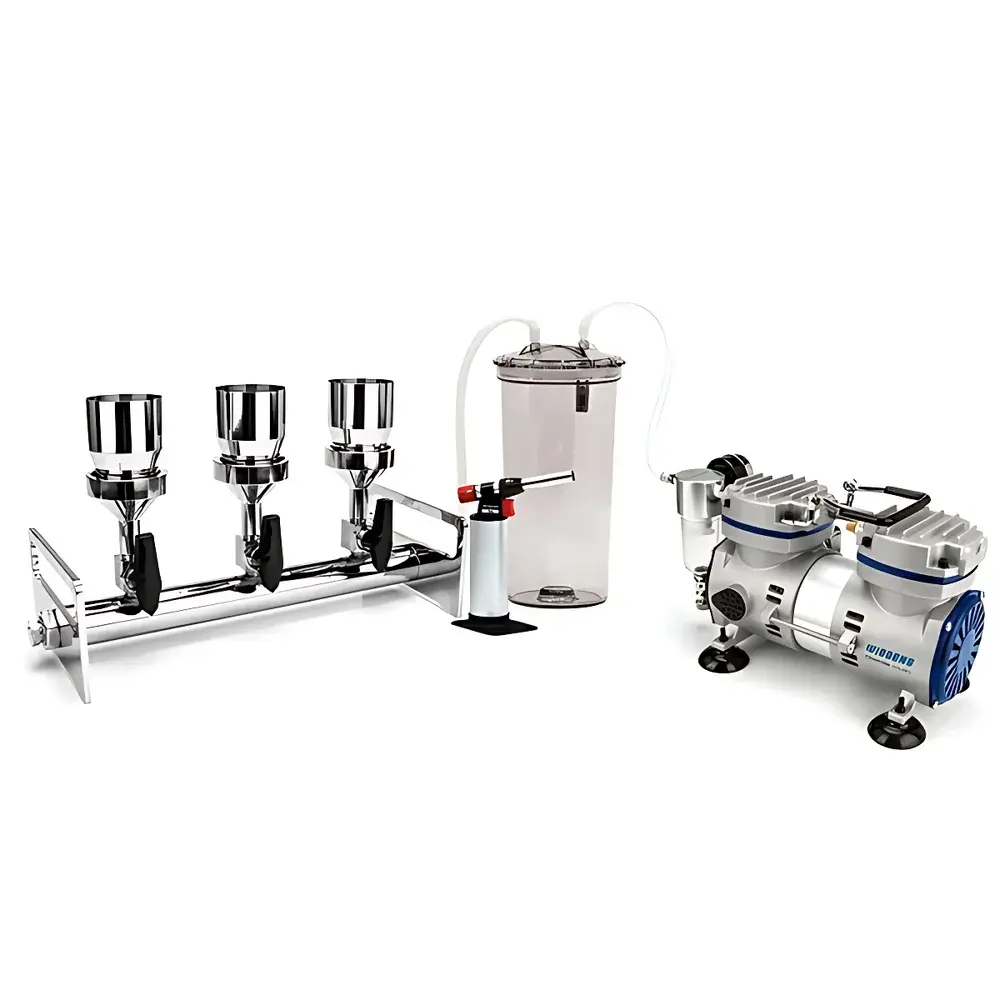
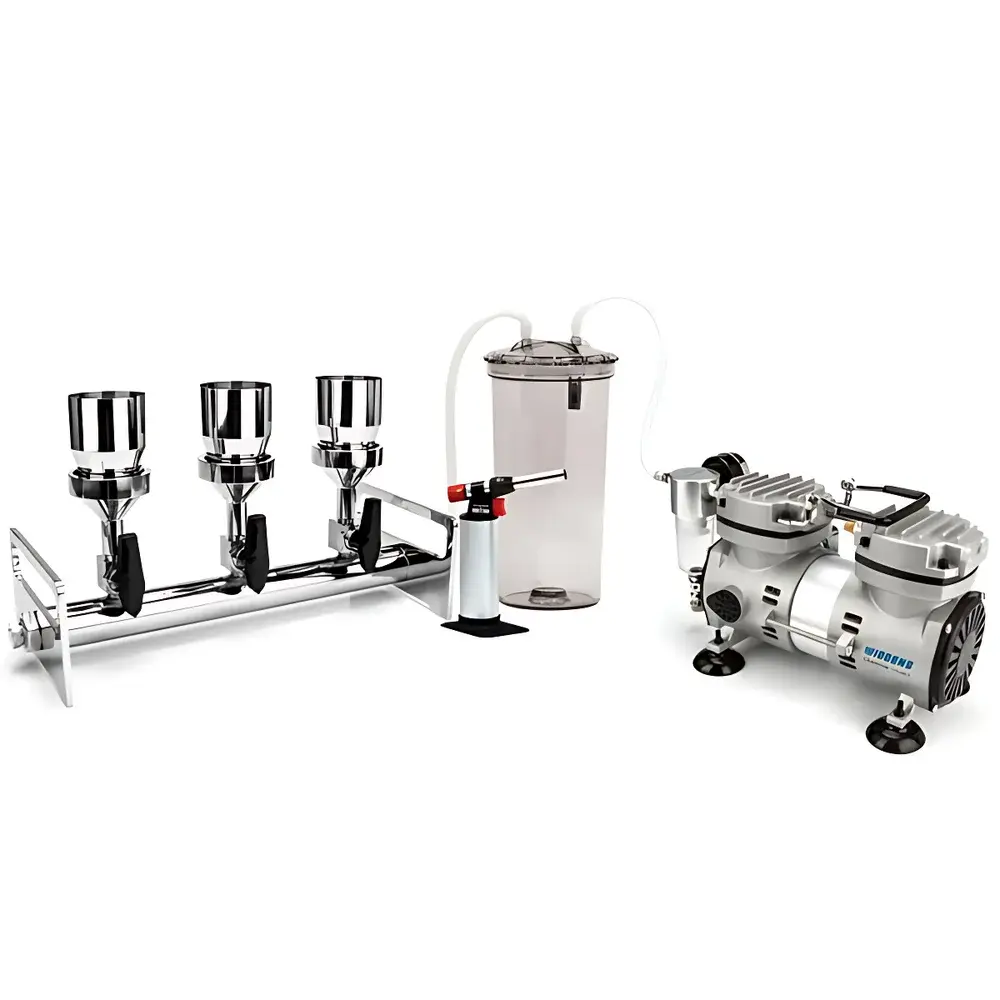
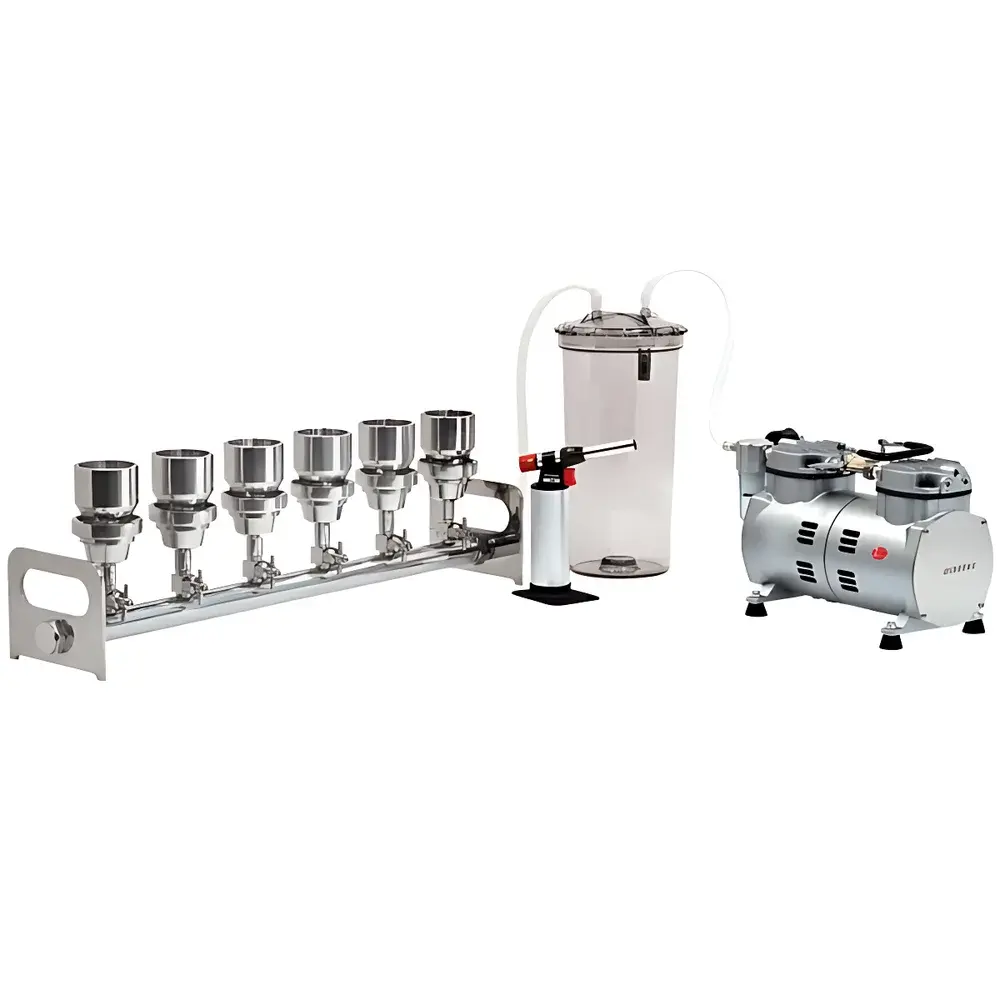
WIGGENS BioVac330B Multi-Position Vacuum Filtration System
| Brand | WIGGENS |
|---|---|
| Origin | Germany |
| Pump Type | Oil-Free Piston Vacuum Pump |
| Model | BioVac330B |
| Air Flow Rate | 34 mL/min |
| Ultimate Vacuum | ≤150 mbar |
| External Dimensions | 572 × 142 × 165 mm |
| Weight | 8 kg |
| Motor Power | 60 W |
| Filtration Positions | 3 |
| Filter Holder Material | SS316 Stainless Steel |
| Compatible Filter Diameters | 47 mm / 50 mm |
| Collection Flask Capacity | 3000 mL (Polycarbonate) |
| Filter Cup Options | 100 mL stainless steel |
| Effective Filtration Area | 9.6 cm² |
| Tubing ID | 8 mm |
| Catalog Number | 167403 |
Overview
The WIGGENS BioVac330B Multi-Position Vacuum Filtration System is an engineered solution for high-integrity, repeatable vacuum-assisted filtration in regulated and research-intensive laboratory environments. Designed around a robust oil-free piston vacuum pump, the system delivers stable vacuum pressure up to 150 mbar with a controlled flow rate of 34 mL/min—optimized for gentle yet efficient particulate capture across biological, pharmaceutical, and chemical applications. Unlike diaphragm or rotary vane alternatives, the piston architecture ensures consistent suction force without oil contamination risk, making it suitable for sterile processing, endotoxin-sensitive workflows, and GLP-compliant sample preparation. The system integrates seamlessly into modular lab setups, supporting both routine QC testing and exploratory research where reproducibility, material compatibility, and ease of sterilization are critical.
Key Features
- SS316 stainless steel filtration manifold: Triple-position filter holder constructed entirely from electropolished 316 stainless steel—resistant to autoclaving (121°C, 20 min), steam sterilization, and aggressive solvents including ethanol, acetone, and dilute acids.
- Individual port isolation: Each of the three filtration positions features independent on/off control via integrated ball valves, enabling parallel processing of heterogeneous samples without cross-contamination or pressure imbalance.
- Tool-free assembly: Twist-lock coupling mechanism secures filter cups and flasks rapidly; no clamps, screws, or external fixtures required—reducing setup time and operator variability.
- Modular compatibility: Accepts standard 47 mm and 50 mm diameter membranes (e.g., mixed cellulose ester, PTFE, PVDF) and accommodates interchangeable collection vessels—including 3000 mL polycarbonate flasks rated for vacuum service and impact resistance.
- Integrated pump architecture: Compact, low-noise (≤52 dB[A]) oil-free piston pump with thermal overload protection, brushless DC motor, and IP20-rated enclosure for benchtop deployment in shared laboratory spaces.
Sample Compatibility & Compliance
The BioVac330B supports filtration of aqueous suspensions, microbial cultures, cell lysates, buffer solutions, and organic solvent mixtures—provided vapor pressure and chemical compatibility are verified per membrane and flask specifications. Its all-metal wetted path complies with USP , ISO 10993-1 (biocompatibility), and FDA 21 CFR Part 11 requirements when paired with audit-trail-enabled software (e.g., WIGGENS LabControl Suite). The system meets IEC 61000-6-3 (EMC emissions) and IEC 61010-1 (safety) standards. For sterility assurance, SS316 components withstand repeated autoclave cycles per ISO 17665-1, while polycarbonate flasks are validated for gamma irradiation (25 kGy) upon request.
Software & Data Management
While the BioVac330B operates as a standalone hardware platform, it is fully compatible with WIGGENS LabControl Suite (v3.2+), a Windows-based application that enables remote pump parameter logging, vacuum stability monitoring, runtime tracking, and electronic batch record generation. When configured with optional RS-232 or USB-to-serial interface modules, the system supports 21 CFR Part 11–compliant user authentication, electronic signatures, and immutable audit trails—including timestamps for start/stop events, vacuum deviation alerts, and maintenance log entries. Data export formats include CSV, PDF, and XML for integration into LIMS or ELN platforms.
Applications
- Microbiological analysis: Membrane filtration of water, beverages, and pharmaceutical raw materials per ISO 9308-1, ASTM D5673, and USP /.
- Cell culture harvest: Clarification of mammalian or microbial fermentation broths using low-protein-binding MCE or PVDF membranes.
- Environmental testing: Solid-phase extraction (SPE) pre-concentration and suspended solids quantification in wastewater effluent per EPA Method 160.1.
- Quality control laboratories: Routine particulate testing of injectables, ophthalmic solutions, and parenteral packaging components under USP and Ph. Eur. 2.9.19.
- Chemical synthesis workups: Solvent-resistant filtration of Grignard reagents, organolithium intermediates, and catalyst recovery steps—when paired with chemically inert PTFE membranes.
FAQ
Is the BioVac330B suitable for use with organic solvents?
Yes—provided the selected filter membrane and collection flask are chemically compatible. Polycarbonate flasks are not recommended for chlorinated or aromatic hydrocarbons; alternative borosilicate glass flasks (e.g., catalog #167120-31) may be substituted.
Can the system be validated for GMP environments?
Yes. IQ/OQ documentation packages are available upon request, including calibration certificates traceable to NIST standards, vacuum linearity verification, and leak integrity test protocols per ASTM E493.
What maintenance is required for the oil-free piston pump?
No oil changes are needed. Recommended preventive maintenance includes annual inspection of piston seals and intake filters; typical service interval exceeds 10,000 operating hours under continuous duty.
Does the BioVac330B support regulatory audit trails?
When used with LabControl Suite and appropriate interface hardware, full 21 CFR Part 11 compliance—including role-based access, electronic signatures, and tamper-evident data logs—is achievable.
How does the twist-lock filtration manifold compare to traditional clamp-based systems?
The twist-lock design eliminates torque-dependent sealing variability, reduces operator-induced stress on glassware, and accelerates setup/teardown by >60% versus conventional clamp assemblies—validated in internal ergonomics studies across 12 academic and industrial labs.



