
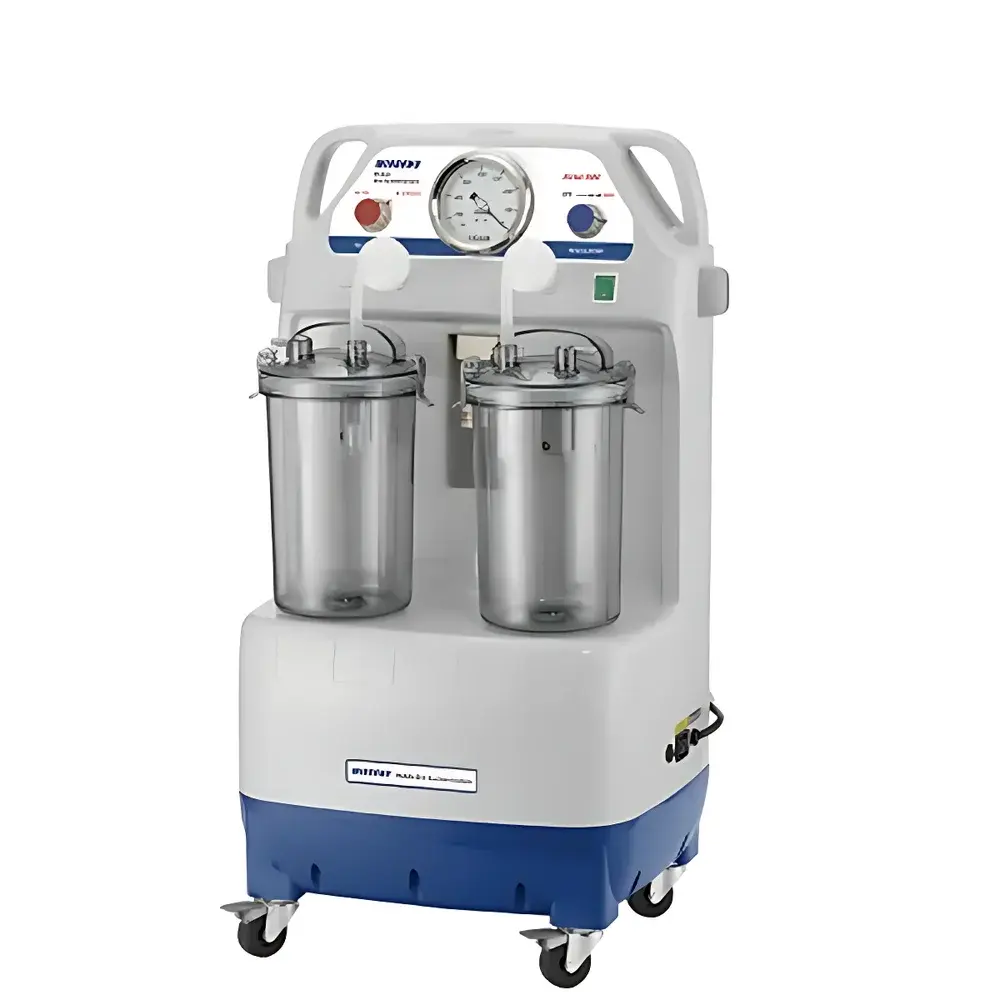
WIGGENS Biovac350A Mobile Liquid Aspiration System
| Brand | WIGGENS |
|---|---|
| Origin | Germany |
| Model | Biovac350A |
| Vacuum Type | Piston Pump |
| Power | 250 W |
| Ultimate Vacuum | ≥60 mbar |
| Maximum Flow Rate | ≤80 L/min |
| Weight | 19.5 kg |
| Dimensions (W×D×H) | 45 × 35 × 84 cm |
| Collection Bottles | Two 3000 mL PC bottles (series-connected) |
| Filtration | 0.2 µm PTFE disc filter |
| Safety Features | Liquid-level float switch in bottle, autoclavable components |
| Mobility | Casters with brakes |
| Control | Foot switch |
| Vacuum Gauge | Analog display |
| Maintenance | Oil-free operation |
Overview
The WIGGENS Biovac350A Mobile Liquid Aspiration System is an engineered solution for sterile liquid handling in biosafety cabinets, laminar flow hoods, and cell culture laboratories. Designed around a maintenance-free oil-free piston vacuum pump, the system delivers consistent aspiration performance while eliminating the risk of oil contamination—a critical requirement in sensitive biological workflows such as spent media removal, supernatant decanting, and post-culture harvest. Its robust mechanical architecture supports continuous operation under variable load conditions, with a rated ultimate vacuum of ≥60 mbar and a maximum volumetric flow rate of ≤80 L/min—sufficient for rapid evacuation across dual 3000 mL polycarbonate (PC) collection vessels connected in series. The unit’s compact footprint (45 × 35 × 84 cm) and integrated braking casters ensure stable repositioning between workstations without compromising ergonomic access or containment integrity.
Key Features
- Oil-free piston vacuum pump: Eliminates lubricant degradation, vapor backstreaming, and routine oil changes—ensuring long-term reliability and compliance with ISO 14644-1 Class 5 cleanroom-compatible environments.
- Dual-series 3000 mL PC waste bottles: Chemically resistant, impact-tough polycarbonate construction; compatible with autoclaving at 121°C, 2 bar for terminal sterilization per ISO 17665-1.
- Integrated 0.2 µm hydrophobic PTFE disc filter: Positioned between the collection train and vacuum pump to prevent aerosol ingress and liquid carryover—validated for bacterial retention per ASTM F838-22.
- Float-activated level cutoff: Mechanical float switch inside the primary bottle triggers automatic pump shutoff upon reaching 95% fill capacity, preventing overflow-induced pump damage or cross-contamination.
- Ergonomic foot switch control: Enables hands-free activation during aseptic procedures—reducing glove contact with non-sterile surfaces and supporting ALARA (As Low As Reasonably Achievable) workflow principles.
- Analog vacuum gauge: Provides real-time visual feedback on system pressure; calibrated traceably to NIST standards for reproducible process monitoring.
- Braking caster assembly: Locking wheels facilitate secure placement adjacent to biosafety cabinets (BSCs), minimizing vibration transmission and maintaining laminar airflow stability.
Sample Compatibility & Compliance
The Biovac350A is validated for use with aqueous buffers, cell culture media, enzymatic digestates, and low-viscosity biological supernatants (viscosity < 10 mPa·s). It is not intended for solvents, corrosive acids/bases, or high-suspended-solids slurries exceeding 5% w/v. All wetted parts—including PC bottles, silicone tubing (included), and PTFE filter housing—are compliant with USP Class VI biocompatibility testing. The system meets CE marking requirements under Directive 2014/30/EU (EMC) and 2014/35/EU (LVD), and its electrical safety conforms to IEC 61010-1:2010 for laboratory equipment. For GLP/GMP environments, the analog vacuum gauge supports manual log entry, and the foot-switch actuation enables audit-trail-compatible procedural documentation when paired with electronic lab notebooks (ELNs).
Software & Data Management
The Biovac350A operates as a standalone hardware platform without embedded firmware or digital connectivity. This design prioritizes electromagnetic compatibility (EMC) in proximity to sensitive instrumentation (e.g., microscopes, electrophysiology rigs) and avoids cybersecurity vulnerabilities associated with networked lab devices. Process parameters—including operational duration, cycle count, and observed vacuum stability—are manually recorded via the analog gauge and standard lab notebooks. For regulated settings requiring electronic data capture, integration with third-party environmental monitoring systems (e.g., Vaisala viewLinc, Siemens Desigo) is achievable through optional 4–20 mA analog output modules (sold separately), enabling trend analysis of vacuum decay profiles over time.
Applications
- Cell culture maintenance: Rapid aspiration of spent DMEM/FBS media from T-flasks, roller bottles, and multilayer cell factories without disrupting monolayers.
- Tissue dissociation workflows: Removal of trypsin-EDTA or collagenase solutions post-incubation, minimizing enzymatic over-digestion.
- Microbiology: Harvesting bacterial pellets from centrifugation supernatants under BSC containment.
- Transfection and transduction support: Gentle aspiration of transfection reagent-containing media prior to replacement with fresh growth medium.
- Quality control labs: Routine cleaning of pipette tips, reservoirs, and reusable glassware in ISO-certified cleanrooms.
FAQ
Is the Biovac350A suitable for use inside a Class II Biosafety Cabinet?
Yes—the unit’s oil-free pump design, low acoustic emission (<52 dB(A)), and caster-based mobility allow safe deployment within the working area of most Class II A2 and B2 cabinets without compromising inflow velocity or containment.
Can the PTFE filter and PC bottles be sterilized in an autoclave?
Yes—both the 0.2 µm PTFE disc filter and the 3000 mL polycarbonate bottles are rated for repeated autoclaving at 121°C, 2 bar for 20 minutes. Verify seal integrity and filter mounting torque after each cycle.
What maintenance intervals are recommended?
No scheduled maintenance is required beyond visual inspection of tubing integrity, periodic cleaning of the float switch mechanism with 70% ethanol, and verification of brake function on casters every 6 months.
Does the system comply with FDA 21 CFR Part 11 requirements?
As a non-networked, analog-controlled device, the Biovac350A does not generate electronic records and therefore falls outside the scope of 21 CFR Part 11. Its operation remains fully compatible with Part 11-compliant ELN or LIMS environments when used with manual data entry protocols.



