
WIGGENS CS-1 Remote Waterproof Stirrer Controller
| Brand | WIGGENS |
|---|---|
| Origin | Germany |
| Model | CS-1 / CB-1 / CS-4 / CB-4 |
| Motor Type | DC Motor |
| Speed Range | 100–1500 rpm |
| Operating Temperature | 0–60 °C |
| Housing Material | Polypropylene (PP) |
| IP Rating | IP67 (fully waterproof & chemical-resistant) |
| Max. Viscosity Handling | Suitable for low-to-medium viscosity liquids (e.g., aqueous solutions, buffers, organic solvents) |
| Control Interface | Analog rotary knob (CS-1/CB-1) |
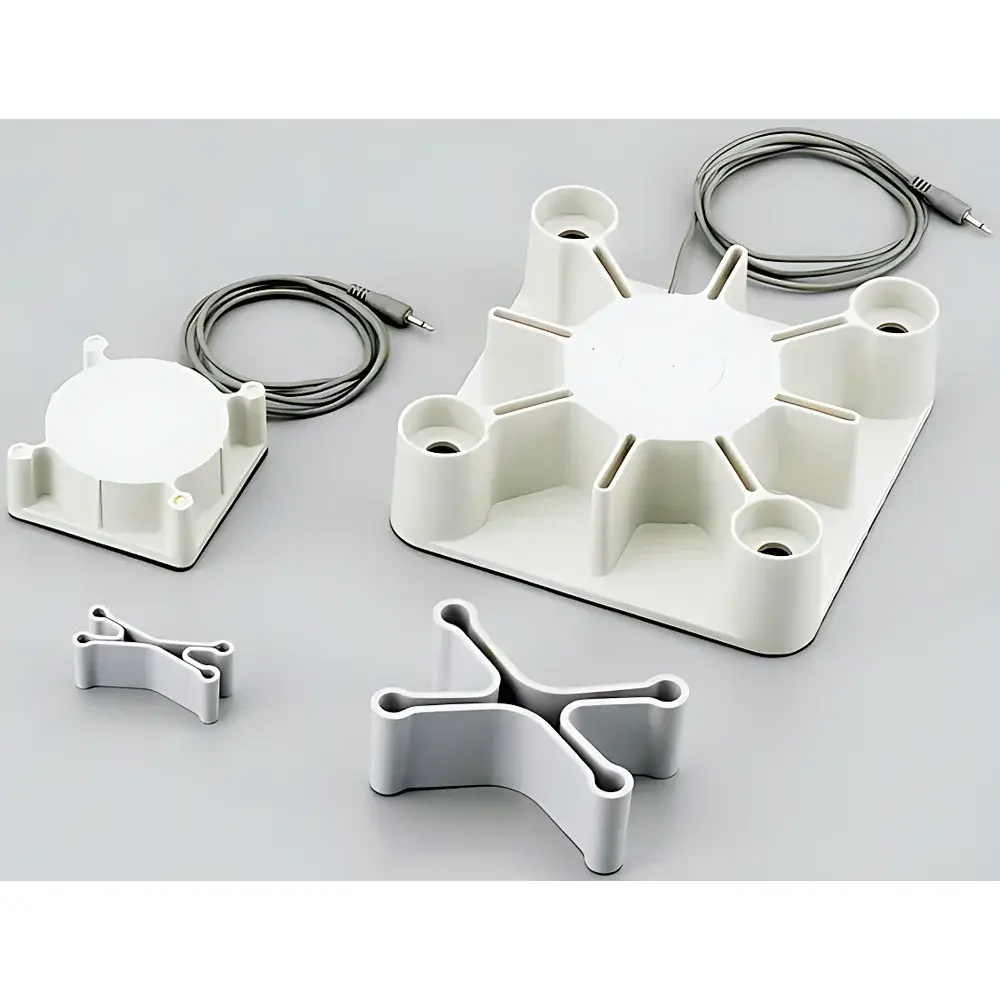
| Cable Length | 1 m with 2.5 mm mini-jack connector |
| Compatibility | Designed exclusively for WIGGENS S-1 and B-1 series submersible stirrers |
| Dimensions (CS-1) | 95 × 158 × 56 mm |
| Dimensions (Controller Housing, e.g., CS-1 base unit) | 70 × 70 × 28 mm |
| Certifications | CE, RoHS, ISO 9001-manufactured supply chain |
Overview
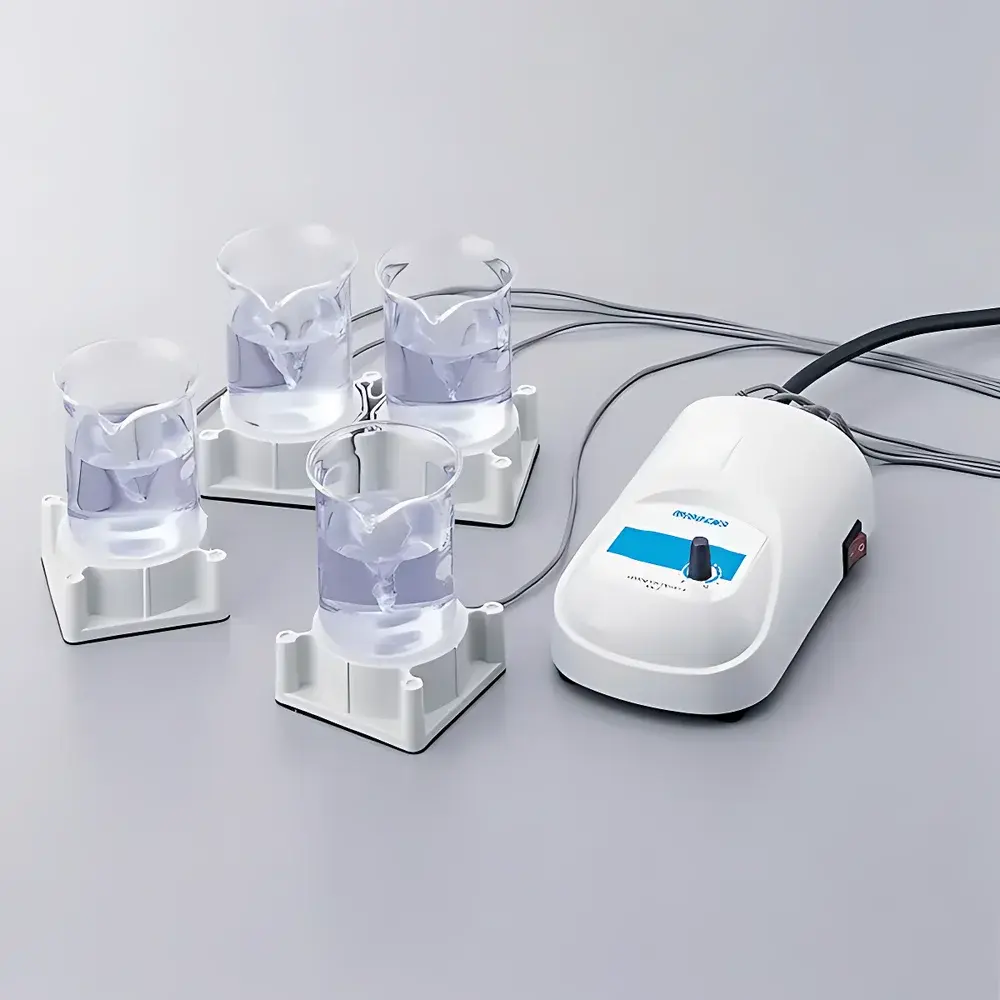
The WIGGENS CS-1 Remote Waterproof Stirrer Controller is an engineered solution for precise, hands-free speed regulation of submersible magnetic stirrers in demanding laboratory environments—particularly where direct operator access is restricted or environmental integrity must be preserved. Unlike conventional benchtop controllers, the CS-1 employs a fully separated architecture: the control unit remains outside the process zone while the stirrer head operates submerged in water baths, humidity-controlled incubators, or sealed reaction vessels. Its core functionality relies on analog signal transmission via a shielded 1 m cable terminating in a standardized 2.5 mm mini-jack interface—ensuring reliable, noise-immune communication with WIGGENS S-1 series stirrers. The controller utilizes a high-tolerance DC motor drive system, delivering stable rotational output across its full 100–1500 rpm range with minimal speed drift (<±2 rpm at setpoint under constant load). This stability is critical for applications requiring reproducible mixing kinetics, such as dissolution testing, enzymatic assays, or temperature-dependent solubility studies conducted within thermostatic enclosures.
Key Features
- IP67-rated polypropylene housing—resistant to water immersion, condensation, and common laboratory chemicals including dilute acids, bases, and alcohols
- Operating temperature range of 0–60 °C—validated for continuous use inside humidified chambers and water baths
- Analog rotary speed adjustment with tactile feedback and calibrated scale markings for repeatable setpoint recall
- Electromagnetic compatibility (EMC) compliant design—minimizes interference with adjacent analytical instrumentation (e.g., pH meters, balances, spectrophotometers)
- Modular compatibility: CS-1 pairs with S-1 stirrer heads; CB-1 with B-1 series—ensuring optimal torque matching and thermal management
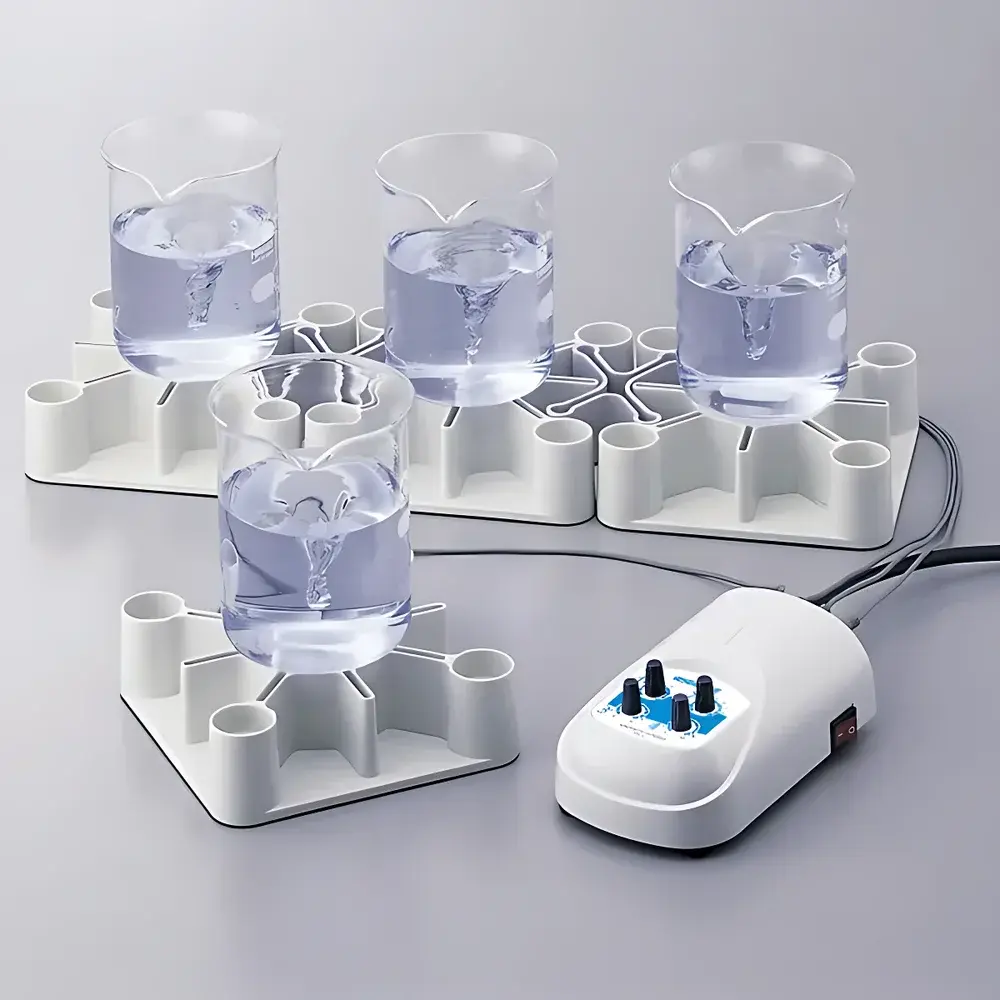
- Optional multi-unit configurations: CS-4 and CB-4 models support synchronized or independently programmed control of up to four stirrers from a single interface
Sample Compatibility & Compliance
The CS-1 controller is validated for use with low- to medium-viscosity liquid samples ranging from 10 mL (micro-reaction vials) to 3000 mL (standard lab beakers and jacketed reactors). It maintains consistent agitation performance across aqueous, polar organic (e.g., ethanol, acetone), and buffered systems—provided the coupled stir bar exhibits appropriate geometry and magnetic coupling strength. From a regulatory standpoint, the device conforms to IEC 61000-6-2 (immunity) and IEC 61000-6-3 (emissions) standards. While not a GLP/GMP-certified instrument per se, its robust construction, traceable calibration history (via manufacturer documentation), and stable analog control loop support audit-ready workflows in quality-controlled labs operating under ISO/IEC 17025 or FDA 21 CFR Part 11-aligned data governance frameworks.
Software & Data Management
The CS-1 operates as a standalone analog controller without embedded firmware or digital connectivity. As such, it does not generate electronic records, require software drivers, or support USB/Ethernet interfaces. This architecture eliminates cybersecurity vulnerabilities, reduces validation overhead, and ensures uninterrupted operation during long-duration experiments (e.g., 72-hour stability studies). For labs requiring documented speed parameters, manual logging against time-stamped experiment entries remains the recommended practice. When integrated with WIGGENS WTherm-series transparent thermostatic baths (e.g., WTherm-13A/M), the CS-1 enables coordinated temperature–agitation protocols—facilitating compliance with USP dissolution apparatus calibration guidelines and ASTM E2915-22 for mechanical stability assessment of stirred systems.
Applications
- Controlled-rate mixing in water baths during calorimetry or phase-transition studies
- Long-term homogenization of cell culture media in humidified CO2 incubators
- Dissolution testing per USP Apparatus II (paddle) verification using submerged stirrer-based alternatives
- Reagent preparation under inert atmosphere gloveboxes—where external controller placement prevents seal compromise
- Teaching laboratories requiring durable, low-maintenance stirring infrastructure for undergraduate chemistry and biology curricula
- Environmental testing chambers simulating tropical or marine conditions (high RH, elevated ambient temperature)
FAQ
Is the CS-1 compatible with non-WIGGENS stirrers?
No—the CS-1 is electrically and mechanically optimized for WIGGENS S-1 and B-1 series stirrer heads. Interchangeability with third-party units is not supported due to proprietary voltage/current profiles and connector pinout.
Can the CS-1 be mounted directly inside a water bath?
No—the controller unit itself must remain external to wet environments. Only the stirrer head (e.g., S-1B-1) is rated for submersion. The CS-1’s IP67 rating applies to incidental splashing or condensation—not continuous immersion.
What maintenance is required?
None beyond periodic visual inspection of the housing for cracks and cleaning of the rotary knob with isopropyl alcohol. No lubrication, recalibration, or firmware updates are necessary over its operational lifetime.
Does the CS-1 support programmable ramping or timer functions?
No—it provides only manual, real-time speed adjustment. For time-dependent protocols, external timing devices or integrated bath controllers (e.g., WTherm-19M) must be used in parallel.
How is speed accuracy verified?
Using a non-contact optical tachometer referenced against the manufacturer’s published calibration certificate (supplied with each unit). Deviation tolerance is ±1.5% of full scale at 23 °C ambient.



