
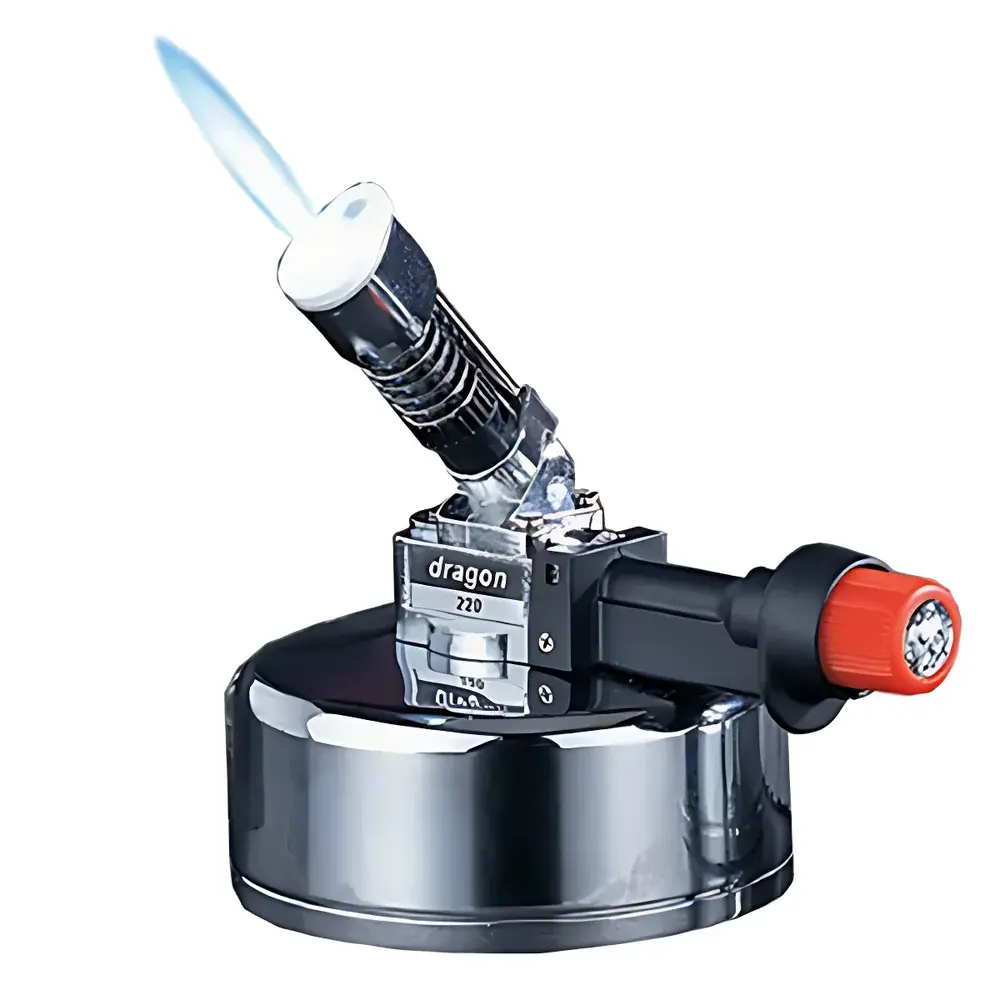
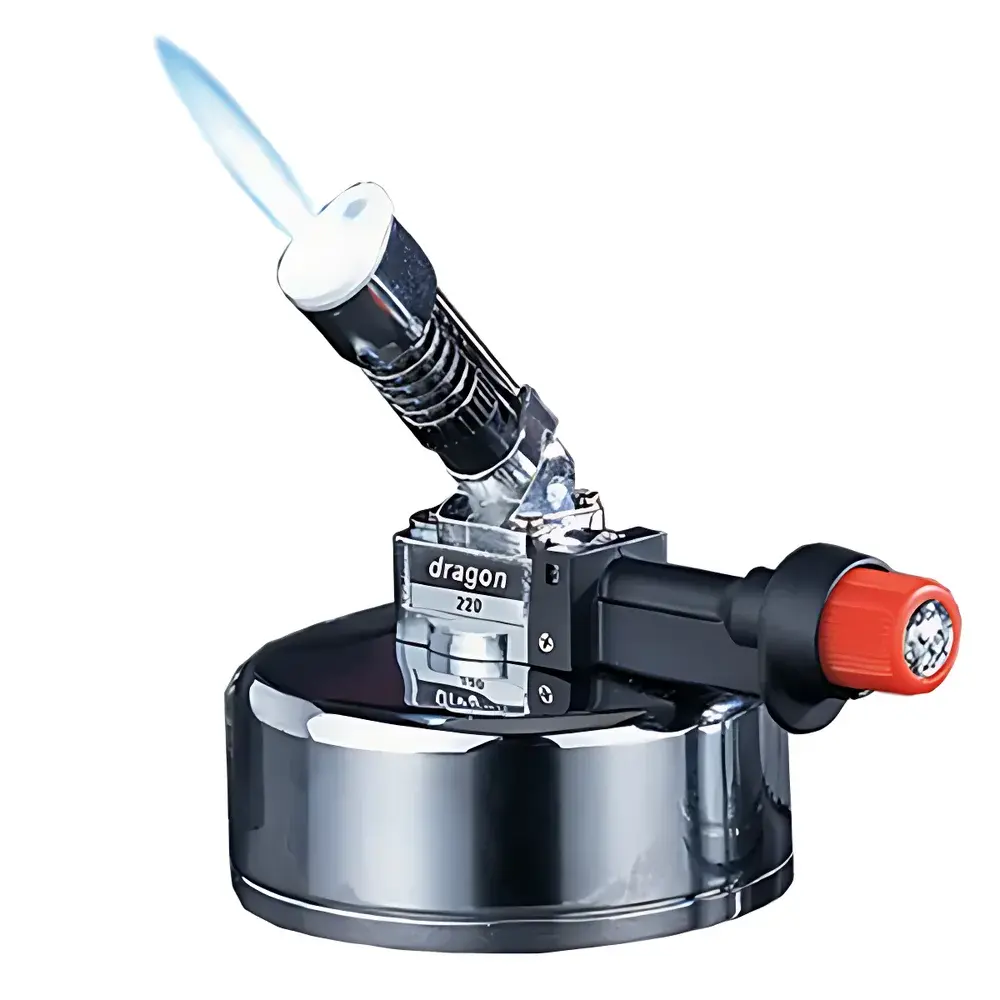
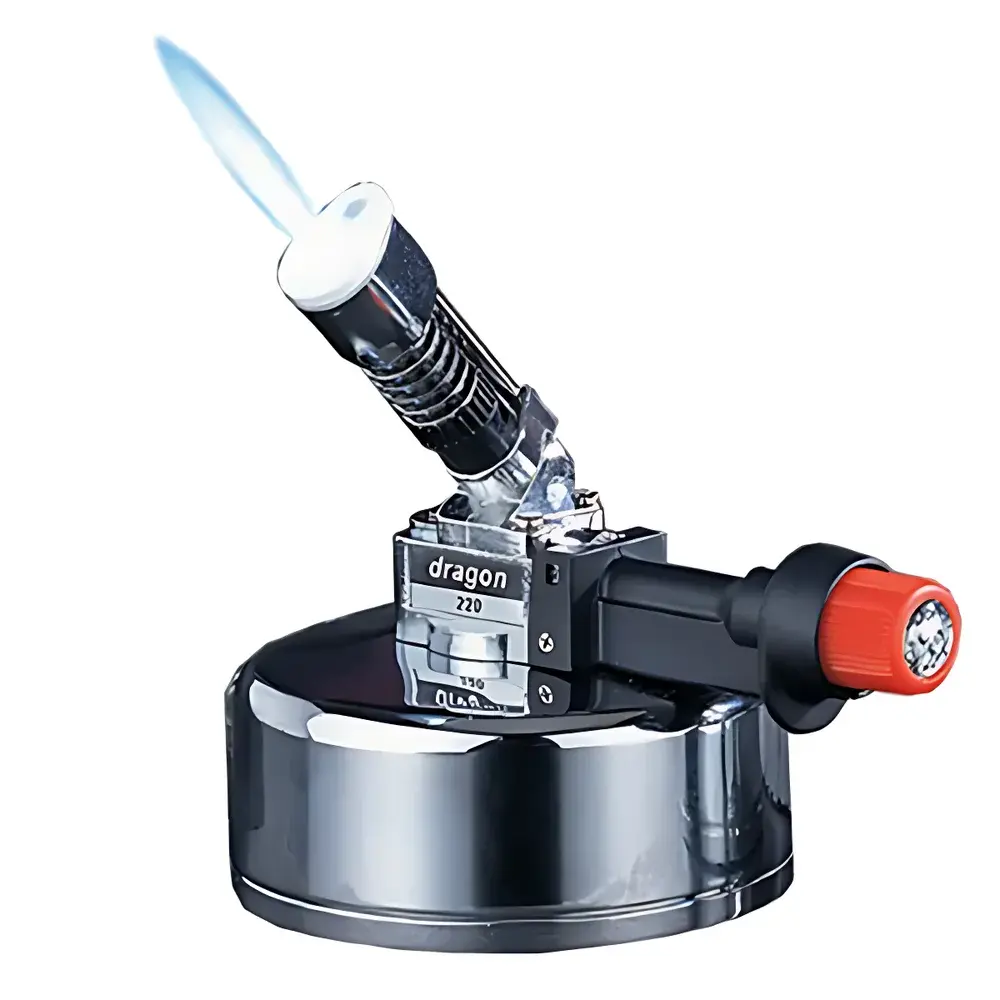
WIGGENS Dragon 220 Portable Butane Bunsen Burner
| Brand | WIGGENS |
|---|---|
| Origin | Germany |
| Model | Dragon 220 |
| Fuel Type | n-Butane |
| Fuel Consumption | 45 g per 60 min |
| Maximum Flame Temperature | 1300 °C |
| Fuel Capacity | 45 g |
| Continuous Operation Time | 60 min |
| Dimensions (L×W×H) | 94 × 115 × 78 mm |
| Net Weight | 425 g |
Overview
The WIGGENS Dragon 220 is a precision-engineered, portable butane-powered Bunsen burner designed for controlled open-flame applications in modern laboratories, teaching facilities, and field-based scientific work. Unlike traditional gas-line-connected burners, the Dragon 220 operates independently using refillable n-butane fuel cartridges—eliminating dependency on fixed laboratory gas infrastructure while maintaining thermal stability and flame reproducibility. Its core function relies on premixed combustion: air and butane are dynamically blended prior to ignition via a calibrated venturi system, enabling precise stoichiometric control and a non-luminous, high-temperature blue flame ideal for sterilization, localized heating, glassworking, and rapid sample drying. With a verified maximum flame temperature of 1300 °C and consistent thermal output over its full 60-minute operational cycle, the Dragon 220 meets the thermal demands of routine microbiological flaming, inoculation loop sterilization, and small-scale metal or ceramic annealing—without requiring external regulators or pressure gauges.
Key Features
- Integrated piezoelectric electronic ignition system for reliable, one-handed flame initiation—no external spark source or matches required.
- Tilt-adjustable flame head with ergonomic 15° forward inclination, optimizing ergonomics during benchtop use and minimizing operator fatigue during extended procedures.
- Refillable stainless-steel fuel cylinder (45 g capacity) compatible with commercially available n-butane canisters—ensuring traceability, consistent combustion chemistry, and low soot generation.
- Multi-stage air shutter and needle valve for fine-tuned flame geometry control: from oxidizing (hot, narrow, blue) to reducing (cooler, broader, slightly luminous) regimes—critical for flame testing and material compatibility studies.
- Robust polymer housing with heat-dissipating aluminum alloy base and integrated anti-tip stabilization feet—certified to IEC 61010-1:2010 for laboratory electrical and mechanical safety.
- No external gas hose or manifold required; fully self-contained operation supports mobility between biosafety cabinets, fume hoods, and mobile lab carts.
Sample Compatibility & Compliance
The Dragon 220 is compatible with standard microbiological tools (platinum loops, nichrome wires), borosilicate glassware (test tubes, Petri dish rims), and small metallic components (surgical instruments, thermocouple probes). It is not intended for use with volatile organic solvents, halogenated gases, or pressurized reaction vessels. The device complies with EN 13861:2016 (laboratory gas appliances), carries CE marking under the EU Gas Appliances Regulation (2016/426), and conforms to ISO 15195:2018 guidelines for calibration and verification of thermal sources used in microbiological sterilization validation. While not a medical device, its consistent 1300 °C output supports GLP-aligned aseptic technique documentation when paired with validated flame exposure time protocols.
Software & Data Management
As a standalone thermal instrument, the Dragon 220 does not incorporate embedded firmware, connectivity, or digital data logging. All operational parameters—including flame height, air/fuel ratio, and ignition status—are manually controlled and visually verified. However, its design supports integration into digitally auditable workflows: flame-on duration can be recorded via external timers synchronized with LIMS or ELN entries; fuel consumption logs (tracked per cartridge batch number) align with ISO/IEC 17025 traceability requirements for consumables. For regulated environments, users may implement simple SOP-based checklists covering pre-use leak verification, flame color assessment (blue vs. yellow), and post-use fuel shutoff confirmation—all supporting FDA 21 CFR Part 11–aligned audit trails when documented electronically.
Applications
- Routine sterilization of inoculation loops, spreaders, and forceps in microbiology and cell culture labs.
- Localized heating of reaction vessels during qualitative flame tests (e.g., sodium, potassium, copper ion identification).
- Sealing glass capillaries, pulling micropipettes, and annealing quartz fibers in materials science workflows.
- Field-deployable flame disinfection in veterinary clinics, food safety inspection units, and environmental sampling sites.
- Teaching demonstrations of combustion stoichiometry, heat transfer, and flame structure in undergraduate chemistry curricula.
- Low-footprint thermal processing in ISO Class 5 cleanrooms where gas-line installation is prohibited.
FAQ
Is the Dragon 220 compatible with propane or mixed hydrocarbon fuels?
No. Only certified n-butane (≥99.5% purity) is approved for use. Propane generates higher backpressure and alters air/fuel mixing dynamics, risking incomplete combustion and soot deposition.
Can the fuel cartridge be refilled in-house using bulk butane canisters?
Refilling is not recommended. The factory-sealed cartridge ensures calibrated flow rate and pressure regulation. Unauthorized refills may compromise seal integrity and violate EN 13861 leakage thresholds.
What maintenance is required to sustain flame accuracy over time?
Monthly cleaning of the air intake mesh and burner nozzle with compressed air or a soft brass brush is sufficient. No lubrication or recalibration is necessary under normal usage conditions.
Does the Dragon 220 meet requirements for GMP-compliant sterilization processes?
It supports GMP-aligned practices when incorporated into validated SOPs—for example, documenting flame-on duration (≥5 seconds), visual flame verification, and tool immersion depth—but it is not itself a validated sterilization device per ISO 17665.



