
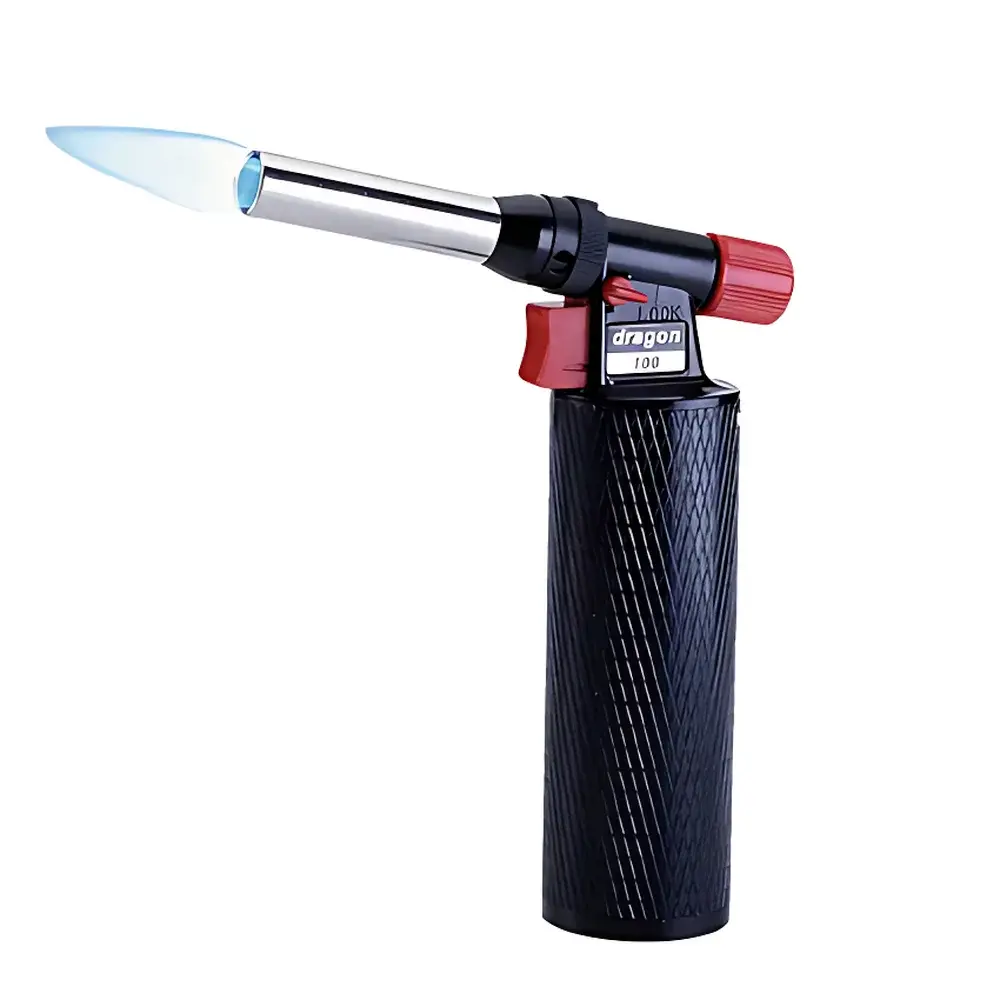
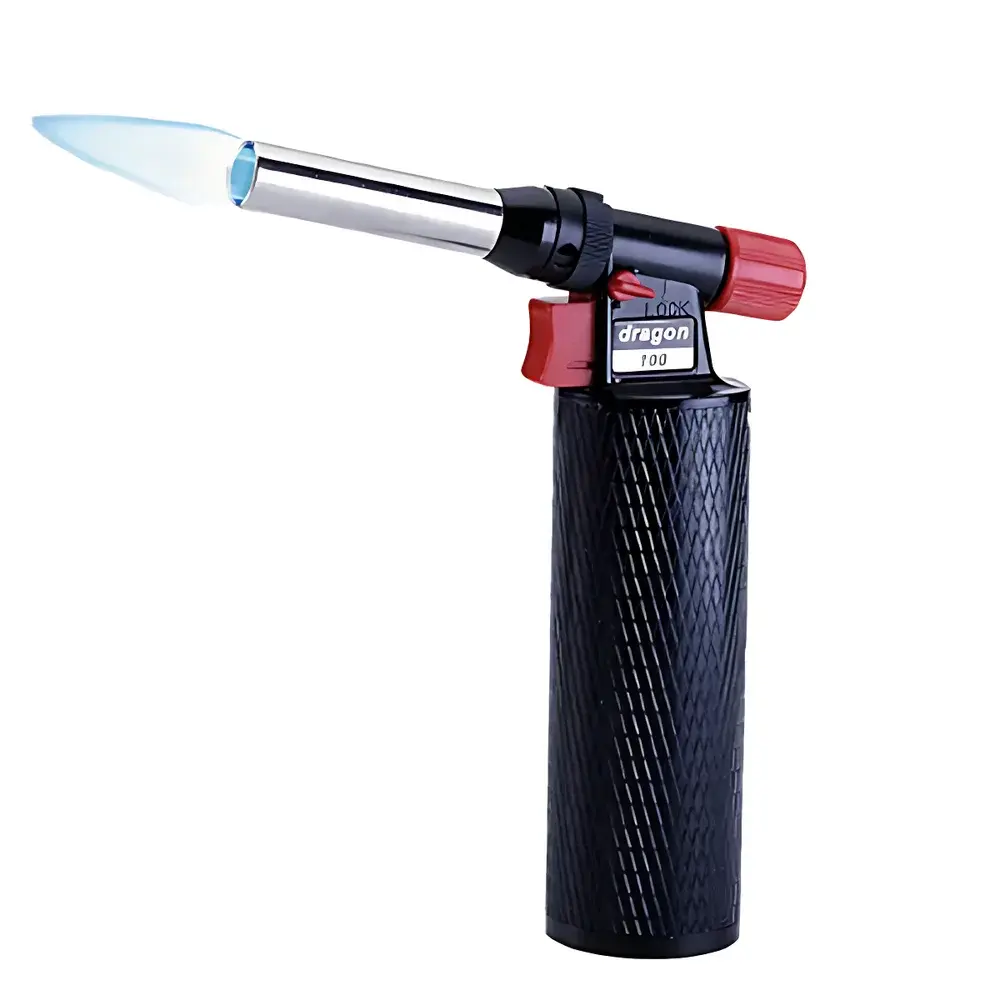
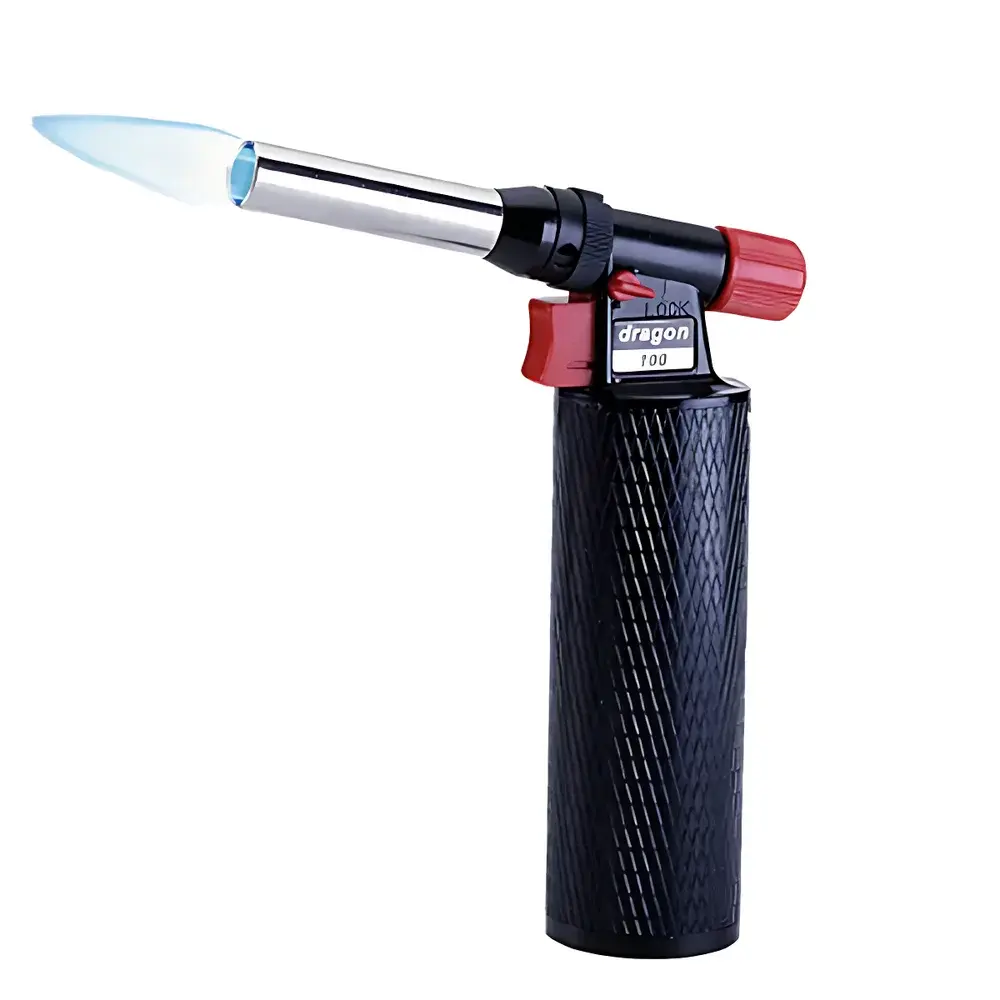
WIGGENS Dragon100 Portable Butane Bunsen Burner
| Brand | WIGGENS |
|---|---|
| Origin | Germany |
| Model | Dragon100 |
| Fuel Type | n-Butane |
| Fuel Consumption | 45 g per 60 min |
| Maximum Flame Temperature | 1300 °C |
| Fuel Capacity | 45 g |
| Continuous Operation Time | 60 min |
| Dimensions (L×W×H) | 161 × 137 × 79 mm |
| Net Weight | 380 g |
| Safety Ignition Switch | Integrated Piezoelectric Igniter |
| Flame Adjustment | Continuously Variable Needle Valve |
Overview
The WIGGENS Dragon100 is a compact, portable, and laboratory-grade butane-fueled Bunsen burner engineered for precision flame control in routine and demanding benchtop applications. Unlike traditional air-mix gas burners connected to central gas lines, the Dragon100 operates independently using refillable n-butane fuel cartridges—eliminating dependency on fixed infrastructure while maintaining thermal stability and reproducibility. Its combustion principle follows the classic Bunsen design: premixed butane and ambient air are drawn through an adjustable venturi tube, enabling precise stoichiometric control over the flame’s oxidizing or reducing character. The burner achieves a maximum adiabatic flame temperature of 1300 °C under optimal air–fuel ratio conditions, making it suitable for rapid localized heating, sterile loop flaming, glassworking, and small-scale soldering tasks where portability and flame repeatability are critical.
Key Features
- Integrated piezoelectric ignition system—no external spark source or matches required; single-press reliable ignition with tactile feedback.
- Continuously adjustable needle valve for fine-tuned flame height and thermal output, supporting both luminous (reducing) and non-luminous (oxidizing) flame modes.
- Refillable 45 g n-butane fuel cartridge with leak-resistant sealing mechanism and pressure-regulated delivery for consistent mass flow rate.
- Robust polymer–metal hybrid housing (heat-resistant thermoplastic body with stainless steel burner head and base), rated for continuous operation up to 60 minutes at full output.
- Ergonomic low-profile form factor (161 × 137 × 79 mm) optimized for fume hood integration, mobile lab carts, and field-deployable setups.
- Dedicated safety switch that mechanically interrupts fuel flow when disengaged—compliant with EN 13861:2021 (Laboratory equipment — Requirements for gas burners).
Sample Compatibility & Compliance
The Dragon100 is compatible with standard microbiological inoculation loops, platinum wire, nichrome wires, small glass capillaries, and ceramic crucibles used in ashing or volatilization protocols. It does not require connection to building gas infrastructure, avoiding compatibility issues with incompatible pipeline gases (e.g., propane or natural gas mixtures). As a CE-marked device manufactured in Germany under ISO 9001-certified processes, it conforms to IEC 61010-1:2010 for electrical safety and EN 60529:2014 (IP20) for ingress protection. While not classified as medical equipment, its flame stability and repeatability support GLP-aligned sterilization procedures per USP and EU Annex 1 requirements for aseptic technique validation when used with calibrated timing and procedural controls.
Software & Data Management
The Dragon100 is a fully mechanical, analog-operated instrument with no embedded electronics, firmware, or digital interfaces. Consequently, it requires no software installation, driver configuration, or cybersecurity validation. All operational parameters—including ignition status, fuel level estimation (via visual gauge window), and flame adjustment—are monitored manually. This architecture ensures intrinsic electromagnetic compatibility (EMC), zero risk of firmware corruption, and unrestricted use in environments sensitive to RF emissions (e.g., near NMR spectrometers or electron microscopes). Maintenance logs, fuel refill records, and usage duration tracking may be integrated into existing laboratory information management systems (LIMS) via manual entry or barcode-scanned consumable labels (e.g., WIGGENS part #DRG-CARTRIDGE-BUT45).
Applications
- Routine sterilization of inoculating loops, needles, and forceps in microbiology and cell culture laboratories.
- Localized heating of reaction vessels during synthetic chemistry demonstrations or small-scale reflux setups.
- Flame-polishing of glass Pasteur pipettes and capillary tubes in histology and microinjection workflows.
- Thermal annealing of metal samples in materials science teaching labs.
- Field-based educational outreach—ideal for science fairs, mobile STEM labs, and resource-constrained institutions lacking centralized gas supply.
- Low-risk soldering of thermocouple junctions or PCB repairs where open-flame precision exceeds hot-air station resolution.
FAQ
Is the Dragon100 compatible with propane or mixed LPG fuels?
No. The Dragon100 is calibrated exclusively for n-butane (C₄H₁₀) with a vapor pressure profile optimized for its pressure-regulated feed system. Propane or LPG blends may cause over-pressurization, inconsistent flame behavior, or seal degradation.
Can the fuel cartridge be refilled in-house using generic butane canisters?
Yes—provided the refill procedure follows WIGGENS Technical Bulletin DRG-TB-02: only use pharmaceutical-grade or laboratory-grade n-butane (≥99.5% purity, certified per ISO 8573-1 Class 2) and observe static-dissipative handling protocols.
Does the Dragon100 meet OSHA or local fire code requirements for indoor laboratory use?
When operated within a certified fume hood or well-ventilated area with ≥6 air changes per hour, and with fuel storage compliant with NFPA 58 Chapter 10 (portable fuel containers), the Dragon100 satisfies standard occupational safety prerequisites for intermittent open-flame devices.
What is the expected service life of the piezoelectric igniter?
Rated for ≥10,000 actuations under normal laboratory conditions; replacement modules (part #DRG-IGNITER-KIT) are available and field-replaceable without tools.
Is calibration required prior to use?
No formal calibration is specified, as the device has no electronic sensors or traceable metrological outputs; however, users should verify flame stability and temperature consistency against reference standards (e.g., ASTM E2550 for thermal analysis verification) during initial qualification and after any physical impact or prolonged storage.



